
Filter
718
Text search:
Education
and
COVID-19
transmission
Featured
97
13
Language
Document type
271
172
107
71
36
19
13
9
7
7
2
1
1
1
Countries
62
28
23
23
21
18
16
15
15
14
14
13
12
12
11
10
9
9
8
8
8
7
7
7
7
7
6
4
4
4
4
4
4
4
4
4
4
3
3
3
3
3
3
3
3
3
3
3
3
3
3
3
3
3
3
3
3
3
2
2
2
2
2
2
2
2
1
1
1
1
1
1
1
1
1
1
1
1
1
1
1
1
1
1
1
1
1
1
1
1
1
1
1
1
1
Authors & Publishers
Publication Years
Category
293
34
29
28
19
8
3
1
Toolboxes
387
48
42
30
21
20
16
15
15
15
13
13
11
10
9
5
3
3
2
2
When situations occur in which unwanted events are rightly or wrongly connected with vaccination, they may erode confidence in vaccines and the authorities delivering them. This document presents the scientific evidence behind WHO’s recommendation
...
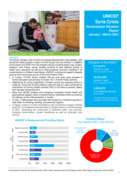

Dracunculiasis (Guinea worm disease), caused by the parasite Dracunculus medinensis, is traditionally acquired by drinking water containing copepods (water fleas) infected with D. medinensis larvae, but in recent years also appears increasingly to be transmitted by eating fish or other aquatic anima
...

The Event-based Surveillance Framework is intended to be used by authorities and agencies responsible for
surveillance and response. This framework serves as an outline to guide stakeholders inter
...
March 2021
This report presents the key findings of the NFHS-5 survey in Arunachal Pradesh, followed by detailed tables and an appendix on sampling errors. The 2019-21 National Family Health Survey (NFHS-5), the fifth in the NFHS series, provides i
...
The desired impact of the OH JPA is a world better able to prevent, predict, detect and
respond to health threats and improve the health of humans, animals, plants
...
A One Health Response. A Briefing Note

The Royal College of Paediatrics and Child Health recognises that climate change
is an existential threat to the health and wellbeing of children and
...
Early damage assessments indicate that at least 800,000 people could be directly exposed to minor to severe damages, including communication, access, security, loss of livelihoods, infrastructure, and health services could be impacted.
Thailand is exposed to flooding, landslides, drought, earthquakes, tsunamis, heat waves, forest fires, and epidemics. Thailand is also exposed to technological hazards such as chemical accidents. Flooding is the natural hazard with the most signific
...
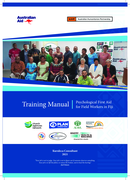
This Fiji contextualized manual was initially drafted for CANDO partners as a result of the work done by the humanitarian arms of the various Christian denominations. However as the work progressed it became evidently clear that the training was needed for all responders,
...
The focus of the current quarterly edition of Eurohealth (from the European Observatory on Health Systems and Policies) is Antimicrobial Resistance (AMR) and contains the following articles:
•
...
The Nigeria Centre for Disease Control (NCDC) declared a Yellow Fever (YF) outbreak and activated a multi-sectoral Emergency Operations Centre for coordination of Yellow Fever response on 12 November 2020. The outbreak, which mainly affected three s
...
Using Epidemiology to Support Primary Health Care. Updated version of the WHO handbook published in the early 1990's entitled: Manual of Epidemiology for District Health Management or those with an interest in applied epidemiology in primary health care an
...
Antimicrobial resistance (AMR) has emerged as a leading cause of death in the African region, surpassing fatalities from malaria, HIV, and TB. In response to this critical threat, the region has adopted the AMR Global Action Plan
...
