
Filter
5950
Filtered Results: 5950
Text search:
community-based
initiatives
Featured
Recommendations
436
New Publications
1645
Language
Document type
No document type
3503
Studies & Reports
1127
Guidelines
519
Manuals
284
Strategic & Response Plan
271
Training Material
84
Fact sheets
71
Situation Updates
54
Resource Platforms
13
Infographics
10
Brochures
9
Online Courses
4
App
1
Countries / Regions
Global
242
India
233
Kenya
217
Myanmar / Burma
132
Ethiopia
131
Nepal
130
Sierra Leone
128
Uganda
128
Nigeria
119
South Africa
117
Liberia
112
Western and Central Europe
107
Bangladesh
105
Africa
97
Malawi
96
Zambia
91
Latin America and the Carribbean
88
Syria
85
Tanzania
81
Rwanda
74
Ghana
67
Ukraine
61
Namibia
52
Congo, Democratic Republic of
51
South Sudan
51
Philippines
43
Cambodia
43
South–East Asia Region
42
Lesotho
40
Asia
40
Guinea
39
Indonesia
37
Mozambique
36
East and Southern Africa
36
Eastern Europe
36
Senegal
34
Yemen
32
West and Central Africa
31
Botswana
30
Burkina Faso
28
Zimbabwe
28
Haiti
28
Afghanistan
26
Pakistan
25
Brazil
25
Middle East and North Africa
24
Colombia
23
Cameroon
22
Germany
20
Central African Republic
19
Venezuela
19
Lebanon
18
Somalia
17
Jordan
17
Benin
17
Eswatini/ Swaziland
17
Eastern Europe and Central Asia
16
Thailand
15
Sudan
15
Russia
13
Mali
12
Vietnam
12
Iraq
11
Sri Lanka
11
Laos
11
China
10
Western Pacific Region
10
Moldova
10
Peru
9
USA
8
Georgia
8
Angola
7
Mexico
7
Southern Africa
7
Tajikistan
7
Turkey
6
Papua New Guinea
6
Albania
6
North America
6
Côte d’Ivoire / Ivory Coast
5
Argentina
5
Burundi
5
Bolivia
5
Libya
5
Kyrgyzstan
5
Jamaica
5
Niger
4
Chad
4
Gambia
4
North Macedonia
4
Ecuador
4
El Salvador
4
Chile
4
Paraguay
4
Bhutan
4
Palestine
4
Iran
4
Kazakhstan
4
Guinea-Bissau
3
Egypt
3
Malaysia
3
Hungary
3
Madagascar
3
Poland
3
Canada
3
Romania
3
Turkmenistan
3
Morocco
2
Togo
2
Singapore
2
Honduras
2
Greece
2
Guatemala
2
Timor Leste/ East Timor
2
Lithuania
2
Tunisia
2
Bosnia and Herzegovina
2
Saudi Arabia
1
Mauritania
1
Vanuatu
1
Serbia
1
Croatia
1
Nicaragua
1
Fiji
1
North Korea
1
Italy
1
Armenia
1
Mongolia
1
Qatar
1
Bulgaria
1
Estonia
1
Slovakia
1
Gabon
1
Japan
1
Belgium
1
Maldives
1
Mauritius
1
United Kingdom
1
Norway
1
Portugal
1
South Korea
1
Algeria
1
Belarus
1
Authors & Publishers
Publication Years
Category
Countries
2317
Public Health
378
Women & Child Health
311
Clinical Guidelines
300
Key Resources
289
Capacity Building
95
Pharmacy & Technologies
29
Annual Report MEDBOX
2
Toolboxes
HIV
479
Mental Health
441
COVID-19
389
Disability
329
Planetary Health
268
TB
251
Conflict
210
AMR
176
Caregiver
152
Ebola
124
NTDs
123
Refugee
122
Rapid Response
114
Global Health Education
111
NCDs
101
Natural Hazards
90
Pharmacy
70
Health Financing Toolbox
63
Polio
43
Social Ethics
39
Specific Hazards
22
Zika
19
Cholera
17
Typhoon
4
South Sudan
1
Health Financing
1

Updated with information on Ebola virus disease and Middle East respiratory syndrome coronavirus
A wide variety of health events ranging in severity may occur related to air transport, requiring different responses or, perhaps, no response at all. The target audience for this guidance document incl...
Antimicrobial resistance (AMR) is a serious public health concern with economic, social and political implications that are global in scope, and cross all environmental and ethnic boundaries. As a global threat, AMR risks the achievements of modern medicine, and has the po...
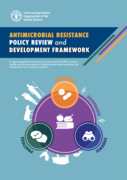
A regional guide for governments in Asia and the Pacific to review, update and develop policies to address antimicrobial resistance and antimicrobial use in animal production
South Africa has faced many challenges over the past two decades, accomplishing profound positive changes in the social structure and government of the nation. This has not yet fully translated into better health for the population, however, particularly the poorest segment. In fact, the p...
Spread of resistance to antimicrobial agents (AMR) does not know national borders and has reached dimensions, which require immediate actions at the national, regional and global levels.
Antibiotic resistance is a natural biological response to improper use of antimicrobial agents (AMA); increasing...
A Students' Toolkit.
How does the digital transformation of health care change the daily routine of a healthcare professional? Which knowledge and skills will healthcare professionals need? Are universities in Europe preparing their students well enough to work within a digitised health system?
Th...
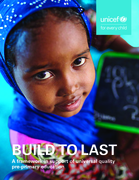
Today, the world is facing a learning crisis: While millions of children have entered education systems for the first time, many of them cannot read, write or do basic mathematics, even after several years of primary school.1 This global learning crisis has its roots in children’s earliest years, ...
Society first acknowledges a child’s existence and identity
through birth registration. The right to be recognized as
a person before the law is a critical step in ensuring
lifelong protection and is a prerequisite for exercising all
other rights. A birth certificate is proof of that legal ide...
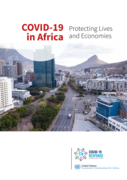
The ECA, says over 300,000 Africans could lose their lives due to COVID-19. This, as the pandemic continues to impact on the Continent’s struggling economies whose growth is expected to slow down from 3.2 percent to 1.8 percent in a best-case scenario, pushing close to 27 million people into extr...
School health programmes are the most cost-effective way to influence health behaviours in young people. The purpose of this two-part handbook is to support schools as they seek to implement interventions in order to reduce the main modifiable risk behaviours for noncommunicable disea...

Deeply concerned by the morbidity and mortality caused by the COVID-19 pandemic, the negative impacts on physical and mental health and social well-being, the negative impacts on economies and societies and the consequent exacerbation of inequalities within and between countries.
Recent forecasts by the Food and Agriculture Organization of the United Nations (FAO) have indicated a risk of locust invasion in West Africa from June 2020. From East Africa, some swarms could reach the eastern part of the Sahel and continue westwards from Chad to Mauritania.
Surveillance and co...
It is too early to know the full impact of COVID-19 on Africa. To date the experience has been varied. There are causes for concern, but also reasons for hope. Early estimates were pessimistic regarding the pandemic’s impact on the continent. But the relatively low numbers of COVID-19 cases report...
Improvements in water sanitation and hygiene (WASH) and wastewater management in all sectors are critical elements of preventing infections and reducing the spread of antimicrobial resistance (AMR) as identified in the Global Action Plan to combat AMR. Yet, at present, WASH and wastewater management...
The WHO Global Health Estimates show that nearly half a million deaths (493 471) occurred in the WHO European Region due to violence and injuries in 2016. This represents a decline of 29% from 2000. Injuries account for 5.3% of all deaths and 9.6 of all years of life lost. They are a leading cause o...
Journal of Palliative Medicine Volume 21, Number 10, 2018
DOI: 10.1089/jpm.2018.0248ad
Just about everyone has experienced the joy that a healthy newborn child brings to parents, families and communities. But the arrival of a newborn who is small or sick often results in immediate worry and sadness. When the infant is at high risk of death or disability, these concerns can be a tremen...
A new publication - Waste Management during the COVID-19 Pandemic: from response to recovery - reviews current practices for managing waste from healthcare facilities, households and quarantine locations accommodating people with confirmed or suspected cases of COVID-19. Jointly produced by UNEP, th...
At the time of writing, the novel coronavirus pandemic had reached every region of the world, with millions of infections globally and untold disruptions to nearly every aspect of daily life.
Estima-se que 17,8 milhões de mulheres em todo o mundo com 18 anos ou mais viviam com o VIH em 2015, o equivalente a 51% dos adultos que viviam com o VIH. As raparigas adolescentes e as mulheres jovens são particularmente afectadas; em 2015 representavam 60 por cento dos indivíduos com idades com...
