
Filter
1091
Text search:
mali
Featured
63
272
Language
Document type
603
280
68
49
28
13
13
11
11
7
4
4
Countries
167
155
154
135
105
96
85
84
76
62
58
56
52
49
43
42
39
30
24
20
20
18
18
16
16
15
15
14
14
14
13
13
13
13
11
11
10
10
10
9
8
8
8
8
7
7
7
7
6
6
6
6
6
6
6
6
5
5
5
4
4
4
4
4
4
4
4
4
3
3
3
3
3
3
2
2
2
2
2
2
2
2
2
2
2
2
2
1
1
1
1
1
1
1
1
1
1
1
1
1
1
1
Authors & Publishers
Publication Years
Category
309
91
71
64
58
14
7
1
Toolboxes
207
84
52
52
48
42
39
37
33
33
28
28
20
14
11
11
9
6
6
6
4
2
2
1
This document provides an overview of the evidence of nutrition gains that can be achieved with improved WASH, a description of key WASH practices, and practical knowledge and guidance on how to integrate WASH into nutrition programmes, including important monitoring and evaluation (M&E) aspects. Th
...
Resilience has rapidly become one of the most prominent objectives for the development sector, so ascertaining how best to measure it is an essential task for practioners working in monitoring and evaluation. In this discussion paper, the main insights emerging from the series of large-N Effectivene
...
This new publication presents the continuing and emerging challenges to children’s environmental health.
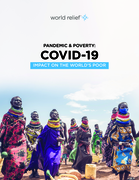
World Relief published a new report revealing the immense impact of COVID-19 on the world's poor. This report is one of the most comprehensive of its kind, corresponding to the two-year anniversary of when the World Health Organization declared COVID-19 to be a global pandemic.
Globally, more than 3 million new cases and 10 000 deaths have been reported in the week of 26 December 2022 to 1 January 2023. This represents a reduction in weekly cases and deaths of 22% and 12%, respectively. In the last 28 days (5 December 2022 to 1 January 2023), over 14.5 million cases and ov
...
The Global Campaign Against Epilepsy “Out of the Shadows”
The Handbook is primarily addressed to child protection coordination teams, which may include coordinators, co-leads and information managers, the guidance is equally valid for all members of the child protection coordination group, including national and international nongovernmental organizations
...
Extraced from the full version of WDI 2016
Disease Control Priorities –3rdEdition, Volume 2.
This book focuses on maternal conditions, childhood illness, and malnutrition. Specifically, the chapters address acute illness and undernutrition in children, principally under age 5. It also covers maternal mortality, morbidity, stillbirth, and
...
Les Standards Minimums de la Protection de l’Enfant (SMPE) définis en 2012 par le GTPE présentent 26 normes nécessaires pour assurer une protection adéquate des enfants dans les situations d’urgence.
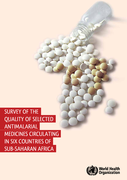
Survey of the Quality of Selected Antimalarial Medicines Circulating in Six Countries of Sub-Saharan Africa
recommended
The survey aimed at evaluating the quality of selected antimalarials in six countries of sub-Saharan Africa (Cameroon, Ethiopia, Ghana, Kenya, Nigeria and the United Republic of Tanzania). These countries have been supported by WHO to strengthen their regulatory controls o
...
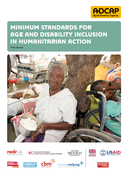
The Minimum Standards for Age and Disability Inclusion in Humanitarian Action inform the design, implementation, monitoring and evaluation of humanitarian programmes across all sectors and phases of response, and in all emergency contexts, ensuring older people and people with disabilities are not e
...
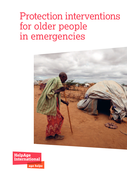
The Health Equity Assessment Toolkit (HEAT) is a software application for use on desktop or laptop computers and mobile devices (minimum screen size of 7.9 inches recommended). It was developed to facilitate the assessment of within-country health inequalities. The Built-in Database Edition, Version
...
The new five-year agenda of WHO in Africa, The Africa Health Transformation Programme, 2015–2020: a vision for universal health coverage, is the strategic framework that will guide WHO’s contribution to the emerging sustainable development platform in Africa. It articulates a vision for health a
...
A key purpose of the Recovery Toolkit is to support countries in the reactivation of health services which may have suffered as a result of the emergency. These services include ongoing programmes such as immunization and vaccinations, maternal and child health services, and noncommunicable diseases
...
