Filter
684
Text search:
Miller,
C.
Featured
Recommendations
52
New Publications
106
Language
Document type
No document type
398
Studies & Reports
133
Guidelines
84
Manuals
40
Training Material
9
Strategic & Response Plan
9
Situation Updates
5
Fact sheets
5
Resource Platforms
1
Countries / Regions
India
15
Russia
15
Global
15
South Africa
14
Ukraine
14
Kenya
13
Eastern Europe
12
Latin America and the Carribbean
9
Africa
9
Uganda
8
Zambia
8
Malawi
8
Western and Central Europe
8
Sierra Leone
7
Brazil
7
Zimbabwe
6
Indonesia
6
Mozambique
6
Colombia
6
Liberia
5
Germany
5
Rwanda
5
Asia
5
Nigeria
4
Philippines
4
Tanzania
4
Angola
4
Burkina Faso
3
Senegal
3
USA
3
Ethiopia
3
Ghana
3
Nepal
3
South Sudan
3
China
3
Myanmar / Burma
3
Guinea
2
Congo, Democratic Republic of
2
Guinea-Bissau
2
Cameroon
2
Syria
2
Cambodia
2
Benin
2
Argentina
2
Eswatini/ Swaziland
2
Chile
2
West and Central Africa
2
Eastern Europe and Central Asia
2
Paraguay
2
Southern Africa
2
Spain
2
Mali
1
Haiti
1
Jordan
1
Afghanistan
1
Lebanon
1
Egypt
1
Thailand
1
Bangladesh
1
Singapore
1
Sudan
1
Central African Republic
1
Namibia
1
Burundi
1
Honduras
1
Botswana
1
El Salvador
1
Bolivia
1
Mexico
1
Sri Lanka
1
Yemen
1
Middle East and North Africa
1
South–East Asia Region
1
Venezuela
1
Albania
1
Canada
1
Tajikistan
1
Romania
1
Vietnam
1
Portugal
1
Authors & Publishers
Publication Years
Category
Countries
144
Clinical Guidelines
86
Public Health
40
Women & Child Health
33
Key Resources
17
Capacity Building
7
Pharmacy & Technologies
5
Toolboxes
Mental Health
118
HIV
69
TB
60
COVID-19
45
Planetary Health
30
Disability
29
Caregiver
25
NCDs
24
Ebola
20
AMR
19
Rapid Response
15
NTDs
14
Conflict
12
Global Health Education
9
Pharmacy
9
Natural Hazards
8
Refugee
7
Social Ethics
7
Zika
5
Specific Hazards
4
Cholera
3
Health Financing Toolbox
3
Polio
1
Combler les écarts
Rompre les barrières
Réparer les injustices
Synthèse
PLOS ONE | www.plosone.org
May 2013 | Volume 8 | Issue 5 | e63476
Accessed: 08.11.2020
Journal des anthropologues n° 138-139, 2014
http://journals.openedition.org/jda/4444
Le médicament pharmaceutique industriel est un objet de santé
à la fois scientifique, populaire et marchand. Si ces deux premiers
caractères sont souvent mis en avant respectivement par les sciences
biom
...
WHO recommends that pre-exposure prophylaxis (PrEP) be offered as an additional prevention choice for HIV-negative individuals at substantial risk of HIV infection as part of combination prevention approaches.
HIV drug resistance has been rarely reported among PrEP users who tested HIV positive i
...
UNAIDS 2018 / Guidance
Guidance for policy-makers, and people living with, at risk of or affected by HIV
Policy
July 2012
Working Paper No. 3
Yu et al. BMC Public Health (2018) 18:825 https://doi.org/10.1186/s12889-018-5731-z
Research Article
Downloaded from https://aidsinfo.nih.gov/guidelines on 11/27/2019
Visit the AIDSinfo website to access the most up-to-date guideline.
Register for e-mail notification of guideline updates at https://aidsinfo.nih.gov/e-news.
Rutstein SE et al. Journal of the International AIDS Society 2017, 20:21579 http://www.jiasociety.org/index.php/jias/article/view/21579 | http://dx.doi.org/10.7448/IAS.20.1.21579
Experiences from Indonesia, Kenya, Uganda and Ukraine
Accessed Febr. 6, 2020

accessed Febr. 6, 2020

Accessed Febr. 6, 2020
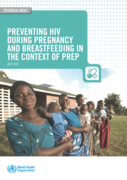
Technical Brief
July 2017
Senegal has adopted the World Health Organization–Joint United Nations Programme on HIV/AIDS recommended 90-90-90 targets.5 The adoption of this strategy means that the country is expected, by 2020, to have 90% of its population living with HIV diagnosed, 90% of all those diagnosed receiving susta
...
The World Health Organization (WHO) recommends the use of insecticide-treated nets (ITNs) and intermittent preventive treatment in pregnancy (IPTp) as a cost-effective intervention for the prevention of malaria during pregnancy in endemic areas. This study was conducted to investigate: (1) the exten
...
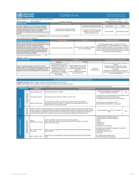
30 April 2020
| COVID-19: Essential health services
Module 1
Clinical
July 2017
Module 1: Clinical. This module is for clinicians, including physicians, nurses and clinical officers. It gives an overview of how to provide PrEP safely and effectively, including: screening for substantial risk of HIV; performing appropriate testing before initi
...