Filter
553
Text search:
World
Health
Organization,
WASH
Cluster,
Health
Cluster
Featured
Recommendations
74
New Publications
209
Language
Document type
No document type
304
Studies & Reports
79
Guidelines
67
Strategic & Response Plan
46
Manuals
29
Situation Updates
21
Fact sheets
4
Training Material
3
Countries / Regions
Sierra Leone
21
Global
21
Nepal
20
South Sudan
19
Liberia
17
Myanmar / Burma
17
Bangladesh
16
Yemen
16
Syria
13
Kenya
13
Malawi
13
Nigeria
11
Ukraine
11
Ethiopia
10
Philippines
10
Mozambique
10
Congo, Democratic Republic of
9
India
9
Venezuela
9
Uganda
8
Africa
8
Haiti
7
Zimbabwe
6
Tanzania
6
Rwanda
5
South Africa
5
Sudan
5
Central African Republic
5
Madagascar
5
Latin America and the Carribbean
5
Guinea
4
Ghana
4
Niger
4
Somalia
4
Colombia
4
Mali
3
Cameroon
3
Pakistan
3
East and Southern Africa
3
West and Central Africa
3
Western and Central Europe
3
Burkina Faso
2
Senegal
2
Iraq
2
Jordan
2
Lebanon
2
Zambia
2
Indonesia
2
Namibia
2
Eswatini/ Swaziland
2
South–East Asia Region
2
Eastern Europe and Central Asia
2
Asia
2
Palestine
2
Iran
2
Guinea-Bissau
1
Morocco
1
Saudi Arabia
1
Togo
1
Afghanistan
1
Turkey
1
Cambodia
1
Malaysia
1
Papua New Guinea
1
Brazil
1
Hungary
1
Burundi
1
Greece
1
Libya
1
Lesotho
1
Sri Lanka
1
Middle East and North Africa
1
Western Pacific Region
1
Poland
1
Albania
1
Laos
1
Russia
1
Romania
1
Moldova
1
Georgia
1
Tunisia
1
Belarus
1
Authors & Publishers
Publication Years
Category
Countries
254
Key Resources
58
Clinical Guidelines
25
Women & Child Health
25
Public Health
23
Capacity Building
10
Pharmacy & Technologies
1
Toolboxes
COVID-19
84
Conflict
52
Natural Hazards
29
Ebola
28
Rapid Response
24
Disability
21
Cholera
19
Planetary Health
18
Refugee
12
HIV
11
Mental Health
11
TB
9
AMR
9
Global Health Education
8
Caregiver
7
NTDs
5
Pharmacy
4
Zika
3
Specific Hazards
2
Polio
1
South Sudan
1
Typhoon
1
Health Financing Toolbox
1
NCDs
1

This guidance aims to assist leaders in the development or revision of humanitarian-sector contributions to district-level pandemic preparedness and response planning. It is directly linked to H2P guidance for national-level planning.

A discussion paper on the scope of the problem, its drivers, and strategies for moving forward for policy, practice, and research
In many protracted emergencies, the prevalence rates of global acute malnutrition (GAM) regularly exceed the emergency threshold of > 15% of children with acute malnutri
...
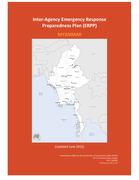
Myanmar is prone to various natural hazards that include earthquakes, floods, cyclones, droughts, fires, tsunamis, some of whichhave the potential to impact large numbers of people. In the event that large numbers of people are affected(such as was the case in 2008 following cyclone Nargis), the gov
...

The ECA, says over 300,000 Africans could lose their lives due to COVID-19. This, as the pandemic continues to impact on the Continent’s struggling economies whose growth is expected to slow down from 3.2 percent to 1.8 percent in a best-case scenario, pushing close to 27 million people into extr
...
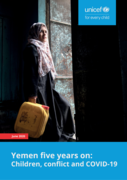
Millions of children in Yemen could be pushed to ‘the brink of starvation’ due to huge shortfalls in humanitarian aid funding amid the COVID-19 pandemic – according to a new UNICEF report marking more than five years since conflict escalated in the country.
The Camp Managment Toolkit
recommended
Applicable to both IDP and refugee scenarios, the Toolkit incorporates a wide range of relevant information on managing displaced populations living in communal settings (collective centres, spontaneous sites, established camps, etc.). Large scale displacements caused by recent conflict and natural
...
USD$ 28 million allocated from UN Central Emergency Fund to assist people affected by Boko Haram’s insurgency.
Boko Haram, insecurity exert misery in Cameroon’s Far North Region.
Millions of people in Ebola-affected countries risk serious food shortages during the June-August lean
...
Version 2 (unedited). The Basic Needs Analysis (BNA) is a multi-sector needs analysis approach that can be applied in both sudden onset and protracted emergencies. The methodology comprises the Guidance (this document) presenting the conceptual BNA framework and related processes, and a Toolbox, whi
...
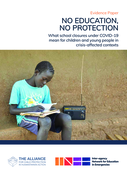
What school closures under COVID-19 mean for children and young people in
crisis-affected contexts
The steps reassert the sequence of the HPC, with needs analysis directly informing decisions about the response and monitoring, whether for the preparation of new plans or adjustments to existing ones. The steps of the HPC have a rationale and cannot be skipped. However, the depth of work under each
...
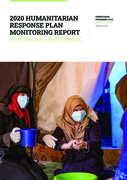
The figures and findings reflected in the 2020 PMR represent the independent analysis of the United Nations (UN) and its humanitarian partners based on information available to them. Many of the figures provided throughout the document are estimates based on sometimes incomplete and partial data set
...
Operation update 01/04/2022
The Haiti Earthquake and Cholera Emergency appeal (MDRHT018) was implemented by the International Federation of Red Cross and Red Crescent Societies (IFRC) in collaboration with the Haitian Red Cross Society (HRCS) following the devastating earthquake on 14 August 2021, and the cholera outbreak on 2
...
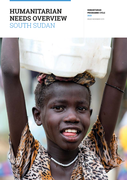
Context and impact of the crisis
A year after the signing of the Revitalized Agreement on the Resolution of the Conflict in South Sudan (R-ARCSS),1 the ceasefire holds in most parts of the country. Armed conflict between State security forces and opposition armed groups has been contained to a sma
...
Learning from earthquake relief and recovery operations
Preliminary Key Findings from Interviews in Accra on the Ebola Response

The report provides an overview of the disaster risk reduction and management in Nepal, a country under threat of multiple natural hazards: earthquakes, floods, landslides, fires, storms, the epidemics, and others. It presents background information on the country, its disaster profile, its legal an
...