
Filter
725
Text search:
General
Pharmaceutical
Council
Featured
Recommendations
52
New Publications
196
Language
Document type
No document type
405
Studies & Reports
140
Guidelines
88
Strategic & Response Plan
38
Manuals
23
Training Material
12
Fact sheets
9
Situation Updates
7
Resource Platforms
2
Brochures
1
Countries / Regions
India
46
Kenya
34
South Africa
30
Nigeria
26
Ethiopia
24
Western and Central Europe
20
Tanzania
17
Uganda
16
Global
16
Ghana
15
Zimbabwe
15
Nepal
15
Zambia
15
Sierra Leone
13
Rwanda
12
Ukraine
11
Namibia
10
Bangladesh
9
Lesotho
8
Eastern Europe
8
Liberia
7
Philippines
7
Malawi
7
Africa
7
Syria
6
Eswatini/ Swaziland
6
Indonesia
5
Botswana
5
Myanmar / Burma
5
South–East Asia Region
4
Latin America and the Carribbean
4
Eastern Europe and Central Asia
4
Pakistan
3
Cambodia
3
United Kingdom
3
Guinea
2
Burkina Faso
2
Congo, Democratic Republic of
2
Cameroon
2
Haiti
2
Germany
2
Egypt
2
Thailand
2
Mozambique
2
Sudan
2
Brazil
2
East and Southern Africa
2
West and Central Africa
2
Middle East and North Africa
2
Asia
2
Fiji
2
Albania
2
Moldova
2
Jamaica
2
Mali
1
USA
1
Saudi Arabia
1
Niger
1
South Sudan
1
Jordan
1
Lebanon
1
Chad
1
China
1
Ireland
1
Benin
1
Central African Republic
1
Peru
1
El Salvador
1
Western Pacific Region
1
Venezuela
1
Southern Africa
1
Laos
1
Timor Leste/ East Timor
1
Russia
1
Bulgaria
1
Romania
1
Lithuania
1
Iran
1
Australia
1
North America
1
Denmark
1
Maldives
1
Authors & Publishers
Publication Years
Category
Countries
360
Clinical Guidelines
37
Public Health
32
Key Resources
15
Pharmacy & Technologies
9
Women & Child Health
7
Capacity Building
5
Toolboxes
AMR
72
Pharmacy
70
COVID-19
53
Mental Health
47
HIV
38
TB
25
Caregiver
19
Conflict
17
Global Health Education
17
NCDs
14
Rapid Response
11
Health Financing Toolbox
11
Planetary Health
10
Ebola
8
Specific Hazards
8
NTDs
6
Polio
4
Refugee
4
Disability
2
Natural Hazards
2
Cholera
1
The availability of controlled medicines is crucial for patients requiring palliative care, pain relief and symptom management. Many individuals worldwide, especially in low- and middle-income countries, continue to experience limited access to these essential medicines. Enhancing access to controll
...
The report aims to capture lessons from the COVID-19 pandemic and to highlight the opportunity for more ambitious global action: expanding sustainable access to vaccines for all towards the Immunization Agenda 2030 and pandemic prevention, preparedness and response efforts. The report is organized i
...
This publication describes the first WHO public-benefit Target Product Profiles (TPPs) for snakebite antivenoms. It focuses on antivenoms for treatment of snakebite envenoming in sub-Saharan Africa. Four TPPs are described in the document:
Broad spectrum Pan-African polyvalent antivenoms: products
...
This document lays out economic arguments for investing in the Access to COVID-19 Tools Accelerator (ACT-Accelerator). Framed within an overall context that recognizes the broader human health and societal impacts of the COVID-19 crisis, ACT-Accelerator's Economic Investment Case argues that investm
...

The World Heart Federation (WHF) is a leading global advocate for stronger legislation and policies regarding cardiovascular disease (CVD) and its risk factors, including raised cholesterol. The present Cholesterol Advocacy Toolkit 2022 provides WHF member organizations with information as well as p
...
The Coronavirus Disease 2019 (COVID-19) has had a continuous and robust impact on world health. The resulting COVID-19 pandemic has had a devastating physical, mental and fiscal impact on the millions of people living with noncommunicable diseases (NCDs), as they have a higher risk of severe illness
...
WHO’s Country Cooperation Strategy (CCS) defines the Organization’s medium-term vision for working in and with a particular country. The CCS, developed in the context of global and national health priorities, examines the overall health situation in a country, including the state of the health s
...
The power relations around global decisions which shape population health can be changed through new alliances and information flows. The Democratising Global Health Governance Initiative, of which WHO Watch is a project, is designed to contribute to improved population health (and health equity) th
...
• provide scientific information on the safety, efficacy, and quality control/ quality assurance of widely used medicinal plants, in order to facilitate their appropriate use in Member States;
• provide models to assist Member States in developing their own mono- graphs or formularies for these
...
• provide scientific information on the safety, efficacy, and quality control/ quality assurance of widely used medicinal plants, in order to facilitate their appropriate use in Member States;
• provide models to assist Member States in developing their own mono- graphs or formularies for these
...
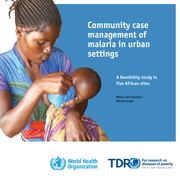
A feasibility study in five African sites
A practical guide for hospital administrators, health disaster coordinators, health facility designers, engineers and maintenance staff to achieve Smart Health Facilities by conserving resources, cutting costs, increasing efficiency in operations and reducing carbon emissions
These policy guidelines provide a strategic approach and new recommendations for integrated TB and HIV services for patients suffering from substance-abuse addiction. The key recommendations fall under three main categories: joint planning, key interventions, and overcoming barriers.
Standard treatment guidelines
recommended
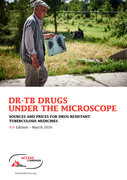
DR-TB drugs under the microscope: Sources and prices for drug-resistant tuberculosis medicines
recommended
4th edition.
This report – now in its fourth edition – analyses the barriers and factors affecting access to treatment regimens for drug-resistant tuberculosis (DR-TB), including new and repurposed drugs. We provide detailed pricing profiles of key DR-TB drugs, using manufacturer responses to s
...
The objectives of these WHO guidelines are to provide updated evidence- based recommendations for the treatment of persons with hepatitis C infection using, where possible, all DAA-only combinations. The guidelines also provide recommendations on the preferred regimens based on a patient’s HCV gen
...
