Filter
705
Text search:
vision
impairment
Featured
80
174
Language
Document type
506
77
49
37
13
13
4
3
2
1
Countries
44
27
25
22
20
16
14
13
11
11
11
9
9
9
8
8
7
6
6
6
6
5
5
5
5
4
4
4
4
4
3
3
3
3
3
3
2
2
2
2
2
2
2
2
1
1
1
1
1
1
1
1
1
1
1
1
1
1
1
1
1
1
1
1
1
1
1
1
Authors & Publishers
Publication Years
Category
253
71
65
26
9
6
1
Toolboxes
224
89
35
15
14
14
14
13
11
10
8
8
6
5
5
4
4
4
3
1
1
1
Contact No 175 - October December 2001
Understanding The UN Convention On The Rights Of Persons With Disabilities
This Guide contains information, guidelines, diagrams and other materials addressed to medical practitioners who are engaged in the treatment of casualties of chemical weapons. It is made available to the public for information purposes, but is not intended to be used by the public. All decisions re
...
Key Recommendations for an Inclusive Urban Agenda
02 - Series on Disability-Inclusive Development
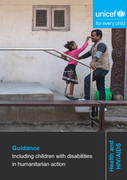
Guidance | Preparedness - Response and early recovery - Recovery and reconstruction
Since independence (1961) the Government through the Department of Social welfare has been providing services to people with disabilities without a comprehensive policy. The adoption of the National Policy on Disability (NPD) is the outcome of many years of consultations among disability stakeholder
...
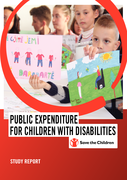
Save the Children in Albania is establishing and strengthening structures and mechanisms which monitor and advocate for children’s rights, promote ways to protect children from all forms of exploitation and violence and also empower and support children and their representatives to meaningfully ad
...
International Development vol. 11. DOI 10.4073/csr.2015.15
The World Health Organization Disability Assessment Schedule (WHODAS 2.0) is a generic assessment instrument developed by WHO to provide a standardized method for measuring health and disability across cultures. It was developed from a comprehensive set of International Classification of Functioning
...
Exposure draft for comment October 2013
This article unites the latest guidelines on the management of arterial hypertension in primary health care in Portuguese speaking countries including Brazil, Angola, Mozambique, São Tomé e Príncipe, Cape Verde, among others.