Filter
652
Text search:
Burial
Featured
98
263
Language
Document type
448
80
43
29
17
15
9
6
3
1
1
Countries
124
119
47
35
32
21
20
16
14
13
12
12
12
11
11
10
10
8
7
7
7
6
6
5
5
4
4
4
4
4
4
4
4
3
3
3
3
3
3
3
3
3
3
2
2
2
2
2
2
2
2
2
2
2
1
1
1
1
1
1
1
1
1
1
1
1
1
1
1
1
1
1
1
1
1
1
Authors & Publishers
Publication Years
Category
193
41
36
19
18
9
4
1
Toolboxes
273
76
62
29
19
17
16
16
15
9
8
6
5
5
5
3
3
2
2
1

A two-week mission was conducted by WASH and quality UHC technical experts from WHO headquarters and supported by the WHO Ethiopia Country Office (WASH and health systems teams) in July 2016, to understand how change in WASH services and quality improvements have been implemented in Ethiopia at nati
...

This document highlights the key aspects of safe health-care waste management in order to guide policy-makers, practitioners and facility managers to improve such services in health-care facilities. It is based on the comprehensive WHO handbook Safe management of wastes from health-care activities (
...

The major areas of focus for the plan will be:
- Social mobilization and community empowerment (health promotion & education for disease prevention);
- Promotion of access to safe water, good sanitation and hygiene;
- Surveillance and laboratory confirmation of outbreaks;
- Prom ...
- Social mobilization and community empowerment (health promotion & education for disease prevention);
- Promotion of access to safe water, good sanitation and hygiene;
- Surveillance and laboratory confirmation of outbreaks;
- Prom ...
March - June 2018
Myanmar introduced Child Death Surveillance and Response (CDSR) in 2015 as an initiative to reduce child (under-5) mortality, an initiative that will contribute to the country’s efforts to meet the Sustainable Development Goals (SDG). Technical Guidelines for CDSR were devel ...
Myanmar introduced Child Death Surveillance and Response (CDSR) in 2015 as an initiative to reduce child (under-5) mortality, an initiative that will contribute to the country’s efforts to meet the Sustainable Development Goals (SDG). Technical Guidelines for CDSR were devel ...
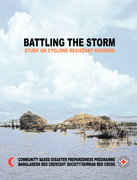
The coastal regions of Bangladesh are hit by cyclones regularly. The country has evolved, in the face of repetitious calamities, a disaster preparedness programme. The major response to cyclones has been the building of cyclone shelters, which also double as community centers and schools. While thes
...
The Journal of Infectious Diseases, jiy435, https://doi.org/10.1093/infdis/jiy435.
Many outbreaks reported high proportions of infected HWs. Similar HW infection rates and exposure risk factors in both past and recent EVD and MVD outbreaks emphasize the need to improve the implementation of approp
...

Managing epidemics
recommended
Key facts about major deadly diseases.This manual provides concise and up-to-date knowledge on 15 infectious diseases that have the potential to become international threats, and tips on how to respond to each of them.
You can download an interactive version directly at the website
http://www.who.
...
Following the declaration of the 9th Ebola Disease Outbreak (EVD) on 8 May 2018 by the Democratic Republic of Congo (DRC) Ministry of Health, the WHO has raised the alert for neighbouring countries of the Democratic Republic of the Congo (DRC) which share extensive borders, hosting DRC refugees and
...

Inequality of access to palliative care and symptom relief is one of the greatest disparities in global health care (1). Currently, there is avoidable suffering on a massive scale due to lack of access to palliative care and symptom relief in low- and middle-income countries (LMICs) (1). Yet basic p
...

People younger than 20 years comprise 35% of the global population and 40% of the global population of least-developed nations. The number of children - neonates, infants, children, and adolescents up to 19 years of age - who need pediatric palliative care (PPC) each year may be as high as 21 millio
...

Humanitarian emergencies and crises (Humanitarian emergencies and crises) are large-scale events that may result in the breakdown of health care systems and society, forced displacement, death, and physical, psychological, social and spiritual suffering on a massive scale. Current responses to Human
...
Risk Communication and Community Engagement (RCCE) is an essential part of any disease outbreak response. Risk communication in the context of an Ebola outbreak refers to real time exchange of information, opinion and advice between frontline responders and people who are faced with the threat of Eb
...
The Sphere Handbook. Humanitarian Charter and Minimum Standards in Humanitarian Response. New Edition
recommended
Humanitarian Charter and Minimum Standards in Humanitarian Response.
The 2018 Sphere Handbook builds on the latest developments and learning in the humanitarian sector. Among the improvements of the new edition, readers will find a stronger focus on the role of local authorities and communities as
...