
Filter
1357
Text search:
post
covid
Featured
162
30
Language
Document type
474
417
142
120
77
37
26
19
12
11
11
5
3
Countries
121
41
38
35
35
34
31
29
27
26
25
23
22
22
19
19
17
17
16
16
16
16
15
13
12
12
11
11
10
10
9
9
8
8
7
7
6
6
6
6
6
6
6
6
5
5
5
5
4
4
4
4
4
4
4
4
4
3
3
3
3
3
3
3
3
3
3
3
3
3
3
3
3
3
3
3
2
2
2
2
2
2
2
2
2
2
2
2
2
2
2
1
1
1
1
1
1
1
1
1
1
1
1
1
1
1
1
1
1
1
1
1
1
1
1
1
1
1
1
1
1
1
Authors & Publishers
Publication Years
Category
543
69
61
53
44
23
15
2
Toolboxes
704
83
62
53
45
43
42
29
28
24
23
20
20
19
16
10
8
5
4
1
1
1
scientific brief, 2 March 2022
The pandemic has emphasized the high risk of avoidable harm to patients, health workers, and the general public, and has identified a range of safety gaps across all core components of health systems at all levels.
The rapid review ‘Implications of the
...
Update, 23 de junio de 2022
Declarations of interests were collected from all external contributors and assessed for any conflicts of interest. Summaries of the reported interests can be found on the SAGE meeting website and SAGE Covid-19 Working Group webpage. This guidance s
...
The aim of this brief is to ensure that the COVID-19 pandemic does not disrupt the supply of and demand generation for condoms. Sexual relations may be transformed in the new context of the pandemic, but they have not stopped. While access to male a
...
The guidance provides critical considerations and practical checklists to keep schools safe. It also advises national and local authorities on how to adapt and implement emergency plans for educational facilities.
In the event of school closures, the guidance includes recommendations to mitigate
...
Risk Communication and Community Engagement (RCCE) is an essential component of your health emergency preparedness and response action plan. This tool is designed to support risk communication, community engagement staff and responders working with national health authorities, and other partners to
...
Los servicios de emergencias médicas prehospitalarias (SEM) facilitan atención inicial de soporte vital básico y/o avanzado y traslado de heridos o enfermos desde el lugar donde ocurre la emergencia hasta el centro sanitario donde le van a prestar cuidados definitivos. Los SEM también pueden pre
...
Interim Version 24, February 2020
This checklist has been prepared with the aim of supporting hospital managers and emergency planners in achieving the above by defining and initiating actions needed to ensure a rapid response to the COVID-19 out
...
How we respond both now and going forward will help mitigate the impact of COVID-19, and to the extent possible preserve children’s rights to Survive, Learn, and Be Protected. We will focus our efforts on the most critical work essential to mainta
...
A Step-by-Step, Research-Informed and Faith-Based Planning Manual
The protection of children and educational facilities is particularly important. Precautions are necessary to prevent the potential spread of COVID-19 in school settings; however, care must also be taken to avoid stigmatizing students and staff who
...
FAO’s component of the Global COVID-19 Humanitarian Response Plan
18.5.2020
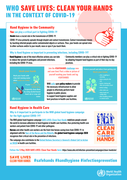
Hand Hygiene is one of the most effective actions to reduce the spread of pathogens and prevent infections, including the COVID-19 virus. This document promotes the WHO global hand hygiene campaign SAVE LIVES: Clean Your Hands in the context of othe
...
Operational considerations for case management of COVID-19 in health facility and community
recommended
This document is intended to guide the care of COVID-19 patients as the response capacity of health systems is challenged; to ensure that COVID-19 patients can access life-saving treatment, without
...

UNFPA aims to achieve three world-changing results by 2030, the deadline for achieving the Sustainable Development Goals. These are: Ending unmet need for family planning, ending gender-based violence including harmful practices such as female genital mutilation and child marriage, and ending all pr
...
