
Filter
514
Text search:
planetary
Featured
16
14
Language
Document type
318
46
25
25
19
18
17
14
11
10
6
3
2
Countries
52
6
5
5
4
4
3
3
3
2
2
2
2
2
1
1
1
1
1
1
1
1
1
1
1
1
1
1
1
1
1
1
1
1
1
1
Authors & Publishers
Publication Years
Category
35
30
14
2
2
2
1
Toolboxes
431
35
19
9
9
6
4
2
2
2
2
1
1
1
1
Antimicrobial resistance (AMR) has emerged as a major public health concern, around which the international leadership has come together to form strategic partnerships and action plans. The main driving force behind the emergence of AMR is selection pressure created due to consumption of antibiotics
...

BACKGROUND: Growing political attention to antimicrobial resistance (AMR) offers a rare opportunity for achieving meaningful action. Many governments have developed national AMR action plans, but most have not yet implemented policy interventions to reduce antimicrobial overuse. A systematic evidenc
...
Why does WHO consider air pollution a public health emergency? If you live in highly polluted areas does COVID-19 affect you differently? WHO’s Dr Maria Neira explains in Science in 5.
Research Programme on Religious Communities and Sustainable Development Humboldt-Universität zu Berlin
The Living Planet Index is the biodiversity metric that always claims the headlines. It’s often misinterpreted. How should we understand it?
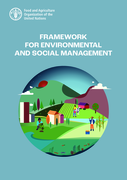
The Food and Agriculture Organization of the United Nations (FAO) launched a new Framework for Environmental and Social Management (FESM) to ensure that both people and the environment are protected from any potential impacts of FAO programmes and projects.
“This Framework ensures that our proj
...

In the spirit of the Sustainable Development Goals, WHO and the International Labour Organization (ILO) produce the WHO/ILO Joint Estimates of the Work-related Burden of Disease and Injury (WHO/ILO Joint Estimates). The WHO/ILO Joint Estimates quantify the population exposed to occupational risk fac
...
Analysis on World about Agriculture, Food and Nutrition and more; published on 23 Sep 2021 by ECA, ECLAC and 3 other organizations

Rapport spécial du GIEC sur le changement climatique,
la désertification, la dégradation des sols, la gestion durable
des terres, la sécurité alimentaire et les flux de gaz à effet de
serre dans les écosystèmes terrestres

Relatório especial do IPCC sobre mudança do clima,
desertificação, degradação da terra, manejo sustentável da
terra, segurança alimentar, e fluxos de gases de efeito estufa
em ecossistemas terrestres
En esta publicación se presenta un método integral para brindar apoyo a los Estados Miembros de la Organización Panamericana de la Salud (OPS) en la preparación para la respuesta a los riesgos para la salud relacionados con el calor en la Región de las Américas. Se basa en los documentos de al
...
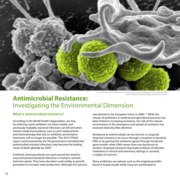
In this edition, the Antimicrobial Resistance chapter discusses the growing, dangerous trend of antimicrobial resistance and the potential catastrophic consequences on global health.
Chapter 1 of Frontier 2017: Emerging Issues of Environmental Concern
A summary of what we know

The 20th century was a period of unprecedented ecological change, with dramatic reductions in natural ecosystems and biodiversity and equally dramatic increases in people and domestic animals. Never before have so many animals been kept by so many people—and never before have so many opportunities
...
Proc Natl Acad Sci U S A v.110(21); 2013 May 21 PMC3666729 ;
A systematic review was conducted by a multidisciplinary team to analyze qualitatively best available scientific evidence on the effect of agricultural intensification and environmental changes on the risk of zoonoses for which there are
...
Current evidence that the climate is changing is overwhelming. Impacts of climate change and variability are being observed: more intense heat-waves, fires and floods; and increased prevalence of food- water- and vector-borne diseases. Climate change will put pressure on environmental and health det
...

The main message emerging from this new comprehensive global assessment is that premature death and disease can be prevented through healthier environments – and to a significant degree. Analysing the latest data on the environment-disease nexus and the devastating impact of environmental hazards
...

En 2015, 26 % des décès de 5,9 millions d'enfants de moins de cinq ans auraient pu être évités si les facteurs de risque
environnementaux avaient été pris en compte – cette possibilité manquée de sauver des vies est révoltante. La période prénatale
et de la petite enfance constitue u
...

In 2015, 26% of the deaths of 5.9 million children who died before reaching their fifth birthday could have been prevented
through addressing environmental risks – a shocking missed opportunity. The prenatal and early childhood period represents
a window of particular vulnerability, where enviro
...

PlosOne December 10, 2014 https://doi.org/10.1371/journal.pone.0111913
Plastic pollution is ubiquitous throughout the marine environment, yet estimates of the global abundance and weight of floating plastics have lacked data, particularly from the Southern Hemisphere and remote regions. Here we re
...
