
Filter
499
Text search:
Zhang,
X.
Featured
47
53
Language
Document type
153
150
138
25
20
7
3
1
1
1
Countries
26
25
18
11
11
9
9
8
7
7
7
7
7
6
6
6
6
5
5
5
4
4
4
4
4
3
3
3
3
3
3
3
2
2
2
2
2
2
2
2
2
2
2
2
2
2
2
2
2
2
2
2
1
1
1
1
1
1
1
1
1
1
1
1
1
1
1
1
1
1
1
1
1
1
1
1
1
1
1
1
1
1
1
1
1
1
1
1
1
1
1
Authors & Publishers
Publication Years
Category
149
41
38
14
5
5
2
Toolboxes
180
40
33
32
32
21
17
16
14
9
8
7
7
6
5
4
3
2
1
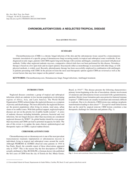
Chromoblastomycosis (CMB) is a chronic fungal infection of the skin and the subcutaneous tissue caused by a transcutaneous traumatic inoculation of a specific group of dematiaceous fungi occurring mainly in tropical and subtropical zones worldwide. If not diagnosed at early stages, patients with CBM
...
Several Public Health Services and general practitioners in the Netherlands observed an increase in scabies in the Netherlands. Since individual cases of scabies are not notifiable in the Netherlands, the epidemiological situation is mostly unknown. To investigate the scabies incidence in the Nether
...
Snakebite envenoming affects millions of people worldwide annually and is a significant source of mortality. Preventing and treating the problem is complex and requires collaboration among the fields of public health, medicine, ecology, and laboratory science. After being removed from the category A
...
In 2014, an estimated 40 million women of reproductive age were infected with Schistosoma haematobium, S. japonicum and/or S. mansoni. In both 2003 and 2006, the World Health Organization (WHO) recommended that all schistosome-infected pregnant and breastfeeding women be offered treatment, with praz
...
Physical activity plays an important role in the care of people living type 2 diabetes. Regular physical
activity can help reduce some of the harmful effects and slow or even reverse disease progression.
Being active can also reduce symptoms of depression and anxiety, and enhance thinking, learnin
...
The publication of the of the Antimicrobial Treatment Guidelines represents the
culmination of the efforts of the Antimicrobial Stewardship Program of ICMR to publish treatment guidelines for common syndromes in India. These guidelines are targeted for the health care settings. It aims to rationali
...
Chagas disease is currently endemic and also predicted to be at increased transmission risk under future climate change scenarios. Similarly, an expansion of areas in the United States at increased risk for Chagas disease transmission is also expected over the next several decades under climate chan
...
COVID-19 has altered health sector capacity in low-income and middle-income countries (LMICs). Cost data to inform evidence-based priority setting are urgently needed. Consequently, in this paper, we calculate the full economic health sector costs of COVID-19 clinical management in 79 LMICs under di
...
La prévalence de la covid -19 chez la femme enceinte et les accouchées semble être faible. Elles étaient asymptomatiques et le pronostic maternel était satisfaisant. Néanmoins, le risque de for.pdf
We combine data on Chinese development projects with data from Demographic and Health Surveys to study the impact of Chinese aid on household welfare in sub-Saharan Africa. We use a novel methodology to test the effect of Chinese aid on three important development outcomes: education, health, and nu
...
Developmental disabilities are common. Yet, children with developmental disabilities have been neglected in health systems planning and policy provisions for health and continue to experience stigmatization, institutionalization, barriers to access health care and inequalities in health and educatio
...
Cardiovascular disease (CVD) is the leading cause of global deaths, with the majority occurring in low- and middle-income countries (LMIC). The primary and secondary prevention of CVD is suboptimal throughout the world, but the evidence-practice gaps are much more pronounced in LMIC. Barriers at the
...
ABSTRACT
More than 500 million people worldwide live with cardiovascular disease (CVD). Health systems today face fundamental challenges in delivering optimal care due to ageing populations, healthcare workforce constraints, financing, availability and affordability of CVD medicine, and service del
...
In 2012, all Member States of the World Health Organization (WHO) endorsed a historical target to reduce premature mortality from noncommunicable diseases
(NCD). This commitment was echoed in 2015 by the United Nations Sustainable Development Goals, which included a target to reduce premature morta
...
The World Heart Federation (WHF) commenced a Roadmap initiative in 2015 to reduce the global burden of cardiovascular disease and resultant burgeoning of healthcare costs. Roadmaps provide a blueprint for implementation of priority solutions for the principal cardiovascular diseases leading to death
...
Background
Cardiovascular diseases (CVDs) are one of the global leading causes of concern due to the rising prevalence and consequence of mortality and disability with a heavy economic burden. The objective of the current study was to analyze the trend in CVD incidence, mortality, and mortality-to-
...

Non-communicable diseases (NCDs) are the second common cause of death in sub-Saharan Africa (SSA) accounting for about 35% of all deaths, after a composite of communicable, maternal, neonatal, and nutritional diseases. Despite prior perception of low NCDs mortality rates, current evidence suggests t
...
The cardiovascular disease continuum begins with risk factors such as diabetes mellitus (DM), progresses to vasculopathy and myocardial dysfunction, and finally ends with cardiovascular death. Diabetes is associated with a 2- to 4-fold increased risk for heart failure (HF). Moreover, HF patients wit
...
Cardiovascular diseases (CVDs) have collectively remained the leading causes of death worldwide and substantially contribute to loss of health and excess health system costs. The Global Burden of Diseases, Injuries, and Risk Factors (GBD) Study has tracked trends in death and disability since 1990 a
...
Objective: To identify gaps in national stroke guidelines that could be bridged to enhance the quality of stroke care services in low- and
middle-income countries.
Methods: We systematically searched medical databases and websites of medical societies and contacted international organizations.
Co
...
