
Filter
460
Text search:
M.
Cotton
Featured
Recommendations
66
New Publications
113
Language
Document type
No document type
283
Guidelines
64
Studies & Reports
47
Manuals
37
Fact sheets
10
Training Material
8
Strategic & Response Plan
5
Infographics
3
Situation Updates
2
Brochures
1
Countries / Regions
India
42
Uganda
16
Kenya
13
Global
13
Nigeria
12
South Africa
12
Sierra Leone
9
Ethiopia
9
Africa
9
Liberia
8
Nepal
8
Ghana
6
Myanmar / Burma
6
Guinea
5
Bangladesh
5
Burkina Faso
4
Tanzania
4
Yemen
4
Senegal
3
Zimbabwe
3
Haiti
3
Zambia
3
Syria
3
Rwanda
3
Malawi
3
Argentina
3
Ukraine
3
Middle East and North Africa
3
Western and Central Europe
3
Paraguay
3
Russia
3
Congo, Democratic Republic of
2
Cameroon
2
Philippines
2
Pakistan
2
Cambodia
2
Indonesia
2
Namibia
2
West and Central Africa
2
Asia
2
Eastern Europe
2
Tajikistan
2
Vietnam
2
Mali
1
Côte d’Ivoire / Ivory Coast
1
Somalia
1
South Sudan
1
Iraq
1
Afghanistan
1
Germany
1
Chad
1
Thailand
1
Mozambique
1
Papua New Guinea
1
Sudan
1
Eswatini/ Swaziland
1
Brazil
1
Colombia
1
Angola
1
Lesotho
1
East and Southern Africa
1
South–East Asia Region
1
Latin America and the Carribbean
1
Eastern Europe and Central Asia
1
Laos
1
Georgia
1
France
1
Authors & Publishers
Publication Years
Category
Countries
179
Clinical Guidelines
76
Key Resources
25
Public Health
24
Pharmacy & Technologies
19
Women & Child Health
17
Capacity Building
10
Toolboxes
HIV
39
TB
37
COVID-19
34
Rapid Response
22
NTDs
20
Planetary Health
19
Ebola
14
Caregiver
14
Cholera
12
Disability
11
Mental Health
11
Pharmacy
11
Conflict
10
NCDs
8
AMR
7
Natural Hazards
6
Refugee
5
Global Health Education
2
Polio
1
Zika
1
Specific Hazards
1
Social Ethics
1
Health Financing Toolbox
1
Accessed on 20.08.2022#
Actualización en Profilaxis Post Exposición (PPE) en Niños, Niñas y Adolescentes
This profile is part of a series of Climate Risk Country Profiles developed by the World Bank Group (WBG). The country profile synthesizes most relevant data and information on climate change, disaster risk reduction, and adaptation actions and policies at the country level. The country profile seri
...
This profile is part of a series of Climate Risk Country Profiles developed by the World Bank Group (WBG). The country profile
synthesizes most relevant data and information on climate change, disaster risk reduction, and adaptation actions and policies
at the country level. The country profile se
...
It explains the importance of faecal sludge management in urban areas in which many people rely on on-site and decentralized sanitation facilities and emphasizes the place of treatment in the overall sanitation service chain. It defines terms used throughout the book, explains why faecal sludge and
...
The meeting was held from 26 to 27 March 2018 to review and discuss the following topics:
Advances and challenges in the use of fTLC, and new approaches to detecting mycolactone using monoclonal antibodies (mAbs).
The status of development of rapid diagnostic tests (RDTs) targeting the MUL
...
The document explains why vector control is important in national programmes and describes the preparation of a tailor-made vector control plan for national programmes. It outlines entomological procedures for regular and specific vector control and how data should be analysed for better overall und
...
Kangaroo mother care: a practical guide
recommended
Kangaroo mother care is a method of care of preterm infants. The method involves infants being carried, usually by the mother, with skin-to-skin contact. This guide is intended for health professionals responsible for the care of low-birth-weight and preterm infants. Designed to be adapted to local
...
Government of Nepal has an obligation to ensure availability of affordable and high quality basic health care services to its population
This manual provides a framework for morbidity management and disability prevention of patients affected by NIDs and gives specific guidance for the proper care of patients suffering from chronic conditions caused by lymphatic filariasis, leprosy, trachoma, and Chagas disease. It is intended to be u
...
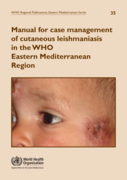
This publication represents a key step forward in translating Control of the leishmaniases (WHO Technical Report Series, No. 949) into a more practical tool for health personnel directly involved in the case management of cutaneous leishmaniasis. With this manual, countries will have, for the first
...
Sleeping sickness is controlled by case detection and treatment but this often only reaches less than 75% of the population. Vector control is capable of completely interrupting HAT transmission but is not used because of expense. We conducted a full scale field trial of a refined vector control tec
...

Dracunculiasis (Guinea worm disease), caused by the parasite Dracunculus medinensis, is traditionally acquired by drinking water containing copepods (water fleas) infected with D. medinensis larvae, but in recent years also appears increasingly to be transmitted by eating fish or other aquatic anima
...
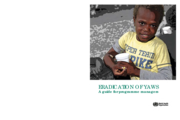
Yaws is a disfiguring non-venereal disease caused by infection with the spirochaete. Treponema pallidum subspecies pertenue which is closely related to the causative agent of syphilis and those of the other endemic treponematoses, bejel and pinta. The disease is endemic in certain areas of the World
...
As of 12 December 2022, over 645 million people worldwide have been diagnosed with COVID-19, with over 6.6 million deaths (4).
The Omicron variant, which emerged in late November 2021, and its subvariants, are now the dominant circulating viruses, contributing to the ongoing surge in several countr
...
Cervical cancer is the fourth most common cancer in women worldwide in 2018, with 570,000 new cases and 311,000 deaths occurring annually.T he highest incidence rates are in Southern Africa, Eastern Africa, SubSaharan Africa, Western Africa, Melanesia, and Middle Africa . It also ranks as the leadin
...
The WHO COVID-19 Clinical management: living guidance contains the most up-to-date recommendations for the clinical management of people with COVID-19. Providing guidance that is comprehensive and holistic for the optimal care of COVID-19 patients throughout their entire illness is important.
Diphtheria is caused by Corynebacterium species, mostly by toxin-producing Corynebacterium diphtheriae and rarely by toxin-producing strains of C. ulcerans and C. pseudotuberculosis. The most common type of diphtheria is classic respiratory diphtheria, whereby the exotoxin produced characteristicall
...
Comprehensive Primary Health Care has an important role in the primary and secondary prevention of several disease conditions, including non-communicable diseases which today contribute to over 60% of the mortality in India. The provision of Comprehensive primary health care reduces morbidity, disab
...
Cardiovascular diseases (CVDs) are a growing public health problem in Ghana and other African countries. Strokes and other CVDs have become a leading cause of death due to increasing risk factors such as hypertension. According to the Global Burden of Disease study (GBD), ischaemic heart disease was
...
The article discusses the significant impact of chronic obstructive pulmonary disease (COPD) as a global health issue, with cigarette smoking as the main risk factor. However, in developing countries, the causes of COPD are often multifactorial, involving environmental tobacco smoke, biomass fuel sm
...
