Filter
478
Text search:
Ebola
must
Go
Featured
Recommendations
43
New Publications
157
Language
Document type
No document type
257
Studies & Reports
91
Guidelines
56
Manuals
36
Strategic & Response Plan
21
Fact sheets
9
Training Material
5
Situation Updates
2
Infographics
1
Countries / Regions
Sierra Leone
73
Liberia
71
Global
30
Guinea
26
Nigeria
16
Congo, Democratic Republic of
16
Uganda
11
Rwanda
10
Kenya
9
West and Central Africa
9
Ghana
8
Bangladesh
6
Western and Central Europe
6
Myanmar / Burma
5
East and Southern Africa
5
Latin America and the Carribbean
5
Ethiopia
4
Nepal
4
Syria
4
South Africa
4
Middle East and North Africa
4
Senegal
3
India
3
South Sudan
3
Tanzania
3
Malawi
3
Ukraine
3
Africa
3
Mali
2
Côte d’Ivoire / Ivory Coast
2
Niger
2
Zimbabwe
2
Haiti
2
Zambia
2
Cambodia
2
Mozambique
2
Central African Republic
2
Angola
2
South–East Asia Region
2
Eastern Europe and Central Asia
2
Vietnam
2
Burkina Faso
1
USA
1
Saudi Arabia
1
Cameroon
1
Pakistan
1
Jordan
1
Afghanistan
1
Germany
1
Lebanon
1
Chad
1
China
1
Sudan
1
Namibia
1
Colombia
1
Botswana
1
Yemen
1
Western Pacific Region
1
Asia
1
Venezuela
1
Eastern Europe
1
Laos
1
Moldova
1
Authors & Publishers
Publication Years
Category
Countries
107
Key Resources
23
Public Health
20
Clinical Guidelines
19
Women & Child Health
19
Capacity Building
7
Pharmacy & Technologies
6
Annual Report MEDBOX
1
General Guidelines
1
Toolboxes
Ebola
140
COVID-19
96
Rapid Response
28
Mental Health
20
Global Health Education
18
Conflict
15
Planetary Health
14
HIV
12
Health Financing Toolbox
10
AMR
9
Caregiver
9
Refugee
7
Disability
6
Natural Hazards
6
Specific Hazards
5
Pharmacy
4
TB
3
Polio
2
Social Ethics
2
NTDs
2
Cholera
1
Zika
1
This brief document compiles existing material related to mental health and psychosocial support (MHPSS) for the COVID-19 crisis, as well as other resources that can be applicable to the context. Documents are divided into different sections, based on the ‘’spaces of new vulnerability” inheren
...
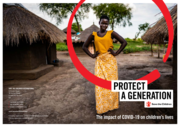
An estimated 99% of children worldwide – or more than 2.3 billion children – live in one of the 186 countries that have implemented some form of restrictions due to COVID-191. Although children are not at a high risk of direct harm from the virus, they are disproportionately affected by its hid
...

Conflict, in its active or latent forms, is everywhere. The COVID-19 pandemic has demonstrated that public health emergencies can strike any country at any time. Given the universality of and interconnections between conflict, humanitarian crises, and public health emergencies, practitioners trained
...
This report presents examples from different agencies on how they approached community engagement in their Covid-19 responses, the tools and methodologies used, as well as the challenges they encountered and how they attempted to overcome these. It discusses what community engagement means to the va
...
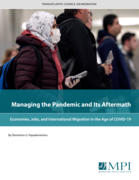
The COVID-19 pandemic’s immediate costs, measured in lives lost and damaged, have been appalling and continue to rise. In addition, its effects on individuals’ livelihoods and economies around the world have been deep and are likely to be long lasting. While saving lives was the near-exclusive f
...
This document draws on scientific evidence from the COVID-19 pandemic and from prior public health research on behaviour change, with the purpose of empowering African Union Member States to promote widespread adoption of masks in the general population. This document complements existing Africa CDC
...
State of Health in the EU Cycle.
With the coronavirus (COVID-19) once again spreading rapidly, and the re-introduction of containment measures to flatten the curve of the epidemic, it is crucial for policymakers to plan effective strategies to re-open their economies to avoid further re-confinement
...
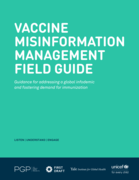
Guidance for addressing a global infodemic and fostering demand for immunization
December 2020
Misinformation threatens the success of vaccination programs across the world. This guide aims to help organizations to address the global infodemic through the development of strategic and well-coordina
...
COVID-19 has heavily emphasized how contact tracing is crucial for managing outbreaks, and as part of the strategy for adjusting, and eventually lifting, lockdowns and other stringent public health and social measures. As the pandemic develops further, it will be a core measure to manage further wav
...

Developing countries face disastrous healthcare setbacks, hunger and huge international debt as covid-19’s ‘final wave’
Aviation plays an important role in humanitarian operations around the world, especially in countries where overland transport is difficult or impossible due to insecurity, damaged or inadequate infrastructure, and challenging climatic conditions. Aviation allows the transport of humanitarian aid wo
...
Wie die Corona-Pandemie soziale Ungleichheit verschärft und warum wir unsere Wirtschaft gerechter gestalten müssen
A wide range of potential enablers and barriers were identified for influencing progress for the scale-up of severe wasting services within national health systems. Findings were categorised according to the six pillars of WHO’s health system strengthening framework.
In the present report, the Special Rapporteur on the sale and sexual exploitation of children, including child prostitution, child pornography and other child sexual abuse material, Mama Fatima Singhateh, focuses on the impact of the coronavirus disease (COVID-19) p
...
Updated May 2021
Almost two years after the signing of the Political Accord for Peace and Reconciliation (APPR), the Central African population is still hostage to an unstable and unpredictable security environment. Continuing conflicts in several areas of the country, structural weaknesses combined with the socio-e
...
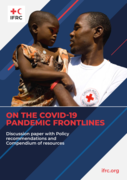
The primary audience of this report with the compendium of resources are youth engagement practitioners in the Red Cross Red Crescent National Societies as well as technical experts and policy makers across the humanitarian landscape that thrive for meaningful interventions with and for children, ad
...
This report is the first of its kind. It brings together various data sets to present the current status of hand hygiene, highlight lagging progress, and call governments and supporting agencies to action, offering numerous inspiring examples of change.
During the COVID-19 pandemic, hand hygiene
...