
Filter
507
Text search:
violent
deaths
Featured
34
158
Language
Document type
324
93
32
15
15
10
9
6
2
1
Countries
23
16
16
15
15
12
12
12
11
10
10
9
8
8
8
8
7
6
6
6
6
6
5
5
5
5
5
4
4
4
4
4
4
3
3
3
3
3
3
3
2
2
2
2
2
2
2
2
2
2
2
2
2
2
1
1
1
1
1
1
1
1
1
1
1
1
1
1
1
1
1
1
1
1
1
1
1
1
1
1
1
1
1
1
1
1
1
1
Authors & Publishers
Publication Years
Category
166
29
24
23
15
6
1
Toolboxes
92
48
40
33
24
24
18
16
15
11
8
7
6
5
4
4
2
2
2
1
1
1
1
The Gap Report 2014
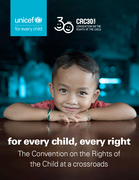
Thirty years ago, the United Nations General Assembly adopted the Convention on the Rights of the Child at a moment of rapid global change marked by the end of apartheid, the fall of the Berlin Wall and the birth of the World Wide Web. These developments and more brought momentous and lasting evolut
...
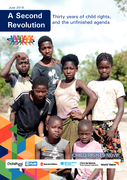
The report showed commitments made three decades ago to protect the rights of children remain unfulfilled for millions. Violence still affects countless children. Discrimination based on age, gender, disability, sexual orientation and religion harms children worldwide.
Key factors include a lack
...
Overwhelming evidence shows that a range of health concerns—mental illness, substance dependence, HIV/AIDS, and noncommunicable diseases—affect prisoners disproportionately. But, while incarceration poses risks to health—including inadequate nutrition and exposure to violence—prisons also pr
...
This publication provides a practical tool to support countries in strengthening surveillance of WASH in schools. The findings will inform the development of supportive regulations and improvement planning to safeguard children’s health, well-being, dignity and cognitive performance. The tool also
...
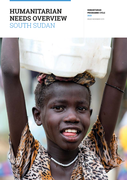
Context and impact of the crisis
A year after the signing of the Revitalized Agreement on the Resolution of the Conflict in South Sudan (R-ARCSS),1 the ceasefire holds in most parts of the country. Armed conflict between State security forces and opposition armed groups has been contained to a sma
...
The present report is based on a longitudinal analysis of assessments on mixed migration routes and dynamics, conducted over the course of 2018. It is based on six rapid thematic studies, conducted over the course of 2018, as well as a longitudinal analysis of changes in mixed migration routes and d
...
La violencia contra las mujeres y las niñas es generalizada en la Región de las Américas, y tiene enormes consecuencias para su salud y bienestar, así como el de sus familias y sus comunidades. Se trata de un costo inaceptable que puede ser prevenido mediante acciones basadas en la evidencia, pr
...
In 1998 the Swedish Veterinary Association decided to adopt a general policy for the use of antibiotics in animals. Since then specifi c policies for the use of antibiotics in dogs and cats have been adopted and in 2011 Guidelines for the use of Antibiotics in Production animals – Cattle and Pigs,
...
First published in 2020, this toolkit is intended for clinicians working in acute care, managing adult and paediatric patients with acute respiratory infection, including severe pneumonia, acute respiratory distress syndrome, sepsis and septic shock. The main objective is to provide key tools for us
...
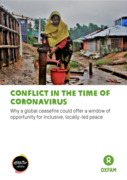
The equation is simple: we cannot effectively respond to a global pandemic when millions of people are still caught in warzones. We cannot treat sick people when hospitals are being bombed, or prevent the spread of coronavirus when tens of millions are forced to flee from violence. We must have a gl
...
It is too early to know the full impact of COVID-19 on Africa. To date the experience has been varied. There are causes for concern, but also reasons for hope. Early estimates were pessimistic regarding the pandemic’s impact on the continent. But the relatively low numbers of COVID-19 cases report
...
PERC produces regional and member state situation analyses, updated regularly.
PERC produces regional and member state situation analyses, updated regularly.
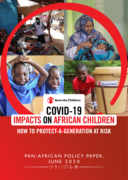
This policy paper underscores that, although children do not represent a high-risk group for direct COVID-19 fatality, the pandemic posts far-reaching secondary impacts that heighten risks to African children’s rights and wellbeing.
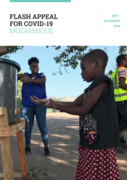
The first case of COVID-19 was reported in Mozambique on 22 March 2020. As of 26 May, Mozambique had 194 confirmed cases of COVID-19, of which 168 were locally transmitted. The country’s capital, Maputo, and the province of Cabo Delgado are currently the epicentres of the outbreak in Mozambique, w
...
As this report shows,
reports of child abuse and of children
witnessing violence between their
parents and caregivers have increased.
Ending violence against children is
increasingly within our reach. D
This technical guidance outlines current evidence, knowledge and best practice relating to incidences of violence and injuries among refugees and migrants in the WHO European Region. It highlights key principles, summarizes priority actions and challenges, maps existing international commitments and
...
This Interim Guidance outlines how key public health and social measures needed to reduce the risk of COVID-19 spread and the impact of the disease can be adapted for use in low capacity and humanitarian settings. The recommendations outlined here need to be adjusted to the scale of transmission, co
...
