
Filter
2362
Text search:
political
agenda
Featured
141
669
Language
2290
71
69
42
34
25
22
20
4
3
2
2
2
2
2
2
1
1
1
1
1
1
1
1
1
1
1
1
1
1
1
1
1
1
1
Document type
1371
530
151
149
96
22
16
12
6
5
4
Countries
154
55
54
50
48
46
46
44
42
42
41
39
38
37
36
34
30
28
27
27
26
23
21
21
20
19
16
16
15
15
14
14
14
14
13
13
12
12
11
10
10
10
9
9
9
9
9
8
8
8
8
7
7
7
6
6
6
6
5
5
5
5
4
4
4
4
3
3
3
3
3
3
3
3
3
3
2
2
2
2
2
2
2
2
2
2
2
2
2
1
1
1
1
1
1
1
1
1
1
1
1
1
1
1
1
1
1
1
1
1
1
1
1
1
1
1
Authors & Publishers
278
94
93
86
86
85
48
24
21
19
17
15
13
13
12
11
11
11
11
11
10
10
9
9
9
9
9
9
8
8
8
8
8
8
8
8
7
7
7
7
7
7
7
7
7
7
7
6
6
6
6
6
6
6
6
6
6
5
5
5
5
5
5
5
5
5
5
5
5
5
5
5
5
5
5
4
4
4
4
4
4
4
4
4
4
4
4
4
4
4
4
4
4
4
4
4
4
4
4
4
4
4
4
4
3
3
3
3
3
3
3
3
3
3
3
3
3
3
3
3
3
3
3
3
3
3
3
3
3
3
3
3
3
3
3
3
3
3
3
3
3
3
3
3
3
3
3
3
3
3
3
3
3
3
3
3
3
2
2
2
2
2
2
2
2
2
2
2
2
2
2
2
2
2
2
2
2
2
2
2
2
2
2
2
2
2
2
2
2
2
2
2
2
2
2
2
2
2
2
2
2
2
2
2
2
2
2
2
2
2
2
2
2
2
2
2
2
2
2
2
2
2
2
2
2
2
2
2
2
2
2
2
2
2
2
2
2
2
2
2
2
2
2
2
2
2
2
2
2
2
2
2
2
2
2
2
2
2
2
2
2
2
2
2
2
2
2
2
2
2
2
2
2
2
2
2
2
2
2
2
2
2
2
2
2
2
2
2
2
2
2
2
2
2
1
1
1
1
1
1
1
1
1
1
1
1
1
1
1
1
1
1
1
1
1
1
1
1
1
1
1
1
1
1
1
1
1
1
1
1
1
1
1
1
1
1
1
1
1
1
1
1
1
1
1
1
1
1
1
1
1
1
1
1
1
1
1
1
1
1
1
1
1
1
1
1
1
1
1
1
1
1
1
1
1
1
1
1
1
1
1
1
1
1
1
1
1
1
1
1
1
1
1
1
1
1
1
1
1
1
1
1
1
1
1
1
1
1
1
1
1
1
1
1
1
1
1
1
1
1
1
1
1
1
1
1
1
1
1
1
1
1
1
1
1
1
1
1
1
1
1
1
1
1
1
1
1
1
1
1
1
1
1
1
1
1
1
1
1
1
1
1
1
1
1
1
1
1
1
1
1
1
1
1
1
1
1
1
1
1
1
1
1
1
1
1
1
1
1
1
1
1
1
1
1
1
1
1
1
1
1
1
1
1
1
1
1
1
1
1
1
1
1
1
1
1
1
1
1
1
1
1
1
1
1
1
1
1
1
1
1
1
1
1
1
1
1
1
1
1
1
1
1
1
1
1
1
1
1
1
1
1
1
1
1
1
1
1
1
1
1
1
1
1
1
1
1
1
1
1
1
1
1
1
1
1
1
1
1
1
1
1
1
1
1
1
1
1
1
1
1
1
1
1
1
1
1
1
1
1
1
1
1
1
1
1
1
1
1
1
1
1
1
1
1
1
1
1
1
1
1
1
1
1
1
1
1
1
1
1
1
1
1
1
1
1
1
1
1
1
1
1
1
1
1
1
1
1
1
1
1
1
1
1
1
1
1
1
1
1
1
1
1
1
1
1
1
1
1
1
1
1
1
1
1
1
1
1
1
1
1
1
1
1
1
1
1
1
1
1
1
1
1
1
1
1
1
1
1
1
1
1
1
1
1
1
1
1
1
1
1
1
1
1
1
1
1
1
1
1
1
1
1
1
1
1
1
1
1
1
1
1
1
1
1
1
1
1
1
1
1
1
1
1
1
1
1
1
1
1
1
1
1
1
1
1
1
1
1
1
1
1
1
1
1
1
1
1
1
1
1
1
1
1
1
1
1
1
1
1
1
1
1
1
1
1
1
1
1
1
1
1
1
1
1
1
1
1
1
1
1
1
1
1
1
1
1
1
1
1
1
1
1
1
1
1
1
1
1
1
1
1
1
1
1
1
1
1
1
1
1
1
1
1
1
1
1
1
1
1
1
1
1
1
1
1
1
1
1
1
1
1
1
1
1
1
1
1
1
1
1
1
1
1
1
1
1
1
1
1
1
1
1
1
1
1
1
1
1
1
1
1
1
1
1
1
1
1
1
1
1
1
1
1
1
1
1
1
1
1
1
1
1
1
1
1
1
1
1
1
1
1
1
1
1
1
1
1
1
1
1
1
1
1
1
1
1
1
1
1
1
1
1
1
1
1
1
1
1
1
1
1
1
1
1
1
1
1
1
1
1
1
1
1
1
1
1
1
1
1
1
1
1
1
1
1
1
1
1
1
1
1
1
1
1
1
1
1
1
1
1
1
1
1
1
1
1
1
1
1
1
1
1
1
1
1
1
1
1
1
1
1
1
1
1
1
1
1
1
1
1
1
1
1
1
1
1
1
1
1
1
1
1
1
1
1
1
1
1
1
1
1
1
1
1
1
1
1
1
1
1
1
1
1
1
1
1
1
1
1
1
1
1
1
1
1
1
1
1
1
1
1
1
1
1
1
1
1
1
1
1
1
1
1
1
1
1
1
1
1
1
1
1
1
1
1
1
1
1
1
1
1
1
1
1
1
1
1
1
1
1
1
1
1
1
1
1
1
1
1
1
1
1
1
1
1
1
1
1
1
1
1
1
1
1
1
1
1
1
1
1
1
1
1
1
1
1
1
1
1
1
1
1
1
1
1
1
1
1
1
1
1
1
1
1
1
1
1
1
1
1
1
1
1
1
1
1
1
1
1
1
1
1
1
1
1
1
1
1
1
1
1
1
1
1
1
1
1
1
1
1
1
1
1
1
1
1
1
1
1
1
1
1
1
1
1
1
1
1
1
1
1
1
1
1
1
1
1
1
1
1
1
1
1
1
1
1
1
1
1
1
1
1
1
1
1
1
1
1
1
1
1
1
1
1
1
1
1
1
1
1
1
1
1
1
1
1
1
1
1
1
1
1
1
1
1
1
1
1
1
1
1
1
1
1
1
1
1
1
1
1
1
1
1
1
1
1
1
1
1
1
1
1
1
1
1
1
1
1
1
1
1
1
1
1
1
1
1
1
1
1
1
1
1
1
1
1
1
1
1
1
1
1
1
1
1
1
1
1
1
1
1
1
1
1
1
1
1
1
1
1
1
1
1
1
1
1
1
1
1
1
1
1
1
1
1
1
1
1
1
1
1
1
1
1
1
1
1
1
1
1
1
1
1
1
1
1
1
1
1
1
1
1
1
1
1
1
1
1
1
1
1
1
1
1
1
1
1
1
1
1
1
1
1
1
1
1
1
1
1
1
1
1
1
1
1
1
1
1
1
1
1
1
1
1
1
1
1
1
1
1
1
1
1
1
1
1
1
1
1
1
1
1
1
1
1
1
1
1
1
1
1
1
1
1
1
1
1
1
1
1
1
1
1
1
1
1
1
1
1
1
1
1
1
1
1
1
1
1
1
1
1
1
1
1
1
1
1
1
1
1
1
1
1
1
1
1
1
1
1
1
1
1
1
1
1
1
1
1
1
1
1
1
1
1
1
1
1
1
1
1
1
1
1
1
1
1
1
1
1
1
1
1
1
1
1
1
1
1
1
1
1
1
1
1
1
1
1
1
1
1
1
1
1
1
1
1
1
1
1
1
1
1
1
1
1
1
1
1
1
1
1
1
1
1
1
1
1
1
1
1
1
1
1
1
1
1
1
1
1
1
1
1
1
1
1
1
1
1
1
1
1
1
1
1
1
1
1
1
1
1
1
1
1
1
1
1
1
1
1
1
1
1
1
1
1
1
1
1
1
1
1
1
1
1
1
1
1
1
1
1
1
1
1
1
1
1
1
1
1
1
1
1
1
1
1
1
1
1
1
1
1
1
1
1
1
1
1
1
1
1
1
1
1
1
1
1
1
1
1
1
1
1
1
1
1
1
1
1
1
1
1
1
1
1
1
1
1
1
1
1
1
1
1
1
1
1
1
1
1
1
1
1
1
1
1
1
1
1
1
1
1
1
1
1
1
1
1
1
1
1
1
1
1
1
1
1
1
1
1
1
1
1
1
1
1
1
1
1
1
1
1
1
1
1
1
1
1
1
1
1
1
1
1
1
1
1
1
1
1
1
1
1
1
1
1
1
1
1
1
1
1
1
1
1
1
1
1
1
1
1
1
1
1
1
1
1
1
1
1
1
1
1
1
1
1
1
1
1
1
1
1
1
1
1
1
1
1
1
1
1
1
1
1
1
1
1
1
1
1
1
1
1
1
1
1
1
1
1
1
1
1
1
1
1
1
1
1
1
1
1
1
1
1
1
1
1
1
1
1
1
1
1
1
1
1
1
1
1
1
1
1
1
1
1
1
1
1
1
1
1
1
1
1
1
1
1
1
1
1
1
1
1
1
1
1
1
1
1
1
1
1
1
1
1
1
1
1
1
1
1
1
1
1
1
1
1
1
1
1
1
1
1
1
1
1
1
1
1
1
1
1
1
1
1
1
1
1
1
1
1
1
1
1
1
1
1
1
1
1
1
1
1
1
1
1
1
1
1
1
1
1
1
1
1
1
1
1
1
1
1
1
1
1
1
1
1
1
1
1
1
1
1
1
1
1
1
1
1
1
1
1
1
1
1
1
1
1
1
1
1
1
1
1
1
1
1
1
1
1
1
1
1
1
1
1
1
1
1
1
1
1
1
1
1
1
1
1
1
1
1
1
1
1
1
1
1
1
1
1
1
1
1
1
1
1
1
1
1
1
1
1
1
1
1
1
1
1
1
1
1
1
1
1
1
1
1
1
1
1
1
1
1
1
1
1
1
1
1
1
1
1
1
1
1
1
1
1
Publication Years
1
637
1559
158
5
1
1
Category
820
187
127
102
76
36
4
3
1
Toolboxes
195
187
160
153
121
106
94
73
66
55
53
52
44
44
39
35
23
18
15
8
7
7
5
1
1
Unchecked inequality and failure to protect the rights of poorest women could undermine peace and world’s development goals, new UNFPA report warns:
- Only about half of the world’s women hold paid jobs
- Globally, women earn 77 per cent of what men get
- Three in five women worldwide lack m
...
aternity leave, many pay "motherhood penalty"
The report is also available in French: https://www.unfpa.org/sites/default/files/sowp/downloads/UNFPA_PUB_2017_FR_swop_Etat_de_la_population_mondiale.pdf; in Spanish: https://www.unfpa.org/sites/default/files/sowp/downloads/UNFPA_PUB_2017_ES_SWOP_Estado_de_la_Poblacion_Mundial.pdf; in Russian: https://www.unfpa.org/sites/default/files/sowp/downloads/UNFPA_PUB_2017_RU_SWOP_NARODONASELENIE_MIRA_V_2017_GODU.pdf and in Arabic: https://www.unfpa.org/sites/default/files/sowp/downloads/UNFPA_PUB_2017_AR_SWOP_Hl_skn_llm_.pdf
more
CBM and the Global Campaign for Education 2014
There is a substantial and ever-increasing unmet need for rehabilitation worldwide, which is particularly profound in low- and middle
-income countries. The availability of accessible and affordable rehabilitation is necessary for many people with health conditions to remain as independent as possi
...
ble, to participate in education, to be economically productive, and fulfil meaningful life roles.
more
The 2017 Global Nutrition Report focuses on 5 key areas and finds that improving nutrition can have a powerful multiplier effect across the SDGs. Indeed, it indicates that it will be a challenge to achieve any SDG without addressing nutrition. The report shows that there is an exciting opportunity t
...
o achieving global nutrition targets while catalysing other development goals through ‘double duty’ and ‘triple duty’ actions, which tackle malnutrition and other development challenges could yield multiple benefits across the SDGs.
more
The 2017 Global Nutrition Report focuses on 5 key areas and finds that improving nutrition can have a powerful multiplier effect across the SDGs. Indeed, it indicates that it will be a challenge to achieve any SDG without addressing nutrition. The report shows that there is an exciting opportunity t
...
o achieving global nutrition targets while catalysing other development goals through ‘double duty’ and ‘triple duty’ actions, which tackle malnutrition and other development challenges could yield multiple benefits across the SDGs.
more
Third edition.
The main changes within the third edition of the JEE tool include the split of the technical area National legislation, policy, and financing into two technical areas (Legal instruments and Financing); the drop of the technical area previously titled Reporting and the move of indicat
...
ors to the technical area IHR coordination, National IHR Focal Point and advocacy; and the merging of two previous technical areas (Emergency preparedness and Emergency operations centre) into a single one named Health emergency management.
more
The Demographic Dividend study on Rwanda assessed the socio-economic and human development potential of our country in the short, medium and long-term period using a comprehensive approach. It generated relevant policy and programme information to guide a well-informed polciy required to propel Rwan
...
da towards achieving its aspirations of being high middle income country by 2035 and high income country by 2050.
The primary objectives of this study were to assess Rwanda’s prospects for harnessing the demographic dividend and demonstrate priority policy and programme options that the country should adopt in order to optimise its chances of earning a maximum demographic dividend in the context of its youthful population and medium, long-term socio-economic development aspirations.
more
A case study of the Essential Health Benefit in Tanzania mainland
Todd G.; Nswilla A.; Kisanga O.; Mamdani M.
Regional Network for Equity in Health in east and southern Africa (EQUINET)
(2017)
C1
Regional Network for Equity in Health in east and southern Africa (EQUINET): Disussion Paper 109
This report describes the evolution of mainland Tanzania’s EHB; the motivations for developing the EHBs, the methods used to develop, define and cost them; how it is being disseminated, communicat ... ed, and used; and the facilitators (and barriers) to its development, uptake or use. Findings presented in this report are from three stages of analysis: literature review, key informant perspectives and a national consultative meeting. more
This report describes the evolution of mainland Tanzania’s EHB; the motivations for developing the EHBs, the methods used to develop, define and cost them; how it is being disseminated, communicat ... ed, and used; and the facilitators (and barriers) to its development, uptake or use. Findings presented in this report are from three stages of analysis: literature review, key informant perspectives and a national consultative meeting. more
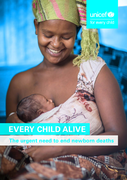
Globally, in low-income countries, the average newborn mortality rate is 27 deaths per 1,000 births, the report says. In high-income countries, that rate is 3 deaths per 1,000. Newborns from the riskiest places to give birth are up to 50 times more likely to die than those from the safest places.
... The report also notes that 8 of the 10 most dangerous places to be born are in sub-Saharan Africa, where pregnant women are much less likely to receive assistance during delivery due to poverty, conflict and weak institutions. If every country brought its newborn mortality rate down to the high-income average by 2030, 16 million lives could be saved.
More than 80 per cent of newborn deaths are due to prematurity, complications during birth or infections such as pneumonia and sepsis, the report says. These deaths can be prevented with access to well-trained midwives, along with proven solutions like clean water, disinfectants, breastfeeding within the first hour, skin-to-skin contact and good nutrition. more
... The report also notes that 8 of the 10 most dangerous places to be born are in sub-Saharan Africa, where pregnant women are much less likely to receive assistance during delivery due to poverty, conflict and weak institutions. If every country brought its newborn mortality rate down to the high-income average by 2030, 16 million lives could be saved.
More than 80 per cent of newborn deaths are due to prematurity, complications during birth or infections such as pneumonia and sepsis, the report says. These deaths can be prevented with access to well-trained midwives, along with proven solutions like clean water, disinfectants, breastfeeding within the first hour, skin-to-skin contact and good nutrition. more

This report is primarily intended for the community of policymakers and researchers concerned about the rising risks of domestic, regional, and global infectious disease epidemics, and the collective failure to take the coordinated actions required to reduce such risks. These risks include the expec
...
ted health, economic, and societal costs that are borne by countries, regions, and even all nations in the case of pandemics (which are worldwide epidemics). These risks also include the consequences of increasing antimicrobial resistance (AMR) and its spread within regions and globally. A necessary first step is to monitor whether a broad range of stakeholders are acting to prevent outbreaks from becoming epidemics, whether their capacities to respond to epidemics are robust, and whether preparedness to respond to pandemics and limit the resulting economic and health damage is improving. Analyzing the adequacy of these efforts is vitally important for the decisions of policymakers to invest in the public health and disaster-risk management capacities. Early and effective control of disease outbreaks prevents substantial health and economic costs whether or not the disease can spread globally and become a pandemic.
more


Water, sanitation and hygiene (WASH) are critical in the prevention and care for all of the 17 neglected tropical diseases (NTDs) scheduled for intensified control or elimination by 2020.
Provision of safe water, sanitation and hygiene is one of the five key interventions within the global NTD ... roadmap. Yet to date, the WASH component of the strategy has received little attention and the potential to link efforts on WASH and NTDs has been largely untapped.
Focused efforts on WASH are urgently needed if the global NTD roadmap targets are to be met. This is especially needed for NTDs where transmission is most closely linked to poor WASH conditions such as soil-transmitted helminthiasis, schistosomiasis, trachoma and lymphatic filariasis.
This strategy aims to mobilise WASH and NTD actors to work together towards the roadmap targets. more
Provision of safe water, sanitation and hygiene is one of the five key interventions within the global NTD ... roadmap. Yet to date, the WASH component of the strategy has received little attention and the potential to link efforts on WASH and NTDs has been largely untapped.
Focused efforts on WASH are urgently needed if the global NTD roadmap targets are to be met. This is especially needed for NTDs where transmission is most closely linked to poor WASH conditions such as soil-transmitted helminthiasis, schistosomiasis, trachoma and lymphatic filariasis.
This strategy aims to mobilise WASH and NTD actors to work together towards the roadmap targets. more

Pathways to progress: a multi-level approach to strengthening health systems
Samuels, F., Amaya, A.B., Rodríguez Pose, R. and Balabanova, D.
Overseas Development Institute
(2014)
C1
Findings on maternal and child health in Nepal, Mozambique and
Rwanda, and neglected tropical diseases in Cambodia and Sierra Leone | This report synthesises findings from five country case studies from the health dimension of this project, which focus on maternal and child health (MCH) (Mozambique
...
,Nepal, Rwanda) and neglected tropical diseases (NTDs)(Cambodia, Sierra Leone). MCH was selected given its centrality in two of the Millennium Development Goals (MDGs) and its ability to act as a proxy for strengthened health systems. NTDs, while until recently relatively neglected in global policy debates, are now attracting more interest, not least because they are viewed as diseases of the poor whose treatment could positively impact on most of the other MDGs.
more
Through public-private partnerships, the government of Rwanda can make more efficient use of public resources by targeting and meeting the needs of specific populations and thus help ensure family planning services and products will be available to all Rwandans in the long term. This report aims to
...
inform stakeholders working to strengthen family planning through multisectoral partnerships about Rwanda’s family market.
more
