
Filter
909
Text search:
mode
de
transmission
Featured
96
256
Language
Document type
510
158
110
50
42
13
13
7
3
2
1
Countries
70
40
30
25
24
23
20
18
17
16
16
15
15
15
14
11
11
11
10
10
9
8
8
8
8
8
8
7
7
6
6
6
6
5
5
5
5
5
4
4
4
4
4
3
3
3
3
3
3
3
2
2
2
2
2
2
2
2
2
2
2
2
2
2
1
1
1
1
1
1
1
1
1
1
1
1
1
1
1
1
1
1
1
1
1
1
1
1
1
1
Authors & Publishers
Publication Years
Category
348
106
55
49
41
20
16
Toolboxes
90
76
72
72
49
41
26
23
23
14
12
12
10
9
7
6
5
5
5
5
3
2
1
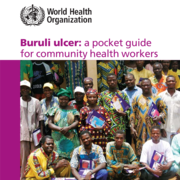
The purpose of this document is to contribute to improved recognition of Buruli
ulcer (Mycobacterium ulcerans infection) and encourage greater efforts in detecting
cases at an early stage of infection.Today, patients can be cured with antibiotics if
diagnosed early, thus avoiding unnecessary suff
...

The purpose of this document is to provide guidance on the cleaning and disinfection of environmental surfaces in the context of COVID-19. This guidance is intended for health care professionals, public health professionals and health authorities that are developing and implementing policies and sta
...
Village Hope Core International works in collaboration with the Ministry of Health and along with the Kenya Red Cross and Plan International are training their community health workers with these materials. Village HopeCore has reassigned their handwashing stations from schools to health facilities
...
About six to seven million people worldwide, mostly in Latin America, are estimated to be infected with
Trypanosoma cruzi, the parasite that causes Chagas disease (WHO data from 2021). Chagas disease is
found mainly in endemic areas of 21 Latin American countries. Chagas disease was once entirely
...
A guide for field health workers
External quality assessment (EQA) is an important component of quality systems for blood transfusion services. Establishing external quality assessment programmes for screening of donated blood for transfusion-transmissible infections (TTI): implementation guide aims to support WHO member States in
...
Cholera is a diarrhoeal disease that is usually contracted when drinking water contaminated with Vibrio cholerae bacteria. The fight against this disease requires a multidisciplinary approach that combines a water, hygiene and sanitation (WaSH) response with a monitoring system, improved water suppl
...
This document focuses on making recommendations for the diagnosis and treatment of Chagas disease, an infection caused by Trypanosoma cruzi, the protozoan agent of a systemic parasitic disease. Methodology: These clinical practice guidelines were prepared following the WHO handbook for guideline dev
...

In 2009, WHO’s Second International Conference on Buruli Ulcer Control and Research resolved to strengthen the capacity of national laboratories to confirm cases of the disease, but advised that “efforts are still needed to develop simple diagnostic tools usable in the field as well as disabilit
...

In 2013, WHO and the Foundation for Innovative New Diagnostics convened a meeting of Buruli ulcer experts in Geneva, Switzerland (9) at which two priority unmet needs in diagnosis were identified:
a diagnostic test for early detection of Buruli ulcer in symptomatic patients with sufficient positive
...
Buruli ulcer caused by Mycobacterium ulcerans is a neglected tropical disease characterized by extensive ulceration involving predominantly the upper and lower limbs of patients. The disease is common in rural tropical communities in West and Central Africa, where access to proper health care is lim
...
