Filter
432
Text search:
HIV
coinfection
Featured
46
121
Language
Document type
307
44
43
11
7
6
5
5
2
1
1
Countries / Regions
18
17
16
15
14
10
8
8
8
8
7
7
7
7
6
6
6
5
5
5
5
5
5
4
4
4
3
3
2
2
2
2
2
2
2
2
2
2
2
2
2
2
1
1
1
1
1
1
1
1
1
1
1
1
1
1
1
1
1
1
1
1
Authors & Publishers
Publication Years
Category
154
60
6
5
4
4
3
Toolboxes
129
124
17
8
7
3
3
2
2
2
2
2
1
1
1
1
1
These guidelines provide updated evidence-based recommendations on the priority HCV-related topics from the 2018 WHO Guidelines for the care and treatment of persons diagnosed with chronic hepatitis C infection and the 2017 WHO Guidelines on hepatitis B and C testing. These priority areas are:
...

Not long ago, on the occasion of the 100th anniversary of the discovery of Chagas disease, several campaigns denounced the scant progress has been made in diffrent spheres- medical, scientific and politcal- but major challanges still remain. This is an appropriate time to celebrate what has been ach
...
Schistosomiasis is a helminthic infection and one of the neglected tropical diseases (NTDs). It is caused by blood flukes of the genus Schistosoma. It is an important public health problem, particularly in poverty-stricken areas, especially those within the tropics and subtropics. It is estimated th
...
Frequently Asked Questions on Visceral Leishmaniasis
Hepatitis B (HBV) infection is a major public health problem and cause of chronic liver disease.
The 2024 HBV guidelines provide updated evidence-informed recommendations on key priority topics. These include expanded and simplified treatment criteria for adults but now also for adolescents; expa
...
Mpox continues to affect people around the world. A new framework released today by WHO will guide health authorities, communities and other stakeholders in preventing and controlling mpox outbreaks, eliminating human-to-human transmission of the disease, and reducing spillover of the virus from ani
...
Prise en charge Intégrée des maladies de l’adolescent
et de l’adulte (PCIMAA)
Avril 2007
WHO/HTM/VIH/2007.01
WHO/HTM/TB/2007.380
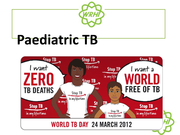
World TB Day 24 March 2012
Accessed: 21.10.2019