
Filter
902
Text search:
know
your
epidemic
Featured
92
239
Language
Document type
557
109
109
59
24
22
15
4
2
1
Countries
44
37
35
34
27
25
21
20
20
20
19
18
18
15
13
11
11
11
9
9
9
8
7
7
7
6
6
6
6
6
6
5
4
4
4
4
4
4
4
3
3
3
3
3
3
3
3
2
2
2
2
2
2
2
2
2
2
1
1
1
1
1
1
1
1
1
1
1
1
1
1
1
1
1
1
1
1
1
1
1
1
1
1
1
1
1
1
1
1
Authors & Publishers
Publication Years
Category
319
57
53
34
29
29
2
1
Toolboxes
207
92
58
57
41
21
19
15
13
12
11
10
10
9
8
7
6
6
6
6
4
3
3

Community health workers (CHWs) enable marginalised communities, often experiencing structural poverty, to access healthcare. Trust, important in all patient–provider relationships, is difficult to build in such
communities, particularly when stigma associated with HIV/AIDS, tuberculosis and now
...
Some observers have described the coronavirus pandemic as an 'Anthropocene disease,' thereby highlighting its connection with this new ecological era that is characterised by the considerable pressure human activities are exerting on ecosystems and the consequences on public health, society and the
...
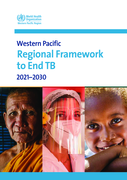
his Framework begins with a desired future scenario and considers actions and interventions necessary to get there. It advocates for holistic view to address tuberculosis. The Framework revisits challenges and actions in four layers: TB specific; challenges in health systems that influence TB care;
...
Road safety is an issue that does not receive anywhere near the attention it deserves – and it really is one
of our great opportunities to save lives around the world
Severe bacterial infections are a leading cause of morbidity and mortality among people with advanced HIV disease, after tuberculosis and cryptococcal disease. For countries to reach the end-AIDS targets for 2030, there is a need to establish a roadmap for managing severe bacterial infections and re
...
In Danger: UNAIDS Global AIDS Update 2022
recommended
Progress in prevention and treatment is faltering around the world, putting millions of people in grave danger. Eastern Europe and central Asia, Latin America, and the Middle East and North Africa have all seen increases in annual HIV infections over several years. In Asia and the Pacific, UNAIDS da
...
January 2020 to December 2021

The world is not on track to end the AIDS pandemic. New infections are rising and AIDS deaths are continuing in too many communities. This report reveals why: inequalities are holding us back. In frank terms, the report calls the world’s attention to the painful reality that dangerous inequalities
...
Yaws is a disfiguring non-venereal disease caused by infection with the spirochaete. Treponema pallidum subspecies pertenue which is closely related to the causative agent of syphilis and those of the other endemic treponematoses, bejel and pinta. The disease is endemic in certain areas of the World
...
The epidemiology of the disease is mediated by the interaction of the parasite (trypanosome) with the vectors (tsetse flies), as well as with the human and animal hosts within a particular environment. Related to these interactions, the disease is confined in spatially limited areas called “fociâ€
...
The report aims to capture lessons from the COVID-19 pandemic and to highlight the opportunity for more ambitious global action: expanding sustainable access to vaccines for all towards the Immunization Agenda 2030 and pandemic prevention, preparedness and response efforts. The report is organized i
...

Ebola disease and Marburg disease outbreaks continue to occur in Africa, with increased frequency. In addition to resulting in high mortality and morbidity, the outbreaks generate fear and mistrust about the response activities within the communities affected.
Infection prevention and control (IP
...
This report makes clear that there is a path to end AIDS. Taking that path will help ensure preparedness to address other pandemic challenges, and advance progress across the Sustainable Development Goals. The data and real-world examples in the report make it very clear what that path is. It is not
...
This document lays out economic arguments for investing in the Access to COVID-19 Tools Accelerator (ACT-Accelerator). Framed within an overall context that recognizes the broader human health and societal impacts of the COVID-19 crisis, ACT-Accelerator's Economic Investment Case argues that investm
...
Ahead of World Malaria Day, the WHO Global Malaria Programme published a new operational strategy outlining its priorities and key activities up to 2030 to help change the trajectory of malaria trends, with a view to achieving the global malaria targets. The strategy outlines 4 strategic objectives
...
