
Filter
588
Text search:
University
of
Cape
Town
-
South
Africa
Featured
Recommendations
48
New Publications
82
Language
Document type
No document type
318
Studies & Reports
111
Guidelines
61
Manuals
32
Training Material
25
Infographics
20
Situation Updates
11
Strategic & Response Plan
4
Resource Platforms
3
Fact sheets
2
Online Courses
1
Countries / Regions
South Africa
124
Global
24
Africa
22
Zambia
9
Liberia
7
Lesotho
7
Sierra Leone
6
Ethiopia
6
Ghana
6
Uganda
5
Kenya
5
India
4
Guinea
3
Nigeria
3
Cameroon
3
Namibia
3
East and Southern Africa
3
West and Central Africa
3
Southern Africa
3
Russia
3
Senegal
2
Ukraine
2
Eastern Europe
2
Burkina Faso
1
Congo, Democratic Republic of
1
USA
1
Zimbabwe
1
Philippines
1
Nepal
1
South Sudan
1
Tanzania
1
Cambodia
1
Thailand
1
China
1
Rwanda
1
Malawi
1
Mozambique
1
Papua New Guinea
1
Sudan
1
Benin
1
Central African Republic
1
Eswatini/ Swaziland
1
Myanmar / Burma
1
Middle East and North Africa
1
South–East Asia Region
1
Asia
1
Estonia
1
Iran
1
Authors & Publishers
Publication Years
Category
Countries
172
Clinical Guidelines
73
Women & Child Health
32
Public Health
31
Capacity Building
12
Key Resources
8
Pharmacy & Technologies
8
Toolboxes
HIV
98
Mental Health
86
TB
65
COVID-19
56
Disability
44
NCDs
25
Planetary Health
20
Caregiver
18
Global Health Education
14
AMR
14
Ebola
10
Rapid Response
7
Refugee
7
Pharmacy
5
Natural Hazards
3
Social Ethics
3
Polio
2
Cholera
1
Conflict
1
NTDs
1
Health Financing Toolbox
1
The far-reaching impacts of the COVID-19 pandemic underscore the critical need for evidence-informed, transparent and inclusive decision-making. Policy-makers have grappled with complex choices amidst uncertainty. They have constantly reassessed res
...

Robust clinical research capacity in low- and middle-income countries is key to stemming the spread of epidemics, according to a new report from the International Vaccines Task Force (IVTF). The report lays out how to develop the political support,
...
Catholic Social Justice teaching is the body of doctrine developed by the Catholic Church on matters of poverty and wealth, economics, social organization and the role
...

People with mental disorders in low-income countries are at risk of being left behind during efforts to expand universal health coverage. Aim is to propose context-relevant strategies for moving towards universal health coverage for people with ment
...

This curricula guide builds on several existing products of WHO and partners, aimed at supporting countries in their effort to address the first objective of the GAP-AMR (to improve awareness and un
...
Person-centred recovery planning for mental health and well-being: self-help tool: WHO QualityRights
Ensuring mental health and well-being has become a worldwide imperative and an important target of the Sustainable Development Goals. But in all countries around the world, our response has been woefully insufficient, and we have made
little progre
...
The new WHO recommendations for the treatment of isoniazid-resistant, rifampicin-susceptible TB are based upon a review of evidence from patients treated with such regimens by a Guideline Developmen
...
Updated 20 Nov. 2020
Countries can use this checklist of hospital governance, structures, plans and protocols to rapidly determine the current capacities of hospitals to respond to the COVID-19 pan
...
Every year, an estimated 15 million babies are born preterm – before 37 weeks of pregnancy. That is more than 1 in 10 live births. Approximately 1 million children die each year worldwide due to complications from their early birth. Those that sur
...

Modern healthcare has given rise to extremely complex and multifaceted ethical dilemmas. All too often physicians are unprepared to manage these competently. This publication is specifically structured to reinforce and strengthen the ethical mindset and prac
...
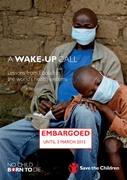
Almost 30 countries vulnerable to a new Ebola-style Epidemic, jeopardising the future of millions of Children. The report ranks the world’s poorest countries on the state
...
The training focuses on building the capacity of health care workers at the primary and secondary level to address and manage TB in children.
WHO guidelines on the pharmacological treatment of persisting pain in children with medical illnesses
These consolidated guidelines on HIV testing services (HTS) bring together existing and new guidance on HTS across different settings and populations.
The World Health Organization (WHO) first released consolidated guidelines on HTS in 2015, in response to requests from Member States, national pr
...
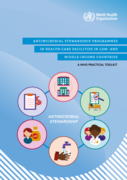
Stewardship is defined as “the careful and responsible management of something entrusted to one’s care”. It was originally applied in the health-care setting as a tool for optimizing antimicrobial use, termed “antimicrob
...
These guidelines provide new and updated recommendations on the use of point-of-care testing in children under 18 months of age and point-
...
Ensuring mental health and well-being has become a worldwide imperative and an important target
of the Sustainable Development Goals.
But in all countries around the world, our response has been woefully insufficient, and we have made
little prog
...
Primary health care offers a cost–effective route to achieving universal health coverage (UHC). However, primary health-care systems are weak in many low- and middle-income countries and often fail to provide comprehensive, people-centred, integrated care. We analysed the primar
...
This World Health Organization (WHO) and the International Labour Organization (ILO) joint guidelines production aims at harnessing the contribution of employers and workers towards the control of T
...
This guideline provides health policy-makers and decision-makers in health professional training institutions with advice on the rationale for health-care providers’ use of counselling skills to address sexual health concerns in a primary health c
...
