
Filter
535
Text search:
Patel
P.
Featured
Recommendations
40
New Publications
76
Language
Document type
No document type
269
Studies & Reports
123
Guidelines
83
Manuals
19
Strategic & Response Plan
14
Fact sheets
14
Training Material
6
Resource Platforms
5
Situation Updates
2
Countries / Regions
India
32
Global
24
Brazil
14
Latin America and the Carribbean
14
South Africa
10
Russia
10
Kenya
9
Western and Central Europe
9
Mozambique
8
Africa
7
Eastern Europe
7
Indonesia
5
Ghana
4
South Sudan
4
Germany
4
Angola
4
Middle East and North Africa
4
Sierra Leone
3
Nigeria
3
Uganda
3
Zimbabwe
3
Syria
3
Peru
3
Ukraine
3
Yemen
3
Liberia
2
Guinea-Bissau
2
Ethiopia
2
Philippines
2
Nepal
2
Pakistan
2
Bangladesh
2
Malawi
2
Sudan
2
Eswatini/ Swaziland
2
Colombia
2
Ecuador
2
Botswana
2
Guatemala
2
Mexico
2
Sri Lanka
2
Eastern Europe and Central Asia
2
Tajikistan
2
Spain
2
Burkina Faso
1
Saudi Arabia
1
Cameroon
1
Haiti
1
Iraq
1
Afghanistan
1
Egypt
1
Tanzania
1
Cambodia
1
Thailand
1
China
1
Malaysia
1
Central African Republic
1
Argentina
1
Dominican Republic
1
Namibia
1
North Macedonia
1
Cuba
1
Burundi
1
Honduras
1
El Salvador
1
Bolivia
1
Nicaragua
1
Myanmar / Burma
1
Chile
1
East and Southern Africa
1
Other region
1
Asia
1
Venezuela
1
Palestine
1
Italy
1
Armenia
1
Southern Africa
1
Canada
1
Georgia
1
Japan
1
Belgium
1
United Kingdom
1
Belarus
1
Authors & Publishers
Publication Years
Category
Countries
124
Clinical Guidelines
39
Public Health
37
Women & Child Health
25
Key Resources
6
Capacity Building
1
General Guidelines
1
Pharmacy & Technologies
1
Toolboxes
Mental Health
152
COVID-19
82
HIV
54
NCDs
24
AMR
21
Planetary Health
17
TB
16
Disability
15
Health Financing Toolbox
15
Caregiver
12
Global Health Education
9
Rapid Response
8
NTDs
8
Pharmacy
7
Refugee
5
Ebola
4
Conflict
4
Natural Hazards
4
Zika
3
Cholera
1
Polio
1
Specific Hazards
1
Social Ethics
1
Health Financing
1
The systematic surveillance of antibiotic use and antibiotic re-sistance prevalence in humans and animals is imperative for managingbacterial infectious disease (JPIAMR, 2019;WHO, 2015). Many low-income countries currently face substantial challenges in building national surveillance systems due to
...
Se sabe que las mujeres embarazadas experimentan cambios inmunológicos y fisiológicos que pueden hacerlas más susceptibles a las infecciones respiratorias virales, incluido COVID-19. Varios estudios revelaron que las mujeres embarazadas con diferentes enfermedades resp
...
Molecular methods for antimicrobial resistance (AMR)diagnostics to enhance the Global Antimicrobial Resistance Surveillance System

The product of all this work is the Standard Treatment Guideline and Essential Medicines List of Common Medical Conditions in the Kingdom of Swaziland. These systematically developed statements are designed to assist practitioners in making decisions about appropriate treatment for specific clinical
...
Improving the quality of hospital antibiotic use is a major goal of WHO’s global action plan to combat antimicrobial resistance. The WHO Essential Medicines List Access, Watch, and Reserve (AWaRe) classification could facilitate simple stewardship interventions that are widely applicable globally.
...
The global emergence of antimicrobial resistance (AMR) is posing a threat to human health. Putting resources into the containment of AMR – including surveillance – is one of the highest-yield investments a country can make to mitigate its impact. In 2015, WHO launched the Global Antimicrobial Re
...
Interium guidance, 25 June 2021Timely and accurate diagnostic testing is an essential tool in preventing and controlling the spread of COVID-19. This document describes recommendations for national testing strategies and the use of PCR and rapid antigen tests in different transmission scenarios of t
...
Scientific brief
8 April 2020
Considerations for implementing and adjusting public health and social measures in the context of COVID-19
recommended
interim guidance, 14 June 2021
This document is intended for national authorities and decision makers in countries that have introduced large scale public health and social measures. It offers guidance for adjusting public health and social measures, while managing the risk of a resurgence of cases
...
This document updates the earlier version published in April 2020. In recent weeks, information on the potential use of chloroquine or hydroxychloroquine for the treatment of people with COVID-19 has been disseminated in academic journals and public media. Although there are now ongoing clinical tri
...
COVID-19 disproportionately affects the poor and vulnerable. Community health workers are poised to play a pivotal role in fighting the pandemic, especially in countries with less resilient health systems. Drawing from practitioner expertise across four WHO regions, this article outlines the targete
...
Infection prevention and control (IPC) practices are of critical importance in protecting the function of healthcare services at all levels and mitigating the impact on vulnerable populations. Although the management of possible COVID-19 cases is usually guided by national policies for specific heal
...
Настоящее руководство «Клиническое ведение случаев COVID-19» базируется на
вышеуказанных стратегических приоритетах и адресовано клиницистам, участвующим в
оказаÐ
...
Start Free Stay Free AIDS Free - 2020 report
recommended
This progress report reviews recent gains, new developments and remaining challenges as countries approach the 2020 targets of the Start Free Stay Free AIDS Free framework.
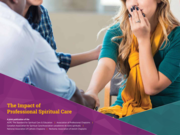
Our spiritual health profoundly impacts our physical health, well-being, and quality of life. Just as medical professionals care for our bodies and minds, spiritual care practitioners care for our spirits. The increasing need for spiritual care makes these practitioners even more crucial. However, m
...
21 August 2020
This guidance provides specific considerations for the use of non-medical masks, also known as fabric masks, by children as a means for source control in the context of the current COVID-19 pandemic. It also advises on the use of medical masks for children under certain conditions.

Whole-genome sequencing (WGS) provides a vast amount of information and the highest possible resolution for pathogen subtyping. The application of WGS for global surveillance can provide information on the early emergence and spread of AMR and further inform timely policy development on AMR control.
...

Available in Arabic, Chinese, English, French, Portuguese and Spanish
https://apps.who.int/iris/handle/10665/334254
