
Filter
624
Text search:
Government
of
Kenya,
USAID
Featured
Recommendations
33
New Publications
174
Language
Document type
No document type
444
Studies & Reports
86
Guidelines
42
Manuals
25
Strategic & Response Plan
17
Training Material
3
Situation Updates
3
Fact sheets
3
Resource Platforms
1
Countries / Regions
Kenya
121
Uganda
33
Ethiopia
29
Tanzania
24
Global
24
Nigeria
23
Malawi
21
Rwanda
15
Zimbabwe
11
Zambia
11
Liberia
9
Africa
9
Congo, Democratic Republic of
8
Nepal
7
South Sudan
7
Senegal
6
Haiti
6
South Africa
6
Mozambique
6
Namibia
6
Lesotho
6
India
5
Cambodia
5
Madagascar
5
Guinea
4
Sierra Leone
4
Ghana
4
Bangladesh
4
Myanmar / Burma
4
Thailand
3
East and Southern Africa
3
Mali
2
Cameroon
2
Pakistan
2
Indonesia
2
Benin
2
Central African Republic
2
Eswatini/ Swaziland
2
Botswana
2
South–East Asia Region
2
Latin America and the Carribbean
2
Asia
2
Niger
1
Philippines
1
Jordan
1
Syria
1
Chad
1
Sudan
1
Ukraine
1
Colombia
1
Angola
1
West and Central Africa
1
Western and Central Europe
1
Tajikistan
1
Vietnam
1
Authors & Publishers
Publication Years
Category
Countries
271
Public Health
41
Women & Child Health
41
Key Resources
29
Clinical Guidelines
20
Capacity Building
6
Pharmacy & Technologies
4
Toolboxes
HIV
82
Disability
45
TB
45
Planetary Health
27
AMR
16
COVID-19
14
Rapid Response
13
Global Health Education
13
NTDs
13
Caregiver
12
Ebola
10
Mental Health
9
Health Financing Toolbox
9
Conflict
8
Natural Hazards
8
Refugee
5
Pharmacy
4
Cholera
1
Polio
1
South Sudan
1
Zika
1
Social Ethics
1
Health Financing
1
The majority of developing countries will fail to achieve their targets for Universal Health Coverage (UHC)1 and the health- and poverty-related Sustainable Development Goals (SDGs) unless they take urgent steps to strengthen their health financing.
...
This report provides a synthesis of some of the most recent, high-quality literature on the security and political processes in Central African Republic produced up to the end
...

A discussion paper on the scope of the problem, its drivers, and strategies for moving forward for policy, practice, and research
In many protracted emergencies, the prevalence rates of global acut
...
Research in Brief.
The international community’s predominant response to the Venezuelan migration crisis remains focused on humanitarian relief. This is important, for two populations: a) the over 50,000 ‘pendular’ migrants who go back and forth across the border every day in order to access
...

The brief concludes that sustaining the continuity of EHS requires policies that ensure a whole-society and systems strengthening approach. This involves increased health care investment, community engagement, disease control regulations, and multis
...
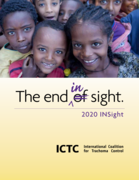
Trachoma is an eye infection that for thousands of years caused many people to go blind across all continents. As the result of development and targeted interventions, trachoma is now limited to an
...
Despite the stated centrality of protection in humanitarian action and a growing attention to protection activities, the evaluation of protection has received relatively little attention. This pilot
...
WHO published and launched the third part of the Wheelchair Service Training Package (WSTP) series consisting of two sub-packages: the Wheelchair Service Training Package for Managers (WSTPm) and th
...
DHS Further Analysis Reports No. 90 - In Rwanda, between 2005 and 2010, there have been radical declines in the desired number of children, actual fertility, and child mortality along with a large increase in contraceptive prevalence. This study rev
...
World Health Organization Department of Reproductive Health and Research
Brocher Foundation, Hermance, Geneva, Switzerland, 27–29 April 2016
As this report shows,
reports of child abuse and of children
witnessing violence between their
parents and caregivers have increased.
Ending violence against children is
increasingly within our
...
The Minimum Standards and Indicators for Community Engagement were developed through an inter‑agency consultation process that engaged a large number of experts from around the world. UNICEF wishes to acknowledge the contribution
...

I examine the effectiveness of donors in targeting the highest burden of malaria in the Democratic Republic of Congo when health information struct
...
This publication provides guidance to governments, civil society organizations (nongovernmental organizations and community-based organizations) and other partners implementing HIV prevention, care and treatment programs with key populations. This guide is designed to assist these programs in the de
...
A Reference Guide for Program Managers and Policy Makers. Recently, a renewed interest in large-scale community health worker (CHW) programs has been seen globally. This renewal provides an opportune moment to take stock of issues and challenges suc
...
It explains the importance of faecal sludge management in urban areas in which many people rely on on-site and decentralized sanitation facilities and emphasizes the place of treatment in the overal
...
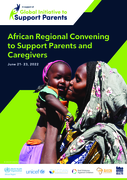
The African Regional Convening of the Global Initiative to Support Parents (GISP) stimulated the interest or engagement of almost 1500 individuals from 742 unique organizations in the fields
...
In an effort to improve the capabilities and accountability of humanitarian and economic practitioners, the SEEP (Small Enterprise Education and Promotion) Network's Minimum Economic Recovery Standards focus on minimum industry standards for facilit
...
Resilience has rapidly become one of the most prominent objectives for the development sector, so ascertaining how best to measure it is an essential task for practioners working in monitoring and evaluation. In this discussion paper, the main insig
...
About one fourth of the world’s population is estimated to have been infected with the tuberculosis (TB) bacilli, and about 5–10% of those infected develop TB disease in their lifetime. The risk
...
