
Filter
961
Text search:
European
Medicines
Agency
Featured
Recommendations
100
New Publications
212
Language
Document type
No document type
424
Studies & Reports
226
Guidelines
154
Manuals
56
Strategic & Response Plan
43
Fact sheets
29
Situation Updates
15
Training Material
9
Resource Platforms
3
Brochures
1
Online Courses
1
Countries / Regions
Western and Central Europe
60
Global
46
Ukraine
38
Eastern Europe
25
Africa
22
Sierra Leone
20
Nigeria
18
Liberia
16
Ghana
16
Kenya
16
Nepal
14
Ethiopia
12
Myanmar / Burma
12
Zambia
11
Syria
10
Latin America and the Carribbean
10
India
9
Germany
9
Eastern Europe and Central Asia
9
Guinea
8
Uganda
8
Philippines
8
Rwanda
8
South Africa
8
Bangladesh
8
Moldova
8
Congo, Democratic Republic of
7
West and Central Africa
7
Zimbabwe
6
Thailand
6
Indonesia
6
Burkina Faso
5
South Sudan
5
Tanzania
5
Malawi
5
East and Southern Africa
5
South–East Asia Region
5
Russia
5
Senegal
4
Jordan
4
Namibia
4
Brazil
4
Hungary
4
Botswana
4
Middle East and North Africa
4
Asia
4
Venezuela
4
Poland
4
Georgia
4
Pakistan
3
Cambodia
3
North Macedonia
3
Yemen
3
Albania
3
Romania
3
Jamaica
3
Morocco
2
Afghanistan
2
Lebanon
2
Mozambique
2
Sudan
2
Argentina
2
Eswatini/ Swaziland
2
Serbia
2
Western Pacific Region
2
Laos
2
Tajikistan
2
Bulgaria
2
Iran
2
Vietnam
2
Côte d’Ivoire / Ivory Coast
1
Saudi Arabia
1
Cameroon
1
Haiti
1
Somalia
1
Iraq
1
Turkey
1
Egypt
1
China
1
Benin
1
Central African Republic
1
Colombia
1
Ecuador
1
Bolivia
1
Greece
1
Lesotho
1
Mexico
1
Sri Lanka
1
Paraguay
1
Bhutan
1
Mongolia
1
Slovakia
1
Kyrgyzstan
1
Australia
1
Gabon
1
Denmark
1
Mauritius
1
Tunisia
1
United Kingdom
1
Norway
1
Portugal
1
Belarus
1
Authors & Publishers
Publication Years
Category
Countries
259
Clinical Guidelines
111
Public Health
57
Women & Child Health
41
Pharmacy & Technologies
23
Key Resources
21
Capacity Building
9
General Guidelines
1
Toolboxes
AMR
90
COVID-19
89
TB
84
HIV
79
Mental Health
66
Pharmacy
53
Conflict
45
Rapid Response
32
Planetary Health
31
Ebola
27
Global Health Education
26
Refugee
23
Disability
18
NCDs
18
Health Financing Toolbox
15
Caregiver
14
NTDs
13
Natural Hazards
9
Zika
7
Specific Hazards
5
Polio
4
Cholera
2

WHO would like to express its gratitude and appreciation to all Member States that provided information to the WHO survey on policies and activities at the national level in the area of antimicrobial resistance. The contribution of staff in WHO Regional and Country Offices has been invaluable: in ga
...
This situation analysis has gathered information about the current state of AMR, contributing factors and antimicrobial use in Zimbabwe from the human, animal, agricultural and environmental sectors. Data has been gathered from different sectors such as the general public, academia, the Ministry of
...
These guidelines provide evidence-based guidance on the use of peripartum antiviral prophylaxis in HBsAg-positive pregnant women for the prevention of mother-to-child transmission of HBV.
Results of rapid assessment
The COVID-19 pandemic has disrupted or halted critical mental health services in 93% of countries worldwide while the demand for mental health is increasing, according to a new WHO survey. The survey of 130 countries provides the first global data showing the devastating
...
The 2020 Report analyzes global health spending for 190 countries from 2000 to 2018 and provides insights as to the health spending trajectory from the MDG era to the SDG era prior to the crisis of 2020. The report shows that global spending on health continually rose between 2000 and 2018 and reach
...
The WHO operational handbook on tuberculosis: tuberculosis preventive treatment is the companion, implementation guide to the 2020 WHO guidelines on TB preventive treatment.[1] Just as these guidelines are the first to be released under the rubric of the WHO consolidated TB guidelines, this handbook
...
This publication is based on the list of clinical interventions selected from clinical guidelines on prevention, screening, diagnosis, treatment, palliative care, monitoring and end of life care. This publication addresses medical devices for six types of cancer: breast, cervical, colorectal, leukem
...

Community-based strategies play a significant role in many health systems in low- and middle-income countries, especially in light of critical shortages in the health workforce. The term community health worker has been used to refer to volunteers and salaried, professional or lay health workers wit
...
When situations occur in which unwanted events are rightly or wrongly connected with vaccination, they may erode confidence in vaccines and the authorities delivering them. This document presents the scientific evidence behind WHO’s recommendations on building and restoring confidence in vaccines
...
Recently, a renewed interest in large-scale community health worker (CHW) programs has been seen globally. This renewal provides an opportune moment to take stock of issues and challenges such programs face and what can be done to make them as effective as possible. With this in mind, this manual is
...
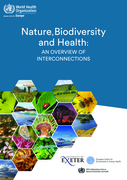
Urbanization, land use, global trade and industrialization have led to profound and negative impacts on nature, biodiversity and ecosystems across the world. The ongoing depletion of natural resources not only afects environmental conditions but also has an enormous impact on the well-being and secu
...

English Analysis on World about Agriculture, Climate Change and Environment and more; published on 29 Sep 2021 by FAO and NEPAD
The World Health Organization (WHO) has identified mental health as an integral component of the COVID-19 response. Its rapid assessment of service delivery for mental, neurological and substance use (MNS) disorders during the COVID-19 pandemic, on which this report is based, is the first attempt to
...
The humanitarian-development-peace nexus (HDPNX) is a new way of working that offers a framework for coherent joined-up planning and implementation of shared priorities between humanitarian development and peacebuilding actors in emergency settings. To advance the HDPNx in a given country a sh
...
This document is the third iteration of the Flash Appeal for Ukraine, which was originally published on 1 March 2022 and revised once in mid-April. This updated Flash Appeal covers the period of 10 months following the onset of the war in Ukraine that started on 24 February 2022 (i.e., from March to
...
(Last Update: July 2022)
