
Filter
1585
Text search:
CDC
United
States
Featured
153
457
Language
Document type
960
209
200
77
63
36
20
10
6
3
1
Countries
65
48
45
43
42
40
36
33
29
26
26
25
24
23
21
20
20
19
19
19
18
18
16
16
16
15
15
14
14
12
11
10
9
9
9
8
8
8
8
8
8
8
7
7
6
6
6
6
6
5
5
5
4
4
4
4
4
4
3
3
3
2
2
2
2
2
2
2
2
2
2
2
2
2
2
2
2
2
2
2
2
2
1
1
1
1
1
1
1
1
1
1
1
1
1
1
1
1
1
1
1
1
1
1
1
1
1
1
1
1
1
1
1
1
1
Authors & Publishers
Publication Years
Category
556
161
82
65
60
29
22
Toolboxes
170
169
120
101
87
81
48
43
39
34
33
21
20
18
14
14
14
12
12
11
10
7
National Center for HIV/AIDS, Viral Hepatitis, STD, and TB Prevention.
Division of Tuberculosis Elimination.
Accessed December 2017

PLOS ONE | www.plosone.org
September 2014 | Volume 9 | Issue 9 | e103657

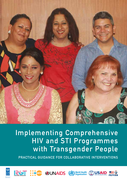
This publication offers practical advice on implementing HIV and STI programmes for transgender people, with a focus on transgender women, aligned with the 2011 Recommendations and the 2014 Key Populations Consolidated Guidelines. It contains examples of good practice from around the world that may
...

The primary objective of the 2015-16 MDHS project is to provide up-to-date estimates of basic demographic and health indicators. Specifically, the MDHS collected information on fertility levels, marriage, fertility preferences, awareness and use of family planning methods, breastfeeding practices, n
...
Этот документ содержит техническое руководство для стран по мониторингу усилий, направленных на
профилактику и лечение ВИЧ-инфекции среди людей, употребляющих иÐ
...
Examining the infrastructure of the Russian and USA healthcare systems with respect to the management of HIV patients
Global HIV Strategic Information Working Group
1-13 December 2018 | Geneva, Switzerland UNAIDS Programme Coordinating Board Issue date: 23 November 2018
UNAIDS/PCB (43)/18.32
Global HIV Strategic Information Working Group
For Populations At Risk For HIV
UNAIDS/WHO 2015 | Reference
PLoSONE 12(9):e0184986.https://doi.org/10.1371/journal.pone.0184986
A practitioner’s guide to the principles of COVID-19 vaccine communications.
The factors that lead people to make choices to take vaccines are nuanced and affected by how they see the world, their perceptions of the choices people like them will make, who they trust, their perceptions of risk,
...
