
Filter
455
Text search:
African
vaccination
week
Featured
60
143
Language
Document type
258
82
52
22
20
12
3
3
1
1
1
Countries
22
21
21
21
18
18
15
14
13
13
12
10
9
8
8
8
8
8
7
7
6
5
5
5
5
4
4
4
4
4
4
3
3
3
2
2
2
2
2
2
2
2
2
2
2
2
2
2
1
1
1
1
1
1
1
1
1
1
1
1
1
1
1
1
1
1
1
1
1
1
Authors & Publishers
Publication Years
Category
187
59
29
20
11
4
3
1
Toolboxes
56
44
30
29
18
14
12
10
9
8
7
6
6
5
5
5
5
5
2
2
1
1
1
First published in 2020, this toolkit is intended for clinicians working in acute care, managing adult and paediatric patients with acute respiratory infection, including severe pneumonia, acute respiratory distress syndrome, sepsis and septic shock. The main objective is to provide key tools for us
...
Only 8,730 asylum applications were registered in the EU+ in April, the lowest since at least 2008, and a massive 87% decrease from pre-COVID-19 levels in January and February.
The European Asylum Support Office (EASO) has released a special report which shows that the COVID-19 related travel restr
...

Monitoring and evaluation framework
recommended
COVID‑19 strategic preparedness and response
Objectifs 2020 : des avancées disparates. Le rapport de l’ONUSIDA sur l’épidémie mondiale de sida fait état d’un échec accentué par la COVID-19. Depuis 2015, 3,5 millions d’infections au VIH et 820 000 morts supplémentaires liés au sida sont imputables à des objectifs non atteints.
...
The UNAIDS 2020 global report is a call to action. It highlights the scale of the HIV epidemic and how it runs along the fault lines of inequalities.
UNAIDS report on the global AIDS epidemic shows that 2020 targets will not be met because of deeply unequal success; COVID-19 risks blowing HIV progress way off course. Missed targets have resulted in 3.5 million more HIV infections and 820 000 more AIDS-related deaths since 2015 than if the world w
...
This publication marks the 25th anniversary of the Beijing Declaration and Platform for Action. It is dedicated to the women leaders and allied community mobilizers who have devoted their lives to advancing the human rights and dignity of all people affected by the HIV epidemic, and to opposing soci
...
Sudan recorded the first COVID-19 case on 13 March 2020 and, at the beginning of July, the Federal Ministry of Health had confirmed that nearly 10,000 people had contracted the virus, including over 600 who died from the disease across the country. Although more than 70 per cent of the confirmed cas
...
Across Zimbabwe, 7 million people in urban and rural areas are in urgent need of humanitarian assistance, compared to 5.5 million in August 2019. Since the launch of the Revised Humanitarian Appeal in August 2019, circumstances for millions of Zimbabweans have worsened. Drought and crop failure, exa
...
WHO published the first COVID-19 Strategic Response and Preparedness Plan (SPRP) on 3 February, 2020. This report highlights the main points of progress that were made up to 30 June 2020 under the three objectives outlined in the SPRP: scaling up international coordination and support; scaling up co
...
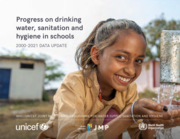
Special Focus on COVID-19
The report provides updated estimates for drinking water, sanitation and hygiene in schools including progress from 2015 to 2019. It highlights the rapid improvement needed to ensure students have access to handwashing facilities with soap and water during the COVID-19 pan
...
Namibia is no exception to the growingglobal concern on the increasing burden of NCDs. Namibia is an upper middle income country with fast economic growth since independence in 1990. The country is bearing the double burden of communicable and noncommunicable diseases and rapid urbanizat
...
Sepsis contributes significantly to preventable mortality and is the final common pathway to death for severe infectious diseases; it can also arise as a complication of injuries and non-communicable diseases.
BMC Health Services Research (2019) 19:458 https://doi.org/10.1186/s12913-019-4315-7
The World Health Organization organized a Consultation of National Leprosy Programme managers, partners and affected persons to discuss the draft Global Leprosy Strategy, 2021--2030. This virtual event took place from 26 to 30 October 2020. It was attended by more than 450 stakeholders. Contribution
...

10 December 2020
8 January 2021
Sequencing enabled the world to rapidly identify SARS-CoV-2 and develop diagnostic tests and other tools for outbreak management. Continued genome sequencing supports the monitoring of the disease’s spread and evolution of the virus. Accelerated integration of genome sequencing int
...
An Action Framework and annexe to Immunization Agenda 2030 (Draft version)
27 January 2021
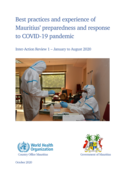
his Inter Action Review report for the COVID-19 outbreak in Mauritius documents and assesses the country’s capacity to respond to the outbreak and identifies the best practices, strengths, gaps and challenges of the national response. Areas requiring improvements or sustained actions have been ide
...
