
Filter
1277
Text search:
Глобальный
Featured
51
45
Language
Document type
425
206
128
115
102
70
67
52
38
19
17
14
13
10
1
Countries
1270
25
16
16
13
11
10
10
9
9
8
8
7
6
6
5
5
4
4
4
4
4
4
3
3
3
3
3
2
2
2
2
2
2
2
2
2
2
2
2
2
1
1
1
1
1
1
1
1
1
1
1
1
1
1
1
1
1
1
1
1
1
1
1
1
1
1
1
1
1
1
1
1
Authors & Publishers
Publication Years
Category
414
193
84
41
36
20
9
Toolboxes
391
226
148
115
79
67
38
32
22
22
21
18
14
11
10
10
9
4
3
3
2
1
A systematic review of clinical and observational antiparasitic treatment studies to assess the potential for establishing an individual participant-level data platform.
Chagas disease (CD), caused by the parasite Trypanosoma cruzi, affects ~6–7 million people worldwide. Significant limitations s
...
Chagas disease, which is caused by infection with the parasite Trypanosoma cruzi, is known as the silent disease. An estimated 8 million people have the disease and most of them do not know that they are infected.
Trachoma is the leading infectious cause of blindness (2). It is characterized by repeated
conjunctival infection with particular strains of Chlamydia trachomatis. This scars the conjunctivae and,
in some cases, leads to trichiasis with or without entropion. The abrasive action of eyelashes can
d
...
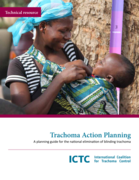
This Trachoma Action Planning – a planning guide – is published by the
International Coalition for Trachoma Control at the request of the
World Health Organization Alliance for the Global Elimination of Trachoma
by 2020.
Chapter 6 contents
Malaria
Human African trypanosomiasis (sleeping sickness)
American trypanosomiasis (Chagas disease)
Leishmaniases
Intestinal protozoan infections (parasitic diarrhoea)
Flukes
Schistosomiases
Cestodes
Nematode infections
Filariasis
...
Leishmaniasis is a vector-borne disease that is transmitted by sandflies and caused by obligate intracellular protozoa of the genus Leishmania. Human infection is caused by about 21 of 30 species that infect mammals. These include the L. donovani complex with 3 species (L. donovani, L. infantum, and
...
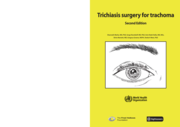
This manual is designed to provide specific information for trachomatous trichiasis (TT) trainers who are training others to undertake surgery for entropion trachomatous trichiasis (TT). Other approaches are not addressed. The manual is divided into two parts. The first part covers specifics designe
...
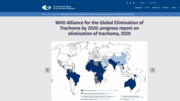
The number of people at risk from trachoma, the world’s leading infectious cause of blindness, remained stable in 2020 despite disruptions to community-based interventions caused by COVID-19, the World Health Organization (WHO) reported in its Weekly Epidemiological Record.
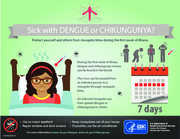
There are currently 4 different serotypes of Dengue virus known to science. Each time someone get infected and recovers, the individual will be protected by a lifelong immunity from further infection against that specific serotype and that serotype only.
Consequent infection from different serotype
...
Chagas disease is a tropical disease caused by a parasite called Trypansoma cruzi and is primarily spread by Triatomine bugs. It is estimated to affect 6-7 million people, mostly in Latin America, and can cause devastating chronic illness. In this video we take a look at the disease, what it is, and
...
Information for the General Public
Schistosomiasis is widely recognized as a disease that is socially determined. An understanding of the social and behavioural factors linked to disease transmission and control should play a vital role in designing policies and strategies for schistosomiasis prevention and control. To this must be a
...
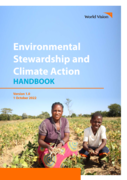
Climate change presents the single biggest threat to human development, and its widespread impacts disproportionately burden the poorest and most vulnerable households in fragile and rural developing contexts – particularly women and children.
According to the Intergovernmental Panel on Climate C
...
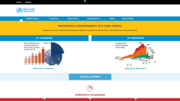
Progress towards achieving the Roadmap targets for control and elimination of the Neglected Tropical Diseases.
Chikungunya: WHO fact sheet on Chikungunya providing key facts and information on scope of the problem, who is at risk, prevention, WHO response.
The aim of this toolkit is to guide countries on how to best estimate their current burden of dengue by combining existing data from dengue surveillance systems with on-going research efforts to measure the community burden
of dengue.
Dengue is a significant public health problem. There are four dengue virus serotypes identified; however, its diagnosis is difficult due to the existence of many viruses, bacteria, and parasites producing the same clinical presentation, being present in the same geographical area and even producing
...
Dengue is the fastest spreading, mosquito-borne viral infectious disease worldwide, with remarkable morbidity and mortality. In the past decades, profound contributions have been made towards understanding its epidemiology, including disease burden and distributions, risk factors, and control and pr
...
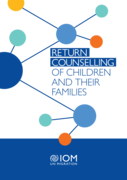
The Return Counselling Toolkit is a capacity-building instrument aimed at providing a harmonized and coherent approach to return counselling, based on key migrant-centred principles while protecting migrants’ rights. Mindful of the specific needs and rights pertaining to children, this additional
...

States have committed and assumed obligations to address multiple and intersecting forms of discrimination against refugees, internally displaced persons, asylum seekers, returnees and stateless persons. The Global Compact on Refugees places ending discrimination of any kind based on the grounds of
...
