
Filter
8113
Text search:
Human
resources
Featured
711
2196
Language
7845
183
149
111
98
61
46
29
13
11
10
9
8
8
8
8
8
7
7
6
6
6
6
6
5
5
5
5
5
4
4
4
4
4
4
4
4
4
4
4
4
4
4
4
3
3
3
3
3
3
3
3
3
3
3
2
2
2
2
2
1
1
1
1
1
1
1
1
1
1
1
Document type
4699
1378
904
429
335
123
121
65
16
15
11
8
1
1
Countries
349
298
249
174
169
166
162
162
157
153
143
140
125
118
116
116
115
111
111
101
93
82
75
69
65
60
58
52
51
51
50
50
49
49
48
45
45
41
41
39
39
36
33
29
28
28
27
27
27
25
23
22
21
20
20
20
19
19
18
17
17
16
16
15
15
14
13
13
12
12
11
11
11
9
9
9
9
9
8
8
8
7
7
7
6
6
6
6
6
6
5
5
5
5
5
4
4
4
4
4
4
4
4
4
3
3
3
3
3
3
3
3
3
3
3
3
3
3
3
3
3
2
2
2
2
2
2
2
2
2
2
2
2
1
1
1
1
1
1
1
1
1
1
1
1
1
Authors & Publishers
1009
422
349
263
209
172
154
149
115
64
49
45
39
37
37
36
34
33
32
31
31
31
30
30
30
29
27
27
27
26
26
26
26
25
25
25
24
24
24
23
23
22
21
21
21
20
20
19
19
19
19
19
18
18
18
18
17
17
17
17
16
15
15
15
15
15
14
14
14
14
14
14
14
14
13
13
13
13
13
13
12
12
12
12
12
12
12
12
12
11
11
11
11
11
11
11
10
10
10
10
10
10
10
10
10
10
10
9
9
9
9
9
9
9
9
9
8
8
8
8
8
8
8
8
8
8
8
8
8
8
8
8
8
7
7
7
7
7
7
7
7
7
7
7
7
7
7
7
7
7
7
7
7
7
7
7
7
7
6
6
6
6
6
6
6
6
6
6
6
6
6
6
6
6
6
6
6
6
6
6
6
6
6
6
6
6
6
6
6
6
6
6
6
5
5
5
5
5
5
5
5
5
5
5
5
5
5
5
5
5
5
5
5
5
5
5
5
5
5
5
5
5
5
5
5
5
5
5
5
5
5
5
5
5
5
5
5
5
5
5
5
5
5
5
5
5
5
5
5
4
4
4
4
4
4
4
4
4
4
4
4
4
4
4
4
4
4
4
4
4
4
4
4
4
4
4
4
4
4
4
4
4
4
4
4
4
4
4
4
4
4
4
4
4
4
4
4
4
4
4
4
4
4
4
4
4
4
4
4
4
4
4
4
4
4
4
4
4
4
4
4
4
4
4
4
4
4
4
4
3
3
3
3
3
3
3
3
3
3
3
3
3
3
3
3
3
3
3
3
3
3
3
3
3
3
3
3
3
3
3
3
3
3
3
3
3
3
3
3
3
3
3
3
3
3
3
3
3
3
3
3
3
3
3
3
3
3
3
3
3
3
3
3
3
3
3
3
3
3
3
3
3
3
3
3
3
3
3
3
3
3
3
3
3
3
3
3
3
3
3
3
3
3
3
3
3
3
3
3
3
3
3
3
3
3
3
3
3
3
3
3
3
3
3
3
3
3
3
3
3
3
3
3
3
3
3
3
3
3
3
3
3
3
3
3
3
3
3
3
3
3
3
3
3
3
3
3
3
3
3
3
3
3
3
3
3
3
3
3
2
2
2
2
2
2
2
2
2
2
2
2
2
2
2
2
2
2
2
2
2
2
2
2
2
2
2
2
2
2
2
2
2
2
2
2
2
2
2
2
2
2
2
2
2
2
2
2
2
2
2
2
2
2
2
2
2
2
2
2
2
2
2
2
2
2
2
2
2
2
2
2
2
2
2
2
2
2
2
2
2
2
2
2
2
2
2
2
2
2
2
2
2
2
2
2
2
2
2
2
2
2
2
2
2
2
2
2
2
2
2
2
2
2
2
2
2
2
2
2
2
2
2
2
2
2
2
2
2
2
2
2
2
2
2
2
2
2
2
2
2
2
2
2
2
2
2
2
2
2
2
2
2
2
2
2
2
2
2
2
2
2
2
2
2
2
2
2
2
2
2
2
2
2
2
2
2
2
2
2
2
2
2
2
2
2
2
2
2
2
2
2
2
2
2
2
2
2
2
2
2
2
2
2
2
2
2
2
2
2
2
2
2
2
2
2
2
2
2
2
2
2
2
2
2
2
2
2
2
2
2
2
2
2
2
2
2
2
2
2
2
2
2
2
2
2
2
2
2
2
2
2
2
2
2
2
2
2
2
2
2
2
2
2
2
2
2
2
2
2
2
2
2
2
2
2
2
2
2
2
2
2
2
2
2
2
2
2
2
2
2
2
2
2
2
2
2
2
2
2
2
2
2
2
2
2
2
2
2
2
2
2
2
2
2
2
2
2
2
2
2
2
2
2
2
2
2
2
2
2
2
2
2
2
2
2
2
2
2
2
2
2
2
2
2
2
2
2
2
2
2
2
2
2
2
2
2
2
2
2
2
2
2
2
2
2
2
2
2
2
2
2
2
2
2
2
2
2
2
2
2
2
2
2
2
2
2
2
2
2
2
2
2
2
2
2
2
2
2
2
2
2
2
2
2
2
2
2
2
2
2
2
2
2
2
2
2
2
2
2
2
2
2
2
2
2
2
2
2
2
2
2
2
2
2
2
2
2
2
2
2
2
2
2
2
2
2
2
2
2
2
2
2
2
2
2
2
2
2
2
2
2
2
2
1
1
1
1
1
1
1
1
1
1
1
1
1
1
1
1
1
1
1
1
1
1
1
1
1
1
1
1
1
1
1
1
1
1
1
1
1
1
1
1
1
1
1
1
1
1
1
1
1
1
1
1
1
1
1
1
1
1
1
1
1
1
1
1
1
1
1
1
1
1
1
1
1
1
1
1
1
1
1
1
1
1
1
1
1
1
1
1
1
1
1
1
1
1
1
1
1
1
1
1
1
1
1
1
1
1
1
1
1
1
1
1
1
1
1
1
1
1
1
1
1
1
1
1
1
1
1
1
1
1
1
1
1
1
1
1
1
1
1
1
1
1
1
1
1
1
1
1
1
1
1
1
1
1
1
1
1
1
1
1
1
1
1
1
1
1
1
1
1
1
1
1
1
1
1
1
1
1
1
1
1
1
1
1
1
1
1
1
1
1
1
1
1
1
1
1
1
1
1
1
1
1
1
1
1
1
1
1
1
1
1
1
1
1
1
1
1
1
1
1
1
1
1
1
1
1
1
1
1
1
1
1
1
1
1
1
1
1
1
1
1
1
1
1
1
1
1
1
1
1
1
1
1
1
1
1
1
1
1
1
1
1
1
1
1
1
1
1
1
1
1
1
1
1
1
1
1
1
1
1
1
1
1
1
1
1
1
1
1
1
1
1
1
1
1
1
1
1
1
1
1
1
1
1
1
1
1
1
1
1
1
1
1
1
1
1
1
1
1
1
1
1
1
1
1
1
1
1
1
1
1
1
1
1
1
1
1
1
1
1
1
1
1
1
1
1
1
1
1
1
1
1
1
1
1
1
1
1
1
1
1
1
1
1
1
1
1
1
1
1
1
1
1
1
1
1
1
1
1
1
1
1
1
1
1
1
1
1
1
1
1
1
1
1
1
1
1
1
1
1
1
1
1
1
1
1
1
1
1
1
1
1
1
1
1
1
1
1
1
1
1
1
1
1
1
1
1
1
1
1
1
1
1
1
1
1
1
1
1
1
1
1
1
1
1
1
1
1
1
1
1
1
1
1
1
1
1
1
1
1
1
1
1
1
1
1
1
1
1
1
1
1
1
1
1
1
1
1
1
1
1
1
1
1
1
1
1
1
1
1
1
1
1
1
1
1
1
1
1
1
1
1
1
1
1
1
1
1
1
1
1
1
1
1
1
1
1
1
1
1
1
1
1
1
1
1
1
1
1
1
1
1
1
1
1
1
1
1
1
1
1
1
1
1
1
1
1
1
1
1
1
1
1
1
1
1
1
1
1
1
1
1
1
1
1
1
1
1
1
1
1
1
1
1
1
1
1
1
1
1
1
1
1
1
1
1
1
1
1
1
1
1
1
1
1
1
1
1
1
1
1
1
1
1
1
1
1
1
1
1
1
1
1
1
1
1
1
1
1
1
1
1
1
1
1
1
1
1
1
1
1
1
1
1
1
1
1
1
1
1
1
1
1
1
1
1
1
1
1
1
1
1
1
1
1
1
1
1
1
1
1
1
1
1
1
1
1
1
1
1
1
1
1
1
1
1
1
1
1
1
1
1
1
1
1
1
1
1
1
1
1
1
1
1
1
1
1
1
1
1
1
1
1
1
1
1
1
1
1
1
1
1
1
1
1
1
1
1
1
1
1
1
1
1
1
1
1
1
1
1
1
1
1
1
1
1
1
1
1
1
1
1
1
1
1
1
1
1
1
1
1
1
1
1
1
1
1
1
1
1
1
1
1
1
1
1
1
1
1
1
1
1
1
1
1
1
1
1
1
1
1
1
1
1
1
1
1
1
1
1
1
1
1
1
1
1
1
1
1
1
1
1
1
1
1
1
1
1
1
1
1
1
1
1
1
1
1
1
1
1
1
1
1
1
1
1
1
1
1
1
1
1
1
1
1
1
1
1
1
1
1
1
1
1
1
1
1
1
1
1
1
1
1
1
1
1
1
1
1
1
1
1
1
1
1
1
1
1
1
1
1
1
1
1
1
1
1
1
1
1
1
1
1
1
1
1
1
1
1
1
1
1
1
1
1
1
1
1
1
1
1
1
1
1
1
1
1
1
1
1
1
1
1
1
1
1
1
1
1
1
1
1
1
1
1
1
1
1
1
1
1
1
1
1
1
1
1
1
1
1
1
1
1
1
1
1
1
1
1
1
1
1
1
1
1
1
1
1
1
1
1
1
1
1
1
1
1
1
1
1
1
1
1
1
1
1
1
1
1
1
1
1
1
1
1
1
1
1
1
1
1
1
1
1
1
1
1
1
1
1
1
1
1
1
1
1
1
1
1
1
1
1
1
1
1
1
1
1
1
1
1
1
1
1
1
1
1
1
1
1
1
1
1
1
1
1
1
1
1
1
1
1
1
1
1
1
1
1
1
1
1
1
1
1
1
1
1
1
1
1
1
1
1
1
1
1
1
1
1
1
1
1
1
1
1
1
1
1
1
1
1
1
1
1
1
1
1
1
1
1
1
1
1
1
1
1
1
1
1
1
1
1
1
1
1
1
1
1
1
1
1
1
1
1
1
1
1
1
1
1
1
1
1
1
1
1
1
1
1
1
1
1
1
1
1
1
1
1
1
1
1
1
1
1
1
1
1
1
1
1
1
1
1
1
1
1
1
1
1
1
1
1
1
1
1
1
1
1
1
1
1
1
1
1
1
1
1
1
1
1
1
1
1
1
1
1
1
1
1
1
1
1
1
1
1
1
1
1
1
1
1
1
1
1
1
1
1
1
1
1
1
1
1
1
1
1
1
1
1
1
1
1
1
1
1
1
1
1
1
1
1
1
1
1
1
1
1
1
1
1
1
1
1
1
1
1
1
1
1
1
1
1
1
1
1
1
1
1
1
1
1
1
1
1
1
1
1
1
1
1
1
1
1
1
1
1
1
1
1
1
1
1
1
1
1
1
1
1
1
1
1
1
1
1
1
1
1
1
1
1
1
1
1
1
1
1
1
1
1
1
1
1
1
1
1
1
1
1
1
1
1
1
1
1
1
1
1
1
1
1
1
1
1
1
1
1
1
1
1
1
1
1
1
1
1
1
1
1
1
1
1
1
1
1
1
1
1
1
1
1
1
1
1
1
1
1
1
1
1
1
1
1
1
1
1
1
1
1
1
1
1
1
1
1
1
1
1
1
1
1
1
1
1
1
1
1
1
1
1
1
1
1
1
1
1
1
1
1
1
1
1
1
1
1
1
1
1
1
1
1
1
1
1
1
1
1
1
1
1
1
1
1
1
1
1
1
1
1
1
1
1
1
1
1
1
1
1
1
1
1
1
1
1
1
1
1
1
1
1
1
1
1
1
1
1
1
1
1
1
1
1
1
1
1
1
1
1
1
1
1
1
1
1
1
1
1
1
1
1
1
1
1
1
1
1
1
1
1
1
1
1
1
1
1
1
1
1
1
1
1
1
1
1
1
1
1
1
1
1
1
1
1
1
1
1
1
1
1
1
1
1
1
1
1
1
1
1
1
1
1
1
1
1
1
1
1
1
1
1
1
1
1
1
1
1
1
1
1
1
1
1
1
1
1
1
1
1
1
1
1
1
1
1
1
1
1
1
1
1
1
1
1
1
1
1
1
1
1
1
1
1
1
1
1
1
1
1
1
1
1
1
1
1
1
1
1
1
1
1
1
1
1
1
1
1
1
1
1
1
1
1
1
1
1
1
1
1
1
1
1
1
1
1
1
1
1
1
1
1
1
1
1
1
1
1
1
1
1
1
1
1
1
1
1
1
1
1
1
1
1
1
1
1
1
1
1
1
1
1
1
1
1
1
1
1
1
1
1
1
1
1
1
1
1
1
1
1
1
1
1
1
1
1
1
1
1
1
1
1
1
1
1
1
1
1
1
1
1
1
1
1
1
1
1
1
1
1
1
1
1
1
1
1
1
1
1
1
1
1
1
1
1
1
1
1
1
1
1
1
1
1
1
1
1
1
1
1
1
1
1
1
1
1
1
1
1
1
1
1
1
1
1
1
1
1
1
1
1
1
1
1
1
1
1
1
1
1
1
1
1
1
1
1
1
1
1
1
1
1
1
1
1
1
1
1
1
1
1
1
1
1
1
1
1
1
1
1
1
1
1
1
1
1
1
1
1
1
1
1
1
1
1
1
1
1
1
1
1
1
1
1
1
1
1
1
1
1
1
1
1
1
1
1
1
1
1
1
1
1
1
1
1
1
1
1
1
1
1
1
1
1
1
1
1
1
1
1
1
1
1
1
1
1
1
1
1
1
1
1
1
1
1
1
1
1
1
1
1
1
1
1
1
1
1
1
1
1
1
1
1
1
1
1
1
1
1
1
1
1
1
1
1
1
1
1
1
1
1
1
1
1
1
1
1
1
1
1
1
1
1
1
1
1
1
1
1
1
1
1
1
1
1
1
1
1
1
1
1
1
1
1
1
1
1
1
1
1
1
1
1
1
1
1
1
1
1
1
1
1
1
1
1
1
1
1
1
1
1
1
1
1
1
1
1
1
1
1
1
1
1
1
1
1
1
1
1
1
1
1
1
1
1
1
1
1
1
1
1
1
1
1
1
1
1
1
1
1
1
1
1
1
1
1
1
1
1
1
1
1
1
1
1
1
1
1
1
1
1
1
1
1
1
1
1
1
1
1
1
1
1
1
1
1
1
1
1
1
1
1
1
1
1
1
1
1
1
1
1
1
1
1
1
1
1
1
1
1
1
1
1
1
1
1
1
1
1
1
1
1
1
1
1
1
1
1
1
1
1
1
1
1
1
1
1
1
1
1
1
1
1
1
1
1
1
1
1
1
1
1
1
1
1
1
1
1
1
1
1
1
1
1
1
1
1
1
1
1
1
1
1
1
1
1
1
1
1
1
1
1
1
1
1
1
1
1
1
1
1
1
1
1
1
1
1
1
1
1
1
1
1
1
1
1
1
1
1
1
1
1
1
1
1
1
1
1
1
1
1
1
1
1
1
1
1
1
1
1
1
1
1
1
1
1
1
1
1
1
1
1
1
1
1
1
1
1
1
1
1
1
1
1
1
1
1
1
1
1
1
1
1
1
1
1
1
1
1
1
1
1
1
1
1
1
1
1
1
1
1
1
1
1
1
1
1
1
1
1
1
1
1
1
1
1
1
1
1
1
1
1
1
1
1
1
1
1
1
1
1
1
1
1
1
1
1
1
1
1
1
1
1
1
1
1
1
1
1
1
1
1
1
1
1
1
1
1
1
1
1
1
1
1
1
1
1
1
1
1
1
1
1
1
1
1
1
1
1
1
1
1
1
1
1
1
1
1
1
1
1
1
1
1
1
1
1
1
1
1
1
1
1
1
1
1
1
1
1
1
1
1
1
1
1
1
1
1
1
1
1
1
1
1
1
1
1
1
1
1
1
1
1
1
1
1
1
1
1
1
1
1
1
1
1
1
1
1
1
1
1
1
1
1
1
1
1
1
1
1
1
1
1
1
1
1
1
1
1
1
1
1
1
1
1
1
1
1
1
1
1
1
1
1
1
1
1
1
1
1
1
1
1
1
1
1
1
1
1
1
1
1
1
1
1
1
1
1
1
1
1
1
1
1
1
1
1
1
1
1
1
1
1
1
1
1
1
1
1
1
1
1
1
1
1
1
1
1
1
1
1
1
1
1
1
1
1
1
1
1
1
1
1
1
1
1
1
1
1
1
1
1
1
1
1
1
1
1
1
1
1
1
1
1
1
1
1
1
1
1
1
1
1
1
1
1
1
1
1
1
1
1
1
1
1
1
1
1
1
1
1
1
1
1
1
1
1
1
1
1
1
1
1
1
1
1
1
1
1
1
1
1
1
1
1
1
1
1
1
1
1
1
1
1
1
1
1
1
1
1
1
1
1
1
1
1
1
1
1
1
1
1
1
1
1
1
1
1
1
1
1
1
1
1
1
1
1
1
1
1
1
1
1
1
1
1
1
1
1
1
1
1
1
1
1
1
1
1
1
1
1
1
1
1
1
1
1
1
1
1
1
1
1
1
1
1
1
1
1
1
1
1
1
1
1
1
1
1
1
1
1
1
1
1
1
1
1
1
1
1
1
1
1
1
1
1
1
1
1
1
1
1
1
1
1
1
1
1
1
1
1
1
1
1
1
1
1
1
1
1
1
1
1
1
1
1
1
1
1
1
1
1
1
1
1
1
1
1
1
1
1
1
1
1
1
1
1
1
1
1
1
1
1
1
1
1
1
1
1
1
1
1
1
1
1
1
1
1
1
1
1
1
1
1
1
1
1
1
1
1
1
1
1
1
1
1
1
1
1
1
1
1
1
1
1
1
1
1
1
1
1
1
1
1
1
1
1
1
1
1
1
1
1
1
1
1
1
1
1
1
1
1
1
1
1
1
1
1
1
1
1
1
1
1
1
1
1
1
1
1
1
1
1
1
1
1
1
1
1
1
1
1
1
1
1
1
1
1
1
1
1
1
1
1
1
1
1
1
1
1
1
1
1
1
1
1
1
1
1
1
1
1
1
1
1
1
1
1
1
1
1
1
1
1
1
1
1
1
1
1
1
1
1
1
1
1
1
1
1
1
1
1
1
1
1
1
1
1
1
1
1
1
1
1
1
1
1
1
1
1
1
1
1
1
1
1
1
1
1
1
1
1
1
1
1
1
1
1
1
1
1
1
1
1
1
1
1
1
1
1
1
1
1
1
1
1
1
1
1
1
1
1
1
1
1
1
1
1
1
1
1
1
1
1
1
1
1
1
1
1
1
1
1
1
1
1
1
1
1
1
1
1
1
1
1
1
1
1
1
1
1
1
1
1
1
1
1
1
1
1
1
1
1
1
1
1
1
1
1
1
1
1
1
1
1
1
1
1
1
1
1
1
1
1
1
1
1
1
1
1
1
1
1
1
1
1
1
1
1
1
1
1
1
1
1
1
1
1
1
1
1
1
1
1
1
1
1
1
1
1
1
1
1
1
1
1
1
1
1
1
1
1
1
1
1
1
1
1
1
1
1
1
1
1
1
1
1
1
1
1
1
1
1
1
1
1
1
1
1
1
1
1
1
1
1
1
1
1
1
1
1
1
1
1
1
1
1
1
1
1
1
1
1
1
1
1
1
1
1
1
1
1
1
1
1
1
1
1
1
1
1
1
1
1
1
1
1
1
1
1
1
1
1
1
1
1
1
1
1
1
1
1
1
1
1
1
1
1
1
1
1
1
1
1
1
1
1
1
1
1
1
1
1
1
1
1
1
1
1
1
1
1
1
1
1
1
1
1
1
1
1
1
1
1
1
1
1
1
1
1
1
1
1
1
1
1
1
1
1
1
1
1
1
1
1
1
1
1
1
1
1
1
1
1
1
1
1
1
1
1
1
1
1
1
1
1
1
1
1
1
1
1
1
1
1
1
1
1
1
1
1
1
1
1
1
1
1
1
1
1
1
1
1
1
1
1
1
1
1
1
1
1
1
1
1
1
1
1
1
1
1
1
1
1
1
1
1
1
1
1
1
1
1
1
1
1
1
1
1
1
1
1
1
1
1
1
1
1
1
1
1
1
1
1
1
1
1
1
1
1
1
1
1
1
1
1
1
1
1
1
1
1
1
1
1
1
1
1
1
1
1
1
1
1
1
1
1
1
1
1
1
1
1
1
1
1
1
1
1
1
1
1
1
1
1
1
1
1
1
1
1
1
1
1
1
1
1
1
1
1
1
1
1
1
1
1
1
1
1
1
1
1
1
1
1
1
1
1
1
1
1
1
1
1
1
1
1
1
1
1
1
1
1
1
1
1
1
1
1
1
1
1
1
1
1
1
1
1
1
1
1
1
1
1
1
1
1
1
1
1
1
1
1
1
1
1
1
1
1
1
1
1
1
1
1
1
1
1
1
1
1
1
1
1
1
1
1
1
1
1
1
1
1
1
1
1
1
1
1
1
1
1
1
1
1
1
1
1
1
1
1
1
1
1
1
1
1
1
1
1
1
1
1
1
1
1
1
1
1
1
1
1
1
1
1
1
1
1
1
1
1
1
1
1
1
1
1
1
1
1
1
1
1
1
1
1
1
1
1
1
1
1
1
1
1
1
1
1
1
1
1
1
1
1
1
1
1
1
1
1
1
1
1
1
1
1
1
1
1
1
1
1
1
1
1
1
1
1
1
1
1
1
1
1
1
1
1
1
1
1
1
1
1
1
1
1
1
1
1
1
1
1
1
1
1
1
1
1
1
1
1
1
1
1
1
1
1
1
1
1
1
1
1
1
1
1
1
1
1
1
1
1
1
1
1
1
1
1
1
1
1
1
1
1
1
1
1
1
1
1
1
1
1
1
1
1
1
1
1
1
1
1
1
1
1
1
1
1
1
1
1
1
1
1
1
1
1
1
1
1
1
1
1
1
1
1
1
1
1
1
1
1
1
1
1
1
1
1
1
1
1
1
1
1
1
1
1
1
1
1
1
1
1
1
1
1
1
1
1
1
1
1
1
1
1
1
1
1
1
1
1
1
1
1
1
1
1
1
1
1
1
1
1
1
1
1
1
1
1
1
1
1
1
1
1
1
1
1
1
1
1
1
1
1
1
1
1
1
1
1
1
1
1
1
1
1
1
1
1
1
1
1
1
1
1
1
1
1
1
1
1
1
1
1
1
1
1
1
1
1
1
1
1
1
1
1
1
1
1
1
1
1
1
1
1
1
1
1
1
1
1
1
1
1
1
1
1
1
1
1
1
1
1
1
1
1
1
1
1
1
1
1
1
1
1
1
1
1
1
1
1
1
1
1
1
1
1
1
1
1
1
1
1
1
1
1
1
1
1
1
1
1
1
1
1
1
1
1
1
1
1
1
1
1
1
1
1
1
1
1
1
1
1
1
1
1
1
1
1
1
1
1
1
1
1
1
1
1
1
1
1
1
1
1
1
1
1
1
1
1
1
1
1
1
1
1
1
1
1
1
1
1
1
1
1
1
1
1
1
1
1
1
1
1
1
1
1
1
1
1
1
1
1
1
1
1
1
1
1
1
1
1
1
1
1
1
1
1
1
1
1
1
1
1
1
1
1
1
1
1
1
1
1
1
1
1
1
1
1
1
1
1
1
1
1
1
1
1
1
1
1
1
1
1
1
1
1
1
1
1
1
1
1
1
1
1
1
1
1
1
1
1
1
1
1
1
1
1
1
1
1
1
1
1
1
1
1
1
1
1
1
1
1
1
1
1
1
1
1
1
1
1
1
1
1
1
1
1
1
1
1
1
1
1
1
1
1
1
1
1
1
1
1
1
1
1
1
1
1
1
1
1
1
1
1
1
1
1
1
1
1
1
1
1
1
1
1
1
1
1
1
1
1
1
1
1
1
1
1
1
1
1
1
1
1
1
1
1
1
1
1
1
1
1
1
1
1
1
1
1
1
1
1
1
1
1
1
1
1
1
1
1
1
1
1
1
1
1
1
1
1
1
1
1
1
1
1
1
1
1
1
1
1
1
1
1
1
1
1
1
1
1
1
1
1
1
1
1
1
1
1
1
1
1
1
1
1
1
1
1
1
1
1
1
1
1
1
1
1
1
1
1
1
1
1
1
1
1
1
1
1
1
1
1
1
1
1
1
1
1
1
1
1
1
1
1
1
1
1
1
1
1
1
1
1
1
1
1
1
1
1
1
1
1
1
1
1
1
1
1
1
1
1
1
1
1
1
1
1
1
1
1
1
1
1
1
1
1
1
1
1
1
1
1
1
1
1
1
1
1
1
1
1
1
1
1
1
1
1
1
1
1
1
1
1
1
1
1
1
1
1
1
1
1
1
1
1
1
1
1
1
1
1
1
1
1
1
1
1
1
1
1
1
1
1
1
1
1
1
1
1
1
1
1
1
1
1
1
1
1
1
1
1
1
1
1
1
1
1
1
1
1
1
1
1
1
1
1
1
1
1
1
1
1
1
1
1
1
1
1
1
1
1
1
1
1
1
1
1
1
1
1
1
1
1
1
1
1
1
1
1
1
1
1
1
1
1
1
1
1
1
1
1
1
1
1
1
1
1
1
1
1
1
1
1
1
1
1
1
1
1
1
1
1
1
1
1
1
1
1
1
1
1
1
1
1
1
1
1
1
1
1
1
1
1
1
1
1
1
1
1
1
1
1
1
1
1
1
1
1
1
1
1
1
1
1
1
1
1
1
1
1
1
1
1
1
1
1
1
1
1
1
1
1
1
1
1
1
1
1
1
1
1
1
1
1
1
1
1
1
1
1
1
1
1
1
1
1
1
1
1
1
1
1
1
1
1
1
1
1
1
1
1
1
1
1
1
1
1
1
1
1
1
1
1
1
1
1
1
1
1
1
1
1
1
1
1
1
1
1
1
1
1
1
1
1
1
1
1
1
1
1
1
1
1
1
1
1
1
1
1
1
1
1
1
1
1
1
1
1
1
1
1
1
1
1
1
1
1
1
1
1
1
1
1
1
1
1
1
1
1
1
1
1
1
1
1
1
1
1
1
1
1
1
1
1
1
1
1
1
1
1
1
1
1
1
1
1
1
1
1
1
1
1
1
1
1
1
1
1
1
1
1
1
1
1
1
1
1
1
1
1
1
1
1
1
1
1
1
1
1
1
1
1
1
1
1
1
1
1
1
1
1
1
1
1
1
1
1
1
1
1
1
1
1
1
1
1
1
1
1
1
1
1
1
1
1
1
1
1
1
1
1
1
1
1
1
1
1
1
1
1
1
1
1
1
1
1
1
1
1
1
1
1
1
1
1
1
1
1
1
1
1
1
1
1
1
1
1
1
1
1
1
1
1
1
1
1
1
1
1
1
1
1
1
1
1
1
1
1
1
1
1
1
1
1
1
1
1
1
1
1
1
1
1
1
1
1
1
1
1
1
1
1
1
1
1
1
1
1
1
1
1
1
1
1
1
1
1
1
1
1
1
1
1
1
1
1
1
1
1
1
1
1
1
1
1
1
1
1
1
1
1
1
1
1
1
1
1
1
1
1
1
1
1
1
1
1
1
1
1
1
1
1
1
1
1
1
1
1
1
1
1
1
1
1
1
1
1
1
1
1
1
1
1
1
1
1
1
1
1
1
1
1
1
1
1
1
1
1
1
1
1
1
1
1
1
1
1
1
1
1
1
1
1
1
1
1
1
1
1
1
1
1
1
1
1
1
1
1
1
1
1
1
1
1
1
1
1
1
1
1
1
1
1
1
1
1
1
1
1
1
1
1
1
1
1
1
1
1
1
1
1
1
1
1
1
1
1
1
1
1
1
1
1
1
1
1
1
1
1
1
1
1
1
1
1
1
1
1
1
1
1
1
1
1
1
1
1
1
1
1
1
1
1
1
1
1
1
1
1
1
1
1
1
1
1
1
1
1
1
1
1
1
1
1
1
1
1
1
1
1
1
1
1
1
1
1
1
1
1
1
1
1
1
1
1
1
1
1
1
1
1
1
1
1
1
1
1
1
1
1
1
1
1
1
1
1
1
1
1
1
1
1
1
1
1
1
1
1
1
1
1
1
1
1
1
1
1
1
1
1
1
1
1
1
1
1
1
1
1
1
1
1
1
1
1
1
1
1
1
1
1
1
1
1
1
1
1
1
1
1
1
1
1
1
1
1
1
1
1
1
1
1
1
1
1
1
1
1
1
1
1
1
1
1
1
1
1
1
1
1
1
1
1
1
1
1
1
1
1
1
1
1
1
1
1
1
1
1
1
1
1
1
1
1
1
1
1
1
1
1
1
1
1
1
1
1
1
1
1
1
1
1
1
1
1
1
1
1
1
1
1
1
1
1
1
1
1
1
1
1
1
1
1
1
1
1
1
1
1
1
1
1
1
1
1
1
1
1
1
1
1
1
1
1
1
1
1
1
1
1
1
1
1
1
1
1
1
1
1
1
1
1
1
1
1
1
1
1
1
1
1
1
1
1
1
1
1
1
1
1
1
1
1
1
1
1
1
1
1
1
1
1
1
1
1
1
1
1
1
1
1
1
1
1
1
1
1
1
1
1
1
1
1
1
1
1
1
1
1
1
1
1
1
1
1
1
1
1
1
1
1
1
1
1
1
1
1
1
1
1
1
1
1
1
1
1
1
1
1
1
1
1
1
1
1
1
1
1
1
1
1
1
1
1
1
1
1
1
1
1
1
1
1
1
1
1
1
1
1
1
1
1
1
1
1
1
1
1
1
1
1
1
1
1
1
1
1
1
Publication Years
1
1
2127
5165
773
40
4
1
1
Category
2926
507
437
419
381
163
58
11
3
3
Toolboxes
621
619
603
403
394
340
277
251
231
230
223
178
168
141
141
120
109
95
69
55
43
38
37
6
2
2
This publication is part of WHO 75th anniversary and aims to capture key successes in public health globally and in Namibia. It includes contributory messages from the Head of State, Prime Minister and the Minister of Health and Social Services.
Strengthening rehabilitation in health emergency preparedness, response, and resilience: policy brief outlines the evidence for rehabilitation in emergencies and the need for greater preparedness of rehabilitation services. It shows how existing guidelines support the integration of rehabilitation i
...
n emergencies and sets out the steps that decision-makers can take to better integrate rehabilitation into health emergency preparedness and response.
more

Health financing for the COVID-19 response: Process guide for national budgetary dialogue. ACT-A Health Systems Connector
World Health Organization (WHO), World Bank, Global Financing Facility (GFF) et al.
World Health Organization (WHO)
(2021)
CC
Annual and medium-term budget preparation processes are the platforms through which specific plans are transformed into actual resource allocation decisions. The aim of this Process Guide is to support key stakeholders involved in these processes (such as the Cabinet, Ministries of Finance and Healt
...
h, the Parliament, citizens, media, and civil society organizations) to reorient budgetary arrangements in order to facilitate the ability of national governments to respond to the COVID-19 pandemic by delivering, therapeutics, diagnostics, and vaccine services to their populations. Reorienting budgetary arrangements positions governments to sustain the capacity to mitigate and respond to COVID-19 while concurrently delivering other essential health services and working towards Universal Health Coverage (UHC). The reorientation process is an opportunity to better align budgetary arrangements to sustain systemic capacity to prevent emerging health threats over the short, medium, and long terms.
more

The objective of Critical Considerations and Actions for Achieving Universal Access to Sexual and Reproductive Health in the Context of Universal Health Coverage through a Primary Health Care Approach is to provide guidance to WHO Member States for ensuring progress towards universal access to compr
...
ehensive sexual and reproductive health (SRH) in the context of primary health care (PHC)- and universal health coverage (UHC)-related policy and strategy reforms.
more

The majority of developing countries will fail to achieve their targets for Universal Health Coverage (UHC)1 and the health- and poverty-related Sustainable Development Goals (SDGs) unless they take urgent steps to strengthen their health financing. Just over a decade out from the SDG deadline of 20
...
30, 3.6 billion people do not receive the most essential health services they need, and 100 million are pushed into poverty from paying out-of-pocket for health services. The evidence is strong that progress towards UHC, core to SDG 3, will spur inclusive and sustainable economic growth, yet this will not happen unless countries achieve high-performance health financing, defined here as funding levels that are adequate and sustainable; pooling that is sufficient to spread the financial risks of ill-health; and spending that is efficient and equitable to assure desired levels of health service coverage, quality, and financial protection for all people— with resilience and sustainability.
more

I examine the effectiveness of donors in targeting the highest burden of malaria in the Democratic Republic of Congo when health information structure is fragmented. I exploit local variations in the burden of malaria induced by mining activities as well as financial and epidemiological data from he
...
alth facilities to estimate how local aid is matching local health needs. Using a regression discontinuity design, I find significant but quantitatively small variations in aid to health facilities located within mining areas. Comparing local aid with the additional cost of treatment and prevention associated with the increased risk of malaria transmission, I find suggestive evidence that local populations with the highest burden of the disease receive a proportionately lower share of aid compared to neighbouring areas with reduced exposure to malaria infection. The evidence of disparities in the allocation of aid for malaria supports the view that donors may have inaccurate information about local population needs.
more
The thirty-seventh meeting of the Programme, Budget and Administration Committee was held in Geneva from 25 to 27 January 2023 and chaired by Ms Aishath Rishmee (Maldives). The Committee adopted its agenda and agreed its programme of work. In his opening remarks, the Director-General emphasized the
...
crucial work on the financial future of the Organization, most significantly implementation of the Programme budget 2022−2023 and development of the Proposed programme budget 2024−2025, which would be the first to benefit from the agreed increase in assessed contributions. He welcomed the work of the Agile Member States Task Group on Strengthening WHO’s Budgetary, Programmatic and Financing Governance with its recommendations for long-term improvements in reform, prevention of and response to sexual abuse and harassment, new web-based information portals and a new replenishment process for consideration by Member States. Efforts were also under way to improve impact at country level, and he would continue to report to Member States on progress. He was heading an agile, proactive and fast-responding WHO, committed to implementing plans approved by Member States.
more

The GFF needs an additional US$2.5 billion from 2021 to 2025 to enable countries to protect health gains and accelerate progress toward the 2030 Goals. Of this amount, the GFF urgently needs to secure new pledges of US$1.2 billion by the end of 2021 to help its current 36 partner countries protect
...
and maintain essential health services and implement time-sensitive service delivery and health system improvements to enable a sharp bend of the curve back to a positive trajectory to close the gap to the SDGs.
more
With sustained economic growth in many parts of the developing world, an increasing number of countries are transitioning away from the most subsidized development finance as they exceed income and other qualification requirements. Cross-country evidence suggests that Development Assistance Committe
...
e (DAC) donors view the crossing over of the World Bank’s International Development Association (IDA) eligibility threshold to signal that a country needs less aid, with subsequent reductions in both IDA and other donors’ concessional funding. Within the health sector, it is particularly important to understand the implications of these status changes for children under five years of age since improving early childhood health is critical to fostering health and social and economic development. Therefore, we examine the implications of the IDA transition by measuring the extent t which World Bank commitments—including both IDA and IBRD—are directed to infant and child health needs in Nigeria. Ordinary Least Squares (OLS) models were used in a difference-indifferences (DID) strategy to compare World Bank IBRD/IDA lending before and after the crossover to regions with varying initial levels of under-five and infant need.
more
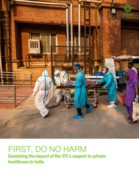
This report examines the support to private healthcare provision in India by the World Bank’s private sector arm, the International Finance Corporation (IFC). Despite supporting private healthcare in the country since 1997, no healthcare results for lending and investments have been disclosed sinc
...
e the start of these operations over twenty-five years ago. The IFC has overwhelmingly invested in high-end urban hospitals which are out of reach for the majority of Indians. Several have consistently failed to provide free healthcare to poor patients despite this being a condition under which free or subsidized public land was allotted to these hospitals. Supporting private healthcare in a context where 37% of Indians experience catastrophic health expenditures in private hospitals appears to run counter to the World Bank Group’s focus on poverty reduction. These investments do not contribute to the building of stronger healthcare infrastructure or respond to unmet healthcare needs. Only 14% of IFC-financed hospitals are located in the 10 states ranked lowest in terms of the overall performance of the health system. Furthermore, we found many instances where regulators upheld complaints pertaining to violations of patients’ rights by these hospitals including overcharging, denial of healthcare, price rigging, financial conflict of interest and medical negligence.
more

This report summarizes the World Health Organization’s (WHO) global work on water, sanitation and hygiene (WASH) during 2022. It describes how the Organization continued to deliver its essential WASH programming as elaborated in its 2018–2025 strategy.
Member States of the Region have initiated processes to strengthen leadership and governance for mental health. Several countries have developed and implemented mental health plans, strategies and legislations. Direct spending on mental health needs to be increased throughout the Region through the
...
health sector as well as other relevant sectors.
more
Pathogen genomic surveillance has become a priority for public health systems in recent years. Genomic sequencing is increasingly being used to characterize pathogens and monitor important public health priorities (e.g. poliovirus, influenza virus, Mycobacterium tuberculosis and Vibrio cholerae, ant
...
imicrobial resistance (AMR)). The decrease in cost and time of sequencing and the exponential development of bioinformatic pipelines have played a critical role in integrating pathogen genomics into routine public health surveillance. The coronavirus disease 2019 (COVID-19) pandemic has highlighted the role that sequencing plays in the surveillance of infectious diseases. Sequencing facilitates earlier detection, more accurate investigation of outbreaks, closer real-time monitoring of pathogen evolution and tailored development and evaluation of interventions to inform local to global public health decision-making and action. However, there remains a need to coordinate efforts, leverage and link existing surveillance and laboratory networks and capabilities, and systematically integrate genetic sequence data (GSD) with clinical and epidemiological data to strengthen its utility.
more
Marco Schäferhoff and colleagues critique funding estimates for the maternal and child health Millennium Development Goals, and make recommendations for improving the tracking of financing flows and estimating the costs of scaling up interventions for mothers and children.
While there has been real progress in addressing the burden of disease in the WHO African region, the COVID-19 pandemic has highlighted the link between health, economics and security, as the region saw decades of progress threatened, including positive trends in decreasing inequality. In the Africa
...
n Region the momentum towards achieving the 2030 SDG disease burden reduction targets (SDG targets 3.3, 3.4 and 3B) has stalled.
The COVID-19 pandemic was also a major threat to gains made, such as the eradication of polio in the region, declared in 2020; reduced numbers of new HIV infections in 2021 compared to 2010; and passing the 2020 milestone of the End TB Strategy, with a 22% reduction in new cases compared with 2015. However, the pandemic also disrupted essential health services in 92% of countries globally, 22.7 million children missed basic immunization, there was an increase in malaria and TB, and global deaths from TB rose for the first time since 2015.
more
In In recent years, China has increased its international engagement in health. Nonetheless, the lack
of data on contributions has limited efforts to examine contributions from China. Existing estimates that track
development assistance for health (DAH) from China have relied primarily on one data
...
set. Furthermore, little is known
about the disbursing agencies especially the multilaterals through which contributions are disbursed and how these
are changing across time. In this study, we generated estimates of DAH from China from 2007 through 2017 and
disaggregated those estimates by disbursing agency and health focus area.
more
What countries need: Investments needed for 2010 targets

This country cooperation strategy (CCS) outlines how the World Health Organization (WHO) will work with the Lao People’s Democratic Republic over the next five years (2024–2028), supporting the implementation of the five-year health sector development plans and the Health Sector Reform Strategy
...
2021–2030 to attain the Sustainable Development Goals (SDGs) by 2030.
The Lao People’s Democratic Republic experienced substantial economic growth in the 30 years prior to the coronavirus disease (COVID-19) pandemic, contributing to reduced poverty and significant progress toward the SDGs. However, the COVID-19 pandemic brought this development to a halt. It was anticipated that the COVID-19 recovery and the tremendous population growth in recent years would provide opportunities for a shift toward more sustainable and inclusive development in the years ahead. In 2023, however, the contrary was the case. Rural residents, including many ethnic minorities, continued to face marginalization because of limited access to education, health care and economic opportunities.
Despite the challenges of COVID-19 and other disease outbreaks, the country has made significant improvements in health. Nonetheless, progress has been uneven and not everyone has benefited from these achievements. In the mountainous region, many people lack access to quality health care because of the unequal distribution of well-trained health-care workers. Preventable deaths due to poor-quality health care for children and newborns, infants and mothers remain a concern, as do communicable diseases such as sexually transmitted infections and tuberculosis. The increasing burden of noncommunicable diseases and the health impact of worsening climate change further heighten the need for strengthened and resilient health systems, which are at risk due to an underfunded health sector and weak economy.
This CCS aims to address remaining and future challenges as well as health needs while creating an impact that is sustainable. It identifies three strategic priorities and nine deliverables (Table 1) to support the attainment of the national vision of Health for all by all, as articulated in the 9th Health Sector Development Plan 2021–2025. It contributes to the country’s goals to achieve universal health coverage, graduate from least developed country status by 2026 and attain SDGs by 2030.
more
This checklist is an operational tool to help national authorities develop or revise national respiratory pathogen (inclusive of influenza and coronaviruses) pandemic preparedness plans.

Benchmarking is a strategic process often used by businesses and institutes to standardize performance in relation to the best practices of their sector. The World Health Organization (WHO) and partners have developed a tool with a list of benchmarks and corresponding suggested actions that can be a
...
pplied to implement the International Health Regulations 2005 (IHR) and strengthen health emergency prevention, preparedness, response and resilience capacities.
The first edition of the benchmarks was published in 2019 to support countries in developing, implementing and documenting progress of national IHR or health security plans (e.g. national action plan for health security (NAPHS), national action plan for emerging infectious diseases, public health emergencies and health security and other country level plans for health emergencies). The tool has been updated to incorporate lessons from COVID-19 and other health emergencies, to align with the updated IHR monitoring & evaluation framework (IHR MEF) tools and the health systems for health security framework, and to support strengthening health emergency prevention, preparedness, response and resilience (HEPR) capacities and the Preparedness and Resilience for Emerging Threats (PRET) initiative.
more
