Filter
435
Text search:
recreation
Featured
30
110
Language
Document type
291
76
28
15
8
6
4
4
1
Countries
20
18
18
16
15
13
9
8
7
7
7
7
7
6
6
6
5
5
5
5
5
5
5
4
4
4
4
3
3
3
3
3
3
3
3
2
2
2
2
2
2
2
2
2
2
2
2
2
2
2
2
1
1
1
1
1
1
1
1
1
1
1
1
1
1
1
1
1
1
1
1
1
1
1
1
1
1
1
1
1
Authors & Publishers
Publication Years
Category
176
33
18
14
13
6
2
Toolboxes
89
52
38
21
13
11
11
10
10
10
9
7
6
6
6
4
2
1
Although Kenyans enjoy comparatively good health, the prevalence of
chronic disease is increasing and our ageing population is placing evergrowing pressures on the finite resources of our health system.

A implementation Matrix approved by the Cabinet of the Government of South Africa
9 March 2022, Timely and accurate diagnostic testing for SARS-CoV-2 is an essential part of a comprehensive COVID-19 response strategy. Ag-RDTs can be performed by individuals in which they collect their own specimen, perform a simple rapid test and interpret their test result themselves at a time a
...
Bioethics 519 (online) doi:10.1111/bioe.12145 Volume 29 Number 8 2015 pp. 488–596;
Pandemic plans recommend phases of response to an emergent infectious disease (EID) outbreak, and are primarily aimed at preventing and mitigating human-to-human transmission. These plans carry presumptive weight
...
Religion and Development 01/2019. Discussion Paper Series of the Research Programme on Religious Communities and Sustainable Development
Climate change, increasing population densities, and intensified globalisation in trade, travel and migration are among the most important factors shaping the 21st century. Each impacts upon population health and the risk of infectious disease, particularly those originating at the human-animal-envi
...
Proc Natl Acad Sci U S A v.110(21); 2013 May 21 PMC3666729 ;
A systematic review was conducted by a multidisciplinary team to analyze qualitatively best available scientific evidence on the effect of agricultural intensification and environmental changes on the risk of zoonoses for which there are
...

The main message emerging from this new comprehensive global assessment is that premature death and disease can be prevented through healthier environments – and to a significant degree. Analysing the latest data on the environment-disease nexus and the devastating impact of environmental hazards
...
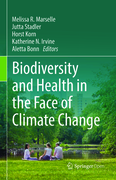
The biosphere underlies the whole sustainable development concept, as the layer on
which society and the economy rely. Nature and biodiversity fuel the natural cycles
and life-support systems of the planet, on which humanity ultimately depends.

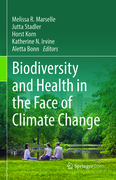
Biodiversity and Health in the Face of Climate Change pp 47–66
This chapter reviews the emerging importance of pollen allergies in relation to ongoing climate change. Allergic diseases have been increasing in prevalence over the last decades, partly as the result of the impact of climate change.
...
Biodiversity and healthy natural ecosystems, including protected areas in and around cities, provide ecosystem benefits and services that support human health, including reducing flood risk, filtering air pollutants, and providing a reliable supply of clean drinking water. These services help to red
...
Human use of land has been transforming Earth's ecology for millennia. From hunting and foraging to burning the land to farming to industrial agriculture, increasingly intensive human use of land has reshaped global patterns of biodiversity, ecosystems, landscapes, and climate. This review examines
...
The Scientific Conceptual Framework for Land Degradation Neutrality (LDN) provides a scientific foundation for understanding, implementing and monitoring LDN. It has been designed to create a bridge between the vision and the practical implementation of LDN, by defining LDN in operational terms. The
...

In 2015, 26% of the deaths of 5.9 million children who died before reaching their fifth birthday could have been prevented
through addressing environmental risks – a shocking missed opportunity. The prenatal and early childhood period represents
a window of particular vulnerability, where enviro
...
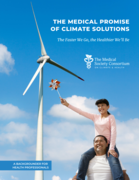
The Faster We Go, the Health We'll Be.
The report outlines five climate solutions that research shows will deliver immediate, often localized, health and equity benefits. Our focus is on the solutions that proactively advance both health and health equity, recognizing that some of us face greater h
...