Filter
1290
Text search:
neglected
tropical
diseases
Featured
109
256
Language
Document type
452
377
120
87
68
55
32
31
19
13
12
11
6
5
2
Countries
224
33
31
25
24
24
21
21
21
15
14
14
14
13
13
12
11
11
11
10
10
10
10
9
9
8
8
7
7
7
6
6
5
5
5
4
4
3
3
3
3
3
3
3
3
3
2
2
2
2
2
2
2
2
2
2
2
2
2
2
2
2
2
1
1
1
1
1
1
1
1
1
1
1
1
1
1
1
1
1
1
1
1
1
1
1
1
1
1
1
1
1
1
1
1
1
1
1
1
1
1
Authors & Publishers
Publication Years
Category
279
149
89
37
29
22
14
1
Toolboxes
561
61
46
36
32
29
27
25
24
22
18
15
15
14
10
9
7
6
4
4
4
2

Website last accessed on 08.05.2023
Parts of the continent are still blighted by one of the world's deadliest diseases. An app is helping to turn the tide.
Website last accessed on 14.05.2023
Leishmaniasis A group of diseases, caused by the Leishmania parasites and transmitted by the sandfly
Schistosomiasis, also known as bilharzia, is an infection caused by a parasitic worm that lives in fresh water in subtropical and tropical regions.
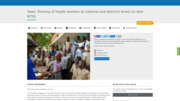
Course information
Yaws is targeted for eradication by WHO in the 2021-2030 NTD Roadmap. It is therefore crucial to know how to identify cases, design and implement activities to eradicate the disease at the community level.
In the context of integration of skin NTDs it is vital to learn to recogn
...

Yaws is a non-venereal endemic treponemal infection caused by Treponema pallidum sub-species pertenue, a bacterium closely related to Treponema pallidum ssp. pallidum, the agent of venereal syphilis. Yaws predominantly affects children living in tropical
...
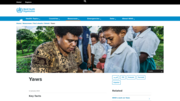
Yaws forms part of a group of chronic bacterial infections commonly known as the endemic treponematoses. These diseases are caused by spiral bacteria of the genus Treponema, which also includes endemic syphilis (bejel) and pinta. Yaws is the most co
...
Course information
Yaws is targeted for eradication by WHO in the 2021-2030 NTD Roadmap. It is therefore crucial to know how to identify cases, design and implement activities to eradicate the disease at the community level.
In the context of integration of skin NTDs it is vital to learn to recogn
...

In 2018, we are celebrating 20 years of progress in eliminating trachoma, the world’s leading infectious cause of blindness. Set up in 1998 by Pfizer Inc. and the Edna McConnell Clark Foundation, the International Trachoma Initiative (ITI) supports Ministries of Health in over 30 countries around
...
Leishmaniasis is still considered to be a global health problem, which spreads in most countries in the world. Leishmania is an intracellular obligate protistan parasite that causes different clinical symptoms in infected humans and other animals. There are clinically different types of the disease
...
Chikungunya virus (CHIKV) is a re-emerging mosquito borne alphavirus responsible
for the recent outbreak in the Americas. Immunologically naïve population in the Americas favors the spread of epidemics. Chikungunya fever is characterized by an abrupt febrile illness, polyarthralgia and maculopapul
...

Background: Despite several cycles of Mass Drug Administration (MDA), however, the prevalence of Soil-transmitted helminthiasis (STH) remains high in Bangladesh. A clear understanding of local knowledge, attitudes, and practices (KAP) related to the acceptance and utilization of MDA is critical for
...
Soil-transmitted helminth (STH) infections are among the most common infections worldwide with an estimated 1.5 billion infected people or 24% of the world’s population. These infections affect the poorest and most deprived communities with poor access to clean water, sanitation and hygiene in
...
Chagas disease or American trypanosomiasis is, together with geohelminths, the neglected disease that causes more loss of years of healthy life due to disability in Latin America. Chagas disease, as determined by the factors and determinants, shows
...
The World Heart Federation (WHF) has been advocating globally for stronger
legislation and policy regarding cardiovascular disease (CVD) for many years. Now, as focus shifts from global to national progress, we call on members and colleagues to advocate for greater action on CVD in your local setti
...
The Country Cooperation Strategy is the World Health Organization (WHO)’s reference for country work guiding planning and resource allocation through alignment with national health priorities and harmonization with other development partners. It clarifies roles and functions of WHO in supporting t
...
Mpox continues to affect people around the world. A new framework released today by WHO will guide health authorities, communities and other stakeholders in preventing and controlling mpox outbreaks, eliminating human-to-human transmission of the disease, and reducing spillover of the virus from ani
...

The purpose of this handbook is to provide guidance to Member States on the practical aspects of maintaining sanitary standards at international borders at ports, airports, and ground crossings (points of entry) as set out in the International Health Regulations (2005). It provides technical advice
...