
Filter
865
Text search:
Ministry
de
la
Santé
Featured
Recommendations
45
New Publications
338
Language
Document type
No document type
565
Studies & Reports
128
Guidelines
52
Training Material
41
Manuals
36
Fact sheets
18
Strategic & Response Plan
16
Situation Updates
5
Infographics
2
Online Courses
1
Videos
1
Countries / Regions
India
89
Kenya
54
Nepal
43
Rwanda
43
Tanzania
35
Nigeria
34
Uganda
32
Malawi
32
Ethiopia
30
Sierra Leone
27
Bangladesh
26
Senegal
25
Myanmar / Burma
24
Zambia
20
Congo, Democratic Republic of
18
Indonesia
16
Burkina Faso
15
Haiti
14
Ghana
13
Namibia
13
Liberia
12
Cameroon
12
Cambodia
11
Global
11
Zimbabwe
9
Benin
8
Syria
7
Lesotho
7
Mali
5
Pakistan
5
Afghanistan
5
Mozambique
5
Africa
5
South–East Asia Region
4
Latin America and the Carribbean
4
Guinea
3
South Sudan
3
South Africa
3
Ukraine
3
Botswana
3
Western and Central Europe
3
Togo
2
Eswatini/ Swaziland
2
Sri Lanka
2
Asia
2
Tajikistan
2
Guinea-Bissau
1
Niger
1
Somalia
1
Germany
1
Chad
1
Central African Republic
1
Argentina
1
North Macedonia
1
Yemen
1
East and Southern Africa
1
Paraguay
1
Venezuela
1
Eastern Europe
1
Southern Africa
1
Russia
1
Estonia
1
Romania
1
Iran
1
Kyrgyzstan
1
North America
1
Jamaica
1
Belarus
1
Latvia
1
Authors & Publishers
Publication Years
Category
Countries
667
Women & Child Health
98
Capacity Building
50
Public Health
35
Clinical Guidelines
32
Key Resources
9
Pharmacy & Technologies
1
Toolboxes
Mental Health
35
Caregiver
26
COVID-19
22
Conflict
12
Refugee
10
Disability
9
Rapid Response
9
TB
9
Ebola
8
HIV
8
Planetary Health
8
Global Health Education
7
Cholera
5
AMR
5
Pharmacy
4
Health Financing Toolbox
4
Natural Hazards
3
Zika
3
NTDs
3
NCDs
3
Polio
1
This article reexamines a set of study findings that directly relate to the influence of gender on workplace violence, synthesizes these findings with other research from Rwanda, and examines the subsequent impact of the study on Rwanda’s policy environment.
Nigeria reported its first case of COVID-19 at the end of February 2020 and subsequently experienced
four waves, with peaks in June 2020 and January, August and December 2021. The COVID-19 pandemic
severely impacted the economy of Nigeria and caused disruption of health services nationwide. During
...
The booklet includes a number of child protection case management forms to be used in tandem with the Training Manual and Framework.
Nigeria is Africa’s most populous nation and accounts for nearly one quarter of the continent’s maternal, newborn and child deaths. In the spirit of the global Countdown to 2015 for Maternal, Newborn and Child Health and the Nigerian Saving One Million Lives Initiative, these state data profiles
...
To provide quality maternal and newborn health services at health facilities in India.
NAMIBIA (2012/13-2015/16)
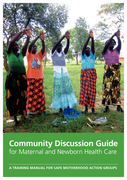
A training manual for safe motherhood action groups (MAMaZ)
Census Report Volume 4-C
The 2014 Myanmar Census provided the opportunity to measure maternal mortality. The questions on deaths in households during the twelve months prior to the Census were included in the questionnaire, as well as questions necessary to estimate maternal mortality indicator ...
The 2014 Myanmar Census provided the opportunity to measure maternal mortality. The questions on deaths in households during the twelve months prior to the Census were included in the questionnaire, as well as questions necessary to estimate maternal mortality indicator ...

India contributes to 16% of the global maternal deaths and around 27% of global newborn deaths. Reducing the burden of maternal and newborn mortality and morbidity in urban poor settings today requires an expansion of effective Maternal and Newborn Health (MNH) care services and lowering the barrier
...
Neonatal mortality is a major challenge in reducing child mortality rates in Nepal. Despite efforts by the Government of Nepal, data from the last three demographic and health surveys show a rise in the contribution of neonatal deaths to infant and child mortality. The Government of Nepal has implem
...
Version 2, January 2016
The primary purpose of this document is to provide 3MDG stakeholders with some essential information on the MNCH core-indicators for 3MDG, which were derived from the 3MDG Logical Framework, Data Dictionary for Health Service Indicators (2014 June, DoPH, MoH), A ... (MEASURE Evaluation, September 2005) and Monitoring Emergency Obstetric Care (WHO/UNICEF/UNFPA/AMDD). Partners are strongly encouraged to integrate the MNCH indicators into their ongoing monitoring and evaluation (M&E) activities.
These indicators are designed to help Partners assess the current state of their activities, their progress towards achieving their targets, and contribution towards the national response. This guideline is designed to improve the quality and consistency of data collected at the township level, which will enhance the accuracy of conclusions drawn when the data are aggregated.
The primary purpose of this document is to provide 3MDG stakeholders with some essential information on the MNCH core-indicators for 3MDG, which were derived from the 3MDG Logical Framework, Data Dictionary for Health Service Indicators (2014 June, DoPH, MoH), A ... (MEASURE Evaluation, September 2005) and Monitoring Emergency Obstetric Care (WHO/UNICEF/UNFPA/AMDD). Partners are strongly encouraged to integrate the MNCH indicators into their ongoing monitoring and evaluation (M&E) activities.
These indicators are designed to help Partners assess the current state of their activities, their progress towards achieving their targets, and contribution towards the national response. This guideline is designed to improve the quality and consistency of data collected at the township level, which will enhance the accuracy of conclusions drawn when the data are aggregated.

WAHA International’s mHealth programme addresses several barriers to maternal and neonatal care, including: a lack of information at the community level about locally available services; a large distance from services and a lack of affordable transport for patients; and ineffective communication b
...
