
Filter
2842
Text search:
women
law
Featured
192
821
Language
Document type
1851
463
186
121
100
44
35
24
6
5
4
2
1
Countries
101
97
95
73
70
70
63
60
59
56
54
54
50
47
45
43
39
36
36
35
34
33
32
31
27
27
27
25
25
24
23
23
21
21
19
19
14
13
13
12
12
12
12
12
11
10
10
10
10
10
9
9
8
8
8
8
8
7
7
7
6
6
6
6
6
6
5
5
5
5
5
4
4
4
4
4
4
4
4
4
4
4
3
3
3
3
3
3
3
3
2
2
2
2
2
2
2
2
2
2
2
2
2
2
2
2
2
2
1
1
1
1
1
1
1
1
1
1
1
1
1
1
1
1
1
1
1
1
1
1
Authors & Publishers
Publication Years
Category
1141
192
126
84
83
50
5
4
3
Toolboxes
304
293
198
173
167
127
91
74
54
45
45
42
25
24
23
23
20
17
13
13
10
8
3
1
1
1
An integrated approach to health and human rights lies at the heart of ensuring the dignity and well-being of women living with HIV.
DHS Further Analysis Reports No. 98

This five-day child protection case management training manual was developed to meet the needs of community child protection workers and other social workers working in tandem with the justice, health and law enforcement systems in Malawi.
Accessed: 24.09.2019
The recommendation in this document thus supersedes the previous WHO recommendation for the prevention of PPH as published in the 2012 guideline, WHO recommendations for the prevention and treatment of postpartum haemorrhage.
“They Treated Us in Monstrous Ways”.
Since the Syrian conflict began in March 2011, men and boys and transgender women have been subjected to rape and other forms of sexual violence by the Syrian government and non-state armed groups, includin
...

UNFPA implements programmes addressing gender-based violence (GBV) in 153 countries and territories, many of which face humanitarian emergencies. Leading resources used by GBV practitioners include the Inter-Agency Minimum Standards for Gender-Based Violence in Emergencies Programming (the GBViE Min
...
Further Analysis of the 2000, 2005, and 2011 Demographic Health Surveys. DHS Further Analysis Reports No. 72
This report serves as a background paper to five short studies Yemeni-international researcher tandems will jointly develop in the course of 2019. It places a particular focus on ‘peace requirements’, a term that seeks to draw attention to the manifold challenges to establishing stab
...
Health and Human Rights Journal
December 2016 / Volume 18 / Number 2 / Papers, 171-182
Vanquishing violence and vulnerability in humanitarian settings
Background paper for the joint African Union–UNAIDS (in capacity of serving
Chair of H6) high-level side event at the 73rd United Nations General Assembly,
24 September 2018, at UNHQ, Conference Room 3
The crisis caused by the COVID-19 pandemic exacerbated preexisting structural economic inequalities, and had a disproportionate impact on informal workers, especially on women and young people, who lost jobs and income. The situation was even more d
...

Volume 3 - 2015
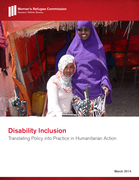
The report provides lessons and recommendations for other organizations and the wider humanitarian community on engaging persons with disabilities at all levels of humanitarian work. It draws on consultations with over 700 displaced persons—including persons with disabilities, their families, and
...
This provisional Facilitator's Kit provides a complete framework for a 3-day training on Community Preparedness for Reproductive Health and Gender. The goal is to build community capacity to prepare and respond to risks and inequities faced by women
...
The module is currently available in English, French, Nepali, Portuguese, Russian, and Spanish
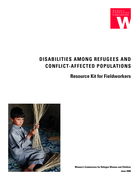
Resource Kit for Field workers

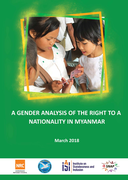
According to 2014 Census data, almost a third of the population in Myanmar do not have adequate identity and civil documentation. Of these, 54 percent are women.
Women who live in remote or conf ...
Women who live in remote or conf ...

Volume 2 - 2014

TOWARDS 30 YEARS OF THE BEIJING DECLARATION AND PLATFORM FOR ACTION: UNITE TO END VIOLENCE AGAINST WOMEN
Concept Note
Globally, 85,000 women and girls were killed intentionally in 2023. 60 per cent of these homicides—51,000—were committed by an intimate partner or other family member. 140 women and girls die ev
...

arrow country studies
Political developments in Myanmar/Burma prompted the Asian-Pacific Resource and Research Centre for Women (ARROW) in 2013 to undertake a small-scale scoping study to re-evaluate and refine its advocacy strategies for sexual ...
Political developments in Myanmar/Burma prompted the Asian-Pacific Resource and Research Centre for Women (ARROW) in 2013 to undertake a small-scale scoping study to re-evaluate and refine its advocacy strategies for sexual ...
The guide summarizes an assessment of War Child Canada’s three-pronged legal protection model as implemented with South Sudanese refugees in Northern Uganda and uses it to identify the most important lessons for ensuring legal protection mechanisms are in place at the onset of an emergency
An Advocate’s Guide: Strategic Indicators for Universal Access to Sexual and Reproductive Health and Rights
recommended
This guide was prepared to enable advocates to use data
when advocating for universal access to SRHR at the national,
regional and global levels. It is a direct outcome of the Strategic
SRHR Indicators workshop held in Kuala Lumpur, Malaysia on
21-22 August for the project “Strengthening the N
...


The coronavirus outbreak that began in late 2019 (COVID-19) has evolved rapidly and globally. On 30 January 2020, the World Health Organization (WHO) declared the outbreak of COVID-19 a Public Health Emergency of International Concern and a pandemic on 11 March 2020 indicating global spread of a new
...
Guidance Document and supporting Resources
2017-2018
Republic of Albania
Training for Health Care Providers
Facilitators’ Manual
With an FGM prevalence of 75.8% among women aged 15-491, Burkina Faso is classified by UNICEF2 as a ‘moderately high prevalence’ country.
FGM is practised across all regions, ethnic groups and religions in Burkina Faso. There are distinct re
...
Violence Against Women and HIV/AIDS Prevention and Treatment
Refugee law encompasses both customary law, peremptory norms, and international legal instruments.
The only international instruments directly applying to refugees are the 1951 United Nations Conve
...
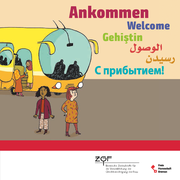
Nice multilingual information brochure for refugee women arriving in Germany/Bremen. Includes Information on:
- Learn German
- Education & Employment
- Healthcare & Pregnancy
- Protection against Violence
- Asylum for
...

A Focus on the Journey to Self-Reliance for Preventing Child and Maternal Deaths . June 2018
The 2018 Acting on the Call report focuses on 25 countries’ journeys to self-reliance for preventing child and maternal deaths. Self-reliance is a country’s ability to finance and implement solution ...
The 2018 Acting on the Call report focuses on 25 countries’ journeys to self-reliance for preventing child and maternal deaths. Self-reliance is a country’s ability to finance and implement solution ...

Census data shows that Myanmar can harness a double dividend – both youth and gender. This year’s annual report provides many facets of the journey to gender equality. It tells a story of widening horizons for women and girls who are capable in
...
Kreyol translation of Where Women Have No Doctor
You can download single chapters for free from the website
This Rapid Gender Analysis provides preliminary information and observations on the different needs, capacities and coping strategies of Venezuelan migrant and refugee women, men, boys, and girls in Colombia. It seeks to understand how gender roles
...
Children malnutrition eradication in developing countries is a real challenge, especially among
vulnerable population. There are so many effort towards women (who are the main care providers)
socio-economic situation in order to improve their chil
...
Not all that bleeds is Ebola
recommended
How has the DRC Ebola outbreak impacted Sexual and Reproductive Health in North-Kivu?
Recommendations (more specifics found in the assessment):
1. Sexual and reproductive health needs and services are to be embedded in the EVD response from the outset.
2. Reduce delays at every stage of the patie
...
Induced abortion is permitted in Burkina Faso only to save the life and protect the health of a
pregnant woman, or in cases of rape, incest, and severe fetal impairment. As a result, the vast
majority of women who end unintended pregnancies do so
...
Senegal is home to nearly 2 million girls and women who have experienced FGM. Overall, 25 per cent of girls and women have undergone the practice, varying from over 90 per cent in Kédougou to just
...
Female Genital Mutilation in Mali: Insights from a statistical analysis Mali is home to nearly 8 million girls and women who have experienced FGM. Overall, 89 per cent of girls and women aged 15 to
...
Kenya is home to 4 million girls and women who have experienced FGM. Overall, 21 per cent of girls and women aged 15 to 49 years have undergone the practice, varying from 98 per cent in the North Ea
...
Ethiopia is home to 25 million girls and women who have experienced FGM. More than half are in the regions of Oromia and Amhara. Overall, 65 per cent of girls and women aged 15 to 49 have undergone
...

Women have less access to the development services and support – such as adequate healthcare, education and
modern technology – that make people more resilient to climate change and other shocks and stressors.2
...
Women and children, especially pregnant girls and women, infants and young children and postpartum women, are populations that are extremely vulner
...
Humanitarian crises can affect women, men, girls and boys in radically different ways. To address the different impacts of conflict and disasters on each group and promote the potential for positive transformation of gender norms, Oxfam calls for hu
...
Accessibility is by law; not just a favour. The booklet contains what the laws say about physical accessibility and their interpretation
Abuses against Women and Girls with Psychosocial or Intellectual Disabilities in institutions in India
This study emphasizes the contribution that women can play in the prevention of violent extremism within the family and society and analyzes the drivers and roles of women taking part in violent ext
...
Despite the existence of criminal law, which is an important aspect of anti-FGM policies and programmes, there is not much research on the effects of cross-border practices that invalidate the law a
...
Do men and women experience different types of security events? Are there differences in the attitudes within humanitarian agencies towards the same type of events affecting men or women? In this pa
...
A Booklet on Women and HIV/AIDS for Auxiliary Nurse Midwives (ANMs) Accredited Social Health Activists (ASHAs) Anganwadi Workers (AWWs) and Members of Self-help Groups (SHGs)
Version 2
Version 2
Links to the Humanitarian Charter and international law
The Impact of the Zika Outbreak on Women and Girls in Northeastern Brazil

This publication offers practical advice on implementing HIV and STI programmes for transgender people, with a focus on transgender women, aligned with the 2011 Recommendations and the 2014 Key Populations Consolidated Guidelines. It contains exampl
...
Updated 17 April 2020
Improving care for women during pregnancy and around the time of childbirth to prevent and treat pre-eclampsia and eclampsia is a necessary step towards the achievement of the health targets of the Sustainable Development Goal
...
7 June 2020 Version 1
Women in Myanmar have traditionally been underrepresented in public decision-making processes, a trend which is continuing in structures established to respond to COVID-19. This means that even as
...
This publication makes the case for working with men and women, boys and girls, together in an intentional and mutually reinforcing way that challenges gender norms in the pursuit of improved health and gender equality. In addition to providing a de
...
Unchecked inequality and failure to protect the rights of poorest women could undermine peace and world’s development goals, new UNFPA report warns:
- Only about half of the world’s women hold
...
Sexual violence is a major problem in South Africa, with studies showing that up to one in four women have been raped in their lifetime.
Sexual and gender-based violence (SGBV) threatens displaced women and girls, as well as men and boys, in all regions of the world. Creating safe environments and mitigating the risk of SGBV can only be achieved by addressing gender inequality and di
...
The primary audience of these recommendations includes healthcare providers who are responsible for developing national and local health protocols (particularly those related to hypertensive disorders of pregnancy), and those directly providing care to pregnant
...
How the Greek reception system is failing to protect the most vulnerable people seeking asylum.
Greece and its EU partners are failing pregnant women, unaccompanied children, victims of torture or sexual violence and other vulnerable people who see
...
Family planning: a global handbook for providers
recommended
4th edition 2022 of the Handbook includes new WHO recommendations that expand contraceptive choices. Also, guidance on starting ongoing contraception following emergency contraception is provided.
Drawing on lessons from recent outbreaks, this new edition details tangible me
...
Impact of EU policies on accessing protection. The report highlights the tragedy hundreds of thousands of people face when seeking protection in Europe. Women, men and children escaping war, repression and violation of human rights often turn to Eur
...
This FAQ responds to questions revolving around the topic of protecting refugee women and girls against violence. It begins with a glossary that clarifies key terms and their consequences for female refugees. The glossary will be a
...
Census Report Volume 4-B
In the 2014 Census, early-age mortality was measured from the responses to two simple retrospective questions on childbearing addressed to ever-married women aged 15 and over. These questions referred to how many live c ...
In the 2014 Census, early-age mortality was measured from the responses to two simple retrospective questions on childbearing addressed to ever-married women aged 15 and over. These questions referred to how many live c ...
Census Report Volume 4-A
This thematic report presents findings on fertility and nuptiality in Myanmar. The analysis hows that the total fertility rate is 2.5 children per woman at the Union level, 1.9 children per woman for urban areas, and 2.8 children per woman for rural areas. Total fertili ...
This thematic report presents findings on fertility and nuptiality in Myanmar. The analysis hows that the total fertility rate is 2.5 children per woman at the Union level, 1.9 children per woman for urban areas, and 2.8 children per woman for rural areas. Total fertili ...
This gender analysis was conducted to understand the different risks and vulnerabilities but also opportunities and skills for Rohingya and host community women, men, boys and girls. Data collection was conducted over three weeks from 8 April to 29
...
Submitted to the United Nation's Committee on the Convention on the Elimination
of All Forms of Discrimination Against Women
February 2016
Published by the Albanian Center for Population and Development (ACPD) Adresa : Bul “ Gjergj Fishtaâ€
...
This handbook is an adaptation from the WHO Clinical Handbook Health care for women subjected to intimate partner violence or sexual violence developed by the World Health Organization (WHO), UN Women
...
Every day in 2020, approximately 800 women died from preventable causes related to pregnancy and childbirth - meaning that a woman dies around every two minutes.
Sustainable Development Goal (SDG) target 3.1 is to reduce maternal mortality to less
...
UNHCR invested significantly in risk mitigation, prevention and response to sexual exploitation and abuse (SEA) in the Europe region in 2022-2023, in particular in connection with the Ukraine emergency, where the risks were considered high due to the unprecedented scale and speed of displacement, mo
...
In October 2022, President Biden signed the Global Malnutrition Prevention and Treatment Act (GMPTA) into law, which directs USAID to prevent and treat malnutrition globally. The GMPTA further codifies USAID’s leadership on nutrition, with a focus
...
The Compendium brings together for the first time key consensus-based policy recommendations and guidance to improve the delivery of proven interventions to women and children. The user-friendly format incorporates icons and tabs to present key heal
...
Findings from this report reveal that, rates of early marriage are high, a significant percentage of children contribute to the household’s income or are its main source of income, and restrictions on the mobility of women and girls constrain thei
...
Once identified as vulnerable, applicants enjoy specific rights and safeguards in the asylum process under EU law. Vulnerability should therefore trigger additional or tailored support to ensure that people have the necessary conditions to bring for
...
We have long been working to prevent and end sexual violence in armed conflicts and to ensure that the countless victims – men, women, boys and girls – receive the help they need.
In this document, we examine sexual violence specifically in ...
In this document, we examine sexual violence specifically in ...
One billion people around the world live with disabilities. This report makes the case that they are being “left behind” in the global community’s work on health. This lack of access not only violates the rights of people with disabilities under international
...
The Russian Federation continues to be a major destination country for Central Asianlabour migrants. There were nearly million Central Asians living in the Russian Federation in 2019, mainly coming from Kyrgyzstan, Tajikistan, and Uzbekistan in order to seek employment opportunities. Men continue to
...
Human rights-based approaches to the creation of knowledge involve application of human rights principles to both the content and process of knowledge creation. Human rights-based approaches have special significance for the sexual and reproductive health and rights (SRHR) of all people, in particul
...
The escalation of the war in Ukraine began on 24 February 2022, causing thousands of civilian
casualties; destroying civilian infrastructure, including hospitals, and triggering the fastest-
growing displacement crisis in Europe since World War II. The demographic profile of Ukraine,
combined wit
...
A study set out to investigate the factors affecting the prevalence of the practice among cross-border communities in East Africa and the Horn of Africa and the extent to which people cross borders to practise or undergo FGM and the effects of the practice on the
...
