Filter
1852
Text search:
vision
loss
Featured
184
557
Language
Document type
1118
270
177
120
80
48
19
13
3
2
2
Countries
112
95
72
53
49
46
36
34
34
32
30
29
27
26
25
25
22
22
21
19
17
16
15
15
14
14
14
13
12
12
11
8
8
7
6
6
6
6
6
6
5
5
5
4
4
4
4
4
4
4
4
4
4
3
3
3
3
3
2
2
2
2
2
2
2
2
2
1
1
1
1
1
1
1
1
1
1
1
1
1
1
1
1
1
1
1
1
1
1
1
Authors & Publishers
Publication Years
Category
731
155
135
89
57
40
11
4
1
Toolboxes
165
151
100
78
75
69
56
54
49
41
40
40
39
38
33
21
20
18
13
13
10
7
3
3


This brief gives an overview of disability rights in the Sub-Saharan region, with focus on Sida partner countries; DRC, Ethiopia, Kenya, Liberia, Mali, Mozambique, Rwanda, Somalia, Sudan and South Sudan, Tanzania, Uganda, Zambia and Zimbabwe
This brief focuses on disability rights in the ASEAN countries, namely Brunei Darussalam, Cambodia, Indonesia, Lao People’s Democratic
Republic (PDR), Malaysia, Myanmar, the Philippines, Singapore, Thailand and Viet Nam.
Accessed: 10.03.2019
Session outline
•Introduction to epilepsy.
•Assessment of epilepsy.
•Management of epilepsy.
•Follow-up of a person with epilepsy.
•Review or materials and skills.
Communicable Disease Control Branch
Communicable Disease Management Protocol – Human Immunodeficiency Virus/Acquired Immunodeficiency Syndrome (HIV/AIDS), February 2010

Drug Distribution and Control: Preparation and Handling–Guidelines
Review 2008
This short guide to the Global Diabetes Compact explains what diabetes is and why action to improve prevention efforts, diagnosis and treatment is so urgent. It outlines the key asks associated with the Compact and emphasizes that increasing access to insulin, strengthening health systems and meanin
...
Disability Fact Sheet #13 (FS13)
Glaucoma is a leading cause of irreversible blindness globally. In Malawi, glaucoma accounts for 15.8% of the blindness among people aged 50 years and above. Blindness from glaucoma is preventable with early detection and timely treatment. However, glaucoma management remains a challenge to eye care
...
Psychological first aid: Guide for field workers
recommended
When terrible things happen in our communities, countries and the world, we want to reach out a helping hand to those who are affected. This guide covers
psychological first aid which involves humane, supportive and practical help to fellow human beings suffering serious crisis events. It is writt
...
Emergency Capacitiy Building Project agencies, led by CARE, have developed the Shelter Accountability Resources for project managers and decision-makers in humanitarian shelter programs.
As a guide it is also intended to be useful for Shelter Cluster coordinators, and other staff who would like t
...
- Resilient Markets
- Resilient Agriculture
- Resilient People
- Political Leadership for Resilient Growth
This manual is designed to orient helpers to offer psychologicalfirst aid (PFA) to people following a serious crisis event. PFA involves humane, supportive and practical assistance for people who are distressed, in ways that respect their dignity, culture and abilities. PFA is an approach that can b
...
Equity and Quality in Health: a People's Right
The Vienna Declaration was signed at the end of the Fifth High-level Meeting on Transport, Health and Environment. The virtual meeting, hosted by the Federal Government of Austria, brought together 46 ministers and representatives of 56 countries in the pan-European region.
The group discussed ho
...
Security Risk Management and Religion: Faith and secularism in humanitarian assistance examines the impact that religion has on security risk management for humanitarian agencies, and considers whether a better understanding of religion can improve the security of organisations and individuals in th
...
El Niño conditions persisting during the 2015/16 planting season have caused the worst drought in 35 years in Southern Africa, resulting in a second consecutive failed harvest. This has created severe food shortages and compounded existing vulnerabilities. Since July 2016, Namibia and Botswana have
...

The training manual consists of: (i) Tools for communication, reassurance and comfort for staff working directly with distressed children; (ii) Advice and guidance for staff working with parents and primary care-givers; (iii) Suggestions for ways to support a distressed child. It provides a non-i
...
Final Draft narrative December 6, 2012 - This strategic plan, developed through the joint collaboration of all stakeholders in the different sectors is aimed at harnessing and bringing together all the stakeholders who have a role in the prevention, detection and management of epidemic and infectiou
...

This National Food and Nutrition Policy developed in 2013 builds on several achievements that have improved the status of nutrition and household food security in Rwanda during the past six years. The outlines ambitious but necessary strategies needed to solve serious and
persistent problems includ
...
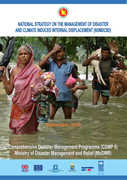
National strategy on the management of disaster and climate induced internal displacement (NSMDCIID)
This strategy has been developed with a view to managing climate-induced internal displacement (CIID) in a comprehensive and rights-based manner. It is part of the action plan for the Government of Bangladesh (GoB) to implement the Sendai Framework.
The strategy focuses solely on internal disp ...
The strategy focuses solely on internal disp ...
The guidelines are presented in the form of the following chapters:
Chapter 1: Floods status and context
Chapter 2: Institutional framework and financial arrangements
Chapter 3: Flood prevention, preparedness and mitigation
Chapter 4: Flood forecasting and warning in India
C ...
Chapter 1: Floods status and context
Chapter 2: Institutional framework and financial arrangements
Chapter 3: Flood prevention, preparedness and mitigation
Chapter 4: Flood forecasting and warning in India
C ...
CBDRR Practice. Case Studies 1
No publication year indicated.
No publication year indicated.

No publication year indicated
The specific objectives of the plan are to:
- Scale up evidence-based, cost effective interventions through effective strategies within a HSS approach and provide equitable coverage with quality.
- Reduce neonatal mortality by improved home-based newborn ...
The specific objectives of the plan are to:
- Scale up evidence-based, cost effective interventions through effective strategies within a HSS approach and provide equitable coverage with quality.
- Reduce neonatal mortality by improved home-based newborn ...
Lancet Global Health Volume 7, Issue 1, January 2019, Pages e81-e95
7 February 2019
Neurological, Psychiatric, and Developmental Disorders: Meeting the Challenge in the Developing World
Institute of Medicine (US) Committee on Nervous System Disorders in Developing Countries.
Washington (DC): National Academies Press (US); 2001.
Managing Sexual Violence against Aid Workers aims to support aid agencies in preventing, being prepared for and responding to incidents of sexual violence against their staff. It is intended as a good practice guide to help strengthen existing processes and support organisations as they set up their
...

Antibiotics have been useful in fighting infectious diseases in our country for decades, but because of the overuse and misuse of these agents, an increasing number of organisms are now resistant to them. The Philippines, like other Southeast Asian countries, has already been encountering the many c
...
Human rights must be at the centre of all prevention, preparedness, containment and treatment efforts from the start, in order to best protect public health and support the groups and people who are most at risk. States have an obligation to protect and guarantee everyone the right to the highest at
...

RMRP 2020 - Regional Refugee and Migrant Response Plan for Refugees and Migrants from Venezuela 2020
The Venezuelan refugee and migrant crisis is one of the biggest external displacement crises in the world today. The COVID-19 pandemic has compounded an already desperate situation for many refugees and migrants, as well as their hosts, sorely testing health and social welfare systems and the abilit
...
Prescriptions and Actionables for a Healthy and Green Recovery.
The practical steps outlined in this report aim at creating a healthier, fairer and greener world while investing to maintain and resuscitate the economy hit by the effects of COVID-19.
Policy makers, national and local decision-make
...
The purpose of the toolkit is to bring together existing learning and guidance as a starting point for stakeholders to begin SRH preparedness work. Within the SRH sector the field of preparedness is relatively new and growing. More collective effort is required to further evaluate the impact of prep
...
The new Global AIDS Strategy 2021--2026, End Inequalities, End AIDS, is a bold approach that uses an inequalities lens to close the gaps preventing progress to end AIDS
mnesty International’s annual report on the state of the world’s human rights in 2021, published in March 2022, shows that promises to “build back better” after the Covid-19 pandemic were little more than lip service. Hopes of global cooperation withered in the face of vaccine hoarding and c
...
This case study takes a closer look at experiences in three countries and one sub-region, each with a unique profile, a specific set of challenges and opportunities, and differing levels of WASH competencies. Through the lens of the participating National Societies and the communities they serve, th
...
For the purpose of this document, Interprofessional is defined as: Multiple health disciplines with diverse knowledge and skills who share an integrated set of goals and who utilize interdependent collaboration that involves communication, sharing of knowledge and coordination of services to provide
...
The Manifesto to Secure a Healthy Planet for All – A Call for Emergency Action | InterAction Council
The Manifesto was launched at a High Level Event in London on the 31st July 2019, where Emergency response mechanisms to address the Climate and Environmental Crisis are being explored. The Manifesto has been developed in response to the increasing international and United Nations evidence and under
...
This Eye health strategic plan presents the Ministry of Health’s five
year proposed strategies for eye care in Kenya. It sets the strategic
direction for the National Eye Health Care System and presents
information on the priorities, objectives and indicators that the
Ministry has adopted espe
...
The roadmap describes the actions needed to
achieve the three development goals for TB
vaccines set by the WHO:
1. A safe, effective and affordable TB vaccine
for adolescents and adults.
2. An affordable TB vaccine for neonates and
infants with improved safety and efficacy.
3. A therapeutic v
...
Tuberculosis (TB) is an infectious disease that usually affects the lungs, though it can affect any organ in the body. It can develop when bacteria spread through droplets in the air. TB can be fatal, but in many cases, TB is preventable and treatable. This report examines the human rights impact of
...
The Lancet Regional Health - Americas 2022;00: 100248 Published online xxx https://doi.org/10.1016/j.lana.2022.100248.
The Lancet Countdown report, discuss the overlapping social, climate and health challenges in Latin America and the Caribbean, and urge multisectoral and political action to trans
...
Climate Smart Agriculture provides an excellent opportunity for the transformation by uniting agriculture, development and climate change under a common agenda through integrating the three dimensions of sustainable development (economic, social and environmental) by jointly addressing food security
...
27 April 2022 Chronic land degradation: UN offers stark warnings and practical remedies in Global Land Outlook 2. GLO2 offers hundreds of examples from around the world that demonstrate the potential of land restoration.
The way land resources – soil, water and biodiversity – are currently mi
...
Trachoma is one of the 17 WHO-defined Neglected Tropical Diseases
(NTDs) that affect over 1 billion of the world’s poorest and most
marginalized people. It is caused by the bacterium chlamydia trachomatis.
The longlist of knowledge gaps is based on existing research agendas published in 2015 or later and expert input from reviewers of the first draft of the longlist. It only includes knowledge gaps focussing on a better
understanding of the relationship between global environmental change and human h
...
Oral health is defined as the absence of disease and a status that ensures optimal functioning of the mouth and its tissues in a manner preserving the highest level of function and self-esteem. Oral health enables an individual to eat, speak and socialise having no active disease, discomfort or disc
...
Ukraine: Russian invasion has forced older people with disabilities to endure isolation and neglect – new report
Many temporary shelters inaccessible to people with physical disabilities
Overburdened care system often provides few alternatives to institutions for older people
Authorities
...
Interim guidelines developed by CDC for healthcare providers in the United States caring for infants born to mothers who while pregnant traveled to or resided in an area with Zika virus transmission. These guidelines include recommendations for the evaluation, testing, and management of infants with
...
Community Health Workers in Sub Saharan Africa
recommended
A booklet on how CHWs were addressing eye health across Africa based on desk research and a survey in 23 countries

Chronic Non Communicable Diseases. Case Management Desk Guide
This report describes the work done by WHO from January 2015 up to the end of December 2016 to address the long-term issues of survivor care, health-systems strengthening and research.
Accessed online July 2018
This manual aims to provide an overview of this subject to health care professionals, paramedics and other voluntary services involved in health care promotion
WHO Package of Essential NCD Interventions (PEN)
Accessed March 18,2019
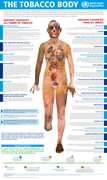
This Poster is available in English, French, Spanish, Russian, Chinese, Portuguese, Hausa and Arabic
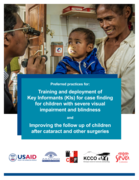
The WHO estimates that 19 million children aged 15 years or younger are visually impaired. Of these, 1.4 million are irreversibly blind and need visual rehabilitation interventions for full psychological and personal development. The remainder have visual problems that could be prevented or treated.
...
The Global Status Report on Noncommunicable Diseases (NCDs) 2014 by the World Health Organization outlines the global impact of NCDs, including cardiovascular diseases, cancer, diabetes, and chronic respiratory diseases, which are responsible for a significant portion of global mortality, particular
...
Cards for Facilitators (including birth preparedness, complication readiness and recognition of danger signs) are also available
Prevention and Recognition of Obstetric Fistula Training Package
Accessed on 2 September 2020
A guide for doctors providing health services for children. 2nd edition
Basic Eye Care
recommended
Training Activities for Community Health Workers