
Filter
188
Text search:
twin
track
Featured
17
42
Language
Document type
138
22
9
8
4
4
2
1
Countries
10
7
6
5
5
5
5
4
4
4
3
3
3
3
3
3
3
2
2
2
2
2
2
2
2
2
2
2
1
1
1
1
1
1
1
1
1
1
1
1
1
1
1
1
1
1
1
1
1
1
1
1
1
1
1
1
1
1
Authors & Publishers
Publication Years
Category
47
13
7
5
5
4
Toolboxes
79
13
11
10
5
5
5
4
3
2
2
2
2
2
2
2
1
1
Global Education Review, 3(3).4-27
The report surveyed 9 leading bilateral and multilateral education donors in respect of their approach to disability-inclusive education.
Inclusive Project Cycle Management - This Inclusive Project Cycle Management (IPCM) training package has been developed for CBM staff and Partner Organisations worldwide. The Trainers’ Manual will guide CBM trainers. It contains the curriculum for the course and training resources for trainers to
...

In the present study, the Office of the United Nations High Commissioner for Human Rights sets forth the standards on equality and non discrimination of persons with disabilities under article 5 of the Convention on the Rights of Persons with Disabilities. It aims at providing guidance for implement
...
While the ratification of the Convention and its Optional Protocol has proceeded rapidly, knowledge on how to implement and monitor them has not kept pace. Conscious of this challenge, my Office has developed this Training Guide on the Convention and its Optional Protocol. It is complemented by eigh
...
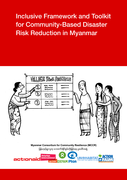
This resource aims to provide relevant and practical guidance to DRR practitioners (policy and programme colleagues), on how to ensure inclusion - particularly of vulnerable groups - in Community-Based DRR (CBDRR) initiatives in Myanmar. It comprises an overall Framework for inclusive CBDRR and a nu
...
Disability at a Glance 2015 focuses on barriers to the employment of persons with disabilities in the Asia-Pacific region, and offers solutions to strengthen their employment prospects. Employment is not only the primary means of livelihood generation; it also provides individuals with the purpose a
...
Lessons learnt from the ADCAP programme | This guide shares good practices and challenges that have emerged through the experience of the Age and Disability Capacity Programme (ADCAP) implementing partners, in embedding inclusion of older people and people with disabilities within their humanitaria
...
Guide de réadaptation à base communautaire (RBC)
En 2003, une Consultation internationale consacrée à l’examen de la réadaptation à base communautaire organisée à Helsinki a émis un certain nombre de recommandations essentielles. Par la suite, la RBC a été redéfinie, dans un document
...
Guide de réadaptation à base communautaire (RBC)
En 2003, une Consultation internationale consacrée à l’examen de la réadaptation à base communautaire organisée à Helsinki a émis un certain nombre de recommandations essentielles. Par la suite, la RBC a été redéfinie, dans un document
...
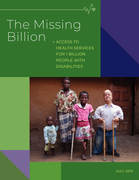
One billion people around the world live with disabilities. This report makes the case that they are being “left behind” in the global community’s work on health. This lack of access not only violates the rights of people with disabilities under international law, but UHC and SDG 3 cannot be a
...

Guidelines.
The guidelines set out essential actions that humanitarian actors must take in order to effectively identify and respond to the needs and rights of persons with disabilities who are most at risk of being left behind in humanitarian settings.
The recommended actions in each chapter pl
...
The Handbook is a guide to the normative framework for humanitarian action and the operational approaches, coordination structures, and available tools and services that facilitate the mobilization of humanitarian assistance.
39 examples of field practices, and learnings from 20 countries, for all phases of humanitarian response. The report shows that deliberate and proactive action is required to ensure that persons with disabilities from all constituencies are systematically included and meaningfully participate in DRR
...
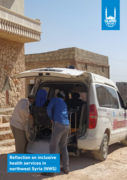
After a decade of crisis, Syria remains one of the world’s most complex humanitarian crises. Continued hostilities, new and protracted displacement, increased returns and the sustained destruction of communities have impacted Syrians’ lives and futures in a devastating way. The 2021 Humanitarian
...
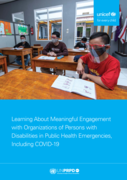
This report presents the findings from a ‘deep dive’ undertaken by UNICEF East Asia and the Pacific Regional Office to consider the experiences in Cambodia, Indonesia, the Lao People’s Democratic Republic, Malaysia, Myanmar, the Philippines and the Pacific. The target audience for this report
...

The MHPSS MSP is an easy-to-follow intersectoral package, which spells out the activities and actions that all humanitarian actors should put in place in all emergencies for an effective MHPSS response. It speaks to different actors at the global, regional, national, and local levels to plan, coordi
...
The WHO Disability-Inclusive Health Services Training Package is a companion to the “WHO Disability-Inclusive Health Services Toolkit: A resource for health facilities in the Western Pacific Region” published by WHO in 2020. This package offers a range of additional training materials including
...

This document contains guidance for strengthening the disability inclusiveness of MHPSS responses and programmes in emergency settings. It is intended to supplement the IASC Guidelines on Mental Health and Psychosocial Support in Emergency Settings (2007).
Overall Objective
To consider and add
...
State of the Climate in Asia 2023
recommended
Asia remained the world’s most disaster-hit region from weather, climate and water-related hazards in 2023. Floods and storms caused the highest number of reported casualties and economic losses, whilst the impact of heatwaves became more severe, according to a new report from the World Meteorolog
...
Strengthening competency based training of health care providers for Reproductive Maternal Newborn Child & Adolescenct Health (RMNCH + A) services
This report seeks to uncover the extent to which global goals crowd in international financing, inform domestic policy priorities, and navigate progress toward development outcomes in low- and middle-income countries (LICs and MICs). Our report:
Provides a historical perspective on how ODA financin
...
Towards the Elimination of Mother-to-Child Transmission of HIV and keeping mothers Alive. 2012-2015
The study analyses the intersection of gender with disability issues by combining economic and social analysis across four states in India by using both quantitative and qualitative methods including gender analysis of disability budgets.
This publication by UNAIDS, UNDP and the International Organisation for Migration examines various dimensions related to migration and HIV and AIDS.
A practioner's guide
Psoriasis, which can involve the skin, nails and joints, is a chronic, painful, disfiguring and disabling noncommunicable disease (NCD) for which there is no cure. It negatively impacts on quality of life. Some of those who suffer from the disease develop chronic, inflammatory arthritis (psoriatic a
...

Project Paper to provide an additional grant for: Human Development Systems Strengthening Project (HDSSP)(P145965, H9360)
At the World Humanitarian Summit in Istanbul in May 2016, leaders made over 3,700 commitments to advance the Agenda for Humanity. In their first self-reports against these commitments, 142 stakeholders described the efforts they made from June to December 2016 to realize this ambitious vision.
The
...
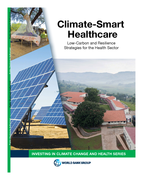
Climate change is damaging human health now and is projected to have a greater impact in the future. Low- and middle-income countries are seeing the worst effects as they are most vulnerable to climate shifts and least able to adapt given weak health systems and poor infrastructure. Low-carbon appro
...

IN THE AMOUNT OF SDR 21.8 MILLION (US$30 MILLION EQUIVALENT) WITH AN ADDITIONAL GRANT FROM THE GLOBAL FINANCING FACILITY (GFF) IN THE AMOUNT OF US$ 10 MILLION TO THE DEMOCRATIC REPUBLIC OF CONGO FOR A HUMAN DEVELOPMENT SYSTEMS STRENGTHENING PROJECT
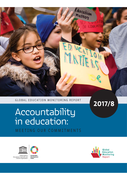
GLOBAL EDUCATION MONITORING REPORT 2017/8

This report aims to raise awareness about the role that the reform of public health laws can play in advancing the right to health and in creating the conditions for people to live healthy lives. By encouraging a better understanding of how public health law can be used to improve the health of the
...

Reporting Period 2010-2011

Lack of satisfactory progress in mainstreaming disaster risk reduction within development is attributed to various factors. One of the important factor that is often not much appreciated is the inadequate comprehension of mainstreaming and the absence of clear, cogent and practical guidelines, tools
...

The goal of the United States Government for the President's Emergency Plan for AIDS Relief (PEPFAR) in Mozambique is to support country efforts to achieve epidemic control by 2020 through evidence-based policies and interventions to drive progress and save
lives. This document details PEPFAR's op
...

Mental Health Information
Progress towards targets of the Global action plan on dementia
Other disorders Chapter H.1
This toolkit will help you to plan and run an event that helps to change the way that people in your community think about, and behave towards, people with mental health problems
Accessed April 16, 2019
Universal health coverage ensures everyone has access to the health services they need without suffering financial hardship as a result. In December 2012, a UN resolution was passed encouraging governments to move towards providing universal access to affordable and quality health care services. As
...
Scaling Up Mental Health Care In Rural India
ICAAP12 Secretariat
Partners in population and development, Dhaka, Bangladesh June 2016
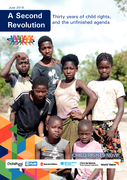
The report showed commitments made three decades ago to protect the rights of children remain unfulfilled for millions. Violence still affects countless children. Discrimination based on age, gender, disability, sexual orientation and religion harms children worldwide.
Key factors include a lack
...
The Antimicrobial Resistance Benchmark has evaluated for the second time how the most important players in the antibiotic market are addressing the rise of resistance and the global need for appropriate access to antibiotics. Although we can see progress — it’s hanging by a thread.
We have reac
...
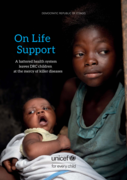
ON LIFE SUPPORT3The Democratic Republic of Congo’s Ebola outbreak has been contained, but confl ict and under-development leave over three million children at risk from measles and other killer diseases. The country’s medical services – ill-equipped and under-resourced – are on life support
...
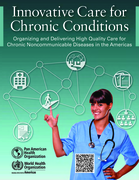
Organizing and Delivering High Quality Care for Chronic Noncommunicable Diseases in the Americas
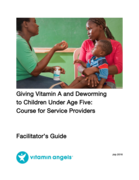
This Course for Service Providers on how to give Vitamin A Supplementation and Deworming (VAS+D) uses both a Learner’sGuide and a Facilitator’s Guide. The Learner’s Guide is designed for participants in the course who are healthcare workers or trainers learning to deliver vitamin A and Albenda
...
Since the release of the first volume in May 2020, the COVID-19 pandemic has continued to rage around the world. By mid-March, 2021, countries around the globe had reported over 123 million cases—a nearly five-fold increase since this report’s previous volume—and over 2.7 million deaths attrib
...
Drawing light from the pandemic: A new strategy for health and sustainable development (2021)
Available in English, French, German and Russian
Saving Lives Through Safe Surgery (SaLTS)
The policy brief focuses on four key areas for intervention - air pollution, energy, transport and food systems. Air pollution causes 7 million deaths annually, and is a leading cause of both NCDs and climate change, thus all interventions to reduce air pollution have a positive impact on both human
...
National-scale databases and reliability issue
Background report

The purpose of this book is to provide an overview of Buruli ulcer (Mycobacterium ulcerans infection) for the medical and scientific communities and the general public alike.
This global progress report attempts to lay the groundwork for the kind of accelerated action needed. Section 1 presents key data, trends and developments in women’s, children’s and adolescents’ health and well-being. That is followed in Section 2 by a deeper dive into the impact of the COVID-
...
The KMC implementation strategy targets a broad audience. These include policy-makers and programme managers at national, regional and local levels, government and nongovernmental organizations working in the area of maternal and newborn care, global and national professional associations, public an
...
Multiple pandemics, numerous outbreaks, thousands of lives lost and billions of dollars of national income wiped out—all since the turn of this century, in barely 17 years—and yet the world’s investments in pandemic preparedness and response remain woefully inadequate. We know by now that the
...
A major problem facing the world is how to build peace following the ravages of increasingly protracted armed conflict. Armed conflicts leave behind shattered, divided societies that are at risk of repeating cycles of violence, and therefore need concerted peacebuilding efforts. Conflicts also take
...
Strategic communication is at the heart of public health and more important than ever in the digital age. Using communication strategically requires expertise, skills and resources to plan, implement and evaluate interventions that encourage governments to implement policies that improve people’s
...
This MHPSS in Emergencies training aims to prepare MHPSS responders, disaster managers, and emergency team leaders for work in the field by building understanding of basic concepts of MHPSS in emergencies as well as planning and implementing PSS activities. It is for MHPSS focal points from the Red
...
