Filter
5500
Text search:
systematic
review
Featured
478
1250
Language
4897
253
226
194
98
89
55
30
13
7
5
5
4
4
4
3
3
3
3
3
2
2
2
2
2
2
2
2
2
2
2
2
2
2
1
1
1
1
1
1
1
1
1
1
1
1
1
1
1
1
1
1
1
1
Document type
2951
1054
832
275
174
107
61
16
13
6
5
3
1
Countries
230
166
137
129
109
101
92
91
88
86
83
81
79
77
70
70
63
60
57
57
56
54
54
53
52
40
40
37
32
31
31
30
30
29
29
28
28
25
24
24
22
22
21
20
19
18
18
15
15
15
14
14
13
12
11
10
10
10
9
9
9
9
9
9
8
8
8
8
8
7
7
6
6
6
6
6
5
5
5
4
4
4
4
4
4
4
4
4
3
3
3
3
3
3
3
3
2
2
2
2
2
2
2
2
2
2
2
2
2
2
2
2
2
2
2
2
1
1
1
1
1
1
1
1
1
1
1
1
1
1
1
1
1
1
1
1
1
1
1
Authors & Publishers
860
324
324
192
136
99
96
95
94
74
36
34
34
34
32
25
23
23
22
22
21
21
20
19
19
19
18
18
16
16
15
15
14
14
14
14
14
13
13
13
13
13
13
13
13
11
11
11
11
11
11
11
11
11
11
10
10
10
10
10
10
10
9
9
9
9
9
9
9
9
9
9
9
8
8
8
8
8
8
8
8
8
8
8
7
7
7
7
7
7
7
7
7
7
7
7
7
7
7
7
7
7
7
7
7
7
7
7
7
6
6
6
6
6
6
6
6
6
6
6
6
6
6
6
6
6
6
5
5
5
5
5
5
5
5
5
5
5
5
5
5
5
5
5
5
5
5
5
5
5
5
5
4
4
4
4
4
4
4
4
4
4
4
4
4
4
4
4
4
4
4
4
4
4
4
4
4
4
4
4
4
4
4
4
4
4
4
4
4
4
4
4
4
4
4
4
4
4
4
4
4
4
4
4
4
3
3
3
3
3
3
3
3
3
3
3
3
3
3
3
3
3
3
3
3
3
3
3
3
3
3
3
3
3
3
3
3
3
3
3
3
3
3
3
3
3
3
3
3
3
3
3
3
3
3
3
3
3
3
3
3
3
3
3
3
3
3
3
3
3
3
3
3
3
3
3
3
3
3
3
3
3
3
3
3
3
3
3
3
3
3
3
3
3
3
3
3
3
3
3
3
3
3
3
3
3
3
3
3
3
3
3
3
3
3
3
3
3
3
3
3
3
3
3
3
3
3
3
3
3
3
3
3
3
3
3
3
3
3
3
3
3
3
3
3
3
3
3
3
3
3
3
3
3
3
3
3
3
3
2
2
2
2
2
2
2
2
2
2
2
2
2
2
2
2
2
2
2
2
2
2
2
2
2
2
2
2
2
2
2
2
2
2
2
2
2
2
2
2
2
2
2
2
2
2
2
2
2
2
2
2
2
2
2
2
2
2
2
2
2
2
2
2
2
2
2
2
2
2
2
2
2
2
2
2
2
2
2
2
2
2
2
2
2
2
2
2
2
2
2
2
2
2
2
2
2
2
2
2
2
2
2
2
2
2
2
2
2
2
2
2
2
2
2
2
2
2
2
2
2
2
2
2
2
2
2
2
2
2
2
2
2
2
2
2
2
2
2
2
2
2
2
2
2
2
2
2
2
2
2
2
2
2
2
2
2
2
2
2
2
2
2
2
2
2
2
2
2
2
2
2
2
2
2
2
2
2
2
2
2
2
2
2
2
2
2
2
2
2
2
2
2
2
2
2
2
2
2
2
2
2
2
2
2
2
2
2
2
2
2
2
2
2
2
2
2
2
2
2
2
2
2
2
2
2
2
2
2
2
2
2
2
2
2
2
2
2
2
2
2
2
2
2
2
2
2
2
2
2
2
2
2
2
2
2
2
2
2
2
2
2
2
2
2
2
2
2
2
2
2
2
2
2
2
2
2
2
2
2
2
2
2
2
2
2
2
2
2
2
2
2
2
2
2
2
2
2
2
2
2
2
2
2
2
2
2
2
2
2
2
2
2
2
2
2
2
2
2
2
2
2
2
2
2
2
2
2
2
2
2
2
2
2
2
2
2
2
2
2
2
2
2
2
2
2
2
2
2
2
2
2
2
2
2
2
2
2
2
2
2
1
1
1
1
1
1
1
1
1
1
1
1
1
1
1
1
1
1
1
1
1
1
1
1
1
1
1
1
1
1
1
1
1
1
1
1
1
1
1
1
1
1
1
1
1
1
1
1
1
1
1
1
1
1
1
1
1
1
1
1
1
1
1
1
1
1
1
1
1
1
1
1
1
1
1
1
1
1
1
1
1
1
1
1
1
1
1
1
1
1
1
1
1
1
1
1
1
1
1
1
1
1
1
1
1
1
1
1
1
1
1
1
1
1
1
1
1
1
1
1
1
1
1
1
1
1
1
1
1
1
1
1
1
1
1
1
1
1
1
1
1
1
1
1
1
1
1
1
1
1
1
1
1
1
1
1
1
1
1
1
1
1
1
1
1
1
1
1
1
1
1
1
1
1
1
1
1
1
1
1
1
1
1
1
1
1
1
1
1
1
1
1
1
1
1
1
1
1
1
1
1
1
1
1
1
1
1
1
1
1
1
1
1
1
1
1
1
1
1
1
1
1
1
1
1
1
1
1
1
1
1
1
1
1
1
1
1
1
1
1
1
1
1
1
1
1
1
1
1
1
1
1
1
1
1
1
1
1
1
1
1
1
1
1
1
1
1
1
1
1
1
1
1
1
1
1
1
1
1
1
1
1
1
1
1
1
1
1
1
1
1
1
1
1
1
1
1
1
1
1
1
1
1
1
1
1
1
1
1
1
1
1
1
1
1
1
1
1
1
1
1
1
1
1
1
1
1
1
1
1
1
1
1
1
1
1
1
1
1
1
1
1
1
1
1
1
1
1
1
1
1
1
1
1
1
1
1
1
1
1
1
1
1
1
1
1
1
1
1
1
1
1
1
1
1
1
1
1
1
1
1
1
1
1
1
1
1
1
1
1
1
1
1
1
1
1
1
1
1
1
1
1
1
1
1
1
1
1
1
1
1
1
1
1
1
1
1
1
1
1
1
1
1
1
1
1
1
1
1
1
1
1
1
1
1
1
1
1
1
1
1
1
1
1
1
1
1
1
1
1
1
1
1
1
1
1
1
1
1
1
1
1
1
1
1
1
1
1
1
1
1
1
1
1
1
1
1
1
1
1
1
1
1
1
1
1
1
1
1
1
1
1
1
1
1
1
1
1
1
1
1
1
1
1
1
1
1
1
1
1
1
1
1
1
1
1
1
1
1
1
1
1
1
1
1
1
1
1
1
1
1
1
1
1
1
1
1
1
1
1
1
1
1
1
1
1
1
1
1
1
1
1
1
1
1
1
1
1
1
1
1
1
1
1
1
1
1
1
1
1
1
1
1
1
1
1
1
1
1
1
1
1
1
1
1
1
1
1
1
1
1
1
1
1
1
1
1
1
1
1
1
1
1
1
1
1
1
1
1
1
1
1
1
1
1
1
1
1
1
1
1
1
1
1
1
1
1
1
1
1
1
1
1
1
1
1
1
1
1
1
1
1
1
1
1
1
1
1
1
1
1
1
1
1
1
1
1
1
1
1
1
1
1
1
1
1
1
1
1
1
1
1
1
1
1
1
1
1
1
1
1
1
1
1
1
1
1
1
1
1
1
1
1
1
1
1
1
1
1
1
1
1
1
1
1
1
1
1
1
1
1
1
1
1
1
1
1
1
1
1
1
1
1
1
1
1
1
1
1
1
1
1
1
1
1
1
1
1
1
1
1
1
1
1
1
1
1
1
1
1
1
1
1
1
1
1
1
1
1
1
1
1
1
1
1
1
1
1
1
1
1
1
1
1
1
1
1
1
1
1
1
1
1
1
1
1
1
1
1
1
1
1
1
1
1
1
1
1
1
1
1
1
1
1
1
1
1
1
1
1
1
1
1
1
1
1
1
1
1
1
1
1
1
1
1
1
1
1
1
1
1
1
1
1
1
1
1
1
1
1
1
1
1
1
1
1
1
1
1
1
1
1
1
1
1
1
1
1
1
1
1
1
1
1
1
1
1
1
1
1
1
1
1
1
1
1
1
1
1
1
1
1
1
1
1
1
1
1
1
1
1
1
1
1
1
1
1
1
1
1
1
1
1
1
1
1
1
1
1
1
1
1
1
1
1
1
1
1
1
1
1
1
1
1
1
1
1
1
1
1
1
1
1
1
1
1
1
1
1
1
1
1
1
1
1
1
1
1
1
1
1
1
1
1
1
1
1
1
1
1
1
1
1
1
1
1
1
1
1
1
1
1
1
1
1
1
1
1
1
1
1
1
1
1
1
1
1
1
1
1
1
1
1
1
1
1
1
1
1
1
1
1
1
1
1
1
1
1
1
1
1
1
1
1
1
1
1
1
1
1
1
1
1
1
1
1
1
1
1
1
1
1
1
1
1
1
1
1
1
1
1
1
1
1
1
1
1
1
1
1
1
1
1
1
1
1
1
1
1
1
1
1
1
1
1
1
1
1
1
1
1
1
1
1
1
1
1
1
1
1
1
1
1
1
1
1
1
1
1
1
1
1
1
1
1
1
1
1
1
1
1
1
1
1
1
1
1
1
1
1
1
1
1
1
1
1
1
1
1
1
1
1
1
1
1
1
1
1
1
1
1
1
1
1
1
1
1
1
1
1
1
1
1
1
1
1
1
1
1
1
1
1
1
1
1
1
1
1
1
1
1
1
1
1
1
1
1
1
1
1
1
1
1
1
1
1
1
1
1
1
1
1
1
1
1
1
1
1
1
1
1
1
1
1
1
1
1
1
1
1
1
1
1
1
1
1
1
1
1
1
1
1
1
1
1
1
1
1
1
1
1
1
1
1
1
1
1
1
1
1
1
1
1
1
1
1
1
1
1
1
1
1
1
1
1
1
1
1
1
1
1
1
1
1
1
1
1
1
1
1
1
1
1
1
1
1
1
1
1
1
1
1
1
1
1
1
1
1
1
1
1
1
1
1
1
1
1
1
1
1
1
1
1
1
1
1
1
1
1
1
1
1
1
1
1
1
1
1
1
1
1
1
1
1
1
1
1
1
1
1
1
1
1
1
1
1
1
1
1
1
1
1
1
1
1
1
1
1
1
1
1
1
1
1
1
1
1
1
1
1
1
1
1
1
1
1
1
1
1
1
1
1
1
1
1
1
1
1
1
1
1
1
1
1
1
1
1
1
1
1
1
1
1
1
1
1
1
1
1
1
1
1
1
1
1
1
1
1
1
1
1
1
1
1
1
1
1
1
1
1
1
1
1
1
1
1
1
1
1
1
1
1
1
1
1
1
1
1
1
1
1
1
1
1
1
1
1
1
1
1
1
1
1
1
1
1
1
1
1
1
1
1
1
1
1
1
1
1
1
1
1
1
1
1
1
1
1
1
1
1
1
1
1
1
1
1
1
1
1
1
1
1
1
1
1
1
1
1
1
1
1
1
1
1
1
1
1
1
1
1
1
1
1
1
1
1
1
1
1
1
1
1
1
1
1
1
1
1
1
1
1
1
1
1
1
1
1
1
1
1
1
1
1
1
1
1
1
1
1
1
1
1
1
1
1
1
1
1
1
1
1
1
1
1
1
1
1
1
1
1
1
1
1
1
1
1
1
1
1
1
1
1
1
1
1
1
1
1
1
1
1
1
1
1
1
1
1
1
1
1
1
1
1
1
1
1
1
1
1
1
1
1
1
1
1
1
1
1
1
1
1
1
1
1
1
1
1
1
1
1
1
1
1
1
1
1
1
1
1
1
1
1
1
1
1
1
1
1
1
1
1
1
1
1
1
1
1
1
1
1
1
1
1
1
1
1
1
1
1
1
1
1
1
1
1
1
1
1
1
1
1
1
1
1
1
1
1
1
1
1
1
1
1
1
1
1
1
1
1
1
1
1
1
1
1
1
1
1
1
1
1
1
1
1
1
1
1
1
1
1
1
1
1
1
1
1
1
1
1
1
1
1
1
1
1
1
1
1
1
1
1
1
1
1
1
1
1
1
1
1
1
1
1
1
1
1
1
1
1
1
1
1
1
1
1
1
1
1
1
1
1
1
1
1
1
1
1
1
1
1
1
1
1
1
1
1
1
1
1
1
1
1
1
1
1
1
1
1
1
1
1
1
1
1
1
1
1
1
1
1
1
1
1
1
1
1
1
1
1
1
1
1
1
1
1
1
1
1
1
1
1
1
1
1
1
1
1
1
1
1
1
1
1
1
1
1
1
1
1
1
1
1
1
1
1
1
1
1
1
1
1
1
1
1
1
1
1
1
1
1
1
1
1
1
1
1
1
1
1
1
1
1
1
1
1
1
1
1
1
1
1
1
1
1
1
1
1
1
1
1
1
1
1
1
1
1
1
1
1
1
1
1
1
1
1
1
1
1
1
1
1
1
1
1
1
1
1
1
1
1
1
1
1
1
1
1
1
1
1
1
1
1
1
1
1
1
1
1
1
1
1
1
1
1
1
1
1
1
1
1
1
1
1
1
1
1
1
1
1
1
1
1
1
1
1
1
1
1
1
1
1
1
1
1
1
1
1
1
1
1
1
1
1
1
1
1
1
1
1
1
1
1
1
1
1
1
1
1
1
1
1
1
1
1
1
1
1
1
1
1
1
1
1
1
1
1
1
1
1
1
1
1
1
1
1
1
1
1
1
1
1
1
1
1
1
1
1
1
1
1
1
1
1
1
1
1
1
1
1
1
1
1
1
1
1
1
1
1
1
1
1
1
1
1
1
1
1
1
1
1
1
1
1
1
1
1
1
1
1
1
1
1
1
1
1
1
1
1
1
1
1
1
1
1
1
1
1
1
1
1
1
1
1
1
1
1
1
1
1
1
1
1
1
1
1
1
1
1
1
1
1
1
1
1
1
1
1
1
1
1
1
1
1
1
1
1
1
1
1
1
1
1
1
1
1
1
1
1
1
1
1
1
1
1
1
1
1
1
1
1
1
1
1
1
1
1
1
1
1
1
1
1
1
1
1
1
1
1
1
1
1
1
1
1
1
1
1
1
1
1
1
1
1
1
1
1
1
1
1
1
1
1
1
1
1
1
1
1
1
1
1
1
1
1
1
1
1
1
1
1
1
1
1
1
1
1
1
1
1
1
1
1
1
1
1
1
1
1
1
1
1
1
1
1
1
1
1
1
1
1
1
1
1
1
1
1
1
1
1
1
1
1
1
1
1
1
1
1
1
1
1
1
1
1
1
1
1
1
1
1
1
1
1
1
1
1
1
1
1
1
1
1
1
1
1
1
1
1
1
1
1
1
1
1
1
1
1
1
1
1
1
1
1
1
1
1
1
1
1
1
1
1
1
1
1
1
1
1
1
1
1
1
1
1
1
1
1
1
1
1
1
1
1
1
1
1
1
1
1
1
1
1
1
1
1
1
1
1
1
1
1
1
1
1
1
1
1
1
1
1
1
1
1
1
1
1
1
1
1
1
1
1
1
1
1
1
1
1
1
1
1
1
1
1
1
1
1
1
1
1
1
1
1
1
1
1
1
1
1
1
1
1
1
1
1
1
1
1
1
1
1
1
1
1
1
1
1
1
1
1
1
1
1
1
1
1
1
1
1
1
1
1
1
1
1
1
1
1
1
1
1
1
1
1
1
1
1
1
1
1
1
1
1
1
1
1
1
1
1
1
1
1
1
1
1
1
1
1
1
1
1
1
1
1
1
1
1
1
1
1
1
1
1
1
1
1
1
1
1
1
1
1
1
1
1
1
1
1
1
1
1
1
1
1
1
1
1
1
1
1
1
1
1
1
1
1
1
1
1
1
1
1
1
1
1
1
1
1
1
1
1
1
1
1
1
1
1
1
1
1
1
1
1
1
1
1
1
1
1
1
1
1
1
1
1
1
1
1
1
1
1
1
1
1
1
1
1
1
1
1
1
1
1
1
1
1
1
1
1
1
1
1
1
1
1
1
1
1
1
1
1
1
1
1
1
1
1
1
1
1
1
1
1
1
1
1
1
1
1
1
1
1
1
1
1
1
1
1
1
1
1
1
1
1
1
1
1
1
1
1
1
1
1
1
1
1
1
1
1
1
1
1
1
1
1
1
1
1
1
1
1
1
1
1
1
1
1
1
1
1
1
1
1
1
1
1
1
1
1
1
1
1
1
1
1
1
1
1
1
1
1
1
1
1
1
1
1
1
1
1
1
1
1
1
1
1
1
1
1
1
1
1
1
1
1
1
1
1
1
1
1
1
1
1
1
1
1
1
1
1
1
1
1
1
1
1
1
1
1
1
1
1
1
1
1
1
1
1
1
1
1
1
1
1
1
1
1
1
1
1
1
1
1
1
1
1
1
1
1
1
1
1
1
1
1
1
1
1
1
1
1
1
1
1
1
1
1
1
1
1
1
1
1
1
1
1
1
1
1
1
1
1
1
1
1
1
1
1
1
1
1
1
1
1
1
1
1
1
1
1
1
1
1
1
1
1
1
1
1
1
1
1
1
1
1
1
1
1
1
1
1
1
1
1
1
1
1
1
1
1
1
1
1
1
1
1
1
1
1
1
1
1
1
1
1
1
1
1
1
1
1
1
1
1
1
1
1
1
1
1
1
1
1
1
1
1
1
1
1
1
1
1
1
1
1
1
1
1
1
1
1
1
1
1
1
1
1
1
1
1
1
1
1
1
1
1
1
1
1
1
1
1
1
1
1
1
1
1
1
1
1
1
1
1
1
1
1
1
1
1
1
1
1
1
1
1
1
1
1
1
1
1
1
1
1
1
1
1
1
1
1
1
1
1
1
1
1
1
1
1
1
1
1
1
1
1
1
1
1
1
1
1
1
1
1
1
1
1
1
1
1
1
1
1
1
1
1
1
1
1
1
1
1
1
1
1
1
1
1
1
1
1
1
1
1
1
1
1
1
1
1
1
1
1
1
1
1
1
1
1
1
1
1
1
1
1
1
1
1
1
1
1
1
1
1
1
1
1
1
1
1
1
1
1
1
1
1
1
1
1
1
1
1
1
1
1
1
1
1
1
1
1
1
1
1
1
1
1
1
1
1
1
1
1
1
1
1
1
1
1
1
1
1
1
1
1
1
1
1
1
1
1
1
1
1
1
1
1
1
1
1
1
1
1
1
1
1
1
1
1
1
1
1
1
1
1
1
1
1
1
1
1
1
1
1
1
1
1
1
1
1
1
1
1
1
1
1
1
1
1
1
1
1
1
1
1
1
1
1
1
1
1
1
1
1
1
1
1
1
1
1
1
1
1
1
1
1
1
1
1
1
1
1
1
1
1
1
1
1
1
1
1
1
1
1
1
1
1
1
1
1
1
1
1
1
1
1
1
1
1
1
1
1
1
1
1
1
1
1
1
1
1
1
1
1
1
1
1
1
1
1
1
1
1
1
1
1
1
1
1
1
1
1
1
1
1
1
1
1
1
1
1
1
1
1
1
1
1
1
1
1
1
1
1
1
1
1
1
1
1
1
1
1
1
1
1
1
1
1
1
1
1
1
1
1
1
1
1
1
1
1
1
1
1
1
1
1
1
1
1
1
1
1
1
1
1
1
1
1
1
1
1
1
1
1
1
1
1
1
1
1
1
1
1
1
1
1
1
1
1
1
1
1
1
1
1
1
1
1
1
1
1
1
1
1
1
1
1
1
1
1
1
1
1
1
1
1
1
1
1
1
1
1
1
1
1
1
1
1
1
1
1
1
1
1
1
1
1
1
1
1
1
1
1
1
1
1
1
1
1
1
1
1
1
1
1
1
1
1
1
1
1
1
1
1
1
1
1
1
1
1
1
1
1
1
1
1
1
1
1
1
1
1
1
1
1
1
1
1
1
1
1
1
1
1
1
1
1
1
1
1
1
1
1
1
1
1
1
1
1
1
1
1
1
1
1
1
1
1
1
1
1
1
1
1
1
1
1
1
1
1
1
1
1
1
1
1
1
1
1
1
1
1
1
1
1
1
1
1
1
1
1
1
1
1
1
1
1
1
1
1
1
1
1
1
1
1
1
1
1
1
1
1
1
1
1
1
1
1
1
1
1
1
1
1
1
1
1
1
1
1
1
1
1
1
1
1
1
1
1
1
1
1
1
1
1
1
1
1
1
1
1
1
1
1
1
1
1
1
1
1
1
1
1
1
1
1
1
1
1
1
1
1
1
1
1
1
1
1
1
1
1
1
1
1
1
1
1
1
1
1
1
1
1
1
1
1
1
1
1
1
1
1
1
1
1
1
1
1
1
1
1
1
1
1
1
1
1
1
1
1
1
1
1
1
1
1
1
1
1
1
1
1
1
1
1
1
1
1
1
1
1
1
1
1
1
1
1
1
1
1
1
1
1
1
1
1
1
1
1
1
1
1
1
1
1
1
1
1
1
1
1
1
1
1
1
1
1
1
1
1
1
1
1
1
1
1
1
1
1
1
1
1
1
1
1
1
1
1
1
1
1
1
1
1
1
1
1
1
1
1
1
1
1
1
1
1
1
1
1
1
1
1
1
1
1
1
1
1
1
1
1
1
1
1
1
1
1
1
1
1
1
1
1
1
1
1
1
1
1
1
1
1
1
1
1
1
1
1
1
1
1
1
1
1
1
1
1
1
1
1
1
1
1
1
1
1
1
1
1
1
1
1
1
1
1
1
1
1
1
1
1
1
1
1
1
1
1
1
1
1
1
1
1
1
1
1
1
1
1
1
1
1
1
1
1
1
1
1
1
1
1
1
1
1
1
1
1
1
1
1
1
1
1
1
1
1
1
1
1
1
1
1
1
1
1
1
1
1
1
1
1
1
1
1
1
1
1
1
1
1
1
1
1
1
1
1
1
1
1
1
1
1
1
1
1
1
1
1
1
1
1
1
1
1
1
1
1
1
1
1
1
1
1
1
1
1
1
1
1
1
1
1
1
1
1
1
1
1
1
1
1
1
1
1
1
1
1
1
1
1
1
1
1
1
1
1
1
1
1
1
1
1
1
1
1
1
1
1
1
1
1
1
1
1
1
1
1
1
1
1
1
1
1
1
1
1
1
1
1
1
1
1
1
1
1
1
1
1
1
1
1
1
1
1
1
1
1
1
1
1
1
1
1
1
1
1
1
1
1
1
1
1
1
1
1
1
1
1
1
1
1
1
1
1
1
1
1
1
1
1
1
1
1
1
1
1
1
1
1
1
1
1
1
1
1
1
1
1
1
1
1
1
1
1
1
1
1
1
1
1
1
1
1
1
1
1
1
1
1
1
1
1
1
1
1
1
1
1
1
1
1
1
1
1
1
1
1
1
1
1
1
1
1
1
1
1
1
1
1
1
1
1
1
1
1
1
1
1
1
1
1
1
1
1
1
1
1
1
1
1
1
1
1
1
1
1
1
1
1
1
1
1
1
1
1
1
1
1
1
1
1
1
1
1
1
1
1
1
1
1
1
1
1
1
1
1
1
1
1
1
1
1
1
1
1
1
1
1
1
1
1
1
1
1
1
1
1
1
1
1
1
1
1
1
1
1
1
1
1
1
1
1
1
1
1
1
1
1
1
1
1
1
1
1
1
1
1
1
1
1
1
1
1
1
1
1
1
1
1
1
1
1
1
1
1
1
1
1
1
1
1
1
1
1
1
1
1
1
1
1
1
1
1
1
1
1
1
1
1
1
1
1
1
1
1
1
1
1
1
1
1
1
1
1
1
1
1
1
1
1
1
1
1
1
1
1
1
1
1
1
1
1
1
1
1
1
1
1
1
1
1
1
1
1
1
1
1
1
1
1
1
1
1
1
1
1
1
1
1
1
1
1
1
1
1
1
1
1
1
1
1
1
1
1
1
1
1
1
1
1
1
1
1
1
1
1
1
1
1
1
1
1
1
1
1
1
1
1
1
1
1
1
1
1
1
1
1
1
1
1
1
1
1
1
1
1
1
1
1
1
1
1
1
1
1
1
1
1
1
1
1
1
1
1
1
1
1
1
1
1
1
1
1
1
1
1
1
1
1
1
1
1
1
1
1
1
1
Publication Years
1566
3575
344
13
2
Category
1697
491
359
339
218
67
47
4
Toolboxes
585
503
476
383
209
196
175
172
163
143
136
113
102
84
82
81
48
43
35
31
25
18
15
4
1
Lack of information about economic burden of COPD is a major cause of lack of attention to this chronic condition from governments and policymakers.
Chronic obstructive pulmonary disease (COPD) is an increasingly important cause of morbidity, disability, and mortality worldwide. We aimed to estimate global, regional, and national COPD prevalence and risk factors to guide policy and population interventions.
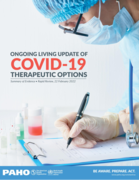
Ongoing Living Update of COVID-19 Therapeutic Options: Summary of Evidence, Rapid Review 22 February 2022
recommended
This document includes the results of a rapid systematic review of current available literature. The information included in this review reflects t
...
he evidence as of the date posted in the document. In recognition of the fact that there are numerous ongoing clinical studies, PAHO will periodically update this review and corresponding recommendations as new evidence becomes available.
more
The protozoan parasite Trypanosoma cruzi causes Chagas disease, an important public health problem throughout Latin America. Current therapeutic options are characterised by limited efficacy, long treatment regimens and frequent toxic side-effects. Advances in this area have been compromised by gaps
...
in our knowledge of disease pathogenesis, parasite biology and drug activity. Nevertheless, several factors have come together to create a more optimistic scenario. Drug-based research has become more systematic, with increased collaborations between the academic and commercial sectors, often within the framework of not-for-profit consortia. High-throughput screening of compound libraries is being widely applied, and new technical advances are helping to streamline the drug development pipeline. In addition, drug repurposing and optimisation of current treatment regimens, informed by laboratory research, are providing a basis for new clinical trials. Here, we will provide an overview of the current status of Chagas disease drug development, highlight those areas where progress can be expected, and describe how fundamental research is helping to underpin the process.
more
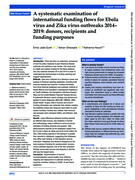
There has been no systematic comparison of how the policy response to past infectious disease outbreaks and epidemics was funded. This study aims to collate and analyse funding for the Ebola epidemic and Zika outbreak between 2014 and 2019 in order
...
to understand the shortcomings in funding reporting and suggest improvements. Methods: Data were collected via a literature review and analysis of financial reporting databases, including both amounts donated and received. Funding information from three financial databases was analysed: Institute of Health Metrics and Evaluation’s Development Assistance for Health database, the Georgetown Infectious Disease Atlas and the United Nations Financial Tracking Service. A systematic literature search strategy was devised and applied to seven databases: MEDLINE, EMBASE, HMIC, Global Health, Scopus, Web of Science and EconLit. Funding information was extracted from articles meeting the eligibility criteria and measures were taken to avoid double counting. Funding was collated, then amounts and purposes were compared within, and between, data sources.
more
The evolving epidemic of type 2 diabetes mellitus has challenged health-care professionals. It stands among the leading causes of mortality in the present world. It warrants new and versatile approaches to improve mortality and the associated huge quality-adjusted life years lost to it once diagnose
...
d. A possible venue to lower the incidence is to assess the safety and efficacy of various diabetes prevention strategies. Diet and exercise have a well-developed role in the prevention of weight gain and, ultimately, diabetes mellitus type II in high-risk individuals. However, high-risk individuals can also benefit from adjunct pharmacotherapy. In light of this information, we decided to conduct a systematic review of randomized controlled trials. This article summarizes the evidence in the literature on the pharmacological prevention of diabetes in high-risk individuals.
more
Assessing the Impact of Workforce Nutrition Programmes on Nutrition, Health and Business Outcomes: A Review of the Global Evidence and Future Research Agenda
Dhillon, C.N.; Ortenzi, F.
International Journal of Environmental Research and Public Health
(2023)
CC
One in three people globally suffers from at least one form of malnutrition, leading to poor health outcomes and low productivity in the workplace. The workplace offers an important, relatively unexploited opportunity to address malnutrition in all its forms. This narrative literature
...
review aims to understand the impact of workforce nutrition programmes on nutrition, health, and business outcomes, based on high-strength-of-evidence studies. We used PubMed as our primary research database, complemented by Google Scholar, to identify systematic reviews, meta-analyses, and randomised controlled trials published between January 2010 and October 2021. In total, 26 records were included. We found that comprehensive workforce nutrition programmes, including a variety of intervention areas, and/or programmes targeting high-risk categories of workers (overweight/obese or (pre-)diabetic) were more likely to be effective on nutrition, health, and business outcomes. Within comprehensive and targeted programmes, individualised counselling and worksite environmental modifications were often mentioned as the most effective components. However, a high degree of heterogeneity in outcome measures and programme designs made it difficult to draw strong conclusions on the impact of workforce nutrition interventions. Limited evidence was found on business outcomes, longer-term effects of interventions, and programme implementation in LMICs. Therefore, further research is needed to address these evidence gaps.
more
Coronary heart disease (CHD) is the single most common cause of death globally. However, with falling CHD mortality rates, an increasingnumber of people live with CHD and may need support to manage their symptoms and improve prognosis. Cardiac rehabilitation is acomplex multifaceted intervention whi
...
ch aims to improve the health outcomes of people with CHD. Cardiac rehabilitation consists of threecore modalities: education, exercise training and psychological support. This is an update of a Cochrane systematic review previouslypublished in 2011, which aims to investigate the specific impact of the educational component of cardiac rehabilitation.
more
Community-based rehabilitation for people with disabilities
V.Lemmi; H. Kuper and K. Blanchett , et al.
International I nitiativ e for Impact E valuation (3ie)
(2016)
C1
Systematic Review Summary 4
Global Experience of Community Health Workers for Delivery of Health Related Millennium Development Goals
Zulfiqar A. Bhutta, Zohra S. Lassi, George Pariyo and Luis Huicho
World Health Organization WHO; Global Health Workforce Alliance
(2010)
C_WHO
A Systematic Review, Country Case Studies, and Recommendations for Integration into National Health Systems
Alliance Report
Participation of community health workers (CHWs) in the provision of pr
...
imary health care has been experienced all over the world for several decades, and there is an amount of evidence showing that they can add significantly to the efforts of improving the health of the population, particularly in those settings with the highest shortage of motivated and capable health professionals.
more
A systematic review of randomized controlled efficacy trials | REPORT -
DEPARTMENT OF CHILD AND ADOLESCENT HEALTH AND DEVELOPMENT
eLearning for undergraduate health professional education
Al-Shorbaji, Najeeb, Atun, Rifat, Car, Josip, Majeed, Azeem, Wheeler, Erica.
World Health Organization, Imperial College London
(2019)
C1
A systematic review informing a radical transformation of health workforce development
A Systematic Review and Meta-analysis
Clinical Infectious Diseases® 2016;62(12):1586–94
Cochrane Systematic Review - Intervention Version published: 15 April 2020
https://doi.org/10.1002/14651858.CD011621.pub4
A systematic review of clinical and observational antiparasitic treatment studies to assess the potential for establishing an individual participant-level data platform.
Chagas disease (CD), caused
...
by the parasite Trypanosoma cruzi, affects ~6–7 million people worldwide. Significant limitations still exist in our understanding of CD. Harnessing individual participant data (IPD) from studies could support more in-depth analyses to address the many outstanding research questions. This systematic review aims to describe the characteristics and treatment practices of clinical studies in CD and assess the breadth and availability of research data for the potential establishment of a data-sharing platform.
more
Clean Household Energy Solutions Toolkit
recommended
A systematic review of the evidence has demonstrated the key role of clean household energy in improving global health, reaffirming the importance of United Nations’ Sustainable Development Goal (
...
SDG) 7, to achieve worldwide access to affordable, modern and clean energy by 2030.
more
A systematic literature review of education systems in low-and middle income countries commissioned by CBM
This s a systematic review of English language literature from 2000 to 2010 covering spiritual care in end of life care settings which includes spiritual assessment tools and ongoing intervention m
...
odels.
more
Evidence from a systematic review on antenatal zinc supplementation was evaluated as part of the World Health Organization (WHO) antenatal care (ANC) guideline development process in 2016, and the f
...
ollowing recommendation on zinc supplementation was made: “Zinc supplementation for pregnant women is only recommended in the context of rigorous research.” The Guideline Development Group (GDG) made this recommendation because it felt that the evidence on the intervention was incomplete and that more research was necessary.
more
Chronic obstructive pulmonary disease in sub-Saharan Africa
Awokola, B.I.; Amusa, G.A.; Jewell, C.P.; et al.
International Journal of Tuberculosis and Lung Disease
(2022)
CC2
The article provides a systematic review and meta-analysis of the prevalence and risk factors of chronic obstructive pulmonary disease (COPD) in sub-Saharan Africa (SSA). It highlights that COPD is
...
a significant cause of morbidity and mortality in the region, with prevalence rates ranging from 1.7% to 24.8% and an average pooled prevalence of 8%. The analysis points out that smoking, exposure to biomass smoke, and age are key risk factors. The study emphasizes the need for improved diagnosis and awareness, as COPD often remains underdiagnosed and undertreated in SSA. The authors call for coordinated efforts from clinicians, researchers, and policymakers to address these issues and reduce exposure to preventable risk factors.
more
This fact sheet is based on a systematic review of the literature on HPV and cervical cancer epidemiology, and a survey on policies and practices related to the prevention and control of cervical ca
...
ncer among women living with HIV (WLHIV) to PAHO Member States. It details scorecards on the advances of countries against WHO recommendations and international commitments for cervical cancer prevention and control among WLHIV.
more
A systematic approach to holistic wound care is essential for the delivery of high quality wound care. Holistic wound assessment considers the whole person and should comprise the components of the generic wound assessment minimal data set. Therefor
...
e holistic assessment is key to gathering information on the
patient and their wound. This information should be documented at each review so that it can act as a baseline against which wound progress can be tracked and used to guide management decisions.
Inaccurate or lack of assessment can result in appropriate care and delays in healing, unnecessary patient suffering, poor outcomes and the inappropriate use of resources
more
Cochrane Database of Systematic Reviews 2015, Issue 2. Art. No.: CD011386. DOI: 10.1002/14651858.CD011386.pub2
Free access from the website http://onlinelibrary.wiley.com/enhanced/doi/10.1002/14651858.CD011386.pub2
Watch a short film which accompa
...
nies this Cochrane Review and talks about applying the findings in relevant clinical settings at http://www.cochrane.org/news/new-evidence-helps-health-workers-fight-against-ebola
more
Global and regional estimates of violence against women
he report presents the first global systematic review of scientific data on the prevalence of two forms of violence against women: violence b
...
y an intimate partner (intimate partner violence) and sexual violence by someone other than a partner (non-partner sexual violence). It shows, for the first time, global and regional estimates of the prevalence of these two forms of violence, using data from around the world. Previous reporting on violence against women has not differentiated between partner and non-partner violence. You can download the report in different languages
more
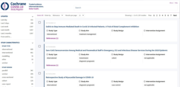
The aim of the register is to support rapid evidence synthesis by all systematic review producers, including Cochrane's work on Rapid Reviews in response to COVID-19. The register helps
...
systematic reviewers prioritize topics, identify available evidence, and produce urgently needed reviews for front-line health professionals, public health policymakers, and research teams developing new therapeutic, diagnostic, and preventive interventions for COVID-19.
The new COVID-19 Study Register will be continually updated with human studies on COVID-19. More background information about the register can be found here: https://community.cochrane.org/about-covid-19-study-register
more
The Middle East Program for Youth in Crisis at the Harvard Humanitarian Initiative
Brett D. Nelson, Maya Fehling, Margaret E. Tierna, Zina Maan Jarrah
Harvard Humanitarian Initiative
(2015)
Examining the needs of at‐risk youth in the Middle East and North Africa: A multi‐method landscape analysis and systematic literature review
“mhGAP Intervention Guide for mental, neurological and substance use disorders in non-specialized health settings” is a technical tool for implementation of the mhGAP Programme. The Intervention Guide has been developed through a systematic
...
review of evidence, followed by an international consultative and participatory process. It provides the full range of recommendations to facilitate high quality care at first- and second-level facilities by the non-specialist health-care providers in resource-poor settings
more
Breastfeeding in the context of Zika virus
recommended
The purpose of this document is to provide interim recommendations to guide breastfeeding practices in the context of Zika virus. A systematic review of evidence will be conducted in March 2016 to r
...
evise and update these recommendations. Also available in arabic and chinese. Please download directly from the website.
more
Vol. 5, No. 3 - 2011 | The Quarterly provides summaries of the best available research evidence on a variety of children’s mental health topics, prepared using systematic review and synthesis met
...
hods adapted from the Cochrane Collaboration and Evidence-Based Mental Health. Our goal is to improve outcomes for children by informing policy and practice. The BC Ministry of Children and Family Development funds the Quarterly.
more

This guidance is targeted to primary health care policy-makers and only addresses issues relevant for primary health care providers. It has been prepared on the basis of a systematic review of the b
...
est available evidence and emergent country practices in response to the COVID-19 outbreak in the WHO European Region. It will be updated on a regular basis as new information becomes available.
more
The WHO COVID-19 LENS (Living Evidence Synthesis) working group consolidated available evidence, based on rapid reviews of the literature and results of a living systematic review on pregnancy and C
...
OVID-19 (up to October 7, 2020), on potential mechanisms of vertical transmission of infectious pathogens, feasibility of vertical transmission of SARS-CoV-2, data related to interpretation of positive SARS-CoV-2 virologic and serologic neonatal tests, lessons from diagnosis of other congenital infections, and existing proposed definitions to classify timing of vertical transmission of SARS-CoV-2.
more
Proc Natl Acad Sci U S A v.110(21); 2013 May 21 PMC3666729 ;
A systematic review was conducted by a multidisciplinary team to analyze qualitatively best available scientific evidence on the effect
...
of agricultural intensification and environmental changes on the risk of zoonoses for which there are epidemiological interactions between wildlife and livestock.
more

Objective: There are an estimated 38 million people with HIV (PWH), with significant economic consequences. We aimed to collate global lifetime costs for managing HIV.
Design: We conducted a systematic re
...
view (PROSPERO: CRD42020184490) using five databases from 1999 to 2019.
Methods: Studies were included if they reported primary data on lifetime costs for PWH. Two reviewers independently assessed the titles and abstracts, and data were extracted from full texts: lifetime cost, year of currency, country of currency, discount rate, time horizon, perspective, method used to estimate cost and cost items included. Descriptive statistics were used to summarize the discounted lifetime costs [2019 United States dollars (USD)].
more
Med Princ Pract 2021;30:17–28
An overview of ethics and clinical ethics is presented in this review. The 4 main ethical principles, that is beneficence, nonmaleficence, autonomy, and justice, are defined and explained. Informed consent,
...
truth-telling, and confidentiality spring from the principle of autonomy, and each of them is discussed. In patient care situations, not infrequently, there are conflicts between ethical principles (especially between beneficence and autonomy). A four-pronged systematic approach to ethical problem-solving and several illustrative cases of conflicts are presented. Comments following the cases highlight the ethical principles involved and clarify the resolution of these conflicts. A model for patient care, with caring as its central element, that integrates ethical aspects
(intertwined with professionalism) with clinical and technical expertise desired of a physician is illustrated
more
Cardiovascular diseases (CVD) represent the highest burden of disease globally. Medicines are a critical intervention used to prevent and treat CVD. This review describes access to medication for CVD from a health system perspective and strategies t
...
hat have been used to promote access, including providing medicines at lower cost, improving medication supply, ensuring medicine quality, promoting appropriate use, and managing intellectual property issues. Using key evidence in published and gray literature and systematic reviews, we summarize advances in access to cardiovascular medicines using the 5 health system dimensions of access: availability, affordability, accessibility, acceptability, and quality of medicines. There are multiple barriers to access of CVD medicines, particularly in low- and middle-income countries. Low availability of CVD medicines has been reported in public and private healthcare facilities. When patients lack insurance and pay out of pocket to purchase medicines, medicines can be unaffordable. Accessibility and acceptability are low for medicines used in secondary prevention; increasing use is positively related to country income. Fixed-dose combinations have shown a positive effect on adherence and intermediate outcome measures such as blood pressure and cholesterol. We have a new opportunity to improve access to CVD medicines by using strategies such as efficient procurement of low-cost, quality-assured generic medicines, development of fixed-dose combination medicines, and promotion of adherence through insurance schemes that waive copayment for long-term medications. Monitoring progress at all levels, institutional, regional, national, and international, is vital to identifying gaps in access and implementing adequate policies.
more
This manual was developed based on the recommendations of a global technical consultation on child health in humanitarian emergencies co-organized by WHO and UNICEF at the end of 2003. WHO in collaboration with the Centre for Refugee and Disaster Response, Bloomberg School of Public Health, Johns Ho
...
pkins University undertook a systematic review in 2004. It demonstrated that existing guidelines, including The Integrated Management of Childhood Illness (IMCI), do not cover all priority conditions in emergencies. The objective of this manual is to provide comprehensive guidance on child care in emergencies.
more

In this guideline, natural ventilation is considered
among one the effective measures to control infections in health care. This guideline provides
a design and operation guide for hospital planners, engineers, architects and infection control
personnel. The recommendations in this guidelin
...
e followed a systematic
review of the literature on the association of ventilation and disease transmission, as well
as effective natural ventilation solutions for infection control.
more
These WHO guidelines which were updated in 2018, are valid for any country and suitable to local adaptations, and take account of the strength of available scientific evidence, the cost and resource implications, and patient values and preferences.
The 2018 edition of the guidelines includes the re
...
vision of the recommendation regarding the use of 80% fraction of inspired oxygen (high FiO2) in surgical patients under general anaesthesia with tracheal intubation and the update of the section on implementation. Between 2017 and 2018, WHO re-assessed the evidence on the use of high FiO2 by updating the systematic review related to the effectiveness of this intervention to reduce SSI and commissioning an independent systematic review on adverse events potentially associated with it. Based on the updated evidence, the GDG decided to revise the strength of the recommendation from strong to conditional.
more
Vol 5 No 27 | ISSN 2039-2117 (online) | ISSN 2039-9340 (print) | The rate of sexual victimization of mentally retarded children is alarming and it goes unnoticed because the perpetrators could be parents, step- parents, relatives, well-respected individuals by family members, neighbours and educator
...
s. Drawing from labelling theory that the mentally retarded have low IQ, majority of perpetrators tend not to get arrested because of lack of evidence. Research indicates that educators struggle to identify the psychological, behavioural and physical symptoms of sexual abuse owing to their limited training. Having employed systematic review as methodology, this research study found that mentally retarded children are prone to HIV/AIDS, PTSD and feelings of helplessness owing to uninvolvement of parents, dysfunctional communities, poverty and their inability to differentiate between abuse and affection. Based on the findings, the recommendations are that: (1) extensive training for professionals, families and community members be executed to protect children with intellectual disability. Furthermore, the rights of the mentally retarded children must be respected in the court of law when reporting sexual abuse.
more
Discrete typing units of Trypanosoma cruzi: Geographical and biological distribution in the Americas
Chagas disease caused by Trypanosoma cruzi is a public health issue in Latin America. This highly diverse parasite is divided into at least seven discrete typing units (DTUs) TcI-TcVI and Tcbat. Some DTUs have been associated with geographical distribution in epidemiological scenarios and clinical m
...
anifestations, but these aspects remain poorly understood. Many studies have focused on studying the parasite and its vectors/hosts, using a wide variety of genetic markers and methods. Here, we performed a systematic review of the literature for the last 20 years to present an update of DTUs distribution in the Americas, collecting ecoepidemiological information. We found that the DTUs are widespread across the continent and that there is a whole gamma of genetic markers used for the identification and genotyping of the parasite. The data obtained in this descriptor could improve the molecular epidemiology studies of Chagas disease in endemic regions.
more
Anaemia is a serious global public health problem that particularly affects young children, menstruating adolescent girls and women, and pregnant and postpartum women. It is a condition in which the number of red blood cells or the haemoglobin concentration within them is lower than normal, affectin
...
g the blood’s ability to carry oxygen to the body’s tissues.
To reliably monitor the prevalence of anaemia at a population level, it is vital to measure the haemoglobin concentration in an accurate and precise way. In large-scale surveys, however, haemoglobin is most commonly measured using single-drop capillary blood specimens in point-of-care devices. Emerging evidence suggests that the use of single-drop capillary blood can introduce random and/or systematic errors, which may lead to inaccurate estimates, complicating effective anaemia programming.
This technical brief describes the current best practices for haemoglobin measurement, providing guidance to help plan or implement field surveys to assess anaemia at a population level. Continuing work to review emerging evidence is led by members of the WHO-UNICEF Technical Expert Advisory group on nutrition Monitoring (TEAM).
more
Most of the global burden of sepsis occurs in low- and middle-income countries (LMICs), but the prevalence and etiology of sepsis in LMICs are not well understood. In particular, the lack of laboratory infrastructure in many LMICs has historically precluded an assessment of the pathogens leading to
...
sepsis. A recent systematic review found that data describing antimicrobial resistance were absent for 43% of countries in Africa, and only two countries have national antimicrobial resistance plans. In addition, small studies have identified indiscriminate antibiotic use both in and out of hospital settings in sub-Saharan Africa. The absence of microbiological data and lack of antibiotic stewardship complicate sepsis management and almost certainly worsens outcomes, particularly in low-resource systems. The purpose of this study was to examine the prevalence, etiology, and outcomes of sepsis among a cohort of critically ill patients in a referral hospital of Malawi, with a focus on the prevalence of culture-confirmed bacteremia and urinary tract infections.
more
A worldwide increase in the prevalence of asthma has been reported in recent years. With an increase in prevalence comes an increased burden of disease in terms of morbidity, mortality and compromised quality of life. The economic burden in terms of utilisation of healthcare resources and limitation
...
of the earning capacity of the individuals and families is an added problem. Various indicators such as disability-adjusted life years and healthy life years have been used to define the economic burden. The data from Asian countries regarding these parameters is scarce, underlining the need for systematic studies in these countries, especially those that are resource poor. The purpose of this review is to highlight the varying prevalence of asthma in Asia and to assess the likely economic burden for the future.
more
In 2015, the United Nations set important targets to reduce premature
cardiovascular disease (CVD) deaths by 33% by 2030. Africa disproportionately
bears the brunt of CVD burden and has one of the highest risks of dying
from non-communicable diseases (NCDs) worldwide. There is currently
an epide
...
miological transition on the continent, where NCDs is projected
to outpace communicable diseases within the current decade. Unchecked
increases in CVD risk factors have contributed to the growing burden of three
major CVDs—hypertension, cardiomyopathies, and atherosclerotic diseasesleading to devastating rates of stroke and heart failure. The highest age
standardized disability-adjusted life years (DALYs) due to hypertensive heart
disease (HHD) were recorded in Africa. The contributory causes of heart failure
are changing—whilst HHD and cardiomyopathies still dominate, ischemic
heart disease is rapidly becoming a significant contributor, whilst rheumatic
heart disease (RHD) has shown a gradual decline. In a continent where health
systems are traditionally geared toward addressing communicable diseases,
several gaps exist to adequately meet the growing demand imposed by CVDs.
Among these, high-quality research to inform interventions, underfunded
health systems with high out-of-pocket costs, limited accessibility and
affordability of essential medicines, CVD preventive services, and skill
shortages. Overall, the African continent progress toward a third reduction
in premature mortality come 2030 is lagging behind. More can be done in
the arena of effective policy implementation for risk factor reduction and
CVD prevention, increasing health financing and focusing on strengthening
primary health care services for prevention and treatment of CVDs, whilst
ensuring availability and affordability of quality medicines. Further, investing
in systematic country data collection and research outputs will improve the accuracy of the burden of disease data and inform policy adoption on
interventions. This review summarizes the current CVD burden, important
gaps in cardiovascular medicine in Africa, and further highlights priority
areas where efforts could be intensified in the next decade with potential
to improve the current rate of progress toward achieving a 33% reduction
in CVD mortality.
more
One of the main aims of the WHO Global Initiative for Childhood Cancer and the CureAll Americas framework is to strengthen centers of excellence and promote the training of the health workforce, especially pediatric oncology nurses, specialized in nursing care for children and adolescents with cance
...
r and their families. These health personnel provide compassionate, non traumatic, complex, continuous, ethical, conscious patient- and family-centered care in order to meet the physical, emotional, psychosocial, and cultural needs of the people involved. This publication is aimed at health administration teams, hospital management teams, and professional pediatric oncology nursing groups. Its objective is to identify, systematize, and consolidate available evidence on the scope of pediatric oncology nursing practice in Latin America and the Caribbean based on core competencies, in order to incorporate them into clinical practice, teaching, and research. The preparation process included a systematic review aimed at finding the best evidence on this subject. Patient- and family centered care and the conceptual model of competencies for teenagers and young adults with cancer, developed by the Teenage Cancer Trust with the support of the Royal College of Nursing, were the theoretical foundations supporting the systematization of recommendations.
more
Current and expected problems such as ageing, increased prevalence of chronic conditions and multi-morbidity, increased emphasison healthy lifestyle and prevention, and substitution for care from hospitals by care provided in the community encourage countries worldwide to develop new models of prima
...
ry care delivery. Owing to the fact that many tasks do not necessarily require the knowledge and skills of a doctor, interest in using nurses to expand the capacity of the primary care workforce is increasing. Substitution of nurses for doctors is one strategy used to improve access, efficiency, and quality of care. This is the first update of the Cochrane review published in 2005.
more
Cochrane Database Syst Rev. 2016 Jul 1; (6): 1–61 -Published online 2016 July 1
Background: Understanding the natural course of child and adolescent posttraumatic stress disorder (PTSD) has significant implications for the identification of, and intervention for, at-risk youth. We used a meta-analytic approach to examine longitudinal changes in youth PTSD prevalence and symptom
...
s over the first 12 months posttrauma.
Journal of Child Psychology and Psychiatry57:8 (2016), pp 884–898
more
Systematic screening for active tuberculosis: an operational guide.

Literature Review on TB Control in Prisons 11/18/2008
Journal of Child Psychology and Psychiatry60:5 (2019), pp 500–515
Accessed: 08.11.2020
No publication year indicated
In the context of the floods in August 2015 in Myanmar, the Disaster Risk Reduction Working Group (DRR WG) was requested to provide clear recommendations to the DMH (Department of Hydrology and Meteorology)to strengthen preparedness activities, in particular for t ... he next Monsoon season. UNDP as the lead of the DRR WG’s Policy Technical Task force carried out a desk review on EW (Early Warning) from all the DRR WG’s members at national and community levels. The document synthesizes the received information related to baseline surveys, lessons learned from the 2015’s floods, studies, project documents and initial recommendations on EW. Those serve as a base to this analysis and its overall recommendations. more
In the context of the floods in August 2015 in Myanmar, the Disaster Risk Reduction Working Group (DRR WG) was requested to provide clear recommendations to the DMH (Department of Hydrology and Meteorology)to strengthen preparedness activities, in particular for t ... he next Monsoon season. UNDP as the lead of the DRR WG’s Policy Technical Task force carried out a desk review on EW (Early Warning) from all the DRR WG’s members at national and community levels. The document synthesizes the received information related to baseline surveys, lessons learned from the 2015’s floods, studies, project documents and initial recommendations on EW. Those serve as a base to this analysis and its overall recommendations. more
A rapid review of evidence on the managing the risk of disease emergence in the wildlife trade - World Animal Health Organization (OIE)
A toolkit for pharmacists.
Emerging data show that medication errors and adverse events cause significant harm to patients’ health and
well-being. It is estimated that the burden of adverse events due to medicines is now comparable to that of
widespread diseases, such as malaria or tuberculosis
...
.1 The impacts of medication errors also represent a
burden for health systems, with the annual cost associated with medication errors estimated at USD 42 billion
worldwideharm
more
A Review of the IFRC (International Federation of Red Cross and Red Cresent Societies) Secretariat Recovery Shelter Programme in Haiti 2010-2011
Ghana Med J. 2012 Jun;46(2 Suppl):69-78.
Health Evidence Network synthesis report 53



This report identifies and analyses policies and laws which currently include of Persons with disabilities in social protection specifically the Vision 2020 Umurenge Programme and considers some of the gaps in the VUP norms which prevent the successful inclusion of Persons with Disabilities.
Consultancy to conduct desk review on impact of national policies and programs on disability rights and develop an action plan to make existing policies and programs and legislation disability friendly
Examen du rôle de la société civile dans le plaidoyer et le lobbying en faveur de l'application de la politique de santé au Kenya
African Population Studies Vol 25, 1 (Supplement) 2011
http://aps.journals.ac.za

World J Meta-Anal. Aug 26, 2017; 5(4): 103-123
Published online Aug 26, 2017. doi: 10.13105/wjma.v5.i4.103
Role of a medical review
World Health Organization
(2012)
C_WHO
Q8: For people with dementia, what is the role of a medical review (including comorbid physical and mental conditions and medication use)?
Supplement October 2010
HIV/AIDS, security and conflict: making the connections
HIV Programme Review in Tajikistan
M. Mansfeld; M. Ristola; J. Klinte; et al.
World Health Organization (Europe); Centre for Health & Infectious Disease Research
(2015)
C_WHO
Evaluation report
September 2014

Relevance and effectiveness of World Bank support for public sector capacity building in Sub-Saharan Africa from 1995 to 2004. Benin is part of a six country case study.
Retest and treat: a review of national HIV retesting guidelines to inform elimination of mother-to-child HIV transmission (EMTCT) efforts
A. L. Drake; K. A. Thomson; C. Quinn; et al.
Journal of the International AIDS Society; PubMed.gov
(2019)
C2
Review
Drake AL et al. Journal of the International AIDS Society 2019, 22:e25271 http://onlinelibrary.wiley.com/doi/10.1002/jia2.25271/full | https://doi.org/10.1002/jia2.25271

This short paper aims to identify key evidence gaps in our knowledge of livestock- and fisheries-linked antimicrobial resistance in the developing world, and to document on-going or planned research initiatives on this topic by key stakeholders.
The antimicrobial resistant (AMR) infections in anima
...
ls that are of most potential risk to human health are likely to be zoonotic pathogens transmitted through food, especially Salmonella and Campylobacter. In addition, livestock associated methicillin resistant Staphylococcus aureus (LA MRSA) and extended spectrum beta lactamase E. coli (ESBL E. coli) are emerging problems throughout the world.
more
Tuberculosis (TB) is, and should be, a curable disease; however, each year significant numbers of patients acquire or develop drug-resistant TB, which has a much lower cure rate. Patients with drug-resistant TB have a high prevalence of symptoms; hence, staff caring for these patients should h
...
ave some familiarity with palliative care, so that general palliative care principles are available to all patients. The timely identification, and addressing, of adverse events occurring during the treatment course is considered as general palliative care for those receiving curative treatment. This publication summarizes the general palliative care approach, which is recommended for use in settings and services that occasionally treat palliative care patients, but do not provide palliative care as the main focus of their work. The review focuses on 18 high TB priority countries of the WHO European Region.
more
The article is a scoping review that explores the challenges in diagnosing asthma in children in three sub-Saharan African countries: Nigeria, South Africa, and Uganda. It identifies key barriers, such as a lack of community awareness, inadequate he
...
althcare access, limited diagnostic tools like spirometry, and insufficient knowledge among healthcare workers. The review also highlights the stigma associated with asthma and the absence of relevant diagnostic guidelines. Solutions proposed include community education, development and adherence to diagnostic guidelines, and strengthening healthcare systems. The study aims to inform policymakers and healthcare providers to improve asthma diagnosis and care for children in these regions.
more
Cystic fibrosis (CF) was earlier thought to be a disease prevalent in the West among Caucasians. However, quite a number of recent studies have uncovered CF cases outside of this region, and reported hundreds of unique and novel variant forms of CFTR. Here, we discuss the evidence of CF in parts of
...
the world earlier considered to be rare; Africa, and Asia. This review also highlighted the CFTR mutation variations and new mutations discovered in these regions. This discovery implies that the CF data from these regions were earlier underestimated. The inadequate awareness of the disease in these regions might have contributed towards the poor diagnostic facilities, under-diagnosis or/and under-reporting, and the lack of CF associated health policies. Overall, these regions have a high rate of infant, childhood and early adulthood mortality due to CF. Therefore, there is a need for a thorough investigation of CF prevalence and to identify unique and novel variant mutations within these regions in order to formulate intervention plans, create awareness, develop mutation specific screening kits and therapies to keep CF mortality at bay.
more
11-17 April 2012

8–18 December 2015
4–15 February 2013
March - June 2018
Myanmar introduced Child Death Surveillance and Response (CDSR) in 2015 as an initiative to reduce child (under-5) mortality, an initiative that will contribute to the country’s efforts to meet the Sustainable Development Goals (SDG). Technical Guidelines for CDSR were devel ... oped in 2015 followed by the development of Training Package in 2016. An Implementation Plan was made in 2016; and this led to all townships implementing CDSR in early 2017. After one year of implementation an assessment was carried out in early 2018.
The assessment was conducted in 3 region/states – Ayeyarwaddy, Magway, Shan South, with information gathered from the state/region, district, township and basic health unit levels. In addition a caretaker interview was conducted to see health-seeking behavior. In addition to these three regions/states, information was also gathered from three other regions/states but only at the region/state level – Mandalay, Yangon, Kachin. more
Myanmar introduced Child Death Surveillance and Response (CDSR) in 2015 as an initiative to reduce child (under-5) mortality, an initiative that will contribute to the country’s efforts to meet the Sustainable Development Goals (SDG). Technical Guidelines for CDSR were devel ... oped in 2015 followed by the development of Training Package in 2016. An Implementation Plan was made in 2016; and this led to all townships implementing CDSR in early 2017. After one year of implementation an assessment was carried out in early 2018.
The assessment was conducted in 3 region/states – Ayeyarwaddy, Magway, Shan South, with information gathered from the state/region, district, township and basic health unit levels. In addition a caretaker interview was conducted to see health-seeking behavior. In addition to these three regions/states, information was also gathered from three other regions/states but only at the region/state level – Mandalay, Yangon, Kachin. more

Myanmar is one of the world’s 22 high tuberculosis (TB) burden countries, and supporting TB control in Myanmar is a global priority. This report reflects the findings, discussions, conclusions and recommendations of the fourth international review
...
mission of the Myanmar National TB Programme (NTP), which brought together international and national partners to review progress in TB control and to offer guidance on future TB control directions and efforts.
A high-quality national disease prevalence survey completed in 2010 demonstrated a TB disease burden two to three times higher than anticipated on the basis of previous surveys. In 2011 about 200 000 adults and children will have developed TB, including 20 000 HIV infected and 9000 suffering from MDR-TB, both of which will require additional care and costly treatment. TB remains among the top killers of adults, and more women die of TB than from maternal causes. more
A high-quality national disease prevalence survey completed in 2010 demonstrated a TB disease burden two to three times higher than anticipated on the basis of previous surveys. In 2011 about 200 000 adults and children will have developed TB, including 20 000 HIV infected and 9000 suffering from MDR-TB, both of which will require additional care and costly treatment. TB remains among the top killers of adults, and more women die of TB than from maternal causes. more

The main goal of the National Health Plan (NHP) 2017-2021 is to extend access to a basic Essential Package of Health Services (EPHS) to the entire population while increasing financial protection. In order to extend service delivery to all communities, the NHP calls for all health workers (whether c
...
ommunity-based, outreach-based or facility-based) involved in the delivery of health promotion, prevention and treatment services to be fully recognised and institutionalized within the health system to ensure efficient use of resources, necessary oversight and quality service provision (regardless of whether the health workers are voluntary or salaried). The first year Annual Operational Plan (AOP) of the NHP 2017-2021 calls for a comprehensive literature review of the situation of all Village Based Health Workers (VBHWs) in the country to inform the development of a comprehensive, institutionalized approach to community health for the country.
more
White Paper from the National Child Traumatic Stress Network Refugee Trauma Task Force
HIV Programme Review in Belarus
D. Raben; J. Klinte; A. Sönnerborg; E. Subata,
World Health Organization (Europe); Centre for Health & Infectious Disease Research
(2015)
C_WHO
Evaluation report November 2014
Review of the HIV Programme in the former Yugoslav Republic of Macedonia
D. Raben; S. F.Jakobsen; A. Sönnerborg; E. Subata
World Health Organization (Europe); Research Gate
(2016)
C_WHO
October 2015
Review of Community-Based Management of Acute Malnutrition Implementation in Burkina Faso
Deconinck H., S. Diene, P. Bahwere
Food and Nutrition Technical Assistance II Project (FANTA-2)
(2010)
C2
The United States Agency for International Development (USAID) Bureau for Democracy, Conflict, and Humanitarian Assistance Office of U.S. Foreign Disaster Assistance (DCHA/OFDA) requested Food and Nutrition Technical Assistance II Project (FANTA-2) assistance to
...
review Community-Based Management of Acute Malnutrition (CMAM) in four West African countries—Burkina Faso, Mali, Mauritania, and Niger—to help identify DCHA/OFDA 2010 and 2011 program priorities, including where DCHA/OFDA investment should be directed to support CMAM. The goal was to review CMAM program implementation and its integration into national health systems to provide DCHA/OFDA a status report for each country; draw lessons learned; and make recommendations on challenges, promising practices, gaps, and priority areas for DCHA/OFDA support during 2010 and 2011. The review was intended for DCHA/OFDA program planning purposes and also potentially as an advocacy tool to guide other donors in planning CMAM support in the region. After all four countries have been reviewed, FANTA-2 will develop a synthesis report. The current document presents a summary report on CMAM in Burkina Faso only.
more

Tuberculosis (TB) is the leading cause of death from a single infectious agent even if is largely curable and
preventable. In 2019 an estimated 2.9 million of the 10 million people who fell ill with TB were not
diagnosed or reported to the World Health Organization1. The Politi
...
cal Declaration adopted by the United
Nations General Assembly in September 2018 commits, amongst others, to diagnosing and treating 40
million people with TB. In order to achieve these ambitious targets, there is an urgent need to deploy
strategies to improve diagnosis and initiation of care for people with TB. One of them is systematic
screening for TB disease, which is included in the End TB Strategy as a central component of its first pillar
to ensure early diagnosis for all with TB.
more
Long Acting Muscarinic Antagonists (LAMA) such as tiotropium and glycopyrronium are used in the management of COPD1. They have been shown to improve lung function, quality of life and exercise tolerance. They have also been associated with reduced COPD-related exacerbations, associated hospitalisati
...
ons and duration of hospital stay. Both the South African Thoracic Society (SATS) and Global Initiative for Chronic Obstructive Lung Disease (GOLD), guidelines recommend the use of long acting anticholinergic drugs (or long acting beta agonists) in moderate to very severe disease as defined by lung function (FEV1). The most up to date guideline, utilizing the GRADE methodology (European Respiratory Society guidelines of 2017), confirms their superiority over long acting β agonists (LABA) as monotherapy for COPD in that LAMA's have demonstrated greater efficacy in terms of exacerbation reduction, with similar safety profile.2 These recommnedations are supported by published peer-reviewed
evidence including individual papers and Cochrane reviews.
more
The approach is in line with two of the five objectives outlined in the Every Newborn Action Plan (ENAP): Strategic Objective 2 – Improve the quality of maternal and newborn care; and Strategic Objective 5 – Count every newborn through measurement, programme-tracking and accountability to genera
...
te data for decision-making and action.
more