
Filter
139
Text search:
south
kivu
Featured
9
67
Language
Document type
88
27
8
7
6
1
1
1
Countries
57
17
11
10
10
6
5
4
4
4
4
4
4
3
3
3
2
2
2
2
2
2
2
1
1
1
1
1
1
1
1
1
1
1
1
1
1
1
1
1
1
1
1
1
1
1
1
Authors & Publishers
Publication Years
Category
60
7
7
5
4
2
1
Toolboxes
26
14
12
12
10
10
5
2
2
2
2
2
1
1
1
Coronavirus Disease-19 (COVID-19) was declared a global pandemic on 11 March 2020, and Malawi declared its first case on 2 April. As of 30 April, there were 36 confirmed positive cases of COVID-19 and 3 deaths. A State of Disaster was declared by President Arthur Peter Mutharika on 20 March and a 21
...
Guiding the work of medica mondiale is an attitude of sensitivity towards both trauma and stress.
This stress- and trauma-sensitive approach has a strengthening and relieving effect on the affected
people and also the activists, specialist staff and working groups. For medica mondiale, trauma as a
...
Despite the increasing population of refugees stuck in protracted situations and our awareness of the vulnerability of children and adolescents growing in up these contexts, relatively little is known about community based child protection mechanisms (CBCPMs) in refugee communities. CBCPMs, defined
...
mnesty International’s annual report on the state of the world’s human rights in 2021, published in March 2022, shows that promises to “build back better” after the Covid-19 pandemic were little more than lip service. Hopes of global cooperation withered in the face of vaccine hoarding and c
...

English Analysis on World about Agriculture, Climate Change and Environment and more; published on 29 Sep 2021 by FAO and NEPAD

To support countries in adapting their response to different COVID-19 scenarios, the World Health
Organization (WHO) Department of Maternal, Newborn, Child and Adolescent Health and Ageing commissioned this scoping review of published and grey literature. The objective was to identify interventions
...

I examine the effectiveness of donors in targeting the highest burden of malaria in the Democratic Republic of Congo when health information structure is fragmented. I exploit local variations in the burden of malaria induced by mining activities as well as financial and epidemiological data from he
...
It is widely understood that the food insecurity crisis in the Sahel and the Horn of Africa is one of the world’s fastest growing and most neglected crises. It lacks sufficient global focus, resources and urgency. As in so many crises, women and girls are disproportionately affected and shoulder t
...
Global Trends: Forced Displacement in 2023
recommended
At the end of 2023, an estimated 117.3 million people worldwide were forcibly displaced due to persecution, conflict, violence, human rights violations and events seriously disturbing the public order. The latest Global Trends report, published in June 2024, provides key statistical trends on forc
...
Mpox is an emerging zoonotic disease caused by the mpox virus, a member of the Orthopoxvirus genus closely related to the variola virus that causes smallpox. Mpox was first discovered in 1958 when outbreaks of a pox-like disease occurred in monkeys kept for research. The first human case was recorde
...
22 September 2024
The government of Rwanda conducted the 2010 Rwanda Demographic and Health Survey (RDHS) to gather up-to-date information for monitoring progress on healthcare programs and policies in Rwanda, including the Economic Development and Poverty Reduction Strategy (EDPRS), the Millennium Development Goals
...

The report offers an analysis of the broader challenges to securing humanitarian action and recommends areas for improvement. This study will contribute to improving the way humanitarians ‘do business’ in complex
security environments. Document also available in French, Arabic and Spanish.

Project Paper to provide an additional grant for: Human Development Systems Strengthening Project (HDSSP)(P145965, H9360)

IN THE AMOUNT OF SDR 21.8 MILLION (US$30 MILLION EQUIVALENT) WITH AN ADDITIONAL GRANT FROM THE GLOBAL FINANCING FACILITY (GFF) IN THE AMOUNT OF US$ 10 MILLION TO THE DEMOCRATIC REPUBLIC OF CONGO FOR A HUMAN DEVELOPMENT SYSTEMS STRENGTHENING PROJECT
The main objective of the 2014-15 RDHS was to obtain current information on demographic and health indicators, including family planning; maternal mortality; infant and child mortality; nutrition status of mothers and children; prenatal care, delivery, and postnatal care; childhood diseases; and ped
...
This report complements the previous poverty analysis studies by presenting a series of poverty maps of Rwanda at cell and sector levels, based on data from EICV4 and the 2012 Population and Housing Census. A poverty map is simply a map that shows the incidence of poverty in different areas of the c
...
This report has been developed, based on data provided by the TB & ORD surveillance system from across Rwanda. It provides a comprehensive picture of the occurrence and management of TB & ORD and Leprosy in Rwanda. It is structured based on the 2013-2018 Rwanda TB national strategic plan (2013-2018
...
The 2010-2011 National Annual Report on HIV program presents the progress in implementing the strategies and activities articulated in the National Strategic Plan on HIV and AIDS 2009-2012 commonly referred to as the HIV NSP. The report presents consolidated information regarding the outputs in the
...
The Vision 2020 is a reflection of our aspiration and determination as Rwandans, to construct a united, democratic and inclusive Rwandan identity, after so many years of authoritarian and exclusivist dispensation. We aim, through this Vision, to transform our country into middle - income nation in w
...

OECD Development Policy Tools
Recognising that donor policies and responses constantly evolve, this guidance recommends that donors operating in situations of forced displacement prioritise three broad areas of work, where they can best contribute to existing capacities at the national, regiona ...
Recognising that donor policies and responses constantly evolve, this guidance recommends that donors operating in situations of forced displacement prioritise three broad areas of work, where they can best contribute to existing capacities at the national, regiona ...
Annual report on global preparednessfor health emergencies
The next pandemic is not a question of if, but when—and the world is woefully unprepared, according to the first annual report from the Global Preparedness Monitoring Board. The WHO and the World Bank convened the independent group after
...
Productive and Inclusive Cities for an Emerging Democratic Republic of Congo
Tips for Engaging Communities during COVID-19 in Low-Resource Settings, Remotely and In-Person
recommended
This brief provides key considerations for engaging communities on COVID-19 and tips for how to engage where there are movement restrictions and physical distancing measures in place, particularly in low-resource settings.
Finding community-led solutions to COVID-19
recommended
An interagency guidance note on working with communities in high density settings to plan local approaches to preventing and managing COVID-19. This guidance note is intended for anyone involved in COVID-19 risk communication and community engagement (RCCE) efforts in complex and fragile settings in
...
This paper aims to provide aid agencies with initial analysis and guidance to inform the design, implementation and adaptation of conflict-sensitive humanitarian and development responses to the COVID-19 pandemic. It presents a series of overarching considerations to take into account when determini
...
This paper reviews the effects of vertical responses to COVID-19 on health systems, services, and people’s access to and use of them in LMICs, where historic and ongoing under-investments heighten vulnerability to a multiplicity of health threats. We use the term ‘vertical response’ to describ
...
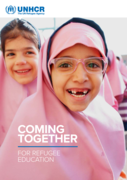
Children in every country are struggling with the impact of COVID-19. An entire generation has had its education disrupted, from nurseries and pre-primaries to universities and apprenticeships
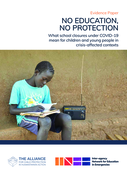
What school closures under COVID-19 mean for children and young people in
crisis-affected contexts
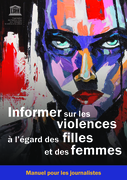
À l’ère des évolutions numérique, démocratique, sociétale et politique, la communication est devenue plus que jamais une passerelle d’idées et d’initiatives révolutionnaires, capable de créer des communautés plus fortes, plus informées et plus impliquées que jamais. L’émergence
...
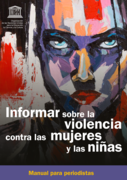
En la era del cambio digital, democrático, social y político, la comunicación se ha convertido en un medio esencial para expresar ideas y desarrollar iniciativas revolucionarias, capaces de crear comunidades más fuertes, mejor informadas y más comprometidas que nunca. El surgimiento del periodi
...
