
Filter
861
Text search:
social
distancing
Featured
103
28
Language
Document type
268
247
78
68
58
57
39
16
14
6
4
4
2
Countries
65
31
29
26
25
24
23
20
18
17
16
15
15
13
12
12
11
11
11
11
10
10
9
9
9
8
8
7
7
7
6
6
6
5
5
5
5
5
5
5
5
5
4
4
4
4
4
4
4
4
4
4
3
3
3
3
3
3
3
3
3
3
2
2
2
2
2
2
2
2
2
2
2
2
2
2
2
2
1
1
1
1
1
1
1
1
1
1
1
1
1
1
1
1
1
1
1
1
1
1
1
1
1
1
1
1
1
Authors & Publishers
Publication Years
Category
352
26
20
17
15
9
3
1
Toolboxes
623
34
33
27
23
20
18
14
13
11
10
8
8
5
4
4
3
2
2
2
2
1
3rd editionThe compendium provides guidance on low-cost handwashing facilities that can be widely used in low and middle-income countries. We hope that this can be shared extensively as governments and agencies tackle the crisis in low and middle-income countries where handwashing facilities are urg
...
Traditional food markets play important economic, cultural, and social role and are sources of livelihood for millions of people in urban and rural areas. The manual Five keys for safer traditional food markets: risk mitigation in traditional food m
...
As countries like the United States pass temporary legislation to cushion the massive blow that is on the horizon that is about to hit many of their citizens – poor and not poor – it is important to think about the tools available to governments of low-income countries, what kind of preparations
...
A new respiratory infectious disease, COVID-19, caused by a new coronavirus called SARS-CoV-2, emerged in early December 2019. Since then, the virus has spread to India and 106 other countries in Asia, Europe, North America, Africa, and Oceania. On March 11, the World Health Organization (WHO) decl
...
This guidance will assist the transportation sector, including transport authorities, companies, independent or informal drivers, and passengers, in addressing coronavirus disease 2019 (COVID-19) for different outbreak phases as defined in the Africa CDC Stepwise Response.
This guidance complements
...
Migration continues to be an essential ingredient of socioeconomic development everywhere.
Whether it is a case of people moving from the countryside to cities to find work, or people crossing seas and borders to meet host country demands for new labour, migrants are an integral part of the modern
...
With the spread of the coronavirus (COVID-19) across Myanmar, many children and caregivers are required to stay in quarantine centres, in isolation and in hospitals, and special attention is needed to ensure children’s rights are protected in these settings. Violence, exploitation, abuse and negle
...
The World Health Organization (WHO)6, the Civil Society Action Committee and the Lancet Migration global collaboration are amongst many organisations that have advised governments against returning irregular migrants during the Coronavirus disease 2019 (COVID-19) pandemic. The expulsion of i
...
There are indigenous communities at high risk in every country of the region. At stake are the lives of 45 million people who belong to more than 800 indigenous peoples. Of these, some 100 are spread across several countries, around 200 maintain voluntary isolation or are in initial contact, and nea
...
This report presents three scenarios on the impact of COVID-19 in Africa using economic growth forecasts, mortality and efforts to ameliorate impact through social grants. Likely effects are examined on per capita income, poverty and the attainment
...
New research explores the stress children in World Vision programmes in the Middle East and Eastern Europe region are under due to COVID-19. In addition to their fear that they themselves or their loved ones will catch the disease, children worry about economic hardships, the loss of their education
...
Saúde Soc. São Paulo, v.30, n.1, e200450, 2021
Desde março de 2020, quando a Organização Mundial de Saúde declarou que o mundo vivia uma pandemia de covid-19, acompanhamos um quadro sanitário sem precedentes nos últimos 100 anos. As medidas atuais contra a
...
27 May 2021
All countries should increase their level of preparedness, alert and response to identify, manage and care for new cases of COVID-19. Countries should prepare to respond to different public health scenarios, recognizing that there is no one-size-fits-all approach to managing cases and o
...
The WHO continuously reviews available data on SARS-CoV-2 variants of concern. For this version, the global epidemiological
situation of the COVID-19 pandemic as of 21 January 2022 – at a time when the Omicron VOC had been identified in 171
countries across all six WHO Regions and was rapidly re
...
Accessed: 27.04.2020
Leaving no one behind in the Covid-19 Pandemic: a call for urgent global action to include migrants & refugees in the Covid-19 response
People on the move, whether they are economic migrants or forcibly displaced persons such asylum seekers, refugees, and internally displa
...
Facing the COVID-19 (new coronavirus disease) pandemic, the countries of the world must take decisive action to stop the spread of the virus. In these critical circumstances, it is es- sential that everyone is informed about other health risks and hazards so that they can stay safe and healthy.
The
...
The COVID-19 pandemic is causing untold fear and suffering for older people across the world. As of 26 April, the virus itself has already taken the lives of some 193,710 people, and fatality rates for those over 80 years of age is five times the global average. As the virus spreads rapidly to devel
...

While the full effects of COVID-19 remain unknown, the pandemic continues to profoundly impact regional migration and mobility dynamics, with deep health, social and economic consequences for the most vulnerable, including migrants, displaced popula
...
The COVID-19 pandemic has exposed the inadequacy of investments in public health, the persistence of profound economic and social inequalities and the fragility of many key global systems and approaches.
Six months in, the indirect impacts of COVID-19 take a toll on health, social and economic outcomes.
COVID-19 Recommended Interventions in Mental Health and Psychosocial Support (MHPSS) during the Pandemic
recommended
This document describes the essential interventions in mental health and psychosocial support (MHPSS) that should be developed on an intersectoral basis in countries and communities. Its frame of reference is the Inter-Agency Standing Committee (IASC) intervention pyramid for MHPSS services. The pyr
...
The report – the first of its kind – shows how the pandemic has driven up food insecurity and increased vulnerability among migrants, families reliant on remittances and communities forced from their homes by conflict, violence and disasters.
The two UN agencies warn the
...
COVID-19 has heavily emphasized how contact tracing is crucial for managing outbreaks, and as part of the strategy for adjusting, and eventually lifting, lockdowns and other stringent public health and social measures. As the pandemic develops furth
...
From the start of the COVID-19 pandemic until August 2021, extreme weather events have affected at least 139.2 million people and killed at least 17,242 people in at least 433 unique events. These figures are certainly an underestimate, as they do not include estimates of numbers of people affected
...
INTRODUCTION: The COVID-19 pandemic has disrupted health systems around the world. The objectives of this study are to estimate the overall effect of the pandemic on essential health service use and outcomes in Mexico, describe observed and predicted trends in services over 24 months, and to estimat
...
Women, the elderly, adolescents, youth, and children,
persons with disabilities, indigenous populations, refugees,
migrants, and minorities experience the highest degree
of socio-economic marginalization. Marginalized people
become even more vulnerable in emergencies.1 This is due
to factors su
...

A comprehensive briefing by Half of Syria
April 2020
A comprehensive briefing on the critical challenges of the COVID-19 pandemic to Syrians, as reported by Syrian civil society organisations. These challenges have been collated following extensive interviews with the teams of member and partner
...

Aligned to the Lancet Migration Global Statement to include migrants and refugees incountries’response to COVID-19, this update focuses on Mexico’s challenges and opportunities to build an inclusive response that is based on a contextualized adaptation of there commendations published by th
...
Available in Arabic, Chinese, English, French, Russian and Spanish. You can download a summary of the main report and background documents!
The report demonstrates that the current system—at both national and international levels— was not adequate to protect people from COVID-19. The time it t
...
The COVID-19 pandemic has resulted in a double shock - health and economic. As of March 1, 2021, COVID-19 has cost more than 2.5 million lives and triggered an economic recession surpassing any economic downturn since World War II.
Part I of this paper explores the impact of this current macro-fisc
...
The 2020 Financing for Sustainable Development Report, the fifth report of the Inter-agency Task Force on Financing for Development, provides a comprehensive assessment of the state of sustainable finance. Prepared by more than 60 agencies of the United Nations system and partner international organ
...

This document contains guidance for strengthening the disability inclusiveness of MHPSS responses and programmes in emergency settings. It is intended to supplement the IASC Guidelines on Mental Health and Psychosocial Support in Emergency Settings (2007).
Overall Objective
To consider and add
...
The Vienna Declaration was signed at the end of the Fifth High-level Meeting on Transport, Health and Environment. The virtual meeting, hosted by the Federal Government of Austria, brought together 46 ministers and representatives of 56 countries in the pan-European region.
The group discussed ho
...
Unlike foot and mouth disease, the avian flu, e-coli or listeria, the COVID-19 pandemic has not spread directly through livestock or agriculture commodities, and has therefore not directly disrupted on-farm production. However, the crisis is undermining the ability of farms and agri-enterprises to e
...
As information about COVID-19 is rapidly evolving, it can be challenging to navigate and synthesize all of the information. The purpose of this document is to provide a synthesized, indexed reference of accurate, standardized COVID-19 information from trustworthy sources. Information is presented in
...
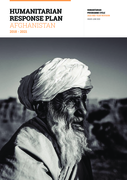
The arrival of COVID-19 in Afghanistan has brought heartache to millions of people who are now battling a deadly pandemic while simultaneously fighting for their survival amid poverty, disaster and war. Over my three years as Humanitarian Coordinator, I have marvelled at the resilience of the people
...
21 January 2022
The overall threat posed by Omicron largely depends on four key questions: (i) how transmissible the variant is; (ii) how well vaccines and prior infection protect against infection, transmission, clinical disease and death; (iii) how virulent the variant is compared to other varian
...

The Infection prevention and control in the context of coronavirus disease 2019 (COVID-19): a living guideline consolidates technical guidance developed and published during the COVID-19 pandemic into evidence-informed recommendations for infection prevention and control (IPC). This living guideline
...

Este documento de orientação aborda a forma como o distanciamento físico (referido em documentos de orientação anteriores como "distanciamento social") pode ajudar a retardar a transmissão.
Safe Ramadan practices in the context of the COVID-19
This document provides public health guidance for social and religious practices and gatherings during Ramadan. It also offers advice to strengthen mental and physical well-being so as to live i
...
Ce document d'orientation explique comment la distance physique (désignée dans les documents d'orientation précédents sous le nom de «distance sociale») peut aider à ralentir la transmission.
orientations provisoires, 14 juin 2021
Consideraciones para aplicar y ajustar medidas de salud pública y sociales en el contexto de la COVID-19
recommended
orientaciones provisionales, 14 de junio de 2021
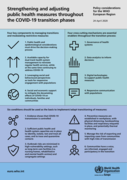
Policy considerations for the WHO European Region
24 April 2020
Guidance on easing lockdown in Arabic Version
Millions of children are at increased risk of harm as their lives move increasingly online during lockdown in the COVID-19 pandemic, UNICEF and partners said today.
“The coronavirus pandemic has led to an unprecedented rise in screen time,” said Global Partnership to End Violence Executive Dire
...
This document provides guidance for African Union Member States on actions to be taken to ensure they continue to meet all the health
needs of their citizens in accordance with achieving the objectives of the Africa Health Strategy 2016 – 2030.
Self-care interventions are among the most promising and exciting new approaches to improve health and well-being, both from a health systems perspective and for people who use these interventions.
The World Health Organization (WHO) uses the following working definition of self-care: Self-care i
...

WHO Guideline on self-care interventions for health and well-being, 2022 revision: executive summary
recommended
A global shortage of an estimated 18 million health workers is anticipated by 2030, a record 130 million people are in need of humanitarian assistance, and there is the global threat of pandemics such as COVID-19. At least 400 million people worldwide lack access to the most essential health service
...

The Government of India is embarking on a mammoth task to prevent COVID-19 spread among communities. The Rapid Evidence Synthesis team received a request to support the planning and development of resources for ensuring preparedness of FLHWs for COVID-19 . The rapid evidence synthesis was conducted
...
WHY THIS GUIDE?
Because, in the face of crises and emergencies, it is vital to include a human rights perspective in responses. Vulnerable groups face major obstacles to accessing and benefiting from prevention, mitigation, and health care policies due to structural barriers of inequality. To offer
...

Several countries affected by COVID-19, have seen increases in levels of violence occurring in the home, including violence against children, intimate partner violence and violence against older people. Countries also face increasing challenges in maintaining support and care for survivors of violen
...
MMWR Morb Mortal Wkly Rep. ePub: 4 December 2020. DOI: http://dx.doi.org/10.15585/mmwr.mm6949e2
People with mental health conditions are challenged in
dealing with the symptoms that result from the condition
but are also challenged by the prejudice and stereotypes
that result from misconception and misunderstanding about
mental health.
But what is mental health stigma and why is it a cent
...
Hand Hygiene and COVID-19
recommended
MEDBOX Issue Brief No.2.
The main route of transmission of the Sars-CoV-2 virus are small respiratory droplets. Therefore, thoroughly cleaning of hands with either alcohol-based hand rub or soap and water is one of the corner stones of basic protective measures against COVID-19 for everyone. A part
...
Accessed: 31.03.2020
March 2020
This document provides a high-level mapping of outbreak stages with guidance on how to time the minimum uptake of different interventions that have been recommended by Africa CDC, driven by evidence and science.
Accessed: 31.03.2020
Coronavirus disease 2019 (COVID-19) is an acute infectious respiratory disease caused by a newly discovered coronavirus (SARS-CoV-2).
Most people infected with the COVID-19 virus experience mild to moderate respiratory illness and recover without requiring special treatment, the disease presentati
...
Last update: 2 April 2020
The Suicide Prevention Resource Center (SPRC) has compiled a selection of web pages and information sheets
on mental health and coping with the effects of COVID-19. These resources are a selection from key organizations
in the field. We will continue to update this list as new resources become ava
...

Accessed: 07.04.2020
Pakistan: Situation Update
This report is produced by OCHA Pakistan in collaboration with humanitarian partners and Government as of 07 April 2020.
12 April 2020
This Guidance Note on making COVID-19 response Age & Disability-inclusive provides advice for organizations and sectors to ensure essential responses, communication about the outbreak and adapt to services and support are inclusive and accessible for older persons and persons with d
...
Masks and Covid-19
recommended
MEDOBOX Issue Brief No.1
This topic last updated: Apr 28, 2020.
The content on the UpToDate website is not intended nor recommended as a substitute for medical advice, diagnosis, or treatment. Always seek the advice of your own physician or other qualified health care professional regarding any medical questions or condi
...
In April 2020, the UN launched a coordinated global humanitarian response plan (GHRP) to fight COVID-19 in some of the world’s most vulnerable countries and address the needs of the most vulnerable people. This tips sheet provides practical tips to strengthen disability inclusion within the new up
...
Countries have shut down the economy to slow the spread of the coronavirus. Supermarket shelves remain stocked for now. But a protracted pandemic crisi s could quickly put a strai n on the f ood supply chains, a complex web of interactions involving farmers, agricultu
...
Several countries have demonstrated that COVID-19 transmission from one person to another can be slowed or stopped. This document has been prepared based on the evidence currently available about Coronavirus disease 2019 (COVID-19) transmission (human-to-human transmission primarily via respiratory
...
Reusing a legacy interactive audio instruction (IAI) program to provide education in a humanitarian crisis is a quick solution and a smart use of previous investments (“Learning in the Time of Ebola”). This article highlights and advises on the issues that relate to adapting and updating previou
...
This document offers guidance to Member States in the African region on the key steps used to conduct contact tracing related to the COVID-19 response. It is to be used by national and local health authorities in the implementation of tracing of contacts of probable and confirmed COVID-19 cases.
Supporting the continuity of health and nutrition services in the context of COVID-19 in refugee settings
recommended
The 2014–2015 Ebola outbreak was catastrophic in West Africa but the indirect impact of increasing the mortality rates of other conditions was also substantial. The increased number of deaths caused by malaria, HIV/AIDS, and tuberculosis attributable to health system failures exceeded deaths from
...
In March 2020 the World Health Organization (WHO) declared the outbreak of a novel coronavirus disease, COVID-19, to be a pandemic, due to the speed and scale of transmission.
WHO and public health authorities around the world are taking action to contain the COVID-19 outbreak. Certain populations,
...
As of 21 May 2020, 4.8 million confirmed cases of Coronavirus disease 2019 (COVID-19) have been reported globally. In South America, COVID-19 was first detected on 26 February 2020, when Brazil confirmed a case in São Paulo.
Praxistipps zu Rahmenbedingungen und Nutzung online basierter Kommunikation
Arabic Version of: Guidance on Environmental decontamination in the context of COVID-19
Primary care health centers and providers who care for individuals with hypertension and cardiovascular disease have an important role to play in ensuring continued access to care, reducing the risk of coronavirus infection, and appropriately managing people with these co-morbidities who acquire COV
...
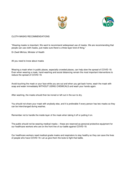
“Wearing masks is important. We want to recommend widespread use of masks. We are recommending that people can use cloth masks, just make sure there’s a three layer kind of thing.”Dr Zweli Mkhize, Minister of Health
available in: Xitsonga, Tshivenda, Siswati, Setswana, Sesotho, Sepedi, isiZul
...
]. تختلف مخاطر التلوث COVID-19المادية في سياق جائحة مرض فيروس كـــورونـا المستجد [السطحي وانتقال العدوى باختلاف نوع الإعداد وحجم السكان الذين يترددون على كل مكان (مثل: مØ
...

Razum O et al. Covid-19 in Flüchtlingsunterkünften: ÖGD. Gesundheitswesen 2020; 82: 392–396
This paper aims to provide aid agencies with initial analysis and guidance to inform the design, implementation and adaptation of conflict-sensitive humanitarian and development responses to the COVID-19 pandemic. It presents a series of overarching considerations to take into account when determini
...
The WHO SAGE values framework for the allocation and prioritization of COVID-19 vaccination is intended to offer guidance on the prioritization of groups for vaccination when vaccine supply is limited. It provides a values foundation for the objectives of COVID-19 vaccination programmes and links t
...
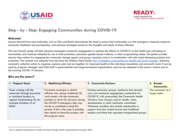
The global coronavirus pandemic, which has brought death to hundreds of thousands and serious illness to millions more, also poses profound spiritual questions and real challenges to Christians everywhere.
The pandemic itself has become a fundamental test of our faith in God and God’s providence,
...

COVID-19 Infection Prevention and Control Sameeksha (Hindi; review) compiles recent key IPC resources on COVID from scientific journals, WHO guidelines, Ministry of Health and Family Welfare /Government of India guidelines, and trainings and IPC resources. The intended target audience for this inclu
...

Key findings from a February 2021 survey from the Partnership for Evidence-Based Response to COVID-19 (PERC)
As a Frontline Health Care Worker or a Vaccinator, you need to counsel pregnant women about the availability, value and precautions regarding the COVID-19 vaccine. This note provides you with the information that you need to educate and support pregnant women so that they can make an informed decisi
...
A report demonstrating the urgent need to support groups at the local level if COVID-19 misinformation and mistrust is to be tackled effectively.
ABSTRACT
Objectives: We developed COVID-19 Outbreak Simulator (https://ictr.github.io/covid19-outbreak-simulator/) to quantitatively estimate the effectiveness of preventative and interventive measures to prevent and battle COVID-19 outbreaks for specific populations.
In response to the COVID-19 outbreak, this guidance provides information on infection and prevention control (IPC) for older people, their friends and families, carers, and healthcare providers. Anyone who manages, works, volunteers or provides care at any type of facilities where older people recei
...
