Filter
6655
Text search:
single
Featured
652
1729
Language
6423
151
139
87
80
62
42
37
17
12
12
11
10
10
9
8
7
7
7
7
7
6
6
6
5
5
5
5
5
5
5
5
5
5
4
4
4
4
4
3
3
3
3
3
3
3
3
2
2
2
2
2
2
2
2
1
1
1
1
1
1
1
1
1
1
1
1
Document type
3766
1093
933
332
162
136
115
34
34
18
17
4
4
Countries
365
285
181
161
131
131
130
122
114
111
110
101
101
98
92
88
88
82
79
77
63
62
50
45
44
40
40
40
39
39
36
35
35
34
33
32
32
30
30
29
28
26
25
24
23
22
21
21
20
18
18
16
15
14
14
13
13
13
13
12
12
11
10
10
9
9
9
9
8
8
7
6
6
6
6
6
5
5
5
5
5
5
5
5
5
5
5
4
4
4
4
4
4
4
4
3
3
3
3
3
3
3
3
3
3
2
2
2
2
2
2
2
2
2
2
2
2
2
2
2
2
2
2
2
2
2
2
2
1
1
1
1
1
1
1
1
1
1
1
1
1
1
1
1
1
Authors & Publishers
915
358
307
200
146
129
126
92
71
52
38
37
31
31
30
26
25
25
25
25
24
24
24
23
23
23
22
22
21
20
20
19
19
19
19
18
18
18
18
17
17
17
17
16
16
16
16
16
16
15
15
14
14
14
14
14
13
13
13
12
12
12
12
12
12
12
12
11
11
11
11
11
11
10
10
10
10
10
10
10
10
9
9
9
9
9
8
8
8
8
8
8
8
8
8
8
8
8
8
8
8
8
8
7
7
7
7
7
7
7
7
7
7
7
7
7
7
7
7
7
7
7
7
7
6
6
6
6
6
6
6
6
6
6
6
6
6
6
6
6
6
6
6
6
6
6
6
6
6
6
6
6
6
5
5
5
5
5
5
5
5
5
5
5
5
5
5
5
5
5
5
5
5
5
5
5
5
5
5
5
5
5
5
5
5
5
5
5
5
5
5
5
5
5
5
5
5
5
5
5
4
4
4
4
4
4
4
4
4
4
4
4
4
4
4
4
4
4
4
4
4
4
4
4
4
4
4
4
4
4
4
4
4
4
4
4
4
4
4
4
4
4
4
4
4
4
4
4
4
4
4
4
4
4
3
3
3
3
3
3
3
3
3
3
3
3
3
3
3
3
3
3
3
3
3
3
3
3
3
3
3
3
3
3
3
3
3
3
3
3
3
3
3
3
3
3
3
3
3
3
3
3
3
3
3
3
3
3
3
3
3
3
3
3
3
3
3
3
3
3
3
3
3
3
3
3
3
3
3
3
3
3
3
3
3
3
3
3
3
3
3
3
3
3
3
3
3
3
3
3
3
3
3
3
3
3
3
3
3
3
3
3
3
3
3
3
3
3
3
3
3
3
3
3
3
3
3
3
3
3
3
3
3
3
3
3
3
3
3
3
3
3
3
3
3
3
3
2
2
2
2
2
2
2
2
2
2
2
2
2
2
2
2
2
2
2
2
2
2
2
2
2
2
2
2
2
2
2
2
2
2
2
2
2
2
2
2
2
2
2
2
2
2
2
2
2
2
2
2
2
2
2
2
2
2
2
2
2
2
2
2
2
2
2
2
2
2
2
2
2
2
2
2
2
2
2
2
2
2
2
2
2
2
2
2
2
2
2
2
2
2
2
2
2
2
2
2
2
2
2
2
2
2
2
2
2
2
2
2
2
2
2
2
2
2
2
2
2
2
2
2
2
2
2
2
2
2
2
2
2
2
2
2
2
2
2
2
2
2
2
2
2
2
2
2
2
2
2
2
2
2
2
2
2
2
2
2
2
2
2
2
2
2
2
2
2
2
2
2
2
2
2
2
2
2
2
2
2
2
2
2
2
2
2
2
2
2
2
2
2
2
2
2
2
2
2
2
2
2
2
2
2
2
2
2
2
2
2
2
2
2
2
2
2
2
2
2
2
2
2
2
2
2
2
2
2
2
2
2
2
2
2
2
2
2
2
2
2
2
2
2
2
2
2
2
2
2
2
2
2
2
2
2
2
2
2
2
2
2
2
2
2
2
2
2
2
2
2
2
2
2
2
2
2
2
2
2
2
2
2
2
2
2
2
2
2
2
2
2
2
2
2
2
2
2
2
2
2
2
2
2
2
2
2
2
2
2
2
2
2
2
2
2
2
2
2
2
2
2
2
2
2
2
2
2
2
2
2
2
2
2
2
2
2
2
2
2
2
2
2
2
2
2
2
2
2
2
2
2
2
2
2
2
2
2
2
2
2
2
2
2
2
2
2
2
2
2
2
2
2
2
2
2
2
2
2
2
2
2
2
2
2
2
2
2
2
2
2
2
2
2
2
2
2
2
2
2
2
2
2
2
2
2
1
1
1
1
1
1
1
1
1
1
1
1
1
1
1
1
1
1
1
1
1
1
1
1
1
1
1
1
1
1
1
1
1
1
1
1
1
1
1
1
1
1
1
1
1
1
1
1
1
1
1
1
1
1
1
1
1
1
1
1
1
1
1
1
1
1
1
1
1
1
1
1
1
1
1
1
1
1
1
1
1
1
1
1
1
1
1
1
1
1
1
1
1
1
1
1
1
1
1
1
1
1
1
1
1
1
1
1
1
1
1
1
1
1
1
1
1
1
1
1
1
1
1
1
1
1
1
1
1
1
1
1
1
1
1
1
1
1
1
1
1
1
1
1
1
1
1
1
1
1
1
1
1
1
1
1
1
1
1
1
1
1
1
1
1
1
1
1
1
1
1
1
1
1
1
1
1
1
1
1
1
1
1
1
1
1
1
1
1
1
1
1
1
1
1
1
1
1
1
1
1
1
1
1
1
1
1
1
1
1
1
1
1
1
1
1
1
1
1
1
1
1
1
1
1
1
1
1
1
1
1
1
1
1
1
1
1
1
1
1
1
1
1
1
1
1
1
1
1
1
1
1
1
1
1
1
1
1
1
1
1
1
1
1
1
1
1
1
1
1
1
1
1
1
1
1
1
1
1
1
1
1
1
1
1
1
1
1
1
1
1
1
1
1
1
1
1
1
1
1
1
1
1
1
1
1
1
1
1
1
1
1
1
1
1
1
1
1
1
1
1
1
1
1
1
1
1
1
1
1
1
1
1
1
1
1
1
1
1
1
1
1
1
1
1
1
1
1
1
1
1
1
1
1
1
1
1
1
1
1
1
1
1
1
1
1
1
1
1
1
1
1
1
1
1
1
1
1
1
1
1
1
1
1
1
1
1
1
1
1
1
1
1
1
1
1
1
1
1
1
1
1
1
1
1
1
1
1
1
1
1
1
1
1
1
1
1
1
1
1
1
1
1
1
1
1
1
1
1
1
1
1
1
1
1
1
1
1
1
1
1
1
1
1
1
1
1
1
1
1
1
1
1
1
1
1
1
1
1
1
1
1
1
1
1
1
1
1
1
1
1
1
1
1
1
1
1
1
1
1
1
1
1
1
1
1
1
1
1
1
1
1
1
1
1
1
1
1
1
1
1
1
1
1
1
1
1
1
1
1
1
1
1
1
1
1
1
1
1
1
1
1
1
1
1
1
1
1
1
1
1
1
1
1
1
1
1
1
1
1
1
1
1
1
1
1
1
1
1
1
1
1
1
1
1
1
1
1
1
1
1
1
1
1
1
1
1
1
1
1
1
1
1
1
1
1
1
1
1
1
1
1
1
1
1
1
1
1
1
1
1
1
1
1
1
1
1
1
1
1
1
1
1
1
1
1
1
1
1
1
1
1
1
1
1
1
1
1
1
1
1
1
1
1
1
1
1
1
1
1
1
1
1
1
1
1
1
1
1
1
1
1
1
1
1
1
1
1
1
1
1
1
1
1
1
1
1
1
1
1
1
1
1
1
1
1
1
1
1
1
1
1
1
1
1
1
1
1
1
1
1
1
1
1
1
1
1
1
1
1
1
1
1
1
1
1
1
1
1
1
1
1
1
1
1
1
1
1
1
1
1
1
1
1
1
1
1
1
1
1
1
1
1
1
1
1
1
1
1
1
1
1
1
1
1
1
1
1
1
1
1
1
1
1
1
1
1
1
1
1
1
1
1
1
1
1
1
1
1
1
1
1
1
1
1
1
1
1
1
1
1
1
1
1
1
1
1
1
1
1
1
1
1
1
1
1
1
1
1
1
1
1
1
1
1
1
1
1
1
1
1
1
1
1
1
1
1
1
1
1
1
1
1
1
1
1
1
1
1
1
1
1
1
1
1
1
1
1
1
1
1
1
1
1
1
1
1
1
1
1
1
1
1
1
1
1
1
1
1
1
1
1
1
1
1
1
1
1
1
1
1
1
1
1
1
1
1
1
1
1
1
1
1
1
1
1
1
1
1
1
1
1
1
1
1
1
1
1
1
1
1
1
1
1
1
1
1
1
1
1
1
1
1
1
1
1
1
1
1
1
1
1
1
1
1
1
1
1
1
1
1
1
1
1
1
1
1
1
1
1
1
1
1
1
1
1
1
1
1
1
1
1
1
1
1
1
1
1
1
1
1
1
1
1
1
1
1
1
1
1
1
1
1
1
1
1
1
1
1
1
1
1
1
1
1
1
1
1
1
1
1
1
1
1
1
1
1
1
1
1
1
1
1
1
1
1
1
1
1
1
1
1
1
1
1
1
1
1
1
1
1
1
1
1
1
1
1
1
1
1
1
1
1
1
1
1
1
1
1
1
1
1
1
1
1
1
1
1
1
1
1
1
1
1
1
1
1
1
1
1
1
1
1
1
1
1
1
1
1
1
1
1
1
1
1
1
1
1
1
1
1
1
1
1
1
1
1
1
1
1
1
1
1
1
1
1
1
1
1
1
1
1
1
1
1
1
1
1
1
1
1
1
1
1
1
1
1
1
1
1
1
1
1
1
1
1
1
1
1
1
1
1
1
1
1
1
1
1
1
1
1
1
1
1
1
1
1
1
1
1
1
1
1
1
1
1
1
1
1
1
1
1
1
1
1
1
1
1
1
1
1
1
1
1
1
1
1
1
1
1
1
1
1
1
1
1
1
1
1
1
1
1
1
1
1
1
1
1
1
1
1
1
1
1
1
1
1
1
1
1
1
1
1
1
1
1
1
1
1
1
1
1
1
1
1
1
1
1
1
1
1
1
1
1
1
1
1
1
1
1
1
1
1
1
1
1
1
1
1
1
1
1
1
1
1
1
1
1
1
1
1
1
1
1
1
1
1
1
1
1
1
1
1
1
1
1
1
1
1
1
1
1
1
1
1
1
1
1
1
1
1
1
1
1
1
1
1
1
1
1
1
1
1
1
1
1
1
1
1
1
1
1
1
1
1
1
1
1
1
1
1
1
1
1
1
1
1
1
1
1
1
1
1
1
1
1
1
1
1
1
1
1
1
1
1
1
1
1
1
1
1
1
1
1
1
1
1
1
1
1
1
1
1
1
1
1
1
1
1
1
1
1
1
1
1
1
1
1
1
1
1
1
1
1
1
1
1
1
1
1
1
1
1
1
1
1
1
1
1
1
1
1
1
1
1
1
1
1
1
1
1
1
1
1
1
1
1
1
1
1
1
1
1
1
1
1
1
1
1
1
1
1
1
1
1
1
1
1
1
1
1
1
1
1
1
1
1
1
1
1
1
1
1
1
1
1
1
1
1
1
1
1
1
1
1
1
1
1
1
1
1
1
1
1
1
1
1
1
1
1
1
1
1
1
1
1
1
1
1
1
1
1
1
1
1
1
1
1
1
1
1
1
1
1
1
1
1
1
1
1
1
1
1
1
1
1
1
1
1
1
1
1
1
1
1
1
1
1
1
1
1
1
1
1
1
1
1
1
1
1
1
1
1
1
1
1
1
1
1
1
1
1
1
1
1
1
1
1
1
1
1
1
1
1
1
1
1
1
1
1
1
1
1
1
1
1
1
1
1
1
1
1
1
1
1
1
1
1
1
1
1
1
1
1
1
1
1
1
1
1
1
1
1
1
1
1
1
1
1
1
1
1
1
1
1
1
1
1
1
1
1
1
1
1
1
1
1
1
1
1
1
1
1
1
1
1
1
1
1
1
1
1
1
1
1
1
1
1
1
1
1
1
1
1
1
1
1
1
1
1
1
1
1
1
1
1
1
1
1
1
1
1
1
1
1
1
1
1
1
1
1
1
1
1
1
1
1
1
1
1
1
1
1
1
1
1
1
1
1
1
1
1
1
1
1
1
1
1
1
1
1
1
1
1
1
1
1
1
1
1
1
1
1
1
1
1
1
1
1
1
1
1
1
1
1
1
1
1
1
1
1
1
1
1
1
1
1
1
1
1
1
1
1
1
1
1
1
1
1
1
1
1
1
1
1
1
1
1
1
1
1
1
1
1
1
1
1
1
1
1
1
1
1
1
1
1
1
1
1
1
1
1
1
1
1
1
1
1
1
1
1
1
1
1
1
1
1
1
1
1
1
1
1
1
1
1
1
1
1
1
1
1
1
1
1
1
1
1
1
1
1
1
1
1
1
1
1
1
1
1
1
1
1
1
1
1
1
1
1
1
1
1
1
1
1
1
1
1
1
1
1
1
1
1
1
1
1
1
1
1
1
1
1
1
1
1
1
1
1
1
1
1
1
1
1
1
1
1
1
1
1
1
1
1
1
1
1
1
1
1
1
1
1
1
1
1
1
1
1
1
1
1
1
1
1
1
1
1
1
1
1
1
1
1
1
1
1
1
1
1
1
1
1
1
1
1
1
1
1
1
1
1
1
1
1
1
1
1
1
1
1
1
1
1
1
1
1
1
1
1
1
1
1
1
1
1
1
1
1
1
1
1
1
1
1
1
1
1
1
1
1
1
1
1
1
1
1
1
1
1
1
1
1
1
1
1
1
1
1
1
1
1
1
1
1
1
1
1
1
1
1
1
1
1
1
1
1
1
1
1
1
1
1
1
1
1
1
1
1
1
1
1
1
1
1
1
1
1
1
1
1
1
1
1
1
1
1
1
1
1
1
1
1
1
1
1
1
1
1
1
1
1
1
1
1
1
1
1
1
1
1
1
1
1
1
1
1
1
1
1
1
1
1
1
1
1
1
1
1
1
1
1
1
1
1
1
1
1
1
1
1
1
1
1
1
1
1
1
1
1
1
1
1
1
1
1
1
1
1
1
1
1
1
1
1
1
1
1
1
1
1
1
1
1
1
1
1
1
1
1
1
1
1
1
1
1
1
1
1
1
1
1
1
1
1
1
1
1
1
1
1
1
1
1
1
1
1
1
1
1
1
1
1
1
1
1
1
1
1
1
1
1
1
1
1
1
1
1
1
1
1
1
1
1
1
1
1
1
1
1
1
1
1
1
1
1
1
1
1
1
1
1
1
1
1
1
1
1
1
1
1
1
1
1
1
1
1
1
1
1
1
1
1
1
1
1
1
1
1
1
1
1
1
1
1
1
1
1
1
1
1
1
1
1
1
1
1
1
1
1
1
1
1
1
1
1
1
1
1
1
1
1
1
1
1
1
1
1
1
1
1
1
1
1
1
1
1
1
1
1
1
1
1
1
1
1
1
1
1
1
1
1
1
1
1
1
1
1
1
1
1
1
1
1
1
1
1
1
1
1
1
1
1
1
1
1
1
1
1
1
1
1
1
1
1
1
1
1
1
1
1
1
1
1
1
1
1
1
1
1
1
1
1
1
1
1
1
1
1
1
1
1
1
1
1
1
1
1
1
1
1
1
1
1
1
1
1
1
1
1
1
1
1
1
1
1
1
1
1
1
1
1
1
1
1
1
1
1
1
1
1
1
1
1
1
1
1
1
1
1
1
1
1
1
1
1
1
1
1
1
1
1
1
1
1
1
1
1
1
1
1
1
1
1
1
1
1
1
1
1
1
1
1
1
1
1
1
1
1
1
1
1
1
1
1
1
1
1
1
1
1
1
1
1
1
1
1
1
1
1
1
1
1
1
1
1
1
1
1
1
1
1
1
1
1
1
1
1
1
1
1
1
1
1
1
1
1
1
1
1
1
1
1
1
1
1
1
1
1
1
1
1
1
1
1
1
1
1
1
1
1
1
1
1
1
1
1
1
1
1
1
1
1
1
1
1
1
1
1
1
1
1
1
1
1
1
1
1
1
1
1
1
1
1
1
1
1
1
1
1
1
1
1
1
1
1
1
1
1
1
1
1
1
1
1
1
1
1
1
1
1
1
1
1
1
1
1
1
1
1
1
1
1
1
1
1
1
1
1
1
1
1
1
1
1
1
1
1
1
1
1
1
1
1
1
1
1
1
1
1
1
1
1
1
1
1
1
1
1
1
1
1
1
1
1
1
1
1
1
1
1
1
1
1
1
1
1
1
1
1
1
1
1
1
1
1
1
1
1
1
1
1
1
1
1
1
1
1
1
1
1
1
1
1
1
1
1
1
1
1
1
1
1
1
1
1
1
1
1
1
1
1
1
1
1
1
1
1
1
1
1
1
1
1
1
1
1
1
1
1
1
1
1
1
1
1
1
1
1
1
1
1
1
1
1
1
1
1
1
1
1
1
1
1
1
1
1
1
1
1
1
1
1
1
1
1
1
1
1
1
1
1
1
1
1
1
1
1
1
1
1
1
1
1
1
1
1
1
1
1
1
1
1
1
1
1
1
1
1
1
1
1
1
1
1
1
1
1
1
1
1
1
1
1
1
1
1
1
1
1
1
1
1
1
1
1
1
1
1
1
1
1
1
1
1
1
1
1
1
1
1
1
1
1
1
1
1
1
1
1
1
1
1
1
1
1
1
1
1
1
1
1
1
1
1
1
1
1
1
1
1
1
1
1
1
1
1
1
1
1
1
1
1
1
1
1
1
1
1
1
1
1
1
1
1
1
1
1
1
1
1
1
1
1
1
1
1
1
1
1
1
1
1
1
1
1
1
1
1
1
1
1
1
1
1
1
1
1
1
1
1
1
1
1
1
1
1
1
1
1
1
1
1
1
1
1
1
1
1
1
1
1
1
1
1
1
1
1
1
1
1
1
1
1
1
1
1
1
1
1
1
1
1
1
1
1
1
1
1
1
1
1
1
1
1
1
1
1
1
1
1
1
1
1
1
1
1
1
1
1
1
1
1
1
1
1
1
1
1
1
1
1
1
1
1
1
1
1
1
1
1
1
1
1
1
1
1
1
1
1
1
1
1
1
1
1
1
1
1
1
1
1
1
1
1
1
1
1
1
1
1
1
1
1
1
1
1
1
1
1
1
1
1
1
1
1
1
1
1
1
1
1
1
1
1
1
1
1
1
1
1
1
1
1
1
1
1
1
1
1
1
1
1
1
1
1
1
1
1
1
1
1
1
1
1
1
1
1
1
1
1
1
1
1
1
1
1
1
1
1
1
1
1
1
1
1
1
1
1
1
1
1
1
1
1
1
1
1
1
1
1
1
1
1
1
1
1
1
1
1
1
1
1
1
1
1
1
1
1
1
1
1
1
1
1
1
1
1
1
1
1
1
1
1
1
1
1
1
1
1
1
1
1
1
1
1
1
1
1
1
1
1
1
1
1
1
1
1
1
1
1
1
1
1
1
1
1
1
1
1
1
1
1
1
1
1
1
1
1
1
1
1
1
1
1
1
1
1
1
1
1
1
1
1
1
1
1
1
1
1
1
1
1
1
1
1
1
1
1
1
1
1
1
1
1
1
1
1
1
1
1
1
1
1
1
1
1
1
1
1
1
1
1
1
1
1
1
1
1
1
1
1
1
1
1
1
1
1
1
1
1
1
1
1
1
1
1
1
1
1
1
1
1
1
1
1
1
1
1
1
1
1
1
1
1
1
1
1
1
1
1
1
1
1
1
1
1
1
1
1
1
1
1
1
1
1
1
1
1
1
1
1
1
1
1
1
1
1
1
1
1
1
1
1
1
1
1
1
1
1
1
1
1
1
1
1
1
1
1
1
1
1
1
1
1
1
1
1
1
1
1
1
1
1
1
1
1
1
1
1
1
1
1
1
1
1
1
1
1
1
1
1
1
1
1
1
1
1
1
1
1
1
1
1
1
1
1
1
1
1
1
1
1
1
1
1
1
1
1
1
1
1
1
1
1
1
1
1
1
1
1
1
1
1
1
1
1
1
1
1
1
1
1
1
1
1
1
1
1
1
1
1
1
1
1
1
1
1
1
1
1
1
1
1
1
1
1
1
1
1
1
1
1
1
1
1
1
1
1
1
1
1
1
1
1
1
1
1
1
1
1
1
1
1
1
1
1
1
1
1
1
1
1
1
1
1
1
1
1
1
1
1
1
1
1
1
1
1
1
1
1
1
1
1
1
1
1
1
1
1
1
1
1
1
1
1
1
1
1
1
1
1
1
1
1
1
1
1
1
1
1
1
1
1
1
1
1
1
1
1
1
1
1
1
1
1
1
1
1
1
1
1
1
1
1
1
1
1
1
1
1
1
1
1
1
1
1
1
1
1
1
1
1
1
1
1
1
1
1
1
1
1
1
1
1
1
1
1
1
1
1
1
1
1
1
1
1
1
1
1
1
1
1
1
1
1
1
1
1
1
1
1
1
1
1
1
1
1
1
1
1
1
1
1
1
1
1
1
1
1
1
1
1
1
1
1
1
1
1
1
1
1
1
1
1
1
1
1
1
1
1
1
1
1
1
1
1
1
1
1
1
1
1
1
1
1
1
1
1
1
1
1
1
1
1
1
1
1
1
1
1
1
1
1
1
1
1
1
1
1
1
1
1
1
1
1
1
1
1
1
1
1
1
1
1
1
1
1
1
1
1
1
1
1
1
1
1
1
1
1
1
1
1
1
1
1
1
1
1
1
1
1
1
1
1
1
1
1
1
1
1
1
1
1
1
1
1
1
1
1
1
1
1
1
1
1
1
1
1
1
1
1
1
1
1
1
1
1
1
1
1
1
1
1
1
1
1
1
1
1
1
1
1
1
1
1
1
1
1
1
1
1
1
1
1
1
1
1
1
1
1
1
1
1
1
1
1
1
1
1
1
1
1
1
1
1
1
1
1
1
1
1
1
1
1
1
1
1
1
1
1
1
1
1
1
1
1
1
1
1
1
1
1
1
1
1
1
1
1
1
1
1
1
1
1
1
1
1
1
1
1
1
1
1
1
1
1
1
1
1
1
1
1
1
1
1
1
1
1
1
1
1
1
1
1
1
1
1
1
1
1
1
1
1
1
1
1
1
1
1
1
1
1
1
1
1
1
1
1
1
1
1
1
1
1
1
1
1
1
1
1
1
1
1
1
1
1
1
1
1
1
1
1
1
1
1
1
1
1
1
1
1
1
1
1
1
1
1
1
1
1
1
1
1
1
1
1
1
1
1
1
1
1
1
1
1
1
1
1
1
1
1
1
1
1
1
1
1
1
1
1
1
1
1
1
1
1
1
1
1
1
1
1
1
1
1
1
1
1
1
1
1
1
1
1
1
1
1
1
1
1
1
1
1
1
1
1
1
1
1
1
1
1
1
1
1
1
1
1
1
1
1
1
1
1
1
1
1
1
1
1
1
1
1
1
1
1
1
1
1
1
1
1
1
1
1
1
1
1
1
1
1
1
1
1
1
1
1
1
1
1
1
1
1
1
1
1
1
1
1
1
1
1
1
1
1
1
1
1
1
1
1
1
1
1
1
1
1
1
1
1
1
1
1
1
1
1
1
1
1
1
1
1
1
1
1
1
1
1
1
1
1
1
1
1
1
1
1
1
1
1
1
1
1
1
1
1
1
1
1
1
1
1
1
1
1
1
1
1
1
1
1
1
1
1
1
1
1
1
1
1
1
1
1
1
1
1
1
1
1
1
1
1
1
1
1
1
1
1
1
1
1
1
1
1
1
1
1
1
1
1
1
1
1
1
1
1
1
1
1
1
1
1
1
1
1
1
1
1
1
1
1
1
1
1
1
1
1
1
1
1
1
1
1
1
1
1
1
1
1
1
1
1
1
1
1
1
1
1
1
1
1
1
1
1
1
1
1
1
1
1
1
1
1
1
1
1
1
1
1
1
1
1
1
1
1
1
1
1
1
1
1
1
1
1
1
1
1
1
1
1
1
1
1
1
1
1
1
1
1
1
1
1
1
1
1
1
1
1
1
1
1
1
1
1
1
1
1
1
1
1
1
1
1
1
1
1
1
1
1
1
1
1
1
1
1
1
1
1
1
1
1
1
1
1
1
1
1
1
1
1
1
1
1
1
1
1
1
1
1
1
1
1
1
1
1
1
1
1
1
1
1
1
1
1
1
1
1
1
1
1
1
1
1
1
1
1
1
1
1
1
1
1
1
1
1
1
1
1
1
1
1
1
1
1
1
1
1
1
1
1
1
1
1
1
1
1
1
1
1
1
1
1
1
1
1
1
1
1
1
1
1
1
1
1
1
1
1
1
1
1
1
1
1
1
1
1
1
1
1
1
1
1
1
1
1
1
1
1
1
1
1
1
1
1
1
1
1
1
1
1
1
1
1
1
1
1
1
1
1
1
1
1
1
1
1
1
1
1
1
1
1
1
1
1
1
1
1
1
1
1
1
1
1
1
1
1
1
1
1
1
1
1
1
1
1
1
1
1
1
1
1
1
1
1
1
1
1
1
1
1
1
1
1
1
1
1
1
1
1
1
1
1
1
1
1
1
1
1
1
1
1
1
1
1
1
1
1
1
1
1
1
1
1
1
1
1
1
1
1
1
1
1
1
1
1
1
1
1
1
1
1
1
1
1
1
1
1
1
1
1
1
1
1
1
1
1
1
1
1
1
1
1
1
1
1
1
1
1
1
1
1
1
1
1
1
1
1
1
1
1
1
1
1
1
1
1
1
1
1
1
1
1
1
1
1
1
1
1
1
1
1
1
1
1
1
1
1
1
1
1
1
1
1
1
1
1
1
1
1
1
1
1
1
1
1
1
1
1
1
1
1
1
1
1
1
1
1
1
1
1
1
1
1
1
1
1
1
1
1
1
1
1
1
1
1
1
1
1
1
1
1
1
1
1
1
1
1
1
1
1
1
1
1
1
1
1
1
1
1
1
1
1
1
1
1
1
1
1
1
1
1
1
1
1
1
1
1
1
1
1
1
1
1
1
1
1
1
1
1
1
1
1
1
1
1
1
1
1
1
1
1
1
1
1
1
1
1
1
1
1
1
1
1
1
1
1
1
1
1
1
1
1
1
1
1
1
1
1
1
1
1
1
1
1
1
1
1
1
1
1
1
1
1
1
1
1
1
1
1
1
1
1
1
1
1
1
1
1
1
1
1
1
1
1
1
1
1
1
1
1
1
1
1
1
1
1
1
1
1
1
1
1
1
1
1
1
1
1
1
1
1
1
1
1
1
1
1
1
1
1
1
1
1
1
1
1
1
1
1
1
1
1
1
1
1
1
1
1
1
1
1
1
1
1
1
1
1
1
1
1
1
1
1
1
1
1
1
1
1
1
1
1
1
1
1
1
1
1
1
1
1
1
1
1
1
1
1
1
1
1
1
1
1
1
1
1
1
1
1
1
1
1
1
1
1
1
1
1
1
1
1
1
1
1
1
1
1
1
1
1
Publication Years
1
1731
4183
687
45
4
2
1
1
Category
2285
617
373
355
305
132
96
6
3
1
Toolboxes
589
488
462
292
256
250
220
205
199
192
171
159
148
143
135
110
94
62
61
48
47
35
26
2
2
1
Background: A recent report by the Institute for Health Metrics and Evaluation (IHME) highlights that mental health receives little attention despite being a major cause of disease burden. This paper extends previous assessments of development assistance for mental health (DAMH) in two significant w
...
ays; first by contrasting DAMH against that for other disease categories, and second by benchmarking allocated development assistance against the core disease burden metric (disability-adjusted life year) as estimated by the Global Burden of Disease Studies. Methods: In order to track DAH, IHME collates information from audited financial records, project level data, and budget information from the primary global health channels. The diverse set of data were standardised and put into a single inflation adjusted currency (2015 US dollars) and each dollar disbursed was assigned up to one health focus areas from 1990 through 2015. We tied these health financing estimates to disease burden estimates (DALYs) produced by the Global Burden of Disease 2015 Study to calculated a standardised measure across health focus areas—development assistance for health (in US Dollars) per DALY.
more
Background
Four methods have previously been used to track aid for reproductive, maternal, newborn, and child health (RMNCH). At a meeting of donors and stakeholders in May, 2018, a single, agreed method was requested to produce accurate, predictab
...
le, transparent, and up-to-date estimates that could be used for analyses from both donor and recipient perspectives. Muskoka2 was developed to meet these needs. We describe Muskoka2 and present estimates of levels and trends in aid for RMNCH in 2002–17, with a focus on the latest estimates for 2017.
Methods
Muskoka2 is an automated algorithm that generates disaggregated estimates of aid for reproductive health, maternal and newborn health, and child health at the global, donor, and recipient-country levels. We applied Muskoka2 to the Organisation for Economic Co-operation and Development's Creditor Reporting System (CRS) aid activities database to generate estimates of RMNCH disbursements in 2002–17. The percentage of disbursements that benefit RMNCH was determined using CRS purpose codes for all donors except Gavi, the Vaccine Alliance; the UN Population Fund; and UNICEF; for which fixed percentages of aid were considered to benefit RMNCH. We analysed funding by donor for the 20 largest donors, by recipient-country income group, and by recipient for the 16 countries with the greatest RMNCH need, defined as the countries with the worst levels in 2015 on each of seven health indicators.
Findings
After 3 years of stagnation, reported aid for RMNCH reached $15·9 billion in 2017, the highest amount ever reported. Among donors reporting in both 2016 and 2017, aid increased by 10% ($1·4 billion) to $15·4 billion between 2016 and 2017. Child health received almost half of RMNCH disbursements in 2017 (46%, $7·4 billion), followed by reproductive health (34%, $5·4 billion), and maternal and newborn health (19%, $3·1 billion). The USA ($5·8 billion) and the UK ($1·6 billion) were the largest bilateral donors, disbursing 46% of all RMNCH funding in 2017 (including shares of their core contributions to multilaterals). The Global Fund and Gavi were the largest multilateral donors, disbursing $1·7 billion and $1·5 billion, respectively, for RMNCH from their core budgets. The proportion of aid for RMNCH received by low-income countries increased from 31% in 2002 to 52% in 2017. Nigeria received 7% ($1·1 billion) of all aid for RMNCH in 2017, followed by Ethiopia (6%, $876 million), Kenya (5%, $754 million), and Tanzania (5%, $751 million).
Interpretation
Muskoka2 retains the speed, transparency, and donor buy-in of the G8's previous Muskoka approach and incorporates eight innovations to improve precision. Although aid for RMNCH increased in 2017, low-income and middle-income countries still experience substantial funding gaps and threats to future funding. Maternal and newborn health receives considerably less funding than reproductive health or child health, which is a persistent issue requiring urgent attention.
Funding
Bill & Melinda Gates Foundation; Partnership for Maternal, Newborn & Child Health.
more
Cardiovascular diseases remain the leading cause of morbidity and mortality worldwide. There are significant differences in the burden of cardiovascular disease and associated risk factors, across high-income countries and low- and middle-income countries. Cardiac imaging by echocardiography, cardia
...
c computed tomography, cardiac magnetic resonance imaging, single-photon emission computed tomography, and positron emission tomography myocardial perfusion imaging are well-established non-invasive tests that aid in the diagnosis, risk stratification, and management of various cardiac diseases. However, there are significant inequalities in availability and access to imaging modalities in low- and middle-income countries attributed to financial constraints, disparities in healthcare and technical infrastructure. In the post-COVID-19 pandemic era, these disparities are exaggerated by the continued technological advancements driving innovations in the field of cardiovascular (CV) imaging in high-income countries, while there is an urgent need to provide sustainable access to diagnostic imaging for patients in economically strained healthcare systems in regions like Africa. This review aims to highlight the inequalities in the burden of cardiac disease, associated risk factors, and access to diagnostic CV imaging tests, while also exploring the need for sustainable solutions to implementing CV imaging all over the world.
more
The World Heart Federation (WHF) Roadmap series covers a large range of cardiovascular conditions. These Roadmaps identify potential roadblocks and their solutions to improve the prevention, detection and management of cardiovascular diseases and provide a generic global framework available for loca
...
l adaptation. A first Roadmap on raised blood pressure was published in 2015. Since then, advances in hypertension have included the publication of new clinical guidelines (AHA/ACC; ESC; ESH/ISH); the launch of the WHO Global HEARTS Initiative in 2016 and the associated Resolve to Save Lives (RTSL) initiative in 2017; the inclusion of single-pill combinations on the WHO Essential
Medicines’ list as well as various advances in technology, in particular telemedicine and mobile health. Given the substantial benefit accrued from effective interventions in the management of hypertension and their potential for scalability in low and middle-income countries (LMICs), the WHF has now revisited and updated the ‘Roadmap for raised BP’ as ‘Roadmap for hypertension’
by incorporating new developments in science and policy. Even though cost-effective lifestyle and medical interventions to prevent and manage hypertension exist, uptake is still low, particularly in resource-poor areas. This Roadmap examined the roadblocks pertaining to both the demand side (demographic and socio-economic factors, knowledge and beliefs, social relations, norms, and
traditions) and the supply side (health systems resources and processes) along the patient pathway to propose a range of possible solutions to overcoming them. Those include the development of population-wide prevention and control programmes; the implementation of opportunistic screening and of out-of-office blood pressure measurements; the strengthening of primary care and a greater focus on task sharing and team-based care; the delivery of people-centred care and stronger patient and carer education; and the facilitation of adherence to treatment. All of the above are dependent upon the availability and effective distribution of good quality, evidencebased, inexpensive BP-lowering agents.
more
Africa is experiencing an increasing burden of cardiac arrhythmias. Unfortunately, the expanding need for appropriate care remains largely unmet because of inadequate funding, shortage of essential medical expertise, and the high cost of diagnostic equipment and treatment modalities. Thus, patients
...
receive suboptimal care. A total of 5 of 34 countries (15%) in Sub-Saharan Africa (SSA) lack a single trained cardiologist to provide basic cardiac care. One-third of the SSA countries do not have a single pacemaker center, and more than one-half do not have a coronary catheterization laboratory. Only South Africa and several North African countries provide complete services for cardiac arrhythmias, leaving more than hundreds of millions of people in SSA without access to arrhythmia care considered standard in other parts of the world. Key strategies to improve arrhythmia care in Africa include greater government health care funding, increased emphasis on personnel training through fellowship programs, and greater focus on preventive care.
more
Anaemia is a serious global public health problem that particularly affects young children, menstruating adolescent girls and women, and pregnant and postpartum women. It is a condition in which the number of red blood cells or the haemoglobin concentration within them is lower than normal, affectin
...
g the blood’s ability to carry oxygen to the body’s tissues.
To reliably monitor the prevalence of anaemia at a population level, it is vital to measure the haemoglobin concentration in an accurate and precise way. In large-scale surveys, however, haemoglobin is most commonly measured using single-drop capillary blood specimens in point-of-care devices. Emerging evidence suggests that the use of single-drop capillary blood can introduce random and/or systematic errors, which may lead to inaccurate estimates, complicating effective anaemia programming.
This technical brief describes the current best practices for haemoglobin measurement, providing guidance to help plan or implement field surveys to assess anaemia at a population level. Continuing work to review emerging evidence is led by members of the WHO-UNICEF Technical Expert Advisory group on nutrition Monitoring (TEAM).
more
This is an update (third edition) of the BACPR Standards & Core Components and represents current evidence-based best practice and a pragmatic overview of the structure and function of Cardiovascular Prevention and Rehabilitation Programmes (CPRPs) in the UK. The previously described seven standards
...
have now been reduced to six but without sacrificing any of the key elements and with a greater emphasis placed on measurable clinical outcomes, audit and certification. Similarly, the second edition provided an overview of seven core components felt to be essential for the delivery of quality prevention and rehabilitation, and this too has been reduced to six. The interplay between cardio-protective therapies and medical risk factors is almost impossible to disentangle for the vast majority of patients and even if specific drug therapies are deployed exclusively for risk factor modulation, the indirect effect will also be cardio-protective. Thus, these have been combined into a single core component – medical risk management.
more
Since 2016, the Pan American Health Organization (PAHO) has been promoting the implementation of the HEARTS Initiative in the Americas as a regional adaptation of the World Health Organization's Global HEARTS Initiative. During this time, 33 countries in the Region of the Americas have committed to
...
implementing HEARTS, and PAHO has developed many technical resources to support them. Most of these resources are clinical tools for primary healthcare teams and focus on quality improvement. This compendium aims to group all these clinical tools in a single document under a simple format that facilitates their practical implementation in daily clinical practice. The reader will notice that each tool is summarized on a single page and presented in a modular format. Therefore, each tool can be used together or separately as needed. In addition, at the bottom of each tool, the reader will find the references and hyperlinks to access full texts in case deeper knowledge is required.
more
This global status report on prevention and control of NCDs (2014), is framed around the nine voluntary global targets. The report provides data on the current situation, identifying bottlenecks as well as opportunities and priority actions for attaining the targets. The 2010 baseline estimates on N
...
CD mortality and risk factors are provided so that countries can report on progress, starting in 2015. In addition, the report also provides the latest available estimates on NCD mortality (2012) and risk factors, 2010-2012.All ministries of health need to set national NCD targets and lead the development and implementation of policies and interventions to attain them. There is no single pathway to attain NCD targets that fits all countries, as they are at different points in their progress in the prevention and control of NCDs and at different levels of socioeconomic development. However all countries can benefit from the comprehensive response to attaining the voluntary global targets presented in this report.
more
Indoor air pollution is caused by burning solid fuel sources – such as firewood, crop waste, and dung – for cooking and heating.
Burning such fuels, particularly in poor households, results in air pollution that leads to respiratory diseases, which can result in premature death. The WHO calls
...
indoor air pollution "the world's largest single environmental health risk."
more
Medical devices are used for the prevention, diagnosis and treatment of illness and diseases and for rehabilitation. WHO developed guidance on medical device donation in 2011, which has been now reviewed, with new evidence, new references on considerations for medical device solicitation and provisi
...
on, risks associated with inappropriate donations, the responsibilities of donors and recipient, and the steps they should follow before, during and after a donation. It includes three sections: description of major problems that may be faced during the donation process, listing of best practices for donors and recipients and addressing situations requiring special attention. It also has three annexes for further reading: the criteria for the acceptability of a donation, literature review on donations of medical devices between 2010 and 2023 and a flyer. This document is intended to improve the quality of medical devices donations, including medical equipment, single-use medical devices and in-vitro diagnostics, to provide maximum benefit to all stakeholders. The considerations can be used to develop institutional or national policies and regulations for medical devices donations. This document is intended for use by any organization, expert or practitioner involved in the donation, procurement, management of medical devices, including health workers, biomedical engineers, health managers, policymakers, donors, nongovernmental organizations and academic institutions.
more
i. A person who is a contact of a probable or confirmed mpox case in the 21 days before the onset of signs or symptoms, and who presents with any of the following: acute onset of fever (>38.5°C), headache, myalgia (muscle pain/body aches), back pain, profound weakness or fatigue.
OR
ii. A per
...
son presenting since 01 January 2022 with an unexplained acute skin rash, mucosal lesions or lymphadenopathy (swollen lymph nodes). The skin rash may include single or multiple lesions in the ano-genital region or elsewhere on the body. Mucosal lesions may include single or multiple oral, conjunctival, urethral, penile, vaginal, or ano-rectal lesions. Ano-rectal lesions can also manifest as ano-rectal inflammation (proctitis), pain and/or bleeding.
AND
for which the following common causes of acute rash or skin lesions do not fully explain the clinical picture: varicella zoster, herpes zoster, measles, herpes simplex, bacterial skin infections, disseminated gonococcus infection, primary or secondary syphilis, chancroid, lymphogranuloma venereum, granuloma inguinale, molluscum contagiosum, allergic reaction (e.g., to plants); and any other locally relevant common causes of papular or vesicular rash.
more
PNAS | March 4, 2014 | vol. 111 | no. 9
Malaria is an important disease that has a global distribution and significant health burden. The spatial limits of its distribution and seasonal activity are sensitive to climate factors, as well as the local capacity to control the disease. Malaria is also
...
one of the few health outcomes that has been modeled by more than one research group and can therefore facilitate the first model intercomparison for health impacts under a future with climate change. We used bias-corrected temperature and rainfall simulations from the Coupled Model Intercomparison Project Phase 5 climate models to compare the metrics of five statistical and dynamical malaria impact models for three future time periods (2030s, 2050s, and 2080s). We evaluated three malaria outcome metrics at global and regional levels: climate suitability, additional population at risk and additional person-months at risk across the model outputs. The malaria projections were based on five different global climate models, each run under four emission scenarios (Representative Concentration Pathways, RCPs) and a single population projection. We also investigated the modeling uncertainty associated with future projections of populations at risk for malaria owing to climate change. Our findings show an overall global net increase in climate suitability and a net increase in the population at risk, but with large uncertainties. The model outputs indicate a net increase in the annual person-months at risk when comparing from RCP2.6 to RCP8.5 from the 2050s to the 2080s. The malaria outcome metrics were highly sensitive to the choice of malaria impact model, especially over the epidemic fringes of the malaria distribution.
more
In view of the ongoing political, peace and reconciliation, administrative and economic reforms as well as plans to establish the United Nations Development Assistance Framework (UNDAF) in 2018, WFP extended the current Protracted Relief and Recovery Operation (PRRO 200299), launched in January 2
...
013, by two years to include 2016 and 2017, with approved budget USD 343 million. To echo this extension and provide a more appropriate response to the country's rapid and multi-pronged transition, WFP adopted a transition strategy with gradually reduced emphasis on humanitarian assistance and greater focus on early recovery and development interventions. WFP's strategic engagement in-country was driven by the overarching goal to assist Myanmar to achieve the national Zero Hunger Challenge by 2025, and was guided by three priorities: emergency preparedness and response; nutrition; and provision of social safety nets.
more
The strategic plan reflects shared commitments to enhance collaboration between environmental, animal (wildlife and domestic) and human health, and building new One Health workforce capacity through higher institutions of learning. The strategy also outlines interventions to be undertaken by governm
...
ent institutions and other partners to enhance existing structures and pool together additional resources to prevent and control zoonotic diseases and other events of public health importance. Successful implementation of the strategy will contribute to the realization of vision 2020 by improving public health, food safety and security, and hence significantly improve the socioeconomic status of the people of Rwanda. It is in this regard that we call upon implementing institutions, bilateral and multilateral partners, civil society and the private sector to join us in implementing the One Health strategy in Rwanda.
more
Offers information on the assessment of complex trauma in children. This fact sheet provides general guidelines for assessing complex trauma such as gathering information, a variety of approaches and techniques, how to work with a child's family and care team, and assessing over time. It also gives
...
helpful tips providers can use.
more
Climate change is resulting in poorer health outcomes, increasing mortality and is a driver of health inequities. However, health is well placed to be a significant part of the solution; the positive health impacts from stronger climate change action can motivate stronger global ambition; health sys
...
tems which are resilient to climate change can help protect their populations from the negative impacts (in the short and longer terms); and sustainable low carbon health systems can make a substantial contribution to reducing national and global emissions.
This fact sheet on climate change and health is part of the Climate Fast Facts series of the United Nations Climate Action team.
more
The policy brief focuses on four key areas for intervention - air pollution, energy, transport and food systems. Air pollution causes 7 million deaths annually, and is a leading cause of both NCDs and climate change, thus all interventions to reduce air pollution have a positive impact on both human
...
and planetary health. In the energy sector, transition from fossil fuels to renewable energy is if vital importance to improving health, with mortality rates due to coal-generated electricity 1,000 times higher than for wind-generated electricity.
Promoting active transport such as walking and cycling in place of motorised transport has the dual benefit of reducing both air pollution and physical activity. Livestock production alone accounts for 18% of greenhouse gas emissions, with added emissions from food which are highly process and transported over long distances, and thus locally sourced plant based diets both prevent NCDs and promote human and planetary health.
more
Report for the WHO Meningitis Guideline Revision (May 2014)
School Lessons Lesson 8: Hygiene
SODIS Sauberes Trinkwasser für alle
(2011)
The Sphere Project strategy for working with regional partners, country focal points and resource persons.
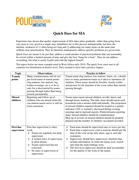

Handout presentations in PDF for illustrating lectures
Accessed May 2014
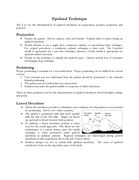
Handout presentations in PDF for illustrating lectures
Accessed May 2014
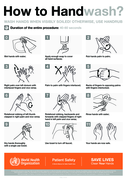
How to Hand wash
recommended
Poster

Accessed 7 July 2015

Integrated HIV Behavioral and Serologic Surveillance
Information note.
This information note provides a strategic overview of key implementation considerations for diagnostic integration using these devices, and is primarily intended for use by national laboratory services and TB, HIV, and hepatitis programme managers.
It may also be of inte ... rest to managers of maternal, newborn and child health programmes and sexual and reproductive health programmes, international and bilateral agencies, and organizations that provide financial and technical support to the relevant national health programmes. more
This information note provides a strategic overview of key implementation considerations for diagnostic integration using these devices, and is primarily intended for use by national laboratory services and TB, HIV, and hepatitis programme managers.
It may also be of inte ... rest to managers of maternal, newborn and child health programmes and sexual and reproductive health programmes, international and bilateral agencies, and organizations that provide financial and technical support to the relevant national health programmes. more
Int J Vaccines Vaccin 2016, 2(1): 00018, January 29, 2016
Cholera kits 2020
recommended
For several years, agencies supporting preparedness and response to cholera outbreaks have supplied medicines and medical devices through the Interagency Diarrhoeal Disease Kits (IDDK).
In an effort to better align the presentation and content of the kits to field needs, the composition of the ch
...
olera kits has been reviewed by WHO and its partners in 2015 and again in 2020. The content of all modules have been slightly revised with no changes except for the cholera laboratory check list.
The revised cholera kits 2020 are designed to help prepare for a potential cholera outbreak and to support the first month of the initial response for 100 cases. The overall package consists of six different kits, each divided in several modules.
more
Staying safe in spite of a disaster. What can you do for your safety in the event of a disaster?
In spring 2013, after weeks of rain, whole areas of southern, eastern and northern Germany were beset by catastrophic floods. Settlements vanished in th
...
e floods up to the roofs of the houses, tens of thousands of emergency personnel and volunteers struggled against the water with sandbags. Villages and parts of towns had to be evacuated, and the citizens were only able to take the essentials with them.
Disasters are part of life. Almost every day, we can read about disasters and largescale emergencies in a variety of media and see the images of destruction and suffering. These are not just major disasters which affect large areas for a long time. Local torrential rain, a severe storm, an electric power breakdown resulting from such a storm, or a house fire can trigger a very personal disaster for each individual, each family, which has to be overcome. Take the time to contemplate your personal emergency planning.
This brochure aims to help you to develop your personal preparedness plan.
The brochure is also available in different languages: https://www.bbk.bund.de/DE/Service/Publikationen/Broschürenfaltblätter/Ratgeber_node.html
more
The EU in Global Health
European Commission
(2014)
C2
EU and Global Governance for Health - How EU global policies impact health
Accessed July 4, 2019
Around one in four adults has at least one mental health need at any time, and in the next 20 years the number of British people expected to suffer from dementia will grow by 40 per cent. Even though you might not be working in a setting specifically caring for people with men
...
tal health conditions, dementia and learning disabilities, it is still important to have some awareness of the signs and symptoms. This will help you to show compassion and care when you observe any behaviour that seems unusual or difficult to understand, and to be aware of the need to consult more experienced staff about behaviours if necessary.
Chapter 5: Introducing practical healthcare
more
No change for Corona
Institute for Hygiene and Environmental Medicine, Charité Universitätsmedizin Berlin
Welthungerhilfe
(2020)
C1
How kids can help beat the virus - This comic strip provides young people between the ages of 10 and 14 with information about the coronavirus and other preventative hygiene measures.
Although children and adolescents are not likely to become seriously ill with COVID-19, they are nevertheless massi
...
vely affected by the pandemic. Instead of playing outside, going to school, participating in sports and meeting friends, many are now trapped in confined spaces with their parents all day long. On top of that, they are worried about family, friends and themselves. Among those children stuck at home are Amina, Oliver, Tara and Akachi.
more
The current effort on fighting COVID-19 cannot conceal the fact that climatic and geological hazards affect Latin-America and the Caribbean every year. At a time when countries of the region are actively responding to the pandemic, they also need to prepare for and implement actions to mitigate the
...
potential impacts of other recurrent hazards. For instance, countries like Guatemala and El Salvador have been recently hit by tropical storm Amanda and, as the Caribbean region faces its annual hurricane season, countries are enhancing climate-hazard preparedness. Many countries are bracing for a two-tier crisis as they grapple with complicated logistics, limited resources and scant supplies.
more
This collection of posters are intended for health care workers, biomedical engineers and staff of health facilities in charge of caring, cleaning, decontaminating and sterilizing respiratory medical equipment in hospitals and health facilities. They include checklists to ensure the optimal infectio
...
n prevention and control during their use and between patients.
They describe the procedures to follow (Checklists) to clean, decontaminate and sterilize different respiratory devices:
Oxygen concentrators,
Non-invasive mechanical ventilation equipment: High flow nasal cannula, BiPAP/CPAP,
Mechanical ventilators,
Pulse oximeters and monitors.
more
News Release 11 april 2022

Yaws is a disfiguring non-venereal disease caused by infection with the spirochaete. Treponema pallidum subspecies pertenue which is closely related to the causative agent of syphilis and those of the other endemic treponematoses, bejel and pinta. The disease is endemic in certain areas of the World
...
Health Organization (WHO) African, South-East Asia and Western Pacific regions. Of the neglected tropical diseases identified for elimination and eradication, yaws is one of two diseases targeted for eradication. In 1949, the Second World Health Assembly adopted resolution WHA2.36, which addresses yaws, bejel and pinta as major public health problems that need attention.
more
Mental wellbeing does not mean being happy all the time and it does not mean you won’t experience negative or painful emotions, such as grief, loss, or failure, which are a part of normal life. However, whatever your age, mindfulness can help
you lead a mentally healthier life and improve your we
...
llbeing.
more

Responding to a polio outbreak. Guidelines
recommended
The occurrence of a case of wild polio in a previously polio free area as presently in Syria, whether through importation, laboratory accident, or mutation of vaccine virus (VDPV), should be considered a public health emergency, that requires a rapid and high quality response as utmost priority
WHO MiNDbank is an online platform bringing together country and international resources, covering mental health, substance abuse, disability, general health, human rights and development. It is part of WHO’s QualityRights campaign to end violations against people with mental disabilities. MiNDban
...
k aims to facilitate dialogue, advocacy and research, to promote reform in these areas in line with international human rights and best practice standards.
more
The push to immunize all children against polio has been hampered by the ongoing crisis in the Syrian Arab Republic. WHO and UNICEF have appealed to all parties to cooperate, including through temporary pauses in hostilities where needed, to allow vaccination campaigns to take place and for all chil
...
dren to be protected.
more
A technical guide for sputum smear microscopy, initiated by the International Union against Tuberculosis, is designed to be an easy to use reference standard for the collection, storage and transport of sputum specimens and for the examination of sputum smears by direct microscopy. This edition incl
...
udes updates addressing bio-safety and quality assurance aspects of sputum smear microscopy.
more
National guidelines for food and nutritional support and care for people living with HIV/AIDS
Ministry of Health, Rwanda
(2014)
Accessed on March 2014
Message Guide Ebola Virus Disease
recommended
Médecins sans Frontières
(2014)
For Healht Promotion Team
Keep Safe – Keep Serving; Liberia: Updated Sept 25 2014.
This document is intended to inform infection prevention and control practices and supply needs in healthcare facilities. As the Ebola outbreak evolves, the document will need to be adapted accordingly.
The guidance provides considerations
...
for establishing Ebola Care Centres. Because needs and resources may vary in different settings, these recommendations should be adapted to the situation in each county
more
Learning from earthquake relief and recovery operations
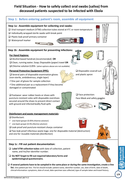
Field Situation - How to safely collect oral swabs (saliva) from deceased patients suspected to be infected with Ebola
World Health Organization
(2014)
Steps on how to safely collect oral swabs (saliva) from deceased patients suspected to be infected with Ebola: before entering patient’s room, how to put on and remove personal protective equipment (PPE), how to collect oral swab from deceased patient and how to prepare VTM collection tube for tra
...
nsport.
more
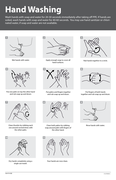
Hand Washing
recommended
Wash hands with soap and water for 20-30 seconds immediately after taking off PPE. If hands are soiled, wash hands with soap and water for 40-60 seconds. You may use hand sanitizer or chlorinated water, if soap and water are not available.

Projected Impact of Vaccination Timing and Dose Availability on the Course of the 2014 West African Ebola Epidemic
David Fishman; Ashleigh Tuite
(2014)
Plos Current Outbreaks November 21, 2014
DOI 10.15252/emmm.201404792 |Published online 30.12.2014
EMBO Molecular Medicine(2014)emmm.201404792
Adolescent HIV Care and Treatment: A Training Curriculum for Health Workers - Participant Manual
T. Colton; V. Allread; E. Abrams; et al.
ICAP Columbia University (Mailman School of Public Health)
(2012)
C2
ALTER Revue Européene de Recherche sur le handicap 2 (2008) 32-43

From channels to commissioning - a practical guide to epilepsy: lecture notes (Chapter 30 - Drug treatment of paediatric epilepsy)
Appleton, R.E. & Cross, J.H.
International League Against Epilepsy (UK Chapter) and Epilepsy Society
(2015)
CC
This is the fifteenth edition of the lecture notes. They were first published in 1987 as a summary of the material used in the biannual epilepsy teaching weekend organised under the auspices of the UK Chapter of the International League against Epilepsy.
(Lecture series consist of a total of 59 cha
...
pters. Section one - introduction (chapter 1-2). Section two - basic science (chapters 3-5). Section (chapters 6-16). Section four - differential diagnosis (chapter 17-19). Section five - investigations (chapter 20-24). Section six - medical treatment of epilepsy (chapters 25-35). Section seven - outcome (chapters 36-40). Section eight - special groups (chapters 41-44). Section nine - surgical treatment of epilepsy (chapters 45-49). Section ten - social aspects (chapters 50-56). Section eleven - provision of care (chapters 57-59). All chapters available at: https://www.epilepsysociety.org.uk/lecture-notes-0#.Wq-cn8NubIU)
more
Eradication of Yaws: Historical Efforts and Achieving WHO's 2020 Target
K. Asedeu; C. Fitzpatrick, J.Jannin
(2014)
PLOS Neglected Tropical Diseases September 2014 | Volume 8 | Issue 9 | e3016 DOI: 10.1371/journal.pntd.0003016

Interim advice on the sexual transmission of the Ebola virus disease
World Health Organization
(2016)
Updated Januar 2016
Q 2: How long should treatment with antidepressants continue in adults with depressive episode/disorder?
When Ebola hit Liberia in 2014, an atmosphere of fear and confusion contributed to the spread of the virus by making people unwilling to come forward for testing and treatment. Oxfam trained and equipped community health volunteers to go door-to-door, giving information and advice, encouraging anyon
...
e showing symptoms to go for tests, and keeping their family members informed about the progress of their treatment. The approach won the trust of communities and helped to slow the spread of the disease. This case study gives an overview of the programme, including aims, results and a personal story.
more

A user-friendly instrument designed to collect and calculate indicators of effective inventory management. The IMAT guides the user through a process of collecting data on the physical and theoretical stock balance and the duration of stockouts for a set of up to 25 frequently-used products, calcula
...
ting indicators, analyzing the results, and identifying strategies for improving record-keeping and stock management practices. The IMAT comes as a computerized spreadsheet in Excel and includes instructions, a data collection form, analysis guidelines, recommendations, and a graphical display of the indicator results.
more
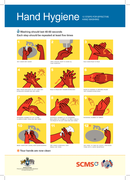
Accessed 3rd of October 2015
last updated 29 March 2016
Sexually Transmitted Diseases Treatment Guidelines, 2015. Pocket guide
Centers for Disease Control and Prevention
(2015)
CC
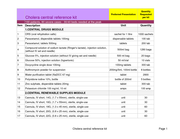
Revised list