
Filter
7273
Text search:
rapid
Featured
710
1930
Language
6682
233
187
147
104
77
70
65
33
21
13
12
11
11
9
8
7
6
6
6
6
5
5
5
5
4
4
4
4
4
4
4
3
3
3
3
3
3
3
3
2
2
2
2
2
1
1
1
1
1
1
1
1
1
1
1
1
1
1
1
1
1
Document type
3944
1231
1003
374
260
208
94
90
21
20
13
8
2
Countries
317
282
193
154
153
152
150
134
134
128
128
121
113
112
101
101
98
94
92
89
89
87
86
74
67
63
63
59
54
54
53
53
52
51
51
51
48
47
47
43
41
40
36
35
30
30
29
27
26
26
23
22
20
19
19
18
17
15
15
15
15
14
14
13
12
12
12
12
12
11
10
9
9
9
9
9
9
9
8
8
7
7
7
7
7
6
5
5
5
5
5
5
5
4
4
4
4
4
4
4
4
4
3
3
3
3
3
3
3
3
3
3
3
3
3
3
3
3
3
3
2
2
2
2
2
2
2
2
2
2
2
2
2
2
2
2
2
1
1
1
1
1
1
1
1
1
1
1
1
1
1
1
1
1
Authors & Publishers
975
402
304
217
167
159
142
136
105
56
48
43
43
42
41
40
39
37
37
36
32
30
29
26
26
26
25
25
24
24
24
24
24
24
23
23
23
23
22
22
22
21
21
21
21
21
21
20
20
20
19
19
19
19
18
18
17
17
17
17
17
16
16
16
16
15
15
15
14
14
14
13
13
13
13
13
13
13
12
12
12
12
12
12
12
12
12
12
11
11
11
11
11
11
11
11
10
10
10
10
10
10
10
10
10
9
9
9
9
9
9
8
8
8
8
8
8
8
8
8
8
8
8
8
8
8
7
7
7
7
7
7
7
7
7
7
7
7
7
7
7
7
7
7
7
7
7
7
7
7
6
6
6
6
6
6
6
6
6
6
6
6
6
6
6
6
6
6
6
6
6
6
6
6
6
6
6
6
6
6
6
6
5
5
5
5
5
5
5
5
5
5
5
5
5
5
5
5
5
5
5
5
5
5
5
5
5
5
5
5
5
5
5
5
5
5
5
5
5
5
5
5
5
5
5
5
5
4
4
4
4
4
4
4
4
4
4
4
4
4
4
4
4
4
4
4
4
4
4
4
4
4
4
4
4
4
4
4
4
4
4
4
4
4
4
4
4
4
4
4
4
4
4
4
4
4
4
4
4
4
4
4
4
4
4
4
4
4
4
4
4
4
4
4
4
4
4
4
4
4
4
4
4
4
4
4
4
4
4
4
4
3
3
3
3
3
3
3
3
3
3
3
3
3
3
3
3
3
3
3
3
3
3
3
3
3
3
3
3
3
3
3
3
3
3
3
3
3
3
3
3
3
3
3
3
3
3
3
3
3
3
3
3
3
3
3
3
3
3
3
3
3
3
3
3
3
3
3
3
3
3
3
3
3
3
3
3
3
3
3
3
3
3
3
3
3
3
3
3
3
3
3
3
3
3
3
3
3
3
3
3
3
3
3
3
3
3
3
3
3
3
3
3
3
3
3
3
3
3
3
3
3
3
3
3
3
3
3
3
3
3
3
3
3
3
3
3
3
3
3
3
3
3
3
3
3
3
3
3
3
3
3
2
2
2
2
2
2
2
2
2
2
2
2
2
2
2
2
2
2
2
2
2
2
2
2
2
2
2
2
2
2
2
2
2
2
2
2
2
2
2
2
2
2
2
2
2
2
2
2
2
2
2
2
2
2
2
2
2
2
2
2
2
2
2
2
2
2
2
2
2
2
2
2
2
2
2
2
2
2
2
2
2
2
2
2
2
2
2
2
2
2
2
2
2
2
2
2
2
2
2
2
2
2
2
2
2
2
2
2
2
2
2
2
2
2
2
2
2
2
2
2
2
2
2
2
2
2
2
2
2
2
2
2
2
2
2
2
2
2
2
2
2
2
2
2
2
2
2
2
2
2
2
2
2
2
2
2
2
2
2
2
2
2
2
2
2
2
2
2
2
2
2
2
2
2
2
2
2
2
2
2
2
2
2
2
2
2
2
2
2
2
2
2
2
2
2
2
2
2
2
2
2
2
2
2
2
2
2
2
2
2
2
2
2
2
2
2
2
2
2
2
2
2
2
2
2
2
2
2
2
2
2
2
2
2
2
2
2
2
2
2
2
2
2
2
2
2
2
2
2
2
2
2
2
2
2
2
2
2
2
2
2
2
2
2
2
2
2
2
2
2
2
2
2
2
2
2
2
2
2
2
2
2
2
2
2
2
2
2
2
2
2
2
2
2
2
2
2
2
2
2
2
2
2
2
2
2
2
2
2
2
2
2
2
2
2
2
2
2
2
2
2
2
2
2
2
2
2
2
2
2
2
2
2
2
2
2
2
2
2
2
2
2
2
2
2
2
2
2
2
2
2
2
2
2
2
2
2
2
2
2
2
2
2
2
2
2
2
2
2
2
2
2
2
2
2
2
2
2
2
2
2
2
2
2
2
2
2
2
2
2
2
2
2
2
2
2
2
2
2
2
2
1
1
1
1
1
1
1
1
1
1
1
1
1
1
1
1
1
1
1
1
1
1
1
1
1
1
1
1
1
1
1
1
1
1
1
1
1
1
1
1
1
1
1
1
1
1
1
1
1
1
1
1
1
1
1
1
1
1
1
1
1
1
1
1
1
1
1
1
1
1
1
1
1
1
1
1
1
1
1
1
1
1
1
1
1
1
1
1
1
1
1
1
1
1
1
1
1
1
1
1
1
1
1
1
1
1
1
1
1
1
1
1
1
1
1
1
1
1
1
1
1
1
1
1
1
1
1
1
1
1
1
1
1
1
1
1
1
1
1
1
1
1
1
1
1
1
1
1
1
1
1
1
1
1
1
1
1
1
1
1
1
1
1
1
1
1
1
1
1
1
1
1
1
1
1
1
1
1
1
1
1
1
1
1
1
1
1
1
1
1
1
1
1
1
1
1
1
1
1
1
1
1
1
1
1
1
1
1
1
1
1
1
1
1
1
1
1
1
1
1
1
1
1
1
1
1
1
1
1
1
1
1
1
1
1
1
1
1
1
1
1
1
1
1
1
1
1
1
1
1
1
1
1
1
1
1
1
1
1
1
1
1
1
1
1
1
1
1
1
1
1
1
1
1
1
1
1
1
1
1
1
1
1
1
1
1
1
1
1
1
1
1
1
1
1
1
1
1
1
1
1
1
1
1
1
1
1
1
1
1
1
1
1
1
1
1
1
1
1
1
1
1
1
1
1
1
1
1
1
1
1
1
1
1
1
1
1
1
1
1
1
1
1
1
1
1
1
1
1
1
1
1
1
1
1
1
1
1
1
1
1
1
1
1
1
1
1
1
1
1
1
1
1
1
1
1
1
1
1
1
1
1
1
1
1
1
1
1
1
1
1
1
1
1
1
1
1
1
1
1
1
1
1
1
1
1
1
1
1
1
1
1
1
1
1
1
1
1
1
1
1
1
1
1
1
1
1
1
1
1
1
1
1
1
1
1
1
1
1
1
1
1
1
1
1
1
1
1
1
1
1
1
1
1
1
1
1
1
1
1
1
1
1
1
1
1
1
1
1
1
1
1
1
1
1
1
1
1
1
1
1
1
1
1
1
1
1
1
1
1
1
1
1
1
1
1
1
1
1
1
1
1
1
1
1
1
1
1
1
1
1
1
1
1
1
1
1
1
1
1
1
1
1
1
1
1
1
1
1
1
1
1
1
1
1
1
1
1
1
1
1
1
1
1
1
1
1
1
1
1
1
1
1
1
1
1
1
1
1
1
1
1
1
1
1
1
1
1
1
1
1
1
1
1
1
1
1
1
1
1
1
1
1
1
1
1
1
1
1
1
1
1
1
1
1
1
1
1
1
1
1
1
1
1
1
1
1
1
1
1
1
1
1
1
1
1
1
1
1
1
1
1
1
1
1
1
1
1
1
1
1
1
1
1
1
1
1
1
1
1
1
1
1
1
1
1
1
1
1
1
1
1
1
1
1
1
1
1
1
1
1
1
1
1
1
1
1
1
1
1
1
1
1
1
1
1
1
1
1
1
1
1
1
1
1
1
1
1
1
1
1
1
1
1
1
1
1
1
1
1
1
1
1
1
1
1
1
1
1
1
1
1
1
1
1
1
1
1
1
1
1
1
1
1
1
1
1
1
1
1
1
1
1
1
1
1
1
1
1
1
1
1
1
1
1
1
1
1
1
1
1
1
1
1
1
1
1
1
1
1
1
1
1
1
1
1
1
1
1
1
1
1
1
1
1
1
1
1
1
1
1
1
1
1
1
1
1
1
1
1
1
1
1
1
1
1
1
1
1
1
1
1
1
1
1
1
1
1
1
1
1
1
1
1
1
1
1
1
1
1
1
1
1
1
1
1
1
1
1
1
1
1
1
1
1
1
1
1
1
1
1
1
1
1
1
1
1
1
1
1
1
1
1
1
1
1
1
1
1
1
1
1
1
1
1
1
1
1
1
1
1
1
1
1
1
1
1
1
1
1
1
1
1
1
1
1
1
1
1
1
1
1
1
1
1
1
1
1
1
1
1
1
1
1
1
1
1
1
1
1
1
1
1
1
1
1
1
1
1
1
1
1
1
1
1
1
1
1
1
1
1
1
1
1
1
1
1
1
1
1
1
1
1
1
1
1
1
1
1
1
1
1
1
1
1
1
1
1
1
1
1
1
1
1
1
1
1
1
1
1
1
1
1
1
1
1
1
1
1
1
1
1
1
1
1
1
1
1
1
1
1
1
1
1
1
1
1
1
1
1
1
1
1
1
1
1
1
1
1
1
1
1
1
1
1
1
1
1
1
1
1
1
1
1
1
1
1
1
1
1
1
1
1
1
1
1
1
1
1
1
1
1
1
1
1
1
1
1
1
1
1
1
1
1
1
1
1
1
1
1
1
1
1
1
1
1
1
1
1
1
1
1
1
1
1
1
1
1
1
1
1
1
1
1
1
1
1
1
1
1
1
1
1
1
1
1
1
1
1
1
1
1
1
1
1
1
1
1
1
1
1
1
1
1
1
1
1
1
1
1
1
1
1
1
1
1
1
1
1
1
1
1
1
1
1
1
1
1
1
1
1
1
1
1
1
1
1
1
1
1
1
1
1
1
1
1
1
1
1
1
1
1
1
1
1
1
1
1
1
1
1
1
1
1
1
1
1
1
1
1
1
1
1
1
1
1
1
1
1
1
1
1
1
1
1
1
1
1
1
1
1
1
1
1
1
1
1
1
1
1
1
1
1
1
1
1
1
1
1
1
1
1
1
1
1
1
1
1
1
1
1
1
1
1
1
1
1
1
1
1
1
1
1
1
1
1
1
1
1
1
1
1
1
1
1
1
1
1
1
1
1
1
1
1
1
1
1
1
1
1
1
1
1
1
1
1
1
1
1
1
1
1
1
1
1
1
1
1
1
1
1
1
1
1
1
1
1
1
1
1
1
1
1
1
1
1
1
1
1
1
1
1
1
1
1
1
1
1
1
1
1
1
1
1
1
1
1
1
1
1
1
1
1
1
1
1
1
1
1
1
1
1
1
1
1
1
1
1
1
1
1
1
1
1
1
1
1
1
1
1
1
1
1
1
1
1
1
1
1
1
1
1
1
1
1
1
1
1
1
1
1
1
1
1
1
1
1
1
1
1
1
1
1
1
1
1
1
1
1
1
1
1
1
1
1
1
1
1
1
1
1
1
1
1
1
1
1
1
1
1
1
1
1
1
1
1
1
1
1
1
1
1
1
1
1
1
1
1
1
1
1
1
1
1
1
1
1
1
1
1
1
1
1
1
1
1
1
1
1
1
1
1
1
1
1
1
1
1
1
1
1
1
1
1
1
1
1
1
1
1
1
1
1
1
1
1
1
1
1
1
1
1
1
1
1
1
1
1
1
1
1
1
1
1
1
1
1
1
1
1
1
1
1
1
1
1
1
1
1
1
1
1
1
1
1
1
1
1
1
1
1
1
1
1
1
1
1
1
1
1
1
1
1
1
1
1
1
1
1
1
1
1
1
1
1
1
1
1
1
1
1
1
1
1
1
1
1
1
1
1
1
1
1
1
1
1
1
1
1
1
1
1
1
1
1
1
1
1
1
1
1
1
1
1
1
1
1
1
1
1
1
1
1
1
1
1
1
1
1
1
1
1
1
1
1
1
1
1
1
1
1
1
1
1
1
1
1
1
1
1
1
1
1
1
1
1
1
1
1
1
1
1
1
1
1
1
1
1
1
1
1
1
1
1
1
1
1
1
1
1
1
1
1
1
1
1
1
1
1
1
1
1
1
1
1
1
1
1
1
1
1
1
1
1
1
1
1
1
1
1
1
1
1
1
1
1
1
1
1
1
1
1
1
1
1
1
1
1
1
1
1
1
1
1
1
1
1
1
1
1
1
1
1
1
1
1
1
1
1
1
1
1
1
1
1
1
1
1
1
1
1
1
1
1
1
1
1
1
1
1
1
1
1
1
1
1
1
1
1
1
1
1
1
1
1
1
1
1
1
1
1
1
1
1
1
1
1
1
1
1
1
1
1
1
1
1
1
1
1
1
1
1
1
1
1
1
1
1
1
1
1
1
1
1
1
1
1
1
1
1
1
1
1
1
1
1
1
1
1
1
1
1
1
1
1
1
1
1
1
1
1
1
1
1
1
1
1
1
1
1
1
1
1
1
1
1
1
1
1
1
1
1
1
1
1
1
1
1
1
1
1
1
1
1
1
1
1
1
1
1
1
1
1
1
1
1
1
1
1
1
1
1
1
1
1
1
1
1
1
1
1
1
1
1
1
1
1
1
1
1
1
1
1
1
1
1
1
1
1
1
1
1
1
1
1
1
1
1
1
1
1
1
1
1
1
1
1
1
1
1
1
1
1
1
1
1
1
1
1
1
1
1
1
1
1
1
1
1
1
1
1
1
1
1
1
1
1
1
1
1
1
1
1
1
1
1
1
1
1
1
1
1
1
1
1
1
1
1
1
1
1
1
1
1
1
1
1
1
1
1
1
1
1
1
1
1
1
1
1
1
1
1
1
1
1
1
1
1
1
1
1
1
1
1
1
1
1
1
1
1
1
1
1
1
1
1
1
1
1
1
1
1
1
1
1
1
1
1
1
1
1
1
1
1
1
1
1
1
1
1
1
1
1
1
1
1
1
1
1
1
1
1
1
1
1
1
1
1
1
1
1
1
1
1
1
1
1
1
1
1
1
1
1
1
1
1
1
1
1
1
1
1
1
1
1
1
1
1
1
1
1
1
1
1
1
1
1
1
1
1
1
1
1
1
1
1
1
1
1
1
1
1
1
1
1
1
1
1
1
1
1
1
1
1
1
1
1
1
1
1
1
1
1
1
1
1
1
1
1
1
1
1
1
1
1
1
1
1
1
1
1
1
1
1
1
1
1
1
1
1
1
1
1
1
1
1
1
1
1
1
1
1
1
1
1
1
1
1
1
1
1
1
1
1
1
1
1
1
1
1
1
1
1
1
1
1
1
1
1
1
1
1
1
1
1
1
1
1
1
1
1
1
1
1
1
1
1
1
1
1
1
1
1
1
1
1
1
1
1
1
1
1
1
1
1
1
1
1
1
1
1
1
1
1
1
1
1
1
1
1
1
1
1
1
1
1
1
1
1
1
1
1
1
1
1
1
1
1
1
1
1
1
1
1
1
1
1
1
1
1
1
1
1
1
1
1
1
1
1
1
1
1
1
1
1
1
1
1
1
1
1
1
1
1
1
1
1
1
1
1
1
1
1
1
1
1
1
1
1
1
1
1
1
1
1
1
1
1
1
1
1
1
1
1
1
1
1
1
1
1
1
1
1
1
1
1
1
1
1
1
1
1
1
1
1
1
1
1
1
1
1
1
1
1
1
1
1
1
1
1
1
1
1
1
1
1
1
1
1
1
1
1
1
1
1
1
1
1
1
1
1
1
1
1
1
1
1
1
1
1
1
1
1
1
1
1
1
1
1
1
1
1
1
1
1
1
1
1
1
1
1
1
1
1
1
1
1
1
1
1
1
1
1
1
1
1
1
1
1
1
1
1
1
1
1
1
1
1
1
1
1
1
1
1
1
1
1
1
1
1
1
1
1
1
1
1
1
1
1
1
1
1
1
1
1
1
1
1
1
1
1
1
1
1
1
1
1
1
1
1
1
1
1
1
1
1
1
1
1
1
1
1
1
1
1
1
1
1
1
1
1
1
1
1
1
1
1
1
1
1
1
1
1
1
1
1
1
1
1
1
1
1
1
1
1
1
1
1
1
1
1
1
1
1
1
1
1
1
1
1
1
1
1
1
1
1
1
1
1
1
1
1
1
1
1
1
1
1
1
1
1
1
1
1
1
1
1
1
1
1
1
1
1
1
1
1
1
1
1
1
1
1
1
1
1
1
1
1
1
1
1
1
1
1
1
1
1
1
1
1
1
1
1
1
1
1
1
1
1
1
1
1
1
1
1
1
1
1
1
1
1
1
1
1
1
1
1
1
1
1
1
1
1
1
1
1
1
1
1
1
1
1
1
1
1
1
1
1
1
1
1
1
1
1
1
1
1
1
1
1
1
1
1
1
1
1
1
1
1
1
1
1
1
1
1
1
1
1
1
1
1
1
1
1
1
1
1
1
1
1
1
1
1
1
1
1
1
1
1
1
1
1
1
1
1
1
1
1
1
1
1
1
1
1
1
1
1
1
1
1
1
1
1
1
1
1
1
1
1
1
1
1
1
1
1
1
1
1
1
1
1
1
1
1
1
1
1
1
1
1
1
1
1
1
1
1
1
1
1
1
1
1
1
1
1
1
1
1
1
1
1
1
1
1
1
1
1
1
1
1
1
1
1
1
1
1
1
1
1
1
1
1
1
1
1
1
1
1
1
1
1
1
1
1
1
1
1
1
1
1
1
1
1
1
1
1
1
1
1
1
1
1
1
1
1
1
1
1
1
1
1
1
1
1
1
1
1
1
1
1
1
1
1
1
1
1
1
1
1
1
1
1
1
1
1
1
1
1
1
1
1
1
1
1
1
1
1
1
1
1
1
1
1
1
1
1
1
1
1
1
1
1
1
1
1
1
1
1
1
1
1
1
1
1
1
1
1
1
1
1
1
1
1
1
1
1
1
1
1
1
1
1
1
1
1
1
1
1
1
1
1
1
1
1
1
1
1
1
1
1
1
1
1
1
1
1
1
1
1
1
1
1
1
1
1
1
1
1
1
1
1
1
1
1
1
1
1
1
1
1
1
1
1
1
1
1
1
1
1
1
1
1
1
1
1
1
1
1
1
1
1
1
1
1
1
1
1
1
1
1
1
1
1
1
1
1
1
1
1
1
1
1
1
1
1
1
1
1
1
1
1
1
1
1
1
1
1
1
1
1
1
1
1
1
1
1
1
1
1
1
1
1
1
1
1
1
1
1
1
1
1
1
1
1
1
1
1
1
1
1
1
1
1
1
1
1
1
1
1
1
1
1
1
1
1
1
1
1
1
1
1
1
1
1
1
1
1
1
1
1
1
1
1
1
1
1
1
1
1
1
1
1
1
1
1
1
1
1
1
1
1
1
1
1
1
1
1
1
1
1
1
1
1
1
1
1
1
1
1
1
1
1
1
1
1
1
1
1
1
1
1
1
1
1
1
1
1
1
1
1
1
1
1
1
1
1
1
1
1
1
1
1
1
1
1
1
1
1
1
1
1
1
1
1
1
1
1
1
1
1
1
1
1
1
1
1
1
1
1
1
1
1
1
1
1
1
1
1
1
1
1
1
1
1
1
1
1
1
1
1
1
1
1
1
1
1
1
1
1
1
1
1
1
1
1
1
1
1
1
1
1
1
1
1
1
1
1
1
1
1
1
1
1
1
1
1
1
1
1
1
1
1
1
1
1
1
1
1
1
1
1
1
1
1
1
1
1
1
1
1
1
1
1
1
1
1
1
1
1
1
1
1
1
1
1
1
1
1
1
1
1
1
1
1
1
1
1
1
1
1
1
1
1
1
1
1
1
1
1
1
1
1
1
1
1
1
1
1
1
1
1
1
1
1
1
1
1
1
1
1
1
1
1
1
1
1
1
1
1
1
1
1
1
1
1
1
1
1
1
1
1
1
1
1
1
1
1
1
1
1
1
1
1
1
1
1
1
1
1
1
1
1
1
1
1
1
1
1
1
1
1
1
1
1
1
1
1
1
1
1
1
1
1
1
1
1
1
1
1
1
1
1
1
1
1
1
1
1
1
1
1
1
1
1
1
1
1
1
1
1
1
1
1
1
1
1
1
1
1
1
1
1
1
1
1
1
1
1
1
1
1
1
1
1
1
1
1
1
1
1
1
1
1
1
1
1
1
1
1
1
1
1
1
1
1
1
1
1
1
1
1
1
1
1
1
1
1
1
1
1
1
1
1
1
1
1
1
1
1
1
1
1
1
1
1
1
1
1
1
1
1
1
1
1
1
1
1
1
1
1
1
1
1
1
1
1
1
1
1
1
1
1
1
1
1
1
1
1
1
1
1
1
1
1
1
1
1
1
1
1
1
1
1
1
1
1
1
1
1
1
1
1
1
1
1
1
1
1
1
1
1
1
1
1
1
1
1
1
1
1
1
1
1
1
1
1
1
1
1
1
1
1
1
1
1
1
1
1
1
1
1
1
1
1
1
1
1
1
1
1
1
1
1
1
1
1
1
1
1
1
1
1
1
1
1
1
1
1
1
1
1
1
1
1
1
1
1
1
1
1
1
1
1
1
1
1
1
1
1
1
1
1
1
1
1
1
1
1
1
1
1
1
1
1
1
1
1
1
1
1
1
1
1
1
1
1
1
1
1
1
1
1
1
1
1
1
1
1
1
1
1
1
1
1
1
1
1
1
1
1
1
1
1
1
1
1
1
1
1
1
1
1
1
1
1
1
1
1
1
1
1
1
1
1
1
1
1
1
1
1
1
1
1
1
1
1
1
1
1
1
1
1
1
1
1
1
1
1
1
1
1
1
1
1
1
1
1
1
1
1
1
1
1
1
1
1
1
1
1
1
1
1
1
1
1
1
1
1
1
1
1
1
1
1
1
1
1
1
1
1
1
1
1
1
1
1
1
1
1
1
1
1
1
1
1
1
1
1
1
1
1
1
1
1
1
1
1
1
1
1
1
1
1
1
1
1
1
1
1
1
1
1
1
1
1
1
1
1
1
1
1
1
1
1
1
1
1
1
1
1
1
1
1
1
1
1
1
1
1
1
1
1
1
1
1
1
1
1
1
1
1
1
1
1
1
1
1
1
1
1
1
1
1
1
1
1
1
1
1
1
1
1
1
1
1
1
1
1
1
1
1
1
1
1
1
1
1
1
1
1
1
1
1
1
1
1
1
1
1
1
1
1
1
1
1
1
1
1
1
1
1
1
1
1
1
1
1
1
1
1
1
1
1
1
1
1
1
1
1
1
1
1
1
1
1
1
1
1
1
1
1
1
1
1
1
1
1
1
1
1
1
1
1
1
1
1
1
1
1
1
1
1
1
1
1
1
1
1
1
1
1
1
1
1
1
1
1
1
1
1
1
1
1
1
1
1
1
1
1
1
1
1
1
1
1
1
1
1
1
1
1
1
1
1
1
1
1
1
1
1
1
1
1
1
1
1
1
1
1
1
1
1
1
1
1
1
1
1
1
1
1
1
1
1
1
1
1
1
1
1
1
1
1
1
1
1
1
1
1
1
1
1
1
1
1
1
1
1
1
1
1
1
1
1
1
1
1
1
1
1
1
1
1
1
1
1
1
1
1
1
1
1
1
1
1
1
1
1
1
1
1
1
1
1
1
1
1
1
1
1
1
1
1
1
1
1
1
1
1
1
1
1
1
1
1
1
1
1
1
1
1
1
1
1
1
1
1
1
1
1
1
1
1
1
1
1
1
1
1
1
1
1
1
1
1
1
1
1
1
1
1
1
1
1
1
1
1
1
1
1
1
1
1
1
1
1
1
1
1
1
1
1
1
1
1
1
1
1
1
1
1
1
1
1
1
1
1
1
1
1
1
1
1
1
1
1
1
1
1
1
1
1
1
1
1
1
1
1
1
1
1
1
1
1
1
1
1
1
1
1
1
1
1
1
1
1
1
1
1
1
1
1
1
1
1
1
1
1
1
1
1
1
1
1
1
1
1
1
1
1
1
1
1
1
1
1
1
1
1
1
1
1
1
1
1
1
1
1
1
1
1
1
1
1
1
1
1
1
1
1
1
1
1
1
1
1
1
1
1
1
1
1
1
1
1
1
1
1
1
1
1
1
1
1
1
1
1
1
1
1
1
1
1
1
1
1
1
1
1
1
1
1
1
1
1
1
1
1
1
1
1
1
1
1
1
1
1
1
1
1
1
1
1
1
1
1
1
1
1
1
1
1
1
1
1
1
1
1
1
1
1
1
1
1
1
1
1
1
1
1
1
1
1
1
1
1
1
1
1
1
1
1
1
1
1
1
1
1
1
1
1
1
1
1
1
1
1
1
1
1
1
1
1
1
1
1
1
1
1
1
1
1
1
1
1
1
1
1
1
1
1
1
1
1
1
1
1
1
1
1
1
1
1
1
1
1
1
1
1
1
1
1
1
1
1
1
1
1
1
1
1
1
1
1
1
1
1
1
1
1
1
1
1
1
1
1
1
1
1
1
1
1
1
1
1
1
1
1
1
1
1
1
1
1
1
1
1
1
1
1
1
1
Publication Years
1
2244
4344
639
41
2
1
1
Category
2791
570
340
291
289
118
86
8
2
1
Toolboxes
927
568
471
338
292
291
260
215
164
164
163
150
131
117
116
104
102
77
73
72
48
42
18
12
2
2
This WHO information note provides an updated list of recommended criteria for selecting RDTs for malaria, and highlights the performance of RDTs evaluated by the WHO malaria RDT product testing programme. It also provides an overview of additional considerations in the procurement of
...
rapid tests.
more

Guidelines for managing advanced HIV disease and rapid initiation of antiretroviral therapy
World Health Organization (WHO)
(2017)
C_WHO
The objectives of these guidelines are to provide recommendations outlining a public health approach to managing people presenting with advanced HIV disease, and to provide guidance on the timing of initiation of antiretroviral therapy (ART) for all people living with HIV.
WHO recommends that a ... package of screening, prophylaxis, rapid ART initiation and intensified adherence interventions be offered to everyone living with HIV presenting with advanced disease.
WHO strongly recommends that rapid ART initiation should be offered to people living with HIV following confirmed diagnosis and clinical assessment. Rapid initiation of ART is defined as within seven days of HIV diagnosis. WHO further strongly recommends ART initiation on the same day as HIV diagnosis based on the person’s willingness and readiness to start ART immediately, unless there are clinical reasons to delay treatment. more
WHO recommends that a ... package of screening, prophylaxis, rapid ART initiation and intensified adherence interventions be offered to everyone living with HIV presenting with advanced disease.
WHO strongly recommends that rapid ART initiation should be offered to people living with HIV following confirmed diagnosis and clinical assessment. Rapid initiation of ART is defined as within seven days of HIV diagnosis. WHO further strongly recommends ART initiation on the same day as HIV diagnosis based on the person’s willingness and readiness to start ART immediately, unless there are clinical reasons to delay treatment. more
The purpose of this manual is to train health workers to use G6PD rapid diagnostic tests (RDTs) safely and effectively, so as to inform appropriate decision making for P. vivax radical cure. This manual should be used with the accompanying job aid.
...
The job aid is a set of step-by-step instructions about how to use a G6PD RDT. It contains both words and pictures.
more
This training toolkit by the European Laboratory Initiative for TB, HIV and Viral Hepatitis provides a unique combination of practical guidance and expert advice on the interpretation of selected WHO-endorsed tests for drug-resistant tuberculosis (DR-TB).
The speed of developing diagnostics for SARS-CoV-2, the causative agent of coronavirus disease 2019 (COVID-19), has been quite remarkable. Diagnostics have focused on nucleic acid amplification testing (NAAT) to identify infected individuals in acute-phase disease for timely implementation of mitiga
...
tion strategies and case management. More and more immunodiagnostics, mostly rapid diagnostic tests, are being made available as an alternative to NAATs. This type of test can be used out-of-laboratory conditions at large scale.
more
16 Dec. 2020
This document provides guidance to Ministries of Health (MOHs), laboratory personnel and implementing partners in African Union Member States on the application of rapid antigen tests to COVID-19 testing. The guidance serves as referen
...
ce for policymakers, laboratory leads, implementing partners, and experts on use case scenarios and associated testing algorithms for COVID-19 antigen tests. It recommends the use of antigen tests to increase access to testing and enable timely results for persons with or without symptoms in specific settings. The document will be reviewed and updated as more evidence becomes available regarding the use of rapid antigen tests for severe acute respiratory syndrome coronavirus 2 (SARS-CoV-2) from global studies and evaluation efforts.
more
This guide provides an overview of the major elements that must be considered before, during and after the implementation of antigen-detecting rapid diagnostic tests (Ag-RDTs) for SARS-CoV-2. This guide is complementary to policy guidance issued by
...
the World Health Organization (WHO). The guide may appeal to a range of audiences including Ministries of Health, donors, public and private organizations/agencies acting as implementing partners and community based and civil society organizations with experience working on health, especially organizations familiar with similar testing campaigns for other disease programmes like HIV and malaria
more
Press Release for the Working Group I contribution to the Sixth Assessment Report, Climate Change 2021: The Physical Science Basis
Available in Arabic, Chinese, English, French, Russian and Spanisch
Ongoing Living Update of COVID-19 Therapeutic Options: Summary of Evidence, Rapid Review 22 February 2022
recommended
This document includes the results of a rapid systematic review of current available literature. The information included in this review reflects the evidence as of the date posted in the document. In recognition of the fact that there are numerous
...
ongoing clinical studies, PAHO will periodically update this review and corresponding recommendations as new evidence becomes available.
more
9 March 2022, Timely and accurate diagnostic testing for SARS-CoV-2 is an essential part of a comprehensive COVID-19 response strategy. Ag-RDTs can be performed by individuals in which they collect their own specimen, perform a simple rapid test and
...
interpret their test result themselves at a time and place of their choosing, termed COVID-19 self-testing. This interim guidance provides a new recommendation that COVID-19 self-testing, using SARS-CoV-2 Ag-RDTs, should be offered as part of SARS-CoV-2 testing services. It also includes implementation considerations that can guide decisions on whether, and how, to adopt self-testing in different contexts, including the populations being prioritized; the disease prevalence in that population; and the impact on accessibility of testing, health care services and result reporting.
more

In 2009, WHO’s Second International Conference on Buruli Ulcer Control and Research resolved to strengthen the capacity of national laboratories to confirm cases of the disease, but advised that “efforts are still needed to develop simple diagnostic tools usable in the field as well as disabilit
...
y prevention methods”.
In 2013, WHO and the Foundation for Innovative New Diagnostics convened a meeting of Buruli ulcer experts in Geneva, Switzerland (9) at which two priority unmet needs in diagnosis were identified:
a diagnostic test for early detection of Buruli ulcer in symptomatic patients with sufficient positive predictive value to put patients on appropriate treatment; and
a screening test at the primary health care or community level for symptomatic patients with ulcer
more
The pandemic has emphasized the high risk of avoidable harm to patients, health workers, and the general public, and has identified a range of safety gaps across all core components of health systems at all levels.
The rapid review ‘Implication
...
s of the COVID-19 pandemic for patient safety’ explores impacts that the COVID-19 pandemic did have on patient safety in terms of risks and avoidable harm, specifically in terms of diagnostic, treatment and care management related issues as well as highlights the main patterns of these implications within the broader health system context.
more
This document is a guide defining requirements for quality and safety for malaria rapid diagnostic testing services to safeguard the quality of the results, the safety of the operators and patients and that of the environment for use by national mal
...
aria control programmes, regulators, implementers and rapid diagnostic providers.
more
Policy Brief to Guidelines for managing advanced HIV disease and rapid initiation of antiretroviral therapy
World Health Organization
(2017)
C_WHO
HIV treatment
Policy brief
July 2017
WHO/HIV/2017.18
Автоматизированная технология амплификации нуклеиновых кислот в режиме реального времени для быстрого и одновременного выявления туберкулеза и устойчивости к р
...
ифампицину: система Xpert MTB/RIF.
Программное заявление.
more
This study consists of a descriptive analysis of M. tuberculosis isolates from Beira Central Hospital, Mozambique, during 2014–2015, being the first report of a genotypic testing used to provide information about second line drug resistance in Mozambique.
BMC Infectious Diseases (2016) 16:423 DO
...
I 10.1186/s12879-016-1766-x
more

WHO Prequalification of Diagnostics Programme - Public Report (Product: Rapid Test for Antibody to Human Immunodeficiency Virus (HIV) (Colloidal Gold Device), Number: PQDx 0005-005-00)
World Health Organization
(2016)
C_WHO
PQDx 0005-005-00
WHO PQDx PR
May/2016, version 3.0
WHO Information Note on the Use of Dual HIV/Syphilis Rapid Diagnostic Tests (RDT)
World Health Organization
(2017)
C_WHO
Information Note
Advice for countries using or planning
to introduce dual HIV/syphilis RDT in antenatal services and other testing sites.
WHO/RHR/17.01

The Government of India is embarking on a mammoth task to prevent COVID-19 spread among communities. The Rapid Evidence Synthesis team received a request to support the planning and development of resources for ensuring preparedness of FLHWs for COV
...
ID-19 . The rapid evidence synthesis was conducted in a period of three days.
The findings highlight what we can learn from recent pandemics such that we are prepared for potential scenarios and challenges due to COVID-19. Key issues which decision-makers need to consider, based on available evidence
more
6 July 2021. Three new nucleic acid amplification test (NAAT) classes are endorsed by WHO and included.
The latest operational handbook includes the new classes recommended by WHO. It aims at facilitating the implementation of the WHO recommendations by the Member States, technical partners, and ot
...
hers involved in managing patients with TB and DR-TB. The operational handbook provides practical information on existing and new tests recommended by WHO, step-by-step advice on implementing and scale-up testing to achieve local and national impact and lastly, model diagnostic algorithms, which are updated to incorporate the latest recommendations. An overview of budgetary considerations and information sheets on each of the newly recommended tests is provided.
more
As of 31 October 2020 This is the tenth edition of this summary of rapid systematic reviews, which includes the results of a rapid systematic review of currently available literature. More than 200
...
therapeutic options or their combinations are being investigated in more than 1,700 clinical trials. In this review, 46 therapeutic options are examined. The Pan American Health Organization (PAHO) is continually monitoring ongoing research on any possible therapeutic options. As evidence emerges, then PAHO will immediately assess and update its position, and particularly as it applies to any special sub-group populations such as children, expectant mothers, those with immune conditions, etc.
more
Cases of monkeypox (MPX) acquired in the EU have recently been reported in nine EU Member States (Austria, Belgium, France, Germany, Italy, Portugal, Spain, Sweden, and the Netherlands).
Monkeypox (MPX) does not spread easily between people. Human-to-human transmission occurs through close contact
...
with infectious material from skin lesions of an infected person, through respiratory droplets in prolonged face-to-face contact, and through fomites. The predominance, in the current outbreak, of diagnosed human MPX cases among men having sex with men (MSM), and the nature of the presenting lesions in some cases, suggest transmission occurred during sexual intercourse
more

WHO Prequalification of In Vitro Diagnostics - Public Report (Product: OraQuick HIV 1/2 Rapid Antibody Test, WHO reference number: PQDx 0159-055-00)
World Health Organization
(2017)
C_WHO
PQDx 0159-055-00
WHO PQ Public Report
February/2017, version 5.0
6 July 2021. The “WHO consolidated guidelines on tuberculosis. Module 3: Diagnosis - Rapid diagnostics for tuberculosis detection 2021 update” is the latest document replacing the one issued in 2020. Three new nucleic acid amplification test (NA
...
AT) classes are endorsed by WHO and included in the latest consolidated guideline
more
The World Health Organization (WHO) has identified mental health as an integral component of the COVID-19 response. Its rapid assessment of service delivery for mental, neurological and substance use (MNS) disorders during the COVID-19 pandemic, on
...
which this report is based, is the first attempt to measure the impact of the pandemic on such services at a global level. The data were collected through a web-based survey completed by mental health focal points at ministries of health between June and August 2020. The questionnaire covered the existence and funding of mental health and psychosocial support (MHPSS) plans, the presence and composition of MHPSS coordination platforms, the degree of continuation and causes of disruption of different MNS services, the approaches used to overcome these disruptions, and surveillance mechanisms and research on MNS data.
more
Hand hygiene in health care in the context of Filovirus disease outbreak response. Rapid advice guideline
recommended
World Health Organization
(2014)
This document provides a summary of the recommendations for hand hygiene best practices to be performed by health workers providing care and/or support to patients with filovirus infection (Ebola and Marburg viruses).
Expert opinion of the European Tuberculosis Laboratory Initiative core group members for the WHO European Region.
Aлгоритм лабораторной диагностики и мониторинга лечения туберкулеза легких и туберкулеза с лекарственной устойчивостью на основе применения современных быстрых
...
молекулярных методов.
Экспертное заключение членов основной группы Европейской лабораторной инициативы, подготовленное для Европейского региона ВОЗ.
more

WHO Prequalification of Diagnostics Programme - Public Report (Product: ABONtm HIV 1/2/O Tri-Line Human Immunodeficiency Virus Rapid Test Device, Number: PQDx 0141-051-00)
World Health Organization
(2017)
C_WHO
PQDx 0141-051-00 WHO
PQDx Public Report
April/2017, version 5.0
In 2019, an estimated 10 million individuals fell ill with tuberculosis (TB) and 3 million of them were not reported to have beendiagnosed and notified. The gap is proportionately even wider for drug-resistant TB. Of the estimated 465 000 patients with rifampicin-resistant and multi-drug resistant T
...
B (RR/MDR-TB), only 206 030 (44%) were diagnosed and notified.For the first time, the World Health Organization (WHO) has provided global estimates of the incidence of isoniazid resistance: in 2019, there were 1.4 million incident cases of isoniazid-resistant TB, of which 1.1 million were susceptible to rifampicin. Most of these people were not diagnosed with drug-resistant TB and did not receive appropriate treatment.
more
Le Burkina connait depuis les 5 dernières années, une dégradation continue de la situation sécuritaire. Cette situation a connu une détérioration accélérée depuis 2029 principalement dans les régions du Nord, du Centre-Nord, du Sahel, de la Boucle du Mouhoun ,de l’Est et du Centre Est. C
...
ette dégradation a entraîné un accroissement substantiel des déplacements internes et réduit l'accès déjà très limité aux services sociaux de base, y compris les services de santé, dans un contexte d'extrême pauvreté dans ces localités.
On estime un total de 2,2 millions de burkinabè qui sont dans un besoin humanitaire de plus en plus croissant dans tous les secteurs. Parmi ces populations vulnérables, on compte 1 902 150 déplacés internes à la date du 30 avril 2022 et plus de 1,2 millions étaient directement privées d’un accès aux soins de santé à cause principalement de la fermeture et ou du fonctionnement au minima des formations sanitaires dans les zones à défis sécuritaire. Au total, 290 communes sont concernées par le phénomène des PDIs dont la majorité se retrouvent à Djibo (285 654),
Kaya (123 610), Barsalogho (93 378), Gorgadji (43 651), Fada N’Gourma (85 574), Dori (66 798) et Gorom-Gorom (65 106).
La situation actuelle est rendue complexe par une annonce d’un niveau alarmant d'insécurité alimentaire et nutritionnelle selon les analyses faites par le Cadre intégré de Classification (IPC) de la malnutrition aiguë de novembre 2021 (IPC AMN) et du cadre harmonisé (CH) de l’insécurité alimentaire de mars 2022. Tous ces facteurs concourent à la dégradation de la situation alimentaire et nutritionnelle des populations affectées surtout les couches les plus vulnérables que sont les femmes et les enfants. C’est ainsi que le Ministère de la santé en collaboration avec l’UNICEF et le PAM a entrepris de réaliser une nouvelle enquête SMART rapide après celles 2019 et de 2020 auprès de certain nombre de localités abritant un grand nombre de déplacés internes afin d’évaluer la situation nutritionnelle et sanitaire des enfants de 6 à 59 mois et des femmes enceintes et des femmes allaitantes ayant des enfants de moins de 2 ans. Cette enquête a couvert 12 communes et localités qui sont reparties par région et par district sanitaire de la manière suivante: Tougan, Nouna, Kaya, Kongoussi, Tougouri, Pissila, Gayéri, Thiou, Séguénéga, Gorom-Gorom,
Gorgadji et Bani.
more
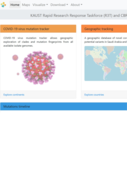
COVID-19 virus mutation tracker
KAUST Rapid Research Response Taskforce (R3T) and CBRC
King Abdullah University of Science and Technology
(2021)
CC
A COVID-19 virus mutation tracker system (CovMT; appendix) based on SARS-CoV-2 isolate genomes deposited to GISAID to track the worldwide sequencing efforts and the evolution of the mutational landscape of this virus. CovMT, which is updated daily, summarises mutations from more than 450 000 isola
...
tes into groups of generic virus clades, lineages, and more specific mutation sets we call mutation fingerprints.
more
Personal Protective Equipment in the Context of Filovirus Disease Outbreak Response
recommended
World Health Organization
(2014)
Rapid advice guideline
IDS Rapid Response Briefing 8
Rapid Advice Guideline
Rapid review and case studies from Member States

A rapid situation analysis in three districts
WiRED Rapid Response Training Module. Free Online Education Course. Please go to the website: http://www.wiredhealthresources.net/presentations/38-X/story.html
This Rapid Advice Guideline updates the Interim Guidance on the “Assessment of infants with microcephaly in the context of Zika virus” published in February 2016 (WHO/ZIKV/MOC/16.3). The recommendations provides guidance on the screening, clinic
...
al assessment, neuroimaging, laboratory investigation and follow-up of children born to women living in areas of Zika virus transmission. The Guideline summarises the evidence base and rationale in support of the recommendations and expands the scope to address complications beyond microcephaly and what is now referred to as the congenital Zika virus syndrome
more
Social science and behavioural data compilation, DRC Ebola outbreak, June - August 2019
Bardosh, K.; T. Jones and J. Bedford
Social Science in Humanitarian Action: A Communication for Development Platform
(2019)
C1
This rapid compilation of data analyses provides a ‘stock-take’ of social science and behavioural data related to the on-going outbreak of Ebola in North Kivu, South Kivu and Ituri provinces. Based on data gathered and analysed by organisations
...
working in the Ebola response and in the region more broadly, it explores convergences and divergences between datasets and, when possible, differences by geographic area, demographic group, time period and other relevant variables. Data sources are listed at the end of the document.
more
Children affected by HIV/AIDS in South Africa
R. Smart; HIVAIDS Consultant
Save the Children (UK) South Africa Programme; The Department of Social Development
(2003)
C2
A Rapid Appraisal of Priorities, Policies and Practices
The rapid arrival of millions of asylum seekers and migrants in Europe in 2015–16 forced cities both large and small to rethink their approach to immigrant inclusion.

Use of chest imaging in COVID-19 (Arab Version)
recommended
This rapid advice guide examines the evidence and makes recommendations for the use of chest imaging in acute care of adult patients with suspected, probable or confirmed COVID-19. Imaging modalities considered are radiography, computed tomography a
...
nd ultrasound. This guide addresses the care pathway from presentation of the patient to a health facility to patient discharge. It considers different levels of disease severity, from asymptomatic individuals to critically ill patients. Accounting for variations in the benefits and harms of chest imaging in different situations, remarks are provided to describe the circumstances under which each recommendation would benefit patients. The guide also includes implementation considerations for different settings, provides suggestions for impact monitoring and evaluation and identifies knowledge gaps meriting further research.
more
A rapid evidence briefing. Vaccinated people are less likely to develop long COVID, even if they get infected, a rapid review of 15 studies by the UK Health Security Agency shows.

Interim rapid response guidance, 10 June 2022.
It includes considerations for certain populations such as patients with mild disease with considerations for community care, patients with moderate to severe disease, sexually active persons, pregnant
...
or breastfeeding women, children and young persons. The guidance also addresses considerations for clinical management such as the use of therapeutics, nutritional support, mental health services, and post-infection follow-up.
The document provides guidance for clinicians, health facility managers, health workers and infection prevention and control practitioners including but not limited to those working in primary care clinics, sexual health clinics, emergency departments, infectious diseases clinics, genitourinary clinics, dermatology clinics, maternity services, paediatrics, obstetrics and gynaecology and acute care facilities that provide care for patients with suspected or confirmed monkeypox
more
Interim rapid response guidance, 10 June 2022.
It includes considerations for certain populations such as patients with mild disease with considerations for community care, patients with moderate to severe disease, sexually active persons, pregnant
...
or breastfeeding women, children and young persons. The guidance also addresses considerations for clinical management such as the use of therapeutics, nutritional support, mental health services, and post-infection follow-up.
The document provides guidance for clinicians, health facility managers, health workers and infection prevention and control practitioners including but not limited to those working in primary care clinics, sexual health clinics, emergency departments, infectious diseases clinics, genitourinary clinics, dermatology clinics, maternity services, paediatrics, obstetrics and gynaecology and acute care facilities that provide care for patients with suspected or confirmed monkeypox
more

The rapid spread of COVID-19 renewed the focus on how health systems across the globe are financed,
especially during public health emergencies. Development assistance is an important source of health financing in
many low-income countries, yet li
...
ttle is known about how much of this funding was disbursed for COVID-19. We
aimed to put development assistance for health for COVID-19 in the context of broader trends in global health
financing, and to estimate total health spending from 1995 to 2050 and development assistance for COVID-19 in 2020.
more
The rapid spread of COVID-19 renewed the focus on how health systems across the globe are financed,
especially during public health emergencies. Development assistance is an important source of health financing in
many low-income countries, yet li
...
ttle is known about how much of this funding was disbursed for COVID-19. We
aimed to put development assistance for health for COVID-19 in the context of broader trends in global health
financing, and to estimate total health spending from 1995 to 2050 and development assistance for COVID-19 in 2020.
more
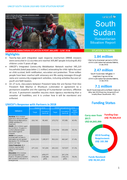
- Twenty-two joint integrated rapid response mechanism (IRRM) missions were conducted in 11 counties and reached 305,887 people including 65,432 children under 5 years of age.
- UNICEF’s Integrated Community Mobilization Network reached 345,2 ... 19 households (total population 2.1 million) advocating for child rights focused on child survival, birth notification, education and protection. Three million people have been reached with advocacy and life-saving messages through radio and community engagement activities, including activities focused on youth and faith leaders.
- On 27 June, discussions between President Salva Kiir and former First Vice President Riek Machar in Khartoum culminated in agreement to a permanent ceasefire and the opening of humanitarian corridors, effective 30 June. more
- UNICEF’s Integrated Community Mobilization Network reached 345,2 ... 19 households (total population 2.1 million) advocating for child rights focused on child survival, birth notification, education and protection. Three million people have been reached with advocacy and life-saving messages through radio and community engagement activities, including activities focused on youth and faith leaders.
- On 27 June, discussions between President Salva Kiir and former First Vice President Riek Machar in Khartoum culminated in agreement to a permanent ceasefire and the opening of humanitarian corridors, effective 30 June. more

India is experiencing rapid demographic and epidemiological transitions with NCDs causing significant disability, morbidity and mortality both in urban and rural populations and across all socioeconomic strata. According to the ICMR State Level Dise
...
ase Burden Initiative, in 2016, NCDs accounted to an estimated 6.0 million deaths, constituting 62% of the total mortality of that year.
more
Results of rapid assessment
The COVID-19 pandemic has disrupted or halted critical mental health services in 93% of countries worldwide while the demand for mental health is increasing, according to a new WHO survey. The survey of 130 countries pro
...
vides the first global data showing the devastating impact of COVID-19 on access to mental health services and underscores the urgent need for increased funding.
more
In the face of rapid increases in the number of hospitalizations due to COVID-19 in Latin America and the Caribbean, coupled with shortages of human and material resources, including medical equipment and gases, there is a need to redesign models of
...
care in the Region to optimize available resources and ensure that more patients receive the quantity and quality of oxygen they need. Oxygen is included in the World Health Organization’s list of essential medicines and is used to care for patients at all levels of integrated health services networks. The efficacy of oxygen use in the treatment of patients with respiratory conditions caused by COVID-19 has been demonstrated, but there is great opportunity to improve the effectiveness of its use if it is used in a rational, sustainable, and safe way. Bearing in mind that the efficacy of a health technology is measured by its benefit under actual conditions of use, practical actions can be taken to improve the use of medical oxygen and avoid oxygen shortages. A drug is considered to be used rationally when patients receive it according to their clinical needs, in doses appropriate to their individual needs, for an appropriate period, and at a low cost to them and their community. By providing instruction on the rational use of oxygen and promoting it, negative repercussions can be avoided, such as loss of efficacy as a result of activities related to oxygen storage, distribution, and administration. Rational use of oxygen also involves controlling waste due to leaks in storage and distribution systems, use of gas at incorrect pressures, use of incorrectly adjusted flowmeters, and disconnections, among other problems. Another aspect to consider is the provision of adequate technical support for all oxygen production systems, in terms of maintenance and calibration, availability of electrical energy, and specific knowledge about these systems. For these reasons, a set of guidelines has been put together for the development of an efficient management system to deal with situations of oxygen scarcity, both now and in the future.
more
UNCTAD has prepared a rapid assessment of the impact of war in Ukraine on trade and development, and interrelated issues in the areas of finance, technology, investment and sustainable development.
The results confirm a rapidly worsening outlook fo
...
r the world economy, underpinned by rising food, fuel and fertilizer prices, heightened financial volatility, sustainable development divestment, complex global supply chain reconfigurations and mounting trade costs.
This rapidly evolving situation is alarming for developing countries, and especially for African and least developed countries, some of which are particularly exposed to the war in Ukraine and its effect on trade costs, commodity prices and financial markets.
The risk of civil unrest, food shortages and inflation-induced recessions cannot be discounted, particularly given the fragile state of the global economy and the developing world as a result of the COVID-19 (coronavirus disease) pandemic.
more
The arrival and rapid spread of the mosquito-borne viral disease Chikungunya across the Americas is one of the most significant public health developments of recent years, preceding and mirroring the subsequent spread of Zika. Globalization in trade
...
and travel can lead to the importation of these viruses, but climatic conditions strongly affect the efficiency of transmission in local settings. In order to direct preparedness for future outbreaks, it is necessary to anticipate global regions that could become suitable for Chikungunya transmission. Here, we present global correlative niche models for autochthonous Chikungunya transmission. These models were used as the basis for projections under the representative concentration pathway (RCP) 4.5 and 8.5 climate change scenarios. In a further step, hazard maps, which account for population densities, were produced. The baseline models successfully delineate current areas of active Chikungunya transmission. Projections under the RCP 4.5 and 8.5 scenarios suggest the likelihood of expansion of transmission-suitable areas in many parts of the world, including China, sub-Saharan Africa, South America, the United States and continental Europe. The models presented here can be used to inform public health preparedness planning in a highly interconnected world.
more
Pulmonary tuberculosis predictors and rapid molecular diagnosis
Preditores de tuberculose pulmonar e experiência com o diagnóstico molecular rápido
There has been a rapid expansion of cash-based, social protection programmes in sub-Saharan Africa (SSA) in recent years as Governments increasingly realise the enormous benefits cash transfers offer (World Bank, 2018). In fact, as an investment in
...
human capital and inclusive economic development, social protection is arguably one of the most efficient uses of Government resources and “one of the smartest investments that policymakers can support” (Cummins, 2021).
more

based on information as at 28 February 2021
Rapid Policy Brief Series Series 14: COVID-19 and hypertension
Many African countries were amongst the most rapid to respond to the emerging threat of COVID-19, implementing large-scale interventions at very early stages of their epidemic. As demonstrated in this document using very simple models, this
...
rapid mobilization and timeliness of implementing control measures is likely to be an important determinant of their success. Indeed, as these measures were relaxed, subsequent waves of disease have been observed in many countries including South Africa, Kenya, Tunisia, Morocco, Sudan and the Democratic Republic of Congo (DRC) where such waves have severely impacted the health system by straining the supply of oxygen and ICU beds and inflicting a heavy toll on healthcare workers, often necessitating the re-imposition of control measures.
more
Protocol for the use of rapid tests for the detection of antibodies against SARS - COV-2/COVID-19
Recent forecasts by the Food and Agriculture Organization of the United Nations (FAO) have indicated a risk of locust invasion in West Africa from June 2020. From East Africa, some swarms could reach the eastern part of the Sahel and continue westwards from Chad to Mauritania.
Surveillance and co
...
ntrol teams will be mobilized across the region with a focus on Burkina Faso, Chad, Mali, Mauritania, and the Niger, and extended to Senegal. Countries such as Cameroon, the Gambia and Nigeria are also on watch in the event that desert locust spreads to these highly acute food-insecure countries. Since the region could be threatened in the coming months, FAO is strongly encouraging no regret investments in preparedness and anticipatory action to control swarms and safeguard livelihoods, given already high levels of acute food insecurity. Therefore, cost estimates for preparedness, anticipatory action and rapid response have been assessed.
more
The International Water Management Institute (IWMI) was commissioned to undertake a rapid review of access to and management of water resources in the Dry Zone, to assist LIFT and other potential donors and investors to identify the key issues and t
...
he priority actions for water management.
The study had three main components:
• A water resources assessment (surface and ground water) of availability, current use, and patterns, trends and variability at different spatial and temporal scales.
• Community survey to evaluate issues of water availability, access and management for different livelihood types in 24 local communities, including evaluation of institutional arrangements in relation to farming strategies and water management practices
• Review and analysis of existing program investments in water in the Dry Zone
Findings from the study are available in three reports (for details, see last page). more
The study had three main components:
• A water resources assessment (surface and ground water) of availability, current use, and patterns, trends and variability at different spatial and temporal scales.
• Community survey to evaluate issues of water availability, access and management for different livelihood types in 24 local communities, including evaluation of institutional arrangements in relation to farming strategies and water management practices
• Review and analysis of existing program investments in water in the Dry Zone
Findings from the study are available in three reports (for details, see last page). more
Myanmar’s transition to a market‐based economy is accompanied by rapid development of the private manufacturing sector, which has large potential for improving economic growth. The overall success of the sector, however, should not be taken for
...
granted. Future advances will greatly depend on the policy and business environment in which manufacturing activities take place. It is, therefore, important to better understand the business environment and help inform policies conducive to sustainable economic growth.
more
Accessed: 08.03.2020
This section provides an overview of an HIV Rapid Testing workshop. It contains information about:
- Workshop Goal
- Training Modules: Learning Objectives and Content Outline
- Learning Methods / Activities
-ô
...
�°€ Recommended Certification Criteria
Section 1: Overview, Trainer’s Guide
more
The aim of the register is to support rapid evidence synthesis by all systematic review producers, including Cochrane's work on Rapid Reviews in response to COVID-19. The register helps systematic r
...
eviewers prioritize topics, identify available evidence, and produce urgently needed reviews for front-line health professionals, public health policymakers, and research teams developing new therapeutic, diagnostic, and preventive interventions for COVID-19.
The new COVID-19 Study Register will be continually updated with human studies on COVID-19. More background information about the register can be found here: https://community.cochrane.org/about-covid-19-study-register
more

Sur la base des informations disponibles au 28 février 2021
Rapid Policy Brief Series Series 14: COVID-19 and hypertension

— com base na informação disponível a 28 de Fevereiro de 2021
Rapid Policy Brief Series Series 14: COVID-19 and hypertension
22 Sept. 2021
The rapid development of effective Covid-19 vaccines in 2020 gave hope to the world in the darkest days of the deadly pandemic. However, the vaccine roll-out has been massively skewed towards wealthy nations. While rich states have ho
...
arded vaccines, companies have also played a decisive role in restricting fair access to a life-saving health product. This report focuses on six leading vaccine developers, AstraZeneca, BioNTech, Johnson & Johnson, Moderna, Novavax and Pfizer, assessing each company’s human rights policy, pricing structure, records on intellectual property, knowledge and technology sharing, allocation of available vaccine doses and transparency.
Available in Arabic, English, French, German and Spanish
more
21 July 2022. The Rapid Core CRF is designed to collect data obtained through examination, interview and review of
hospital or clinic notes of patients with suspected, probable, or confirmed monkeypox infection. Data
may be collected prospectively
...
or retrospectively. The data collection period is defined as the period
from hospital admission or first clinic visit to discharge from care, transfer, death, or continued
hospitalization without possibility of continued data collection.
more
The socioeconomic factors and public health inadequacies that facilitated the rapid spread of this infection continue to exist. As it is a new and emerging disease it has not received sufficient coverage yet in the medical curricula of Member States
...
. Specific treatment is not available, and there is no vaccine for the prevention of chikungunya fever. It has therefore become imperative to develop guidelines, based on the limited clinical experience gathered from managing patients so far, for appropriate management of patients in communities and in health facilities. Experts engaged in managing patients with chikungunya fever in the Region were brought together by the WHO Regional Office for South-East Asia to outline guidelines for managing various situations and stages of the disease.
The socioeconomic factors and public health inadequacies that facilitated the rapid spread of this infection continue to exist. As it is a new and emerging disease it has not received sufficient coverage yet in the medical curricula of Member States. Specific treatment is not available, and there is no vaccine for the prevention of chikungunya fever. It has therefore become imperative to develop guidelines, based on the limited clinical experience gathered from managing patients so far, for appropriate management of patients in communities and in health facilities. Experts engaged in managing patients with chikungunya fever in the Region were brought together by the WHO Regional Office for South-East Asia to outline guidelines for managing various situations and stages of the disease. This publication is the end result of that exercise and is intended to assist health-care providers in planning and implementing appropriate care to patients with chikungunya fever according to their actual clinical conditions
more

FIND and Standard Diagnostics (SD) have developed a lateral flow rapid diagnostic test (RDT) to screen for
T.b. gambiense HAT that is cheap and easy to use. The tests are packed individually and are stable at 40°C for
up to 25 months; they are pe
...
rformed on fresh blood obtained from a finger prick, and no instrument or electricity is required. The RDT detects host antibodies to infection in populations that are at risk, or in suspect individuals. Positive cases are subjected to further confirmatory methods to identify HAT patients.
more

The application of digital health technology is growing at a rapid rate in Africa, with the goals of improving the delivery of healthcare services and more effectively reaching out to remote and underserved communities. The lack of enabling guidelin
...
es and standards across the continent, on the other hand, makes it difficult to share data in a meaningful way across the continent.
Considering this, Africa Centres for Disease Control and Prevention (Africa CDC) established a task force of 24 members to provide expertise and guidance in the development of AU HIE guidelines and standards. Members of the task force were subject matter experts working in Africa and internationally on the collection, analysis, and exchange of health information. Some of these experts had been involved in previous consultations on defining Africa CDC’s health information systems strategy. A chairperson, co-chairperson, and secretary were elected to engage the task force members in different technical working groups.
more
The application of digital health technology is growing at a rapid rate in Africa, with the goals of improving the delivery of healthcare services and more effectively reaching out to remote and underserved communities. The lack of enabling guidelin
...
es and standards across the continent, on the other hand, makes it difficult to share data in a meaningful way across the continent.
Considering this, Africa Centres for Disease Control and Prevention (Africa CDC) established a task force of 24 members to provide expertise and guidance in the development of AU HIE guidelines and standards. Members of the task force were subject matter experts working in Africa and internationally on the collection, analysis, and exchange of health information. Some of these experts had been involved in previous consultations on defining Africa CDC’s health information systems strategy. A chairperson, co-chairperson, and secretary were elected to engage the task force members in different technical working groups.
more

The Contingency Fund for Emergencies (CFE) provides WHO with rapid and flexible resources to respond to disease outbreaks and other health emergencies. The annual report provides an overview of the use and impact of the Fund over the previous year.
Since fighting between the Sudanese Armed Forces (SAF) and the Rapid Support Forces (RSF) erupted in mid-April, an estimated 6.3 million people have fled their homes, taking refuge inside and outside the country, with children representing about hal
...
f of the people displaced. Sudan is now the country with the largest number of displaced people in the world as prior to the fighting there were 3.7 million people internally displaced in Sudan. It is also now the country with the largest child displacement crisis in the world. ACLED estimates that more than 10,400 people have been killed since the fighting broke out in April, of which about 1,300 killings happened between 30 September and 27 October.
more

ProMED - the Program for Monitoring Emerging Diseases - is an Internet-based reporting system dedicated to rapid global dissemination of information on outbreaks of infectious diseases and acute exposures to toxins that affect human health, includi
...
ng those in animals and in plants grown for food or animal feed.
By providing early warning of outbreaks of emerging and re-emerging diseases, public health precautions at all levels can be taken in a timely manner to prevent epidemic transmission and to save lives
more
Myanmar, as a country going through rapid socio-political transition and institutional development also suffers with a high burden of infectious disease. An ongoing challenge has been to effectively reach its 51 million population, most of whom batt
...
le tuberculosis, acute respiratory infections, diarrhoea and malaria including amongst under-five children.
Limited research data on the occurrence of resistant organisms in the nation have, makes it hard to estimate the exact antimicrobial resistance (AMR) scenario. Limited peer reviewed evidence indicates significant divergence from the average resistance trends in APAC region. Nevertheless, several key steps by Government of Myanmar have been instrumental in paving the way for the country to join other nations in the South East Asia Region to speed up its plan on addressing the AMR crisis. Combating antimicrobial resistance would, however, require highest political commitment, multi-sectoral coordination, sustained investment and technical assistance.
more
Due to Nepal’s difficult geographic structure, rapid urbanization, varied groundwater level, and increasing population the country is prone to earthquakes, floods, landslides, fires, lightning, hailstone, drought, epidemic, and other d
...
isasters. These disasters cause a huge
loss of life and property every year.
In normal circumstances, persons with disabilities are at a higher risk than others. Hence, they may be more vulnerable and affected in an event of a disaster. Especially those with severe disabilities, women, children, and senior citizens are more at risk during disasters persons with disabilities must be kept at the forefront for disaster mitigation and
preparedness to protect them from disaster risk
more
Human Resource Capacity Development in Public Health Supply Chain Management: Assessment Guide and Tool
USAID; Deliver Project
(2013)
this toolkit presents a structured, rating-based methodology designed to provide a rapid, comprehensive assessment of the capacity of the human resource support system for a country’s supply chain. Data are gathered from a document review, focus g
...
roup discussions, and in-country stakeholder interviews to identify the strengths, areas for improvement, opportunities, and challenges for a wide range of human resource inputs and components. The findings are transformed into specific recommendations and strategies for action based on an understanding of country priorities and programming gaps. It includes Word templates; PowerPoint templates and Exce-based Diagnostic Dashboard
more
Throughout the Americas, populations are aging and the Region is undergoing a rapid demographic transition. The aging index, which reflects the size of the older age groups per 100 compared to children under age 15, clearly demonstrates the increase
...
in people aged 60 and older. Compared to global trends, the Region of the Americas will have a larger number of people aged 60 and older than children under 15 by 2030, which is approximately 25 years before the global average. The COVID-19 pandemic has presented an unparalleled health crisis around the world. The impact on older persons and those with underlying health conditions has highlighted the challenges of addressing the needs of older populations during a public health emergency. Given this demographic transition it is essential to think about preparedness of systems and services to address this population’s needs, including an increase in emergency planning and protection of older populations.
more

The overall objective of this implementation plan is to define the strategy for implementation of the Xpert MTB/RIF test for rapid detection of TB and rifampicin (RIF) resistance in Tanzania, within the context of the National Tuberculosis and Lepro
...
sy Programme (NTLP) strategic plan and other national health guidelines. It is intended to serve as the main guiding document for national, regional and local programme managers, clinicians, coordinators, laboratory staff and other health workers; national and regional reference laboratories; local and international implementing partners; and donors involved in TB control.
more
Highlights:
- IOM teams reach populations in need in Baggari, south of Wau
- Rapid response teams conduct oral cholera vaccination campaigns across the country
- IOM expands fuel-efficient stove initiative in the Bentiu PoC site
WHO recommends replacing western blotting and line immunoassays with simpler tests in HIV testing services. These simpler tests include rapid diagnostic tests (RDTs) that can be used at the point-of-care, and enzyme immunoassays (EIAs).
These tes
...
ts get results to the client faster, produce accurate results more often, cost less, can be performed by various cadres of health providers, and can thus facilitate greater access and uptake of HIV testing services among those who need it most.
more
Laboratory biosafety guidance related to coronavirus disease (COVID-19): Interim guidance, 28 January 2021
recommended
The latest update (28 January 2021) includes the following addition and revision:
biosafety aspects for working with antigen-detecting rapid diagnostic test;
handling new variants of SARS-CoV-2 in the laboratory;
updated assay decon
...
tamination before disposal;
personal protective equipment (PPE) for specimen collection;
addressing chemical hazards and their safe disposal; and
the fourth edition of the WHO Laboratory Biosafety Manual (LBM4) is now available and the terminology in this guidance was aligned with the LBM4.
more
The WHO COVID-19 LENS (Living Evidence Synthesis) working group consolidated available evidence, based on rapid reviews of the literature and results of a living systematic review on pregnancy and COVID-19 (up to October 7, 2020), on potential mecha
...
nisms of vertical transmission of infectious pathogens, feasibility of vertical transmission of SARS-CoV-2, data related to interpretation of positive SARS-CoV-2 virologic and serologic neonatal tests, lessons from diagnosis of other congenital infections, and existing proposed definitions to classify timing of vertical transmission of SARS-CoV-2.
more
The latest update (28 January 2021) includes the following addition and revision:
biosafety aspects for working with antigen-detecting rapid diagnostic test;
handling new variants of SARS-CoV-2 in the laboratory;
updated assay decon
...
tamination before disposal;
personal protective equipment (PPE) for specimen collection;
addressing chemical hazards and their safe disposal; and
the fourth edition of the WHO Laboratory Biosafety Manual (LBM4) is now available and the terminology in this guidance was aligned with the LBM4.
more
The latest update (28 January 2021) includes the following addition and revision:
biosafety aspects for working with antigen-detecting rapid diagnostic test;
handling new variants of SARS-CoV-2 in the laboratory;
updated assay decon
...
tamination before disposal;
personal protective equipment (PPE) for specimen collection;
addressing chemical hazards and their safe disposal; and
the fourth edition of the WHO Laboratory Biosafety Manual (LBM4) is now available and the terminology in this guidance was aligned with the LBM4.
more
A living WHO guideline on drugs for covid-19
recommended
BMJ 2020; 370 doi: https://doi.org/10.1136/bmj.m3379
Rapid Recommendation and visual graph. This is the fifth version (update 4) of the living guideline (BMJ 2020;370:m3379). When citing this article, please consider adding the update number and da
...
te of access for clarity. The publication of the RECOVERY and REMAP-CAP randomised controlled trials triggered this guideline update, resulting in a strong recommendation for interleukin-6 (IL-6) receptor blockers (tocilizumab or sarilumab) in patients with severe or critical covid-19.
Prior recommendations: (a) A recommendation not to use ivermectin in patients with covid-19, regardless of disease severity, except in the context of a clinical trial; (b) a strong recommendation against the use of hydroxychloroquine in patients with covid-19, regardless of disease severity; (c) a strong recommendation against the use of lopinavir-ritonavir in patients with covid-19, regardless of disease severity; (d) a strong recommendation for systemic corticosteroids in patients with severe and critical covid-19; (e) a conditional recommendation against systemic corticosteroids in patients with non-severe covid-19; and (f) a conditional recommendation against remdesivir in hospitalised patients with covid-19.
more
