
Filter
226
Text search:
radio
broadcast
Featured
21
70
Language
Document type
151
22
17
11
9
8
5
3
Countries
17
13
12
10
10
8
6
6
6
6
5
5
5
4
4
4
4
4
4
3
3
3
3
3
2
2
2
2
2
2
2
2
2
2
1
1
1
1
1
1
1
1
1
1
1
1
1
1
1
1
1
1
1
Authors & Publishers
Publication Years
Category
99
10
7
4
4
2
Toolboxes
40
30
14
10
9
8
7
7
6
4
4
3
3
2
1
1
1
1
1
1
GO pre-deployment training: participant handbook
recommended
This is a pre-deployment training, tailored specially to the Ebola outbreak in West Africa, offered to WHO personnel, consultants, and key partners. The material covered in modules 1-4 is applicable and useful to frontline response workers, national and international. Only Module 5, which focuses on
...

PILOT SURVEY REPORT: BIRIM, HO, MANYA

FIELD GUIDE for staff at the central, intermediate and peripheral level
Conceived as part of the CWS-A/P project on regional security and risk management, this book presents a
collection of testimonies from aid workers in some of the most insecure and volatile environments in the world.
The participants recount a broad array of security incidents, such as kidnappings,
...

The limitation of a single sector approach. HNP Discussion Paper
Each unit builds on the one prior, and they all combine to provide key information for developing an SBCC strategy. It is not essential, however, to work through the I-Kit from start to finish. Users can choose to focus on specific aspects for which they need support in their emergency communication
...
The FCHV program focuses on family planning, maternal/neonatal and child health.
Vitamin A distribution program. The activity of FCHV is contributing to Nepal’s goal of reducing the total fertility rate and under five mortality and maternal mortality rates.
Social auditing in Nepal’s health sector
Towards Malaria Elimination
Collection of country-level good practices
Overcoming Barriers to TB Control
Training Curriculum
August 2011
Summary of key informant interviews with representatives of organizations providing, funding, or supporting WASH services to refugee populations
Further analysis of the Nepal Demographic and Health Surveys, 2001-2011
Further analysis of the 2011 Nepal Demographic and Health Survey

Good practices from South & South-East Asia in disability inclusive disaster risk management
CBM and the Global Campaign for Education 2014
This report is jointly released by the Human Rights Division (HRD)
of the United Nations Mission in South Sudan (UNMISS) and the Office of the United Nations High Commissioner for Human Rights (OHCHR) and focuses on the right to freedom of opinion and expression in South Sudan.
It covers the per
...
The National Institute of statistics of Rwanda (NISR) in collaboration with the worldwide Demographic and Health Surveys Program implemented the 2014-15 Rwanda Demographic and Health Survey (RDHS) to collect data for monitoring progress on health programs and policies in Rwanda. This publication ill
...
The National Institute of statistics of Rwanda (NISR) in collaboration with the worldwide Demographic and Health Surveys Program implemented the 2014-15 Rwanda Demographic and Health Survey (RDHS) to collect data for monitoring progress on health programs and policies in Rwanda. This publication ill
...
he National Institute of statistics of Rwanda (NISR) in collaboration with the worldwide Demographic and Health Surveys Program implemented the 2014-15 Rwanda Demographic and Health Survey (RDHS) to collect data for monitoring progress on health programs and policies in Rwanda. This publication illu
...
The National Institute of statistics of Rwanda (NISR) in collaboration with the worldwide Demographic and Health Surveys Program implemented the 2014-15 Rwanda Demographic and Health Survey (RDHS) to collect data for monitoring progress on health programs and policies in Rwanda. This publication ill
...
The 2011-2012 National Annual Report on HIV program presents the progress in implementing the strategies and activities articulated in the National Strategic Plan on HIV and AIDS 2009-2012, commonly referred to as the HIV NSP.

This National Food and Nutrition Policy developed in 2013 builds on several achievements that have improved the status of nutrition and household food security in Rwanda during the past six years. The outlines ambitious but necessary strategies needed to solve serious and
persistent problems includ
...

During the implementation of the National Strategic Plan 2009–2012 on HIV and AIDS, Rwanda has continued its progress towards universal access to HIV and AIDS services. The new HIV and AIDS National Strategic Plan July 2013–June 2018 (thereafter referred to as ‘the NSP’) presented here is se
...

Based on WHO South-East Asia Regional Strategy on Autism Spectrum Disorder
The collaborative framework for implementation of the “WHO South-East Asia Regional Strategy on Autism Spectrum Disorders” articulates to Member States: the nature of autism spectrum disorder and the issues faced by ...
The collaborative framework for implementation of the “WHO South-East Asia Regional Strategy on Autism Spectrum Disorders” articulates to Member States: the nature of autism spectrum disorder and the issues faced by ...
To implement the set of recommendations on the marketing of foods and non-alcoholic beverages to children
With the growing obesity crisis among children, WHO and other public health advocates and consumer groups have called for restrictions on advertising of ‘unhealthy foods’ high in salt, ...
With the growing obesity crisis among children, WHO and other public health advocates and consumer groups have called for restrictions on advertising of ‘unhealthy foods’ high in salt, ...
Every day, health-care providers are being attacked, patients discriminated against, ambulances held up at checkpoints, hospitals bombed, medical supplies looted and entire communities cut off from critical services around the world.
Between January 2012 and December 2014, the ICRC documented n ...
Between January 2012 and December 2014, the ICRC documented n ...

This year marked the beginning of the WHO biennium 2016-2017 action plan; this annual report highlights WHO’s key achievements in 2016
It also documents the extraordinary efforts by a broad coalition of government ministries, municipalities, international agencies, community groups, women’s or
...
This annual report outlines achievements and challenges of delivering these partnerships. NUDOR takes this opportunity to thank all organizations, individuals and decision makers who have supported NUDOR to contribute to the promotion, respect and realization of the rights of persons with disabiliti
...
Torrential rains and the onset of Cyclone Komen triggered severe and widespread floods and landslides in July and August 2015 across 12 out of 14 states and regions in Myanmar. An estimated 1.6 million individuals were recorded as having been temporarily displaced from their homes by the disaster, a
...
The purpose of this study was to document a technical assessment of a sample of these existing shelters on their functionality, accessibility, operation and management, community perspectives in Myanmar; identify gaps, needs and further the linkages with community-based disaster risk reduction (CDBR
...

This study aims to analyze national and international stakeholders and their initiatives in Early Warning Systems in Myanmar, to identify priority gaps that need to be addressed by all stakeholders. It is presented as a first step towards supporting GoUM in information-gathering under the Myanmar Ac
...
No publication year indicated.
No publication year indicated.
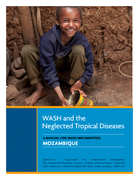
This manual is intended to enable WASH practitioners
who work in Mozambique to contribute to the
reduction of WASH-preventable NTDs.
Accessed January 2019, publication date unknown.
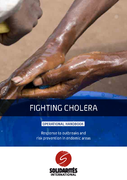
Cholera is a diarrhoeal disease that is usually contracted when drinking water contaminated with Vibrio cholerae bacteria. The fight against this disease requires a multidisciplinary approach that combines a water, hygiene and sanitation (WaSH) response with a monitoring system, improved water suppl
...
WHO QualityRights is an initiative which aims to improve the quality of care in mental health and related services and to promote the human rights of people with psychosocial, intellectual and cognitive disabilities, throughout the world.
Cureus. 2015 Nov; 7(11): e372.
Published online 2015 Nov 3. doi: 10.7759/cureus.372
PMCID: PMC4671837
PMID: 26677422
Rapid review and case studies from Member States

The Government of Myanmar has taken initial steps to implement some of the
recommendations, particularly those made by the Advisory Commission. The overarching
objectives of the recommendations, however, remain largely unaddressed, with no
significant progress observed on human rights concerns ra
...
Reporting on Climate Change and Sustainable Development in Asia and the Pacific: A Handbook for Journalists.
UNESCO Series on Journalism education.
It explores the essential aspects of climate change, including its injustices to vulnerable communities, especially women and girls and least develope
...
The COPSI project is divided into three phases: the first in which the intervention is developed, the second in which researchers evaluate the intervention in a randomised controlled trial, and the final one in which the results of the trial are analysed and disseminated.
A COPSI resource kit has
...
It aims to minimize damage to property, reduce injury and lives lost, and normalize the lives of those affected in a timely manner in the case of a damaging earthquake in the country.
It also seeks to contribute to the achievements of Myanmar Sustainable Development Goals as well as respond to Gl
...
Programme Brief
Accessed: 21.08.2019
Second Edition
Good Policy and Practice in HIV & AIDS and Education
A progress report
Accessed: 17.11.2019
Antibiotics use with care
SHOPS and HIA finalized a scope of work with USAID Senegal in April 2015, and a team of five private sector experts conducted the onsite assessments between May and June 2015. The Private Sector Assessment (PSA) team worked closely with Senegalese key stakeholders throughout the process. The PSA tea
...
The CDAC Network commissioned a practice guide to draw both on their experiences and many others’ in order to document approaches, practices and tools to working with rumors. It is aimed primarily at humanitarian programme managers and field staff to provide them with practical tips on how to work
...
As part of the new strategy preparation, USAID/Senegal requested assistance with a gender assessment. This study was conducted from March 20 to April 11, 2010. It was supported jointly by the Women in Development Indefinite Quantity Contract (WID IQC) Task Order 1 ShortTerm Technical Assistance and
...
USAID Senegal and Health in Africa (HIA) initiative of the World Bank Group engaged the Strengthening Health Outcomes through the Private Sector (SHOPS) project to conduct an assessment of the private health sector in Senegal. The assessment’s primary focus is family planning, and its secondary fo
...
Risk Communication and Community Engagement (RCCE) is an essential component of your health emergency preparedness and response action plan. This tool is designed to support risk communication, community engagement staff and responders working with national health authorities, and other partners to
...

Antimicrobials have been a critical public health tool since the discovery of penicillin in 1928, saving the lives of millions of people around the world. Today, however, the emergence of drug resistance is reversing the miracles of the past eighty years, with drug choices for the treatment of many
...
The goals and objectives of the Sudan National Action Plan on AMR can only be achieved through implementing strategic interventions and activities with all concerned ministries and departments joining hands with other stakeholders to collaboratively tackle these challenges.
The guide seeks to address questions about how we can face local communication challenges presented by the pandemic, and how communicators respond effectively to the situation through supporting our communities to cope and to protect themselves. This guide aims to provide insights for a wide range o
...
Mapping of Communication Resources COVID-19
recommended
This resource mapping contains signposting and direct links to a range of resource sites and content online; this includes information about the main sources for trustworthy information about the pandemic; sites for e-learning; organisations providing COVID-19 communication response guidance and too
...
This strategy, produced by IFRC, UNICEF and WHO, provides an overview of RCCE coordination approach and priorities across the different phases of the COVID-19 preparedness and response
Tips for Engaging Communities during COVID-19 in Low-Resource Settings, Remotely and In-Person
recommended
This brief provides key considerations for engaging communities on COVID-19 and tips for how to engage where there are movement restrictions and physical distancing measures in place, particularly in low-resource settings.
Accessed on 21.05.2020
Considering a hotline? This set of tools will help you assess, set up and manage different types of channels to communicate with communities during humanitarian crises.
South Africa reported it fist case of COVID-19 on 5 March 2020. While the first cases were imported, local transmission has led to a rapid increase in the number of cases. As of 21 April 2020, more than 3,400 cases and 58 deaths had been confirmed. On 15 March, President Cyril Ramaphosa declared a n
...

The COVID-19 pandemic is having far reaching impacts, well beyond the health crisis and needs, with the most severe impacts experienced in the poorest countries and those most vulnerable to humanitarian crises including natural disasters, such as Nepal.
