
Filter
6034
Text search:
population
survey
Featured
333
1917
Language
5648
255
103
85
36
35
31
16
11
7
6
5
4
3
3
3
2
2
2
2
2
2
2
2
2
2
2
2
2
2
2
1
1
1
1
1
1
1
1
1
1
1
1
1
1
1
1
1
1
1
1
1
1
1
1
Document type
3910
1131
390
196
179
113
44
39
17
6
5
2
Countries
243
232
186
181
180
155
141
135
128
126
124
118
112
108
107
105
99
96
89
81
80
77
75
74
68
66
64
64
63
60
47
45
42
41
41
41
39
35
35
31
31
30
28
27
25
25
25
25
23
22
21
19
19
18
17
15
15
15
14
14
13
12
12
11
11
11
10
9
9
9
8
8
8
8
8
8
8
7
7
7
6
6
5
5
5
5
5
5
5
5
4
4
4
4
4
4
4
4
4
3
3
3
3
3
3
3
3
3
3
3
3
2
2
2
2
2
2
2
2
2
2
2
2
2
2
2
2
2
2
2
1
1
1
1
1
1
1
1
1
1
1
1
1
1
1
1
1
1
1
1
Authors & Publishers
561
307
237
225
145
145
142
105
92
55
53
43
34
34
34
32
31
29
28
25
24
24
22
22
22
22
21
21
20
20
20
20
19
19
18
18
18
17
17
16
16
16
16
16
16
16
16
15
15
15
15
14
14
14
14
14
14
13
13
12
12
12
11
11
11
11
11
11
10
10
10
10
10
10
10
10
9
9
9
9
9
9
9
9
9
9
9
9
8
8
8
8
8
8
8
8
8
8
8
7
7
7
7
7
7
7
7
7
7
7
7
7
7
7
7
7
6
6
6
6
6
6
6
6
6
6
6
6
6
6
6
6
6
6
6
6
6
6
6
6
6
6
6
6
6
6
6
6
6
6
6
5
5
5
5
5
5
5
5
5
5
5
5
5
5
5
5
5
5
5
5
5
5
5
5
5
5
5
5
5
5
5
5
5
5
5
5
5
5
5
5
5
5
5
5
5
5
5
5
5
5
5
5
4
4
4
4
4
4
4
4
4
4
4
4
4
4
4
4
4
4
4
4
4
4
4
4
4
4
4
4
4
4
4
4
4
4
4
4
4
4
4
4
4
4
4
4
4
4
4
4
4
4
4
4
4
4
4
4
4
4
4
4
4
4
4
4
4
4
4
4
4
4
4
4
4
4
4
4
4
4
3
3
3
3
3
3
3
3
3
3
3
3
3
3
3
3
3
3
3
3
3
3
3
3
3
3
3
3
3
3
3
3
3
3
3
3
3
3
3
3
3
3
3
3
3
3
3
3
3
3
3
3
3
3
3
3
3
3
3
3
3
3
3
3
3
3
3
3
3
3
3
3
3
3
3
3
3
3
3
3
3
3
3
3
3
3
3
3
3
3
3
3
3
3
3
3
3
3
3
3
3
3
3
3
3
3
3
3
3
3
3
3
3
3
3
3
3
3
3
3
3
3
3
3
3
3
2
2
2
2
2
2
2
2
2
2
2
2
2
2
2
2
2
2
2
2
2
2
2
2
2
2
2
2
2
2
2
2
2
2
2
2
2
2
2
2
2
2
2
2
2
2
2
2
2
2
2
2
2
2
2
2
2
2
2
2
2
2
2
2
2
2
2
2
2
2
2
2
2
2
2
2
2
2
2
2
2
2
2
2
2
2
2
2
2
2
2
2
2
2
2
2
2
2
2
2
2
2
2
2
2
2
2
2
2
2
2
2
2
2
2
2
2
2
2
2
2
2
2
2
2
2
2
2
2
2
2
2
2
2
2
2
2
2
2
2
2
2
2
2
2
2
2
2
2
2
2
2
2
2
2
2
2
2
2
2
2
2
2
2
2
2
2
2
2
2
2
2
2
2
2
2
2
2
2
2
2
2
2
2
2
2
2
2
2
2
2
2
2
2
2
2
2
2
2
2
2
2
2
2
2
2
2
2
2
2
2
2
2
2
2
2
2
2
2
2
2
2
2
2
2
2
2
2
2
2
2
2
2
2
2
2
2
2
2
2
2
2
2
2
2
2
2
2
2
2
2
2
2
2
2
2
2
2
2
2
2
2
2
2
2
2
2
2
2
2
2
2
2
2
2
2
2
2
2
2
2
2
2
2
2
2
2
2
2
2
2
2
2
2
2
2
2
2
2
2
2
2
2
2
2
2
2
2
2
2
2
2
2
2
2
2
2
2
2
2
2
2
2
2
2
2
2
2
2
2
2
2
2
2
2
2
2
2
2
2
2
2
2
2
2
2
2
2
2
2
2
2
2
2
2
2
2
2
2
2
2
2
2
2
2
2
2
2
2
2
2
2
2
2
2
2
2
2
2
2
1
1
1
1
1
1
1
1
1
1
1
1
1
1
1
1
1
1
1
1
1
1
1
1
1
1
1
1
1
1
1
1
1
1
1
1
1
1
1
1
1
1
1
1
1
1
1
1
1
1
1
1
1
1
1
1
1
1
1
1
1
1
1
1
1
1
1
1
1
1
1
1
1
1
1
1
1
1
1
1
1
1
1
1
1
1
1
1
1
1
1
1
1
1
1
1
1
1
1
1
1
1
1
1
1
1
1
1
1
1
1
1
1
1
1
1
1
1
1
1
1
1
1
1
1
1
1
1
1
1
1
1
1
1
1
1
1
1
1
1
1
1
1
1
1
1
1
1
1
1
1
1
1
1
1
1
1
1
1
1
1
1
1
1
1
1
1
1
1
1
1
1
1
1
1
1
1
1
1
1
1
1
1
1
1
1
1
1
1
1
1
1
1
1
1
1
1
1
1
1
1
1
1
1
1
1
1
1
1
1
1
1
1
1
1
1
1
1
1
1
1
1
1
1
1
1
1
1
1
1
1
1
1
1
1
1
1
1
1
1
1
1
1
1
1
1
1
1
1
1
1
1
1
1
1
1
1
1
1
1
1
1
1
1
1
1
1
1
1
1
1
1
1
1
1
1
1
1
1
1
1
1
1
1
1
1
1
1
1
1
1
1
1
1
1
1
1
1
1
1
1
1
1
1
1
1
1
1
1
1
1
1
1
1
1
1
1
1
1
1
1
1
1
1
1
1
1
1
1
1
1
1
1
1
1
1
1
1
1
1
1
1
1
1
1
1
1
1
1
1
1
1
1
1
1
1
1
1
1
1
1
1
1
1
1
1
1
1
1
1
1
1
1
1
1
1
1
1
1
1
1
1
1
1
1
1
1
1
1
1
1
1
1
1
1
1
1
1
1
1
1
1
1
1
1
1
1
1
1
1
1
1
1
1
1
1
1
1
1
1
1
1
1
1
1
1
1
1
1
1
1
1
1
1
1
1
1
1
1
1
1
1
1
1
1
1
1
1
1
1
1
1
1
1
1
1
1
1
1
1
1
1
1
1
1
1
1
1
1
1
1
1
1
1
1
1
1
1
1
1
1
1
1
1
1
1
1
1
1
1
1
1
1
1
1
1
1
1
1
1
1
1
1
1
1
1
1
1
1
1
1
1
1
1
1
1
1
1
1
1
1
1
1
1
1
1
1
1
1
1
1
1
1
1
1
1
1
1
1
1
1
1
1
1
1
1
1
1
1
1
1
1
1
1
1
1
1
1
1
1
1
1
1
1
1
1
1
1
1
1
1
1
1
1
1
1
1
1
1
1
1
1
1
1
1
1
1
1
1
1
1
1
1
1
1
1
1
1
1
1
1
1
1
1
1
1
1
1
1
1
1
1
1
1
1
1
1
1
1
1
1
1
1
1
1
1
1
1
1
1
1
1
1
1
1
1
1
1
1
1
1
1
1
1
1
1
1
1
1
1
1
1
1
1
1
1
1
1
1
1
1
1
1
1
1
1
1
1
1
1
1
1
1
1
1
1
1
1
1
1
1
1
1
1
1
1
1
1
1
1
1
1
1
1
1
1
1
1
1
1
1
1
1
1
1
1
1
1
1
1
1
1
1
1
1
1
1
1
1
1
1
1
1
1
1
1
1
1
1
1
1
1
1
1
1
1
1
1
1
1
1
1
1
1
1
1
1
1
1
1
1
1
1
1
1
1
1
1
1
1
1
1
1
1
1
1
1
1
1
1
1
1
1
1
1
1
1
1
1
1
1
1
1
1
1
1
1
1
1
1
1
1
1
1
1
1
1
1
1
1
1
1
1
1
1
1
1
1
1
1
1
1
1
1
1
1
1
1
1
1
1
1
1
1
1
1
1
1
1
1
1
1
1
1
1
1
1
1
1
1
1
1
1
1
1
1
1
1
1
1
1
1
1
1
1
1
1
1
1
1
1
1
1
1
1
1
1
1
1
1
1
1
1
1
1
1
1
1
1
1
1
1
1
1
1
1
1
1
1
1
1
1
1
1
1
1
1
1
1
1
1
1
1
1
1
1
1
1
1
1
1
1
1
1
1
1
1
1
1
1
1
1
1
1
1
1
1
1
1
1
1
1
1
1
1
1
1
1
1
1
1
1
1
1
1
1
1
1
1
1
1
1
1
1
1
1
1
1
1
1
1
1
1
1
1
1
1
1
1
1
1
1
1
1
1
1
1
1
1
1
1
1
1
1
1
1
1
1
1
1
1
1
1
1
1
1
1
1
1
1
1
1
1
1
1
1
1
1
1
1
1
1
1
1
1
1
1
1
1
1
1
1
1
1
1
1
1
1
1
1
1
1
1
1
1
1
1
1
1
1
1
1
1
1
1
1
1
1
1
1
1
1
1
1
1
1
1
1
1
1
1
1
1
1
1
1
1
1
1
1
1
1
1
1
1
1
1
1
1
1
1
1
1
1
1
1
1
1
1
1
1
1
1
1
1
1
1
1
1
1
1
1
1
1
1
1
1
1
1
1
1
1
1
1
1
1
1
1
1
1
1
1
1
1
1
1
1
1
1
1
1
1
1
1
1
1
1
1
1
1
1
1
1
1
1
1
1
1
1
1
1
1
1
1
1
1
1
1
1
1
1
1
1
1
1
1
1
1
1
1
1
1
1
1
1
1
1
1
1
1
1
1
1
1
1
1
1
1
1
1
1
1
1
1
1
1
1
1
1
1
1
1
1
1
1
1
1
1
1
1
1
1
1
1
1
1
1
1
1
1
1
1
1
1
1
1
1
1
1
1
1
1
1
1
1
1
1
1
1
1
1
1
1
1
1
1
1
1
1
1
1
1
1
1
1
1
1
1
1
1
1
1
1
1
1
1
1
1
1
1
1
1
1
1
1
1
1
1
1
1
1
1
1
1
1
1
1
1
1
1
1
1
1
1
1
1
1
1
1
1
1
1
1
1
1
1
1
1
1
1
1
1
1
1
1
1
1
1
1
1
1
1
1
1
1
1
1
1
1
1
1
1
1
1
1
1
1
1
1
1
1
1
1
1
1
1
1
1
1
1
1
1
1
1
1
1
1
1
1
1
1
1
1
1
1
1
1
1
1
1
1
1
1
1
1
1
1
1
1
1
1
1
1
1
1
1
1
1
1
1
1
1
1
1
1
1
1
1
1
1
1
1
1
1
1
1
1
1
1
1
1
1
1
1
1
1
1
1
1
1
1
1
1
1
1
1
1
1
1
1
1
1
1
1
1
1
1
1
1
1
1
1
1
1
1
1
1
1
1
1
1
1
1
1
1
1
1
1
1
1
1
1
1
1
1
1
1
1
1
1
1
1
1
1
1
1
1
1
1
1
1
1
1
1
1
1
1
1
1
1
1
1
1
1
1
1
1
1
1
1
1
1
1
1
1
1
1
1
1
1
1
1
1
1
1
1
1
1
1
1
1
1
1
1
1
1
1
1
1
1
1
1
1
1
1
1
1
1
1
1
1
1
1
1
1
1
1
1
1
1
1
1
1
1
1
1
1
1
1
1
1
1
1
1
1
1
1
1
1
1
1
1
1
1
1
1
1
1
1
1
1
1
1
1
1
1
1
1
1
1
1
1
1
1
1
1
1
1
1
1
1
1
1
1
1
1
1
1
1
1
1
1
1
1
1
1
1
1
1
1
1
1
1
1
1
1
1
1
1
1
1
1
1
1
1
1
1
1
1
1
1
1
1
1
1
1
1
1
1
1
1
1
1
1
1
1
1
1
1
1
1
1
1
1
1
1
1
1
1
1
1
1
1
1
1
1
1
1
1
1
1
1
1
1
1
1
1
1
1
1
1
1
1
1
1
1
1
1
1
1
1
1
1
1
1
1
1
1
1
1
1
1
1
1
1
1
1
1
1
1
1
1
1
1
1
1
1
1
1
1
1
1
1
1
1
1
1
1
1
1
1
1
1
1
1
1
1
1
1
1
1
1
1
1
1
1
1
1
1
1
1
1
1
1
1
1
1
1
1
1
1
1
1
1
1
1
1
1
1
1
1
1
1
1
1
1
1
1
1
1
1
1
1
1
1
1
1
1
1
1
1
1
1
1
1
1
1
1
1
1
1
1
1
1
1
1
1
1
1
1
1
1
1
1
1
1
1
1
1
1
1
1
1
1
1
1
1
1
1
1
1
1
1
1
1
1
1
1
1
1
1
1
1
1
1
1
1
1
1
1
1
1
1
1
1
1
1
1
1
1
1
1
1
1
1
1
1
1
1
1
1
1
1
1
1
1
1
1
1
1
1
1
1
1
1
1
1
1
1
1
1
1
1
1
1
1
1
1
1
1
1
1
1
1
1
1
1
1
1
1
1
1
1
1
1
1
1
1
1
1
1
1
1
1
1
1
1
1
1
1
1
1
1
1
1
1
1
1
1
1
1
1
1
1
1
1
1
1
1
1
1
1
1
1
1
1
1
1
1
1
1
1
1
1
1
1
1
1
1
1
1
1
1
1
1
1
1
1
1
1
1
1
1
1
1
1
1
1
1
1
1
1
1
1
1
1
1
1
1
1
1
1
1
1
1
1
1
1
1
1
1
1
1
1
1
1
1
1
1
1
1
1
1
1
1
1
1
1
1
1
1
1
1
1
1
1
1
1
1
1
1
1
1
1
1
1
1
1
1
1
1
1
1
1
1
1
1
1
1
1
1
1
1
1
1
1
1
1
1
1
1
1
1
1
1
1
1
1
1
1
1
1
1
1
1
1
1
1
1
1
1
1
1
1
1
1
1
1
1
1
1
1
1
1
1
1
1
1
1
1
1
1
1
1
1
1
1
1
1
1
1
1
1
1
1
1
1
1
1
1
1
1
1
1
1
1
1
1
1
1
1
1
1
1
1
1
1
1
1
1
1
1
1
1
1
1
1
1
1
1
1
1
1
1
1
1
1
1
1
1
1
1
1
1
1
1
1
1
1
1
1
1
1
1
1
1
1
1
1
1
1
1
1
1
1
1
1
1
1
1
1
1
1
1
1
1
1
1
1
1
1
1
1
1
1
1
1
1
1
1
1
1
1
1
1
1
1
1
1
1
1
1
1
1
1
1
1
1
1
1
1
1
1
1
1
1
1
1
1
1
1
1
1
1
1
1
1
1
1
1
1
1
1
1
1
1
1
1
1
1
1
1
1
1
1
1
1
1
1
1
1
1
1
1
1
1
1
1
1
1
1
1
1
1
1
1
1
1
1
1
1
1
1
1
1
1
1
1
1
1
1
1
1
1
1
1
1
1
1
1
1
1
1
1
1
1
1
1
1
1
1
1
1
1
1
1
1
1
1
1
1
1
1
1
1
1
1
1
1
1
1
1
1
1
1
1
1
1
1
1
1
1
1
1
1
1
1
1
1
1
1
1
1
1
1
1
1
1
1
1
1
1
1
1
1
1
1
1
1
1
1
1
1
1
1
1
1
1
1
1
1
1
1
1
1
1
1
1
1
1
1
1
1
1
1
1
1
1
1
1
1
1
1
1
1
1
1
1
1
1
1
1
1
1
1
1
1
1
1
1
1
1
1
1
1
1
1
1
1
1
1
1
1
1
1
1
1
1
1
1
1
1
1
1
1
1
1
1
1
1
1
1
1
1
1
1
1
1
1
1
1
1
1
1
1
1
1
1
1
1
1
1
1
1
1
1
1
1
1
1
1
1
1
1
1
1
1
1
1
1
1
1
1
1
1
1
1
1
1
1
1
1
1
1
1
1
1
1
1
1
1
1
1
1
1
1
1
1
1
1
1
1
1
1
1
1
1
1
1
1
1
1
1
1
1
1
1
1
1
1
1
1
1
1
1
1
1
1
1
1
1
1
1
1
1
1
1
1
1
1
1
1
1
1
1
1
1
1
1
1
1
1
1
1
1
1
1
1
1
1
1
1
1
1
1
1
1
1
1
1
1
1
1
1
1
1
1
1
1
1
1
1
1
1
1
1
1
1
1
1
1
1
1
1
1
1
1
1
1
1
1
1
1
1
1
1
1
1
1
1
1
1
1
1
1
1
1
1
1
1
1
1
1
1
1
1
1
1
1
1
1
1
1
1
1
1
1
1
1
1
1
1
1
1
1
1
1
1
1
1
1
1
1
1
1
1
1
1
1
1
1
1
1
1
1
1
1
1
1
1
1
1
1
1
1
1
1
1
1
1
1
1
1
1
1
1
1
1
1
1
1
1
1
1
1
1
1
1
1
1
1
1
1
1
1
1
1
1
1
1
1
1
1
1
1
1
1
1
1
1
1
1
1
1
1
1
1
1
1
1
1
1
1
1
1
1
1
1
1
1
1
1
1
1
1
1
1
1
1
1
1
1
1
1
1
1
1
1
1
1
1
1
1
1
1
1
1
1
1
1
1
1
1
1
1
1
1
1
1
1
1
1
1
1
1
1
1
1
1
1
1
1
1
1
1
1
1
1
1
1
1
1
1
1
1
1
1
1
1
1
1
1
1
1
1
1
1
1
1
1
1
1
1
1
1
1
1
1
1
1
1
1
1
1
1
1
1
1
1
1
1
1
1
1
1
1
1
1
1
1
1
1
1
1
1
1
1
1
1
1
1
1
1
1
1
1
1
1
1
1
1
1
1
1
1
1
1
1
1
1
1
1
1
1
1
1
1
1
1
1
1
1
1
1
1
1
1
1
1
1
1
1
1
1
1
1
1
1
1
1
1
1
1
1
1
1
1
1
1
1
1
1
1
1
1
1
1
1
1
1
1
1
1
1
1
1
1
1
1
1
1
1
1
1
1
1
1
1
1
1
1
1
1
1
1
1
1
1
1
1
1
1
1
1
1
1
1
1
1
1
1
1
1
1
1
1
1
1
1
1
1
1
1
1
1
1
1
1
1
1
1
1
1
1
1
1
1
1
1
1
1
1
1
1
1
1
1
1
1
1
1
1
1
1
1
1
1
1
1
1
1
1
1
1
1
1
1
1
1
1
1
1
1
1
1
1
1
1
1
1
1
1
1
1
1
1
1
1
1
1
1
1
1
1
1
1
1
1
1
1
1
1
1
1
1
1
1
1
1
1
1
1
1
1
1
1
1
1
1
1
1
1
1
1
1
1
1
1
1
1
1
1
1
1
1
1
1
1
1
1
1
1
1
1
1
1
1
1
1
1
1
1
1
1
1
1
1
1
1
1
1
1
1
1
1
1
1
1
1
1
1
1
1
1
1
1
1
1
1
1
1
1
1
1
1
1
1
1
1
1
1
1
1
1
1
1
1
1
1
1
1
1
1
1
1
1
1
1
1
1
1
1
1
1
1
1
1
1
1
1
1
1
1
1
1
1
1
1
1
1
1
1
1
1
1
1
1
1
1
1
1
1
1
1
1
1
1
1
1
1
1
1
1
1
1
1
1
1
1
1
1
1
1
1
1
1
1
1
1
1
1
1
1
1
1
1
1
1
1
1
1
1
1
1
1
1
1
1
1
1
1
1
1
1
1
1
1
1
1
1
1
1
1
1
1
1
1
1
1
1
1
1
1
1
1
1
1
1
1
1
1
1
1
1
1
1
1
1
1
1
1
1
1
1
1
1
1
1
1
1
1
1
1
1
1
1
1
1
1
1
1
1
1
1
1
1
1
1
1
1
1
1
1
1
1
1
1
1
1
1
1
1
1
1
1
1
1
1
1
1
1
1
1
1
1
1
1
1
1
1
1
1
1
1
1
1
1
1
1
1
1
1
1
1
1
1
1
1
1
1
1
1
1
1
1
1
1
1
1
1
1
1
1
1
1
1
1
1
1
1
1
1
1
1
1
1
1
1
1
1
1
1
1
1
1
1
1
1
1
1
1
1
1
1
1
1
1
1
1
1
1
1
1
1
1
1
1
1
1
1
1
1
1
1
1
1
1
1
1
1
1
1
1
1
1
1
1
1
1
1
1
1
1
1
1
1
1
1
1
1
1
1
1
1
1
1
1
1
1
1
1
1
1
1
1
1
1
1
1
1
1
1
1
1
1
1
1
1
1
1
1
1
1
1
1
1
1
1
1
1
1
1
1
1
1
1
1
1
1
1
1
1
1
1
1
1
1
1
1
1
1
1
1
1
1
1
1
1
1
1
1
1
1
1
1
1
1
1
1
1
1
1
1
1
1
1
1
1
1
1
1
1
1
1
1
1
1
1
1
1
1
1
1
1
1
1
1
1
1
1
1
1
1
1
1
1
1
1
1
1
1
1
1
1
1
1
1
1
1
1
1
1
1
1
1
1
1
1
1
1
1
1
1
1
1
1
1
1
1
1
1
1
1
1
1
1
1
1
1
1
1
1
1
1
1
1
1
1
1
1
1
1
1
1
1
1
1
1
1
1
1
1
1
1
1
1
1
1
1
1
1
1
1
1
1
1
1
1
1
1
1
1
1
1
1
1
1
1
1
1
1
1
1
1
1
1
1
1
1
1
1
1
1
1
1
1
1
1
1
1
1
1
1
1
1
1
1
1
1
1
1
1
1
1
1
1
1
1
1
1
1
1
1
1
1
1
1
1
1
1
1
1
1
1
1
1
1
1
1
1
1
1
1
1
1
1
1
1
1
1
1
1
1
1
1
1
1
1
1
1
1
1
1
1
1
1
1
1
1
1
1
1
1
1
1
1
1
1
1
1
1
1
1
1
1
1
1
1
1
1
1
1
1
1
1
1
1
1
1
1
1
1
1
1
1
1
1
1
1
1
1
1
1
1
1
1
1
1
1
1
1
1
1
1
1
1
1
1
1
1
1
1
1
1
1
1
1
1
1
1
1
1
1
1
1
1
1
1
1
1
1
1
1
1
1
1
1
1
1
1
1
1
1
1
1
1
1
1
1
1
1
1
1
1
1
1
1
1
1
1
1
1
1
1
1
1
1
1
1
1
1
1
1
1
1
1
1
1
1
1
1
1
1
1
1
1
1
1
1
1
1
1
1
1
1
1
1
1
1
1
1
1
1
1
1
1
1
1
1
1
1
1
1
1
1
1
1
1
1
1
1
1
1
1
1
1
1
1
1
1
1
1
1
1
1
1
1
1
1
1
1
1
1
1
1
1
1
1
1
1
1
1
1
1
1
1
1
1
1
1
1
1
1
1
1
1
1
1
1
1
1
1
1
1
1
1
1
1
1
1
1
1
1
1
1
1
1
1
1
1
1
1
1
1
1
1
1
1
1
1
1
1
1
1
1
1
1
1
1
1
1
1
1
1
1
1
1
1
1
1
1
1
1
1
1
1
1
1
1
1
1
1
1
1
1
1
1
1
1
1
1
1
1
1
1
1
1
1
1
1
1
1
1
1
1
1
1
1
1
1
1
1
1
1
1
1
1
1
1
1
1
1
1
1
1
1
1
1
1
1
1
1
1
1
1
1
1
1
1
1
1
1
1
1
1
1
1
1
1
1
1
1
1
1
1
1
1
1
1
1
1
1
1
1
1
1
1
1
1
1
1
1
1
1
1
1
1
1
1
1
1
1
1
1
1
1
1
1
1
1
1
1
1
1
1
1
1
1
1
1
1
1
1
1
1
1
1
1
1
1
1
1
1
1
1
1
1
1
1
1
1
1
1
1
1
1
1
1
1
1
1
1
1
1
1
1
1
1
1
1
1
1
1
1
1
1
1
1
1
1
1
1
1
1
1
1
1
1
1
1
1
1
1
1
1
1
1
1
1
1
1
1
1
1
1
1
1
1
1
1
1
1
1
1
1
1
1
1
1
1
1
1
1
1
1
1
1
1
1
1
1
1
1
1
1
1
1
1
1
1
1
1
1
1
1
1
1
1
1
1
1
1
1
1
1
1
1
1
1
1
1
1
1
1
1
1
1
1
1
1
1
1
1
1
1
1
1
1
1
1
1
1
1
1
1
1
1
1
1
1
1
1
1
1
1
1
1
1
1
1
1
1
1
1
1
1
1
1
1
1
1
1
1
1
1
1
1
1
1
1
1
1
1
1
1
1
1
1
1
1
1
1
1
1
1
1
1
1
1
1
1
1
1
1
1
1
1
1
1
1
1
1
1
1
1
1
1
1
1
1
1
1
1
1
1
1
1
1
1
1
1
1
1
1
1
1
1
1
1
1
1
1
1
1
1
1
1
1
1
1
1
1
1
1
1
1
1
1
1
1
1
1
1
1
1
1
1
1
1
1
1
1
1
1
1
1
1
1
1
1
1
1
1
1
1
1
1
1
1
1
1
1
1
1
1
1
1
1
1
1
1
1
1
1
1
1
1
1
1
1
1
1
1
1
1
1
1
1
1
1
1
1
1
1
1
1
1
1
1
1
1
1
1
1
1
1
1
1
Publication Years
1323
4229
464
16
2
Category
2975
300
289
249
190
56
20
4
1
Toolboxes
468
465
359
282
244
179
178
135
124
123
106
92
90
82
73
56
52
32
28
23
18
15
9
2
2
1
The World Health Organization (WHO) endorses the use of population-based prevalence surveys for estimating the prevalence of trachoma. In general, the prevalence of TF in children aged 1–9 years and the prevalence of TT in adults aged ≥ 15 years
...
are measured at the same time in any district being surveyed. This was the approach of the Global Trachoma Mapping Project, which undertook baseline surveys in > 1500 districts worldwide in order to provide the data required to start interventions where needed.
The survey design recommended by WHO is a two-stage cluster random sample survey, which uses probability proportional to size sampling to select 20–30 villages, and random, systematic or quasi-random sampling to select 25–30 households in each of those villages. In most surveys, everyone aged ≥ 1 year living in selected households is examined. more
The survey design recommended by WHO is a two-stage cluster random sample survey, which uses probability proportional to size sampling to select 20–30 villages, and random, systematic or quasi-random sampling to select 25–30 households in each of those villages. In most surveys, everyone aged ≥ 1 year living in selected households is examined. more
This technical report presents the results of a cross-sectional survey conducted in Sarajevo, the Federation of Bosnia and Herzegovina, Bosnia and Herzegovina, between June and August 2017, as part of the FEEDcities Project (Food Environment Descrip
...
tion in cities – eastern Europe and central Asia). The aim of the report is to describe the city’s local street food and takeaway food environment, exploring the characteristics of food vending sites, the industrially produced and homemade foods they typically offer, and the nutritional composition of these foods. Finally, the report provides guidance on how to address its findings through policy action.
The study was conducted through a bilateral partnership between the World Health Organization (WHO) and the Institute of Public Health of the University of Porto, in collaboration with the Faculty of Medicine, the Faculty of Nutrition and Food Sciences, the Faculty of Pharmacy of the University of Porto (WHO registration 2015/591370 and 2017/698514) and the Institute of Public Health of the Federation of Bosnia and Herzegovina. The study was funded through a voluntary contribution of the Ministry of Health of the Russian Federation, and through a contribution made by the Swiss Agency for Development and Cooperation (SDC)/Swiss Government to a joint WHO/SDC project, “Reducing Health Risk Factors in Bosnia and Herzegovina: Developing and Advancing Modern and Sustainable Public Health Strategies, Capacities and Services to Improve Population Health”, implemented in Bosnia and Herzegovina.
more
Objective: To conduct a landscape assessment of public knowledge of cardiovascular disease risk factors and acute myocardial infarction symptoms, cardiopulmonary resuscitation (CPR) and automated external defibrillator (AED) awareness and training in three underserved communities in Brazil.
Metho
...
ds: A cross-sectional, population-based survey of non-institutionalised adults age 30 or greater was conducted in three municipalities in Eastern Brazil. Data were analysed as survey-weighted percentages of the sampled populations.
Results: 3035 surveys were completed. Overall, one-third of respondents was unable to identify at least one cardiovascular disease risk factor and 25% unable to identify at least one myocardial infarction symptom. A minority of respondents had received training in CPR or were able to identify an AED. Low levels of education and low socioeconomic status were consistent predictors of lower knowledge levels of cardiovascular disease risk factors, acute coronary syndrome symptoms and CPR and AED use.
Conclusions: In three municipalities in Eastern Brazil, overall public knowledge of cardiovascular disease risk factors and symptoms, as well as knowledge of appropriate CPR and AED use was low. Our findings indicate the need for interventions to improve public knowledge and response to acute cardiovascular events in Brazil as a first step towards improving health outcomes in this population. Significant heterogeneity in knowledge seen across sites and socioeconomic strata indicates a need to appropriately target such interventions.
more

The mandate of the National Tuberculosis Control Programme is to provide leadership and stewardship to accelerate intense and coordinated efforts to reduce the adult TB burden of 290 per 100,000 population recently established in the 2013 National T
...
B Prevalence Survey. Other key challenges are low TB case notification, unacceptably high TB death rates, low antiretroviral therapy (ART) coverage among TB/HIV patients and low drug-resistant notification and treatment.
more
The epidemiology of wheeze in children, when assessed by questionnaires, is dependent on parents' understanding of the term “wheeze”.
In a questionnaire survey of a random population sample of
...
4,236 children aged 6–10 yrs, parents' definition of wheeze was assessed. Predictors of a correct definition were determined and the potential impact of incorrect answers on prevalence estimates from the survey was assessed.
Current wheeze was reported by 13.2% of children. Overall, 83.5% of parents correctly identified “whistling or squeaking” as the definition of wheeze; the proportion was higher for parents reporting wheezy children (90.4%). Frequent attacks of reported wheeze (adjusted odds ratio (OR) 3.0), maternal history of asthma (OR 1.5) and maternal education (OR 1.5) were significantly associated with a correct answer, while the converse was found for South Asian ethnicity (OR 0.6), first language not English (OR 0.6) and living in a deprived neighbourhood (OR 0.6).
In summary, the present study showed that misunderstanding could lead to an important bias in assessing the prevalence of wheeze, resulting in an underestimation in children from South Asian and deprived family backgrounds. Prevalence estimates for the most severe categories of wheeze might be less affected by this bias and questionnaire surveys on wheeze should incorporate measures of parents' understanding of the term wheeze.
more
Noncommunicable diseases (NCDs) are the principal cause of morbidity, disability and premature mortality in Azerbaijan. The most effective way to reduce the NCD burden is to prevent NCD development, by addressing thebehavioural risk factors underlying NCDs at the
...
population and individual levels: smoking, alcohol use, excessive salt intake, low physical activity, overweight and obesity, and unhealthy diets. In Azerbaijan, a national survey of the prevalence of major NCD risk factors, aligned with the WHO-endorsed STEPwise approach to surveillance (STEPS) methodology, was conducted in 2017.
more
COVID-19 vaccine hesitancy is currently one of the main obstacles to worldwide herd immunity and socioeconomic recovery. Because vaccine coverage can vary between and within countries, it is important
to identify sources of variation so that policies can be tailored to different
...
population groups. In this paper, we analyze the results from a survey designed and implemented in order to identify early adopters and
laggers in six big cities of Latin America. We find that trust in government and science, accurate knowledge about the value of vaccination and vaccine effects, perceived risk of getting sick, and being a student
increase the odds to get vaccinated. We also identify potential laggers as women and populations between 20 and 35 years old who are not students. We discuss specific strategies to promote vaccination among
these populations groups as well as more general strategies designed to gain trust. These findings are specific to the context of Latin America insofar as the underlying factors associated with the choice to be
vaccinated vary significantly by location and in relation to individual-level factors.
more
Obesity is a global health problem. Its worldwide prevalence has tripled between 1975 and 2016, reaching a prevalence in Chile of 34.4%, according to the National Health Survey 2016-2017. If this condition corresponds to a risk factor or primary dis
...
ease is a widely discussed issue. It is recognized as a disease by the American Medical Association and World Health Organization,
based on its metabolic and hormonal features, such as dysregulation of appetite, abnormal energy balance and endocrine dysfunction, among others. Its main environmental risk factors are the consumption of ultra-processed foods and sedentariness. Preventive measures at the population level are fundamental, emphasizing promotion and prevention using a transdisciplinary approach. The individual approach in the management of obesity should improve the quality of life, avoid early mortality, reduce cardiovascular risk, and reduce the progression to type 2 diabetes and incidence of cancer. Thus, an adequate management and
control of obesity would have a great impact in our society.
more
South Sudan continues to struggle with a severe health crisis affecting 8.9 million people, primarily in flood- and conflict-affected regions with population movements (displacement and returns), and disease outbreaks. The nation's health system, he
...
avily reliant on international aid, faces staffing and resource shortages. Vulnerable groups, including women, children, the elderly, and those with disabilities, have limited healthcare access and face heightened risks of mortality and illness.
The life expectancy at birth (55 years) is among the lowest globally, as mortality rates remain among the highest with neonatal, infant, under-five mortality rates estimated at 39.63, 63.76 and 98.69 deaths per 1000 live births respectively, and a maternal mortality ratio of 1,223 deaths per 100,000 live births. Although some disease specific mortality rates such as TB and AIDS-related mortality have declined, mortality due to malaria and non-communicable diseases have increased over the past five years.
The main causes of morbidity remain communicable diseases; malaria, is the top cause of morbidity (64%) and mortality (45%) among outpatients, followed by pneumonia and diarrhea.20 Several Counties report malaria cases above the threshold perennially especially during the rainy seasons, affecting mainly children under five years. The last malaria indicator survey (2017) estimated malaria prevalence of 32%, 34% and 18% among children under-five, protection of civilian’s sites, and internally displaced persons, respectively.
more
The article presents findings from the BREATHE study, which assessed the distribution of COPD-related symptoms in the Middle East and North Africa (MENA) region. The study involved a large cross-sectional survey in 11 countries, collecting data on r
...
espiratory symptoms, smoking habits, and potential COPD prevalence in adults aged 40 and older. Results showed that 14.3% of the surveyed population reported symptoms consistent with COPD, with variations across countries. Women reported symptoms more frequently than men, though diagnosed COPD was more common in men. The study highlighted smoking, including waterpipe use, as significant risk factors and called attention to underdiagnosed COPD in the region, emphasizing the need for increased awareness and better diagnostic practices.
more
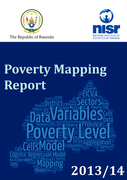
This report complements the previous poverty analysis studies by presenting a series of poverty maps of Rwanda at cell and sector levels, based on data from EICV4 and the 2012 Population and Housing Census. A poverty map is simply a map that shows t
...
he incidence of poverty in different areas of the country. It allows the viewer to appreciate, at a glance, the geographic dimensions of poverty. Apart from their intrinsic interest, poverty maps may be used to help guide the allocation of resources across local agencies or governmental units, in an effort to better target efforts to reach the poor by pinpointing the small areas of most need.
In 2015, the National Institute of Statistics of Rwanda (NISR) published the Rwanda Poverty Profile Report which provided a detailed portrait of the extent and nature of poverty in the country, while in 2016 a Poverty Trends Analysis Report which complements the Profile study by looking at the trends in poverty between 2010/11 and 2013/14 was also published. Both reports were based on information collected by an integrated household living conditions survey (EICV4) undertaken between October 2013 and September 2014.
more
The National AIDS Control Council (NACC) continues to strengthen partnerships with all stakeholders in the response to HIV and AIDS in Kenya. While recognizing that there is no single preventive approach to reverse the spread of HIV, the faith sector comprising of Faith Communities (FCs) a
...
nd Faith-Based Organizations (FBOs) have demonstrated sustained motivation and moral authority with resources and outreach capability to significantly reduce new HIV infections. In addition, they have the power to influence policy changes to address societal, cultural and structural factors that impede individuals’ capacity to prevent HIV infection. According to Kenya Demographic Health Survey (2014), over 97% of the Kenya population was reported to ascribe to religious affiliation.
more
Noncommunicable diseases (NCDs) are responsible for 81% of all deaths in the region of the Americas, of which 34% befall prematurely in people between 30- 69 years old. The burden of theses diseases and their common risk factors jeopardize the health systems to provide adequate management, as well a
...
s to implement customized policies and interventions. The PAHO/WHO STEPwise approach to NCD risk factor surveillance (STEPS) is a simple, sequential, standardized method for collecting, analyzing, and disseminating data on key NCD risk factors in countries in adults from 18 to 69 years old. This survey covers key modifiable risk factors: tobacco use, alcohol use, physical inactivity, and unhealthy diet, as well as key biological risk factors: overweight and obesity, raised blood pressure, raised blood glucose, and abnormal blood lipids. STEPS is a household survey that gathers information on the risk factors through a face-to-face interview (step 1), simple physical measurements (step 2), and collection of urine and blood samples for biochemical analysis (step 3). Every step has a core set of questions, measurements, and expanded sets depending on the countries' needs and interests. It also has optional modules. Implementing STEPS allows the comparability of data within and between countries due to its standardized data collection. It also helps health services plan public health priorities and monitors and evaluates population-wide interventions. It is designed to help countries build and strengthen their capacity to conduct surveillance. STEPS captures 11 of the 25 indicators outlined in the NCD Global Monitoring Framework relating to 7 of the nine global targets.
more
Background
Asthma remains highly prevalent, with more severe symptoms in low-income to middle-income countries (LMICs) compared with high-income countries. Identifying risk factors for severe asthma symptoms can assist with improving outcomes. We aimed to determine the prevalence, severity and ris
...
k factors for asthma in adolescents in an LMIC.
Methods
A cross-sectional survey using the Global Asthma Network written and video questionnaires was conducted in adolescents aged 13 and 14 from randomly selected schools in Durban, South Africa, between May 2019 and June 2021.
Results
A total of 3957 adolescents (51.9% female) were included. The prevalence of lifetime, current and severe asthma was 24.6%, 13.7% and 9.1%, respectively. Of those with current and severe asthma symptoms; 38.9% (n=211/543) and 40.7% (n=147/361) had doctor-diagnosed asthma; of these, 72.0% (n=152/211) and 70.7% (n=104/147), respectively, reported using inhaled medication in the last 12 months. Short-acting beta agonists (80.4%) were more commonly used than inhaled corticosteroids (13.7%). Severe asthma was associated with: fee-paying school quintile (adjusted OR (CI)): 1.78 (1.27 to 2.48), overweight (1.60 (1.15 to 2.22)), exposure to traffic pollution (1.42 (1.11 to 1.82)), tobacco smoking (2.06 (1.15 to 3.68)), rhinoconjunctivitis (3.62 (2.80 to 4.67)) and eczema (2.24 (1.59 to 3.14)), all p<0.01.
Conclusion
Asthma prevalence in this population (13.7%) is higher than the global average (10.4%). Although common, severe asthma symptoms are underdiagnosed and associated with atopy, environmental and lifestyle factors. Equitable access to affordable essential controller inhaled medicines addressing the disproportionate burden of asthma is needed in this setting.
more
Anaemia is a serious global public health problem that particularly affects young children, menstruating adolescent girls and women, and pregnant and postpartum women. It is a condition in which the number of red blood cells or the haemoglobin concentration within them is lower than normal, affectin
...
g the blood’s ability to carry oxygen to the body’s tissues.
To reliably monitor the prevalence of anaemia at a population level, it is vital to measure the haemoglobin concentration in an accurate and precise way. In large-scale surveys, however, haemoglobin is most commonly measured using single-drop capillary blood specimens in point-of-care devices. Emerging evidence suggests that the use of single-drop capillary blood can introduce random and/or systematic errors, which may lead to inaccurate estimates, complicating effective anaemia programming.
This technical brief describes the current best practices for haemoglobin measurement, providing guidance to help plan or implement field surveys to assess anaemia at a population level. Continuing work to review emerging evidence is led by members of the WHO-UNICEF Technical Expert Advisory group on nutrition Monitoring (TEAM).
more
The 2018 NDHS is a national sample survey that provides up-to-date information on demographic and health indicators. The sample was selected using a stratified, two-stage cluster design, with enumeration areas (EAs) as the sampling units for the fir
...
st stage. The second stage was a complete listing of households carried out in each of the 1,400 selected EAs. The target groups were women age 15-49 and men age 15-59
in randomly selected households across Nigeria. A representative sample of approximately 42,000 households was selected for the survey. One-third of the households (14,000) were selected for malaria, anaemia, and genotype testing of children age 6-59 months. Also, in the subsample of households selected
for the men’s survey, one eligible woman in each household was randomly selected for additional questions regarding domestic violence. Specifically, information was collected on fertility levels, marriage, fertility preferences, awareness and use of family planning methods, child feeding practices, nutritional status of women and children, adult and childhood mortality, awareness and attitudes regarding
HIV/AIDS, and female genital mutilation. The survey also assessed the nutritional status (according to weight and height measurements) of women and children in these households. In addition to presenting national estimates, the report provides estimates of key indicators for both rural and urban areas, the country’s six geopolitical zones and 36 states, and the Federal Capital Territory (FCT).
more


Bangladesh Health Facility Survey 2014
recommended
Final Report
Biobehavioural Survey Guidelines - For Populations at risk for HIV
A. Abdul-Quader; M. Berry; T. Bingham; J. Burnett; et al.
Centers for Diseases Control and Prevention; UNAIDS; World Health Organization; et al.
(2017)
C_WHO
Global HIV Strategic Information Working Group


This report presents the findings of the Estimating the Size of Populations through a Household Survey (ESPHS) study that took place in 2011. The study utilized a single household survey to estimate
...
the size of several key populations, including sex workers, men who have sex with men (MSM), injecting drug users (IDU), and clients of sex workers. These populations include several groups outlined in the National Strategic Plan for HIV and AIDS as most at risk for HIV infection, specifically sex workers and MSM.
more
The survey is representative of the Union Territory, its states and regions and urban and rural areas. It was conducted in all the districts and in 296 of the 330 townships of Myanmar. A total of 13,730 households were interviewed. It collects data
...
on the occupations of people, how much income they earn, and how they use this to meet the food, housing, health, education and other needs of their families. The main focus of the survey is to produce estimates of poverty and living conditions, to provide core data inputs into the System of National Accounts and the Consumer Price Index and to support monitoring of the Sustainable Development Goals.
more
Monitoring HIV impact using population-based surveys
UNAIDS (Joint United Nations Programme on HIVAIDS); World Health Organization (WHO)
UNAIDS (Joint United Nations Programme on HIVAIDS); World Health Organization (WHO)
(2015)
C2
UNAIDS/WHO Working group
HIV/AIDS and STI surveillance 2015 / Reference
The 2015-16 MDHS is a national sample survey that provides up-to-date information on fertility levels; marriage; fertility preferences; awareness and use of family planning methods; child feeding practices; nutrition; adult and childhood mortality;
...
awareness and attitudes regarding HIV/AIDS; women’s empowerment; and domestic violence. The target groups were women and men age 15-49 residing in randomly selected households across the country. In addition to national estimates, the report provides estimates of key indicators for both urban and rural areas in Myanmar and also for the 15 states and regions.
more
The government of Rwanda conducted the 2010 Rwanda Demographic and Health Survey (RDHS) to gather up-to-date information for monitoring progress on healthcare programs and policies in Rwanda, including the Economic Development and Poverty Reduction
...
Strategy (EDPRS), the Millennium Development Goals (MDGs),
and Vision 2020. The 2010 RDHS is a follow-up to the 1992, 2000, 2005, and 2007-08 RDHS surveys. Each survey provides data on background characteristics of the respondents, demographic and health indicators, household health expenditures, and domestic violence. The target groups in these surveys were women age 15-49 and men age 15-59
who were randomly selected from households across the country. Information about children age 5 and under also was collected, including the weight and height of the children.
more

Achieving Quality Health Care in Bangladesh:
2014 Bangladesh Health Facility Survey (BHFS)
Census Report Volume 4-C
The 2014 Myanmar Census provided the opportunity to measure maternal mortality. The questions on deaths in households during the twelve months prior to the Census were included in the questionnaire, as well as questions necessary to estimate maternal mortality indicator ... s. more
The 2014 Myanmar Census provided the opportunity to measure maternal mortality. The questions on deaths in households during the twelve months prior to the Census were included in the questionnaire, as well as questions necessary to estimate maternal mortality indicator ... s. more

Cross-sectional Survey to Assess Prevalence of Disability and Access to Services in Albay Province, The Philippines
Hodge, M., Bolinas, A., Jaucian, E., et al.
Disability, CBR & Inclusive Development Journal (DCIDJ)
(2017)
CC
In this article a cluster randomized cross-sectional survey, conducted in Albay Province in the Philippines in April 2016, was used to assess the prevalence of disability and access to support services. This was done with the purpose of generating
...
representative data for local programme development. A cross-sectional survey was carried out with the WG/UNICEF methodology to examine the prevalence of disabilities, and the accessibility and coverage of relevant services. The aim is for this information to be used for public policy formulation at all levels, as well as to improve communication and advocacy on disabilities.
more

DEMOGRAPHIC RESEARCH, VOLUME 36, ARTICLE 37, PAGES 1081-1108; PUBLISHED 5 APRIL 2017; http://www.demographic-research.org/Volumes/Vol36/37/; DOI: 10.4054/DemRes.2017.36.37


Please download the district fact sheets directly for each state/union territory at the website:
http://dhsprogram.com/publications/publication-OF31-Other-Fact-Sheets.cfm
Monitoring the situation of children and women
The FCHV program focuses on family planning, maternal/neonatal and child health.
Vitamin A distribution program. The activity of FCHV is contributing to Nepal’s goal of reducing the total fertility rate and under five mortality and maternal mortality rates.
The 2013 RMIS is a nationally representative, household-based survey that provides data on malaria indicators, which are used to assess the progress of a malaria control program. The primary objective of the 2013 Rwanda Malaria Indicator
...
Survey (2013 RMIS) was to provide up-to date information on the prevention of malaria to policymakers, planners, and researchers.
more
The primary objectives of the 2017 TMIS are to measure the level of ownership and use of mosquito nets; assess coverage of intermittent preventive treatment for pregnant women; identify treatment practices, including the use of specific antimalarial medications to treat malaria among c
...
hildren age 6-59 months; measure the prevalence of malaria and anemia among children age 6-59 months; and assess knowledge, attitudes, and practices among adults with malaria.
This table provides estimates of key indicators for the country as a whole and for each of the 31 geographic regions in Tanzania. A comprehensive analysis of the 2017 TMIS data will be presented in a final report. more
This table provides estimates of key indicators for the country as a whole and for each of the 31 geographic regions in Tanzania. A comprehensive analysis of the 2017 TMIS data will be presented in a final report. more
Census Report Volume 4-L
Myanmar’s 2014 Census enumerated 4.5 million people aged 60 and over and by 2050 Myanmar is projected to have 13 million people in this age group.
Myanmar’s population has aged between 1973 and 2014; while the ... total population increased at an annual rate of 1.4 per cent, the population aged 60 and over increased annually by 2.4 per cent. Within the older population, the oldest age group, those over 80 years old, has been growing much faster than those aged 60-79. In 2014, the urban population was slightly older than the rural population. This is the result of a more rapid decline in urban fertility, offset by net migration to urban areas by youth and young adults. more
Myanmar’s 2014 Census enumerated 4.5 million people aged 60 and over and by 2050 Myanmar is projected to have 13 million people in this age group.
Myanmar’s population has aged between 1973 and 2014; while the ... total population increased at an annual rate of 1.4 per cent, the population aged 60 and over increased annually by 2.4 per cent. Within the older population, the oldest age group, those over 80 years old, has been growing much faster than those aged 60-79. In 2014, the urban population was slightly older than the rural population. This is the result of a more rapid decline in urban fertility, offset by net migration to urban areas by youth and young adults. more
Annual Household Survey 2015/16 is the forth survey of its kind. These annual surveys are conducted to provide estimations of some major socio-economic indicators on annual basis which would not be
...
possible with other periodic surveys like Nepal Labour Force Surveys (NLSS) and Nepal Living Standard Surveys (NLSS) which are undertaken at longer intervals. The survey basically aims to provide estimates of consumption by sex, urban-rural area and by consumption quintiles/deciles. Although the major thrust of Annual Household Survey is on consumption and employment situations, other sectors like education, housing and housing facilities and demographic characteristics are also included. As this year NLSS survey is conducted so, this survey does not contain information on employment situation as in previous annual household surveys.
more
Population size estimate of people who inject drugs (PWID) in the Republic of Kazakhstan
Ganina L.Yu; Yelizaryeva A. V.; Saparbekov M. K.; et al.
Ministry of Health and Social Development of the Republic of Kazakhstan Republican Center for AIDS Prevention and Control
(2016)
C2
Report
Almaty, 2016
Authors: Ganina L.Yu., head of epidemiology department, Republican AIDS Center (RAC), Yelizaryeva A. V., epidemiologist, RAC, Kaspirova А. А., head of epidemiology department, Aktobe Oblast AIDS center, IvakinV.Yu., deputy regional director for strategic information, ICA
...
P, KryukovaV.А., Strategic Information Specialist for Kazakhstan, ICAP, Abishev A. T., acting director general, RAC.
Edited by Saparbekov M. K., Doctor of Medical Science, Professor, Head of the Department of Epidemiology and Hygiene Faculty of Medicine – GSPH KazNU n.a. Al-Farabi, Almaty c.
more
An exploratory survey measuring stigma and discrimination experienced by people living with HIV/AIDS in South Africa: The People Living with HIV Stigma Index
M. M.L. dos Santos; P. Kruger; S. E. Mellors; et al.
BioMed Central; PMC Public Health; PubMed.gov
(2014)
CC
dos Santos et al. BMC Public Health 2014, 14:80 http://www.biomedcentral.com/1471-2458/14/80
This survey is part of a series of eight country surveys conducted in the context of the People that Deliver Initiative (peoplethatdeliver.org). This global initiative, which brings together the world’s largest organizations, aims to improve healt
...
h services performance through the professionalization of logistics managers.
more

The following protocol has been designed to investigate the extent of infection, as determined by seropositivity in the general population, in any country in which COVID-19 virus infection has been reported. Each country may need to tailor some aspe
...
cts of this protocol to align with public health, laboratory and clinical systems, according to capacity, availability of resources and cultural appropriateness. However, using a standardized protocol such as this one below, epidemiological exposure data and biological samples can be systematically collected and shared rapidly in a format that can be easily aggregated, tabulated and analyzed across many different settings globally for timely estimates of COVID-19 virus infection severity and attack rates, as well as to inform public health responses and policy decisions. This is particularly important in the context of a novel respiratory pathogen, such as COVID-19 virus
more
The results of a WHO survey conducted to assess the impact of the COVID-19 pandemic on up to 25 essential health services in countries show disruptions of essential health services in nearly all countries, and more so in lower-income than higher-inc
...
ome countries. The great majority of service disruptions were partial, which was defined as a change of 5–50% in service provision or use.
more
Final Survey Report
Nigeria Malaria Indicator Survey (NMIS) - Key Indicators 2021

Biobehavioural Survey Guidelines
A. Abdul-Quader, M. Berry, T. Bingham; et al.
UNAIDS; World Health Organization; fhi360; et al.
(2017)
C_WHO
Global HIV Strategic Information Working Group
For Populations At Risk For HIV

This Key Indicators report presents selected findings of the 2019 EMDHS. A comprehensive analysis of the data will be publishedin a final report in 2019.T he primary objective of the 2019 EMDHS project is to provide up-to-date estimates of key demographic and health indicators.
Preliminary overview of refugees and migrants self-reported impact of COVID-19
The study surveyed over 30,000 refugees and migrants living in 170 countries. Many of the respondents had fled war or dire economic conditions in their home country only to be faced with the additional challenges posed b
...
y COVID-19. Travel restrictions including border closures, suspension of resettlement travel, and last-minute deportation left many stranded or forced to stay in cramped, makeshift shelters or detention centers. Amid these uncertain, precarious conditions, many migrants described either a lack of access to health services or a fear of seeking them out — even if they were experiencing COVID-19 symptoms.
more
The 2019 SLDHS is a national sample survey that provides up-to-date information on demographic and health indicators. The sample was selected using a stratified, two-stage cluster design, with enumeration areas (EAs) as the sampling units for the fi
...
rst stage. The second stage was a complete listing of households carried out in each of the 578 selected EAs. The target groups were women age 15-49 and men age 15-59 in
randomly selected households across the country. A representative sample of approximately 13,872 households was selected for the survey. Half of the households (6,936) were selected for biomarker and men’s interview. The men’s survey was conducted in half (50%) of the sample households, and all men age 15-59 in these households were included. In this subsample, one eligible woman in each household was randomly selected to be asked additional questions about domestic violence.
more
The winter season is approaching fast, while older people (OP) and people with disabilities (PwD) have already been living in the harsh environment of a full-scale war for eight months, with their basic needs and human rights at risk of being neglected and violated for eight years of ongoing war.
T
...
he recent brutal attacks on the critical infrastructure facilities such as power plants and power substations in eight regions of Ukraine, including Kyiv, show the alarming prediction that this winter is going to be challenging for the affected areas, especially for the vulnerable people residing there
more
Tanzania Demographic and Health Survey
National Bureau of Statistics
inistry of Health and Social Welfare (MoHSW), Tanzania Food and Nutrition Centre (TFNC), et al.
(2011)
C1
