
Filter
2751
Text search:
personal
hygiene
Featured
383
714
Language
Document type
1379
496
387
170
114
65
65
49
9
8
5
1
1
Countries
115
99
98
84
67
63
60
55
54
53
52
52
48
47
44
44
39
37
35
32
29
27
27
26
24
24
23
22
22
21
21
20
19
19
15
15
15
15
14
14
13
12
11
11
11
11
10
10
10
10
9
9
9
9
9
8
8
8
7
7
7
6
5
5
5
5
5
5
5
5
5
5
5
5
5
4
4
4
4
4
4
4
4
4
3
3
3
3
3
3
3
3
3
3
2
2
2
2
2
2
2
2
2
2
2
2
2
2
1
1
1
1
1
1
1
1
1
1
1
1
1
1
1
1
1
1
1
1
1
1
1
1
1
Authors & Publishers
Publication Years
Category
970
211
166
140
125
69
25
5
Toolboxes
534
201
136
130
126
103
99
98
92
78
76
75
62
55
39
36
27
20
16
16
9
5
4
4
1
1
Fully functioning water, sanitation, hygiene (WASH) and health care waste management services are a critical aspect of infection prevention and control (IPC) practices, and ensuring patient safety and quality of care. Such services are also essentia
...
Updated September 2021.
Provision of water and sanitation and good hygiene practices play an essential role in protecting human health during all disease outbreaks, including during Ebola Virus Disease (EVD) outbreaks. This question and answer do
...
This document provides an overview of the evidence of nutrition gains that can be achieved with improved WASH, a description of key WASH practices, and practical knowledge and guidance on how to integrate WASH into nutrition programmes, including important monitoring and evaluation (M&E) aspects. Th
...

World Vision’s Gender Equality and Social Inclusion (GESI) approach actively strives to examine, question, and change harmful social norms and power imbalances as a means of reaching gender equality and social inclusion objectives in a programme area.
This reference guide is designed to help WASH
...
Department Of Medicine AIIMS New Delhi
30.03.2020
Video Tutorial: How to put on and remove protective equipment properly
Funded by CBM: www.cbm.org
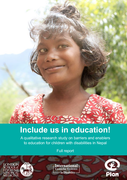
A 2013 Plan study across 30 countries found that children with disabilities were on average 10 times less likely to go to school than children without disabilities. This report presents the findings of a follow-up second phase to the research with a qualitative study on barriers and enablers to educ
...
This document provides guidance on the implementation of the shielding approach in urban areas in LICs and crisis-affected regions. It is intended for the community itself, national and local governance institutions, and humanitarian and development actors operating in the country.
his manual is for people who have had no formal training in counselling but wish to learn the necessary components to establishing an effective counselling relationship. It will be useful for anyone who is involved in counselling people with a mental health problem.
h
...
Analysis of survey data looking at 25 years of progress in and the future challenges for tropical medicine and global health
A Program To Improve The Care For Patients With Common Mental Disorders In Primary Health Care.
The essence of the MANAS model is to shift mental health care from mental health specialists to primarycare doctors and lay HCs (someone similar to other more widely available
...
The Healthy Activity Program manual aims at providing counsellors like you with information about counselling patients with moderate to severe Depression in primary care settings.
Funded by CBM: www.cbm.org
Evidence from Low and Middle Income Countries
Global and regional estimates of violence against women
he report presents the first global systematic review of scientific data on the prevalence of two forms of violence against women: violence by an intimate partner (intimate partner violence) and sexual violence by someone other than a partner
...
Caregiver: Standard precautions
recommended
Issue Brief 28: Cargiver Toolbox Part 2
A collection of important documents from the category "Standard precautions", including hand hygiene, waste management, infection and prevention control (IPC) measures.
This guidebook for people in school settings is intended to offer strategies for use and adaptation with children and families to re-establish routines of hygiene with basic access to water and sanitation services through an approach that visibly sh
...

This selected material from Hesperian's Community Guide to Environmental Health offers 48 pages of information on basic sanitation and hygiene, including instructions on building safe, affordable, environmentally-friendly sanitation systems, as well
...
This page describes ten immediate water, sanitation and hygiene (WASH) actions that low-resource healthcare facilities can undertake with limited budget in the near-term (0-3 months) to prepare for and address COVID-19. On the second page, WHO and U
...
The objectives of the scheme is to promote cleanliness, hygiene and infection control practices in public health care facilities, to incentivize and recognize such public healthcare facilities that show exemplary performance in adhering to standard
...
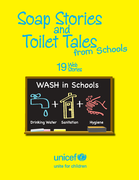
Water, sanitation and hygiene education in schools – WASH in Schools – provides safe drinking water, improves sanitation facilities and promotes lifelong health. WASH in Schools enhances the well-being of children and their families, and paves t
...
The compendium provides guidance on low-cost handwashing facilities that can be widely used in low and middle-income countries. We hope that this can be shared extensively as governments and agencies tackle the crisis in low and middle-income countries where handwashing facilities are urgently neede
...
A guide for developing a hygiene promotion program to increase handwashing with soap
This document provides advice on personal protective measures on publictransport(e.g. bus, metro, train, commuter boats).
Infection preventions
Hygiene
The American Journal of Tropical Medicine and Hygiene Volume 106: Issue 1 p.12-14.he piece highlights a body of research that suggests tiny plastic particles could disrupt immune and endocrine systems, damage organs, and cause other health probl
...
This technical brief presents the current options for safe storage and point of use water treatment. It is intended to help field staff working in a variety of locations to decide upon the most appropriate course of action for providing safe water for the communities in which they work. The effectiv
...
A field guide for accelerating and sustaining open defecation free communities through a Community-Led Total Sanitation approach
Follow-up MANDONA (FUM) is an action-oriented approach for accelerating community-wide sanitation and hygiene behaviour
...
This document highlights the key aspects of safe health-care waste management in order to guide policy-makers, practitioners and facility managers to improve such services in health-care facilities. It is based on the comprehensive WHO handbook Safe management of wastes from health-care activities (
...
N95 or equivalent respirators are single-use personal protective equipment (PPE) designed for use by health workers that provide direct care to patients with diseases transmitted by aerosols or during aerosol generating procedures (AGP) for patients
...
24 Nov. 2021; This guidance provides considerations and a series of options that can be used to inform country strategies to minimise risk associated with shortages of personal protective equipment (PPE).
Re-use and reprocessing of single use PPE m
...
GUIDE PRATIQUE À L’INTENTION DES PROGRAMMES DE LUTTE CONTRE LES MALADIES TROPICALES NÉGLIGÉES
This toolkit provides step-by-step guidance to NTD programme managers and partners on how to engage and work collaboratively with the WASH community to improve delivery of water, sanitation and
...
At its 48th session of Codex Committee on Food Hygiene (CCFH), the Committee noted the importance of water quality and safety in food production and processing. CCFH requested the Food and Agriculture Organization of the United Nations
(FAO) and th
...
Esta nota de orientación elaborada por el UNICEF tiene por objeto ayudar al personal de agua, saneamiento e higiene en su preparación y respuesta a la actual pandemia de COVID-19. Proporciona una visión general de la prevención y el control de l
...
El objetivo de esta guía es brindar recomendaciones prácticas al personal de salud que se hace cargo de las actividades de preparación y respuesta a las enfermedades contagiosas para asegurar que se mantenga el acceso a servicios de aborto seguro
...
The Water and Sanitation for Health Facility Improvement Tool (WASH FIT) presents a framework and acts as a guide to support multisectoral action to improve water, sanitation and hygiene (WASH) in health care. Central to the WASH FIT methodology is
...
Civil Society Organisations’ contribution towards community engagement to access and demand health services and encourage communities to practice appropriate health-seeking behaviour in Mon and Chin States
The following report is a study of 14 villages under the Collective Voices project (Nov ...
The following report is a study of 14 villages under the Collective Voices project (Nov ...
Infection prevention and control (IPC) in a CTC/ CTU IPC are all practical measures taken in the healthcare facility to prevent harm caused by infections to patients, health workers and communities.
The main goal of IPC in the cholera response is to
• To reduce transmission of health care-as
...
Interim guidance 2 February 2021 . Available in Arabic, Chinese, English, French, Ukranian, Russian
Health workers are at the front line of the COVID-19 outbreak response and as such are exposed to different hazards that put them at risk. Occupational hazards include exposure to SARS-CoV-2 and othe
...
In: Beyond construction : use by all : a collection of case studies from sanitation and hygiene promotion practitioners in South Asia. Chapter 2
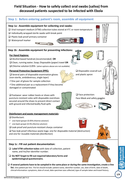
Steps on how to safely collect oral swabs (saliva) from deceased patients suspected to be infected with Ebola: before entering patient’s room, how to put on and remove personal protective equipment (PPE), how to collect oral swab from deceased pat
...
Globally, environmental pollution and other environmental risks cause 24% of all deaths, and these deaths are largely preventable. A shift towards policies and actions that minimize risks to health and promote health and sustainable personal and soc
...
This guidance note developed by UNICEF helps WASH staff in their preparedness and response to the current COVID-19 pandemic. It provides an overview of Infection Prevention and Control (IPC) and its intersection with water, sanitation and hygiene (W
...
This guidance note developed by UNICEF is intended to help WASH staff in their preparedness and response to the current COVID-19 pandemic. It provides an overview of Infection Prevention and Control (IPC) and its intersection with water, sanitation and hyg
...
This guidance note is for UNICEF Regional and Country Office WASH staff to help them in their preparedness and response to the current COVID-19 global pandemic. It provides an overview of Infection Prevention and Control (IPC) and its intersection with water, sanitation and
...
During fresh fruit and vegetables (FFV) production, water is used for a variety of purposes. Even the water was conventionally treated and disinfected, it may still potentially contain human pathogens, albeit at low concentrations. A risk assessment, appropriate to the national or local production c
...
Those who clean are the first line of defense against health care-associated infections (HAIs), and support efforts to reduce antimicrobial resistance (AMR).
Strengthening the training of this important group can contribute to resolving many of today’s public health challenges. This is importan
...
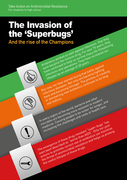
Take Action on Antimicrobial Resistance. For students in high school.
This AMR booklet is designed to inform high school students on AMR and how they can prevent it on a personal level. It is a brief document that has the potential to capture their
...
This brief focuses specifically on the Grand Nord (Great North): the Beni and Lubero territories of northern North Kivu that are the epicentre of the outbreak. Further participatory enquiry should be undertaken with the affected populations, but given ongoing transmission, conveying key consideratio
...
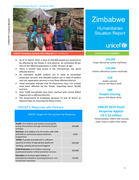
As of 21 March 2019, a total of 250,000 people are reported to be affected by the floods in nine districts. An estimated 48 per cent of the affected population is under 18 years of age.
There is limited road access in the Chimanimani, the worst affected district.
An estimated 60,000 children are
...
(15 April 2020, BST 17:00 hours)
Actions Taken from Bangladesh Red Crescent Society (BDRCS):
9292 Number of staff and RCY/ CPP/ Camp/ Community volunteers being mobilized throughout the country.
10116 Set of PPE provided to individuals working on COVID-19 response.
130,851 Number of Total Peop
...
These guidelines outline the minimum operational guidance for infection prevention and control (IPC) in ambulances transferring suspected or confirmed COVID-19 patients. Ambulance staff should be trained in the procedures outlined here as part of their induction and prior to starting work. They are
...
COVID-19: occupational health and safety for health workers: interim guidance, Interim guidance 2 February 2021
Health workers are at the front line of the COVID-19 outbreak response and as such are exposed to different hazards that put them at risk. Occupational hazards include exposure to SARS-C
...
Childhood Respiratory Diseases & the Environment learning objectives
•To understand how the respiratory tract is affected by the environment
•To describe respiratory diseases linked to the environment
•To list one population-level intervention and one
...

Cholera is a diarrhoeal disease that is usually contracted when drinking water contaminated with Vibrio cholerae bacteria. The fight against this disease requires a multidisciplinary approach that combines a water, hygiene and sanitation (WaSH) resp
...
The COPSI project is divided into three phases: the first in which the intervention is developed, the second in which researchers evaluate the intervention in a randomised controlled trial, and the final one in which the results of the trial are analysed and disseminated.
A COPSI resource kit has
...

Novel coronavirus will disproportionately impact world’s 70 million displaced people
Report recommends stopping asylum seeker deportations, prioritising hygiene and refugee camp decongestion, better communication
Displaced people must be
...
This manual is about the basic nursing care - desinfection, cleaning, sterilization, nursing documentation, hygiene, surgical care and preparation and much more. This booklet has been prepared by the NED Volunteers Foundation.
WASH and Health working together: a ‘how-to’ guide for neglected tropical disease programmes
recommended
2nd edition. This toolkit provides step-by-step guidance to NTD programme managers and partners on how to engage and work collaboratively with the WASH community to improve delivery of water, sanitation and hygiene services to underserved population
...
Guidance Note. The recommended actions are presented under the different components (water supply, hygiene and hand washing, disinfection, solid waste management, latrine and wastewater management, and dead body management) of the defined Ebola Care
...

Beitrag aus dem Handbuch "Biologische Gefahren II - Entscheidungshilfen zu medizinisch angemessenen Vorgehensweisen in einer B-Gefahrenlage".
Das Kompendium setzt sich mit der medizinischen Versorgung von Personen auseinander, die biowaffenfähigen Erregern vermutlich oder gesichert ausgesetzt war
...
The Standard consists of nine key inclusion standards, and seven sets of sector-specific inclusion standards for protection – water, sanitation and hygiene, food security and livelihoods, nutrition, shelter, settlement and household items, health
...

The major areas of focus for the plan will be:
- Social mobilization and community empowerment (health promotion & education for disease prevention);
- Promotion of access to safe water, good sanitation and hygiene;
- Surveillance an ...
- Social mobilization and community empowerment (health promotion & education for disease prevention);
- Promotion of access to safe water, good sanitation and hygiene;
- Surveillance an ...
A WHO-ITU Standard.
Nearly 50% of people aged 12-35 years – or 1.1 billion young people – are at risk of hearing loss due to prolonged and excessive exposure to loud sounds, including music they listen to through personal audio devices. Ahead o
...
The WHO/UNICEF JMP report, WASH in Health Care Facilities, is the first comprehensive global assessment of water, sanitation and hygiene (WASH) in health care facilities. It also finds that 1 in 5 health care facilities has no sanitation service*, i
...
Infectious diseases are constantly in transition. New diseases develop, known dis-eases become widespread or reemerge, and occasionally a disease is eradicated.Infectious diseases such as HIV, tuberculosis, and cholera are significant causes ofillness and death in many parts of the world. Health car
...
Many children will not be ‘safe to learn at home’: As of April 2020, 91 percent of the world’s students have been affected by school closures due to COVID-19. While schools are often places where violence occurs, they also offer a comparatively protective and nurturing space for many children.
...
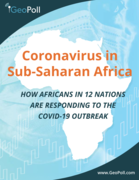
The spread of COVID-19 poses a challenge for emerging markets such as those in Africa and Latin America. While governments around the world are suffering from a shortage of ventilators, hospital beds, and personal protective equipment, availability
...
The WHO COVID-19 Essential Supplies Forecasting Tool (COVID-19-ESFT) is meant to help countries forecast essential supplies for their COVID-19 response including personal protective equipment (e.g., masks and gloves), biomedical equipment for case m
...
This research was conducted in March and April 2020 to explore children and young people’s reflections and perceptions on the COVID-19 outbreak. This study was organised in response to the young people’s continued child activism in the face of personal
...
The checklist is aligned with, and builds upon, existing COVID-19-related WHO guidelines and is structured around protective measures related to: 1) hand hygiene and respiratory etiquette; 2) physical distancing; 3) use of masks in schools; 4) envir
...
Interim guidance 2 February 2021 . Available in Arabic, Chinese, English, French, Ukranian, Russian
Health workers are at the front line of the COVID-19 outbreak response and as such are exposed to different hazards that put them at risk. Occupational hazards include exposure to SARS-CoV-2 and othe
...
La presente publicación describe la evidencia científica disponible sobre la efectividad del uso de mascarillas o respiradores en la prevención y control de infecciones respiratorias virales incluido COVID-19 a nivel comunitario y hospitalario. Se identificaron 778 estudios publicados hasta abril
...
The Lancet Global Health Volume 9, ISSUE 3, e361-e365, March 01, 2021
The public health community has tried for decades to show, through evidence-based research, that safe water, sanitation, and hygiene (WASH) and clean cooking fuels that reduce ho
...
Introduction: Considering the global prevalence of coronavirus disease 2019 (COVID-19), a vaccine is being developed to control the disease as a complementary solution to hygiene measures—and better, in social terms, than social distancing. Given
...

Trachoma causes more vision loss and blindness than any other infection in the world. This disease is caused by Chlamydia trachomatis bacteria. Other variants or strains of these bacteria can cause a sexually transmitted infection (chlamydia) and disease in lymph nodes.
This is photomicrograph
...
The European Union Agency for Fundamental Rights (FRA) collected evidence through field missions and from other sources reporting on the situation in March, May and October 2022.
In parallel, it launched a large-scale online survey of those fleeing Ukraine. This aimed to gather
...
To survive and thrive, children and adolescents need good health, adequate nutrition, security, safety and a supportive clean environment, opportunities for early learning and education, responsive relationships and connectedness, and opportunities for per
...
Asthma is the most common chronic respiratory disease among school-going adolescents worldwide. However, the burden of severe asthma is highest in Sub-Saharan Africa. This study aimed to explore teachers’ perceptions of asthma care across six African countries. We conducted focus group discussions
...
By December of 2019, an estimated 5.3 million Venezuelans would have left the country, migrating in search of opportunities, health services and an overall search to improve the socio-economic conditions of themselves and their families. This is the largest migration in the history of the Americas.
...
When Ebola hit Liberia in 2014, an atmosphere of fear and confusion contributed to the spread of the virus by making people unwilling to come forward for testing and treatment. Oxfam trained and equipped community health volunteers to go door-to-door, giving information and advice, encouraging anyon
...
The skin of a patient is the first and most visible structure of the body that any health-care worker encounters during the course of an examination. To the patient, it is also highly visible, and any disease that affects it is noticeable and will have an impact on
...

Advances have been made through expanded interventions delivered through five public health approaches: innovative and intensified disease management; preventive chemotherapy; vector ecology and management; veterinary public health services; and the provision of safe water, sanitation and
...

Poor quality health services are holding back progress on improving health in countries at all income levels.
Today, inaccurate diagnosis, medication errors, inappropriate or unnecessary treatment, inadequate or unsafe clinical facilities or practices, or providers who lack adequate training an ...
Today, inaccurate diagnosis, medication errors, inappropriate or unnecessary treatment, inadequate or unsafe clinical facilities or practices, or providers who lack adequate training an ...
The magnitude and complexity of these mental health conditions caused by prolonged and extensive trauma requires a diagnosis fitting the unique context of the Syrian conflict. Over half a million people have been killed since the beginning of the conflict in 2011, and more than 6.4 million are inter
...
