
Filter
976
Text search:
millennium
agenda
Featured
55
356
Language
Document type
782
110
30
18
17
7
3
3
2
2
2
Countries
43
39
39
37
36
36
31
29
26
24
24
24
24
22
20
19
18
16
14
14
14
12
10
10
10
9
8
7
7
6
5
5
4
4
4
4
3
3
3
3
3
3
3
3
3
2
2
2
2
2
2
2
2
2
2
2
2
1
1
1
1
1
1
1
1
1
1
1
1
1
1
1
Authors & Publishers
Publication Years
Category
483
56
55
37
19
9
2
2
Toolboxes
92
69
51
45
41
35
32
20
16
11
11
10
8
8
6
5
4
3
1
1
1
1
Kenya Policy: 2014-2030
recommended
Towards attaining the highest standard Health.

Extraced from the full version of WDI 2016
Each year, about 210 million women become pregnant and about 140 million newborn babies are delivered. The sheer scale of maternal health issues makes maternal well being and survival vital concerns. A decade after The Lancet published a Series on maternal survival, a new Series of six papers brings
...

Value in Health Regional Issues 4 C (2014) 37-40

“towards quality health and social welfare services”
CBM and the Global Campaign for Education 2014

Children with disabilities in South Africa: The hidden reality is part of a multiple-country study conducted by ACPF. The study seeks to analyse how cultural, social, physical and other societal barriers prevent children with disabilities from enjoying their constitutional rights to equality, freedo
...
This statement presents the 2018 definition of skilled health personnel providing care during childbirth (also widely known as a “skilled birth attendants” or SBAs). It results from the recent review and revision of the 2004 joint statement by WHO, FIGO and ICM – Making pregnancy safe: the cri
...


To understand the patterns of Rwanda’s achievements in health development, it is important to explore how Rwanda addresses the Social Determinants of Health (SDH) particularly those related to routine conditions in which people are born, live and work. It is in this particular context that a case
...

The Road Map outlines various strategies which will guide policy makers, development partners, training institutions and service providers in supporting Government efforts towards the attainment of MDGs related to maternal and neonatal health.
National Tuberculosis Control Program; Mycobacterial Disease Control National AIDS/STD Program
World Health Organization Department of Reproductive Health and Research
Brocher Foundation, Hermance, Geneva, Switzerland, 27–29 April 2016
This situation analysis has gathered information about the current state of AMR, contributing factors and antimicrobial use in Zimbabwe from the human, animal, agricultural and environmental sectors. Data has been gathered from different sectors such as the general public, academia, the Ministry of
...
Confernece Report 15-16 April 2013 - Dublin, Ireland
Social Determinants of Health Discussion Paper 1 (Debates). This paper was prepared for the launch of the Commission on Social Determinants of Health (CSDH) by its secretariat based at WHO in Geneva. It was discussed by the Commissioners and then revised considering their input.
Equity and Quality in Health: a People's Right
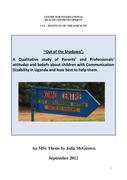
Dissertation submitted in part fulfilment of the requirements for a Masters degree at the Centre for International Health and Development (CIHD) at University College London (UCL) Institute of Child Health (ICH)
The user has given permission for the uploaded document to be reproduced and made publi
...
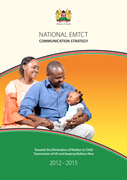
Towards the Elimination of Mother-to-Child Transmission of HIV and keeping mothers Alive. 2012-2015
The Thinking Health manual outlines an evidence-based approach describing how community health workers can reduce prenatal depression through evidence-based cognitive-behavioural techniques recommended by the mhGAP programme.
This manual is the first volume of WHO’s new series on low-intensity p
...
Lancet Glob Health 2015; 3: e396–409. Open Access

Early Essential Newborn Care (EENC) Module 2.

Community Health Workers in Sub Saharan Africa
recommended
A booklet on how CHWs were addressing eye health across Africa based on desk research and a survey in 23 countries
This manual aims to provide practical guidance to field workers in order to maximise the nutritional impact of food security & livelihoods (FSL) interventions. This requires the systematic use of a ‘nutrition lens’ at each step of the project cycle and a close collaboration between sectors.

Acclerating attainment of universal health coverage and bridging the access inequity gap
Workshop on PHC Revitalisation in Nepal, April 5-6, 2010
Monitoring the situation of children and women
The SAARC Member States have more than an estimated 2.0 million TB cases accounting for close to one-third of the total cases of TB in the world. India alone had almost one-fifth of the global disease burden due to TB. India, Pakistan and Bangladesh followed by Afghanistan are the major contributors
...
