
Filter
3326
Text search:
middle-income
countries
Featured
266
705
Language
Document type
1591
929
367
136
111
72
38
26
23
14
7
5
2
1
1
Countries
272
92
75
66
65
62
52
49
47
39
39
37
37
37
36
36
33
33
32
32
29
28
28
26
24
23
22
22
20
19
19
19
18
18
17
16
15
13
13
13
13
12
12
11
10
10
10
10
10
9
9
9
9
7
7
7
7
6
6
6
6
6
5
5
5
5
5
5
5
5
5
5
4
4
4
4
4
4
3
3
3
3
3
3
3
3
3
2
2
2
2
2
2
2
2
2
2
2
2
1
1
1
1
1
1
1
1
1
1
1
1
1
1
1
1
1
1
1
1
1
1
1
1
1
1
Authors & Publishers
Publication Years
Category
878
317
296
199
116
38
29
3
2
Toolboxes
372
364
275
197
183
175
159
146
133
119
98
48
45
40
34
34
20
13
12
6
3
2
2
2
1
HIV/AIDS Programme
Policy Brief
A Systematic Review and Meta-analysis
Clinical Infectious Diseases® 2016;62(12):1586–94
The Lancet Global Health Published:May 12, 2020DOI:https://doi.org/10.1016/S2214-109X(20)30229-1
This document presents an evidence-informed Checklist for implementing rural pathways to train and support the rural
health workforce in low and middle income
...

Front. Public Health, 30 April 2021 | https://doi.org/10.3389/fpubh.2021.628744
It explains the importance of faecal sludge management in urban areas in which many people rely on on-site and decentralized sanitation facilities and emphasizes the place of treatment in the overall sanitation service chain. It defines terms used throughout the book, explains why faecal sludge and
...
Childhood immunisation is one of the most cost-effective health interventions. However, despite its known value, global access to vaccines remains far from complete. Although supply-side constraints lead to inadequate vaccine coverage in many health systems, there is no comprehensive analysis of the
...
Background: Primary health care (PHC) is a driving force for advancing towards universal health coverage (UHC). PHC-oriented health systems bring enormous benefits but require substantial financial investments. Here, we aim to present measures for PHC investments and project the associated resource
...
Background: Asthma and chronic obstructive pulmonary disease (COPD) cause a considerable burden of morbidity
and mortality in low-income and middle-income
...
Demographic and epidemiological transitions are changing the age structure of the population and the most common diseases. Non-communicable respiratory diseases are an increasing problem at both ends of the age range in low-income and middle-
...
The aim of this brief is to ensure that the COVID-19 pandemic does not disrupt the supply of and demand generation for condoms. Sexual relations may be transformed in the new context of the pandemic, but they have not stopped. While access to male and female condoms has been critical in the global r
...
Researchers focused on mental health of conflict-affected children are increasingly interested in the concept of resilience. Knowledge on resilience may assist in developing interventions aimed at improving positive outcomes or reducing negative outcomes, termed promotive or protective interventions
...
The objective of this report is to assess the situational landscape during mid-May 2020 surrounding the value chain of the production and distribution of generic antiretroviral medicines in low- and-middle-
...

Front. Med., 27 November 2020 | https://doi.org/10.3389/fmed.2020.594728. The Checklist included eight actions for implementing rural pathways in LMICs: establishing community needs; policies and partners; exploring existing workers and scope; selecting health workers; education and training; workin
...
Background
The ambitious development agenda of the Sustainable Development Goals (SDGs) requires substantial investments across several sectors, including for SDG 3 (healthy lives and wellbeing). No estimates of the additional resources needed to strengthen comprehensive health service delivery to
...
Petersen et al. Int J Ment Health Syst (2016) 10:30 DOI 10.1186/s13033-016-0060-z
Int J Hyg Environ Health. 2019 Jun; 222(5): 765–777. doi: 10.1016/j.ijheh.2019.05.004;
To develop updated estimates in response to new exposure and exposure-response data of the
burden of diarrhoea, respiratory infections, malnutrition, schistosomiasis, malaria, soil-transmitted helminth
infec
...

About reesource gaps for low and middle income countries
It is of utmost importance to low-income countries and some lower-middle income nations in the time of the SDG period that they are not on course t
...
Tuberculosis (TB) is the deadliest infectious disease in most low- and middle-income countries, claiming more than 4,000 lives each day. The unprec
...
Urbanisation has been associated with temporal and geographical differences in asthma prevalence in low-income and middle-income countries (lMics).
...
This policy brief identifies and explains the main reasons behind the rise of antimicrobial resistance (AMR) associated with improper use of antibiotics in the livestock sector. Focusing on the low- and middle-
...
Development assistance for health (DAH) is an important part of financing healthcare in low- and middle-income countries. We estimated the gross di
...
Official development assistance (ODA) is one of the most important means for donor countries to foster diplomatic relations with low- and middle-income
...
What is already known about this topic?
Roughly 80% of the global disease burden caused by diabetes comes from low-and-middle income countries, an
...
Tracking global malaria spending provides insight into how far the world is from reaching the malaria funding target of $6·6 billion annually by 2020. Because most countries with a high burden of malaria are low income or lower-
...
With sustained economic growth in many parts of the developing world, an increasing number of countries are transitioning away from the most subsidized development finance as they exceed income and other qualification requirements. Cross-country evi
...
Background
Access to medicines is important for long‐term care of cardiovascular diseases and hypertension. This study provides a cross‐country assessment of availability, prices, and affordability of cardiovascular disease and hypertension medicines to identify areas for improvement in access
...
The document addresses the pressing issues of global malnutrition and the urgent need to build workforce capacity in public health nutrition, particularly in low- and middle-income
...
A general consensus exists that as a country develops economically, health spending per capita rises and the share of that spending that is prepaid through government or private mechanisms also rises. However, the speed and magnitude of these changes vary substantially across
...
One of the main limitations to accessing hearing aids is the lack of diagnostic and rehabilitative services, especially at primary and secondary levels of care. This is due to the small number of specialists in ear and hearing care, and to their poor territorial distribution which is more evident in
...
The Global Status Report on Noncommunicable Diseases (NCDs) 2014 by the World Health Organization outlines the global impact of NCDs, including cardiovascular diseases, cancer, diabetes, and chronic respiratory diseases, which are responsible for a significant portion of global mortality, particular
...
Background: The amount of resources, particularly prepaid resources, available for health can affect access to health care and health outcomes. Although health spending tends to increase with economic development, tremendous variation exists among health financing systems. Estimates of future spendi
...
Evidence from Low and Middle Income Countries
In many low- and middle-income countries, there is a wide gap between evidencebased recommendations and current practice. Treatment of major CVD ri
...
Low- and middle-income countries (LMICs) experience a high disease burden for epilepsy, a chronic neurological condition.The authors evaluate the c
...

Background
Low- and middle-income countries now experience the highest prevalence and mortality rates of cardiovascular disease.
Main text
Whi
...

In low- and middle-income middle-income countries
...

Overcoming barriers in low- and middle-income countries
For the first time, this year’s report includes information on hepatitis C diagnostics.
...

Robust clinical research capacity in low- and middle-income countries is key to stemming the spread of epidemics, according to a new report from th
...
Donor financing to low- and middle-income countries for reproductive, maternal, newborn, and child health increased substantially from 2008 to 2013
...
The growing challenges for people in low and middle-income countries to access new medicines.
Analysis 58
This year’s MPI results show that more than two-thirds of the multidimensionally poor—886 millionpeople—live in middle-income countries. A fu
...
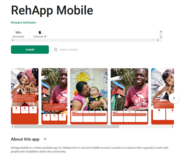
The RehApp is specifically designed for fieldworkers in low-and middle-income countries and aims to enhance their capacity to work with people with
...
Injection practices worldwide and especially in low- and middle-income countries (LMICs) include multiple, avoidable unsafe practices that ultimate
...
Tracking development assistance for health for low- and middle-income countries gives policy makers information about spending patterns and potenti
...
To help adapt cardiovascular disease risk prediction approaches to low-income and middle-income countries, WHO has convened an effort to develop, e
...
While epidemiological data for type 1 diabetes (T1D) in low/middle-income countries, and particularly low-income
...
The number of people with diabetes has risen from 108 million in 1980 to 422 million in 2014.
The global prevalence of diabetes* among adults over 18 years of age has risen from 4.7% in 1980 to 8.5% in 2014.
Diabetes prevalence has been rising more rapidly in middle- and low-income
...
Most of the global burden of sepsis occurs in low- and middle-income countries (LMICs), but the prevalence and etiology of sepsis in LMICs are not
...

As a lower-middle-income country (LMIC), South Africa (SA) bears
the burden of maternal and neonatal mortality similar to other sub-
Saharan African cou
...
The Defeat-NCD Partnership prioritises poorer countries because they bear the brunt of the enormous impact of NCDs with some 48% of premature deaths occurring in low and lower-middle
...
The seventh WHO Report on the global tobacco epidemic analyses national efforts to implement the most effective measures from the WHO Framework Convention on Tobacco Control (WHO FCTC) that are proven to reduce demand for tobacco.
The report showed that while only 23
...
For the primary health worker in a low/middle-income country (LMIC) setting, delivering quality primary care is challenging. This is often complicated by clinical guidance that is out of date, incon
...
Background and aims: Current coverage of mental health care in low- and middle-income countries is limited, not only in terms of access to services
...
The mhGAP guideline supports countries to strengthen capacity to deal with the growing burden of mental, neurological and substance use (MNS) conditions and narrow the treatment gap. This new edition includes 30 updated and 18 new recommendations, a
...
The often-prominent role of external assistance in health financing in low- and middle-income countries raises the question of how such resources c
...
In an environment of stagnant donor funding and increasing private sector investment in low- and middle-income countries, actors in both the public
...
The COVID-19 Hygiene Hub is a free service to help actors in low- and middle-income countries rapidly share, design, and adapt evidence-based hygie
...
A new reportshows that people in some 25 countries are set to face devasting levels of hunger in coming months due to the fallout from the COVID-19 pandemic. While the greatest concentration of need is in Africa,
...
The 2020 Report analyzes global health spending for 190 countries from 2000 to 2018 and provides insights as to the health spending trajectory from the MDG era to the SDG era prior to the crisis of 2020. The report shows that global spending on heal
...
This document provides information for WHO Member States, particularly low-income and middle-income countries, to strengthen preparedness and respo
...
Overview
Learning objectives
• Understand the mental health treatment gap in low-, middle- and high-income countries.
• Understand the principles and aims of the Mental Health Gap Action Programme.
• Acquire an introduction to mhGAP Interv
...
A new formulation of a drug to prevent excessive bleeding following childbirth could save thousands of women’s lives in low- and lower-middle-income cou
...

Poor quality health services are holding back progress on improving health in countries at all income levels.
Today, inaccurate diagnosis, medication errors, inappropriate or unnecessary treatment, inadequate or unsafe clinical facilities or pr ...
Today, inaccurate diagnosis, medication errors, inappropriate or unnecessary treatment, inadequate or unsafe clinical facilities or pr ...
Q6: What is the added advantage of doing neuroimaging in people with convulsive epilepsy in non-specialist settings in low and middle income countries
...
Overview
Learning objectives
• Understand the mental health treatment gap in low-, middle- and high-income countries.
• Understand the principles and aims of the Mental Health Gap Action Programme.
• Acquire an introduction to mhGAP Interv
...
It is intended for clinicians who are working in intensive care units (ICUs) in low and middle-income countries and managing adult and pediatric pa
...
Accessed: 02.05.2020
The COVID-19 Hygiene Hub is a free service to help actors in low- and middle-income countries rapidly share, design, and ad
...
Flutool Plus is the WHO Tool, designed to help lower- and middle-income countries in the process of costing of Seasonal Influenza Immunisation Prog
...
How should humanitarian organisations prepare and respond to COVID-19 in humanitarian settings in low- and middle-income countries?
This Rapid L
...
The compendium provides guidance on low-cost handwashing facilities that can be widely used in low and middle-income countries. We hope that this c
...
INTRODUCTION: Health service use among the public can decline during outbreaks and had been predicted among low and middle-income countries during
...
3rd editionThe compendium provides guidance on low-cost handwashing facilities that can be widely used in low and middle-income countries. We hope
...
Cardiovascular diseases, principally ischemic heart disease (IHD), are the most important cause of death and disability in the majority of low- and lower-middle-income
...
The incidence of circulatory disorders is increasing worldwide, affecting both low- and middle-income countries and some high-income
...
Non- Communicable Diseases (NCDs) over the years have not been given much attention in Ghana and in most Low and Middle- Income Countries (LMICs).
...
Background
Asthma remains highly prevalent, with more severe symptoms in low-income to middle-income countries (LMICs) compared with high-income
...
Severe and difficult asthma in a low- and middle-income country (LMIC) can relate to lack of availability of basic medications; potentially reversible factors such as poor adherence or comorbidities
...
Over 90% of the morbidity and mortality related to chronic obstructive pulmonary disease (COPD) and asthma occurs in low-income and middle-income countrie
...
Prevention, early identification, assessment and intervention in low- and middle-income countries | A Review | CHILD AND ADOLESCENT HEALTH AND DEVE
...

The global burden of disease due to mental disorders continues to rise, especially in low- and middle-income countries (LMIC). In addition to causi
...
Q5: What is the added advantage of doing an electroencephalography (EEG) in people with convulsive epilepsy in non- specialist settings in low and middle income
...
The availability of controlled medicines is crucial for patients requiring palliative care, pain relief and symptom management. Many individuals worldwide, especially in low- and middle-income
...
Hypertension is the leading preventable risk factor for cardiovascular diseases and disability globally. In low- and middle-income countries hypert
...
Collaboration between The Lancet and Imperial College London, UK, has resulted in a new Commission, which examines how medical technology should best be used to improve health in low- and middle-income
...
This report seeks to uncover the extent to which global goals crowd in international financing, inform domestic policy priorities, and navigate progress toward development outcomes in low- and middle-incom
...
This website provides practical tools and advice for programme planners and policy makers to run inclusive social protection programmes, especially in low and middle income
...

Climate change is damaging human health now and is projected to have a greater impact in the future. Low- and middle-income countries are seeing th
...
There is a substantial and ever-increasing unmet need for rehabilitation worldwide, which is particularly profound in low- and middle
-income countries
...

Every year, around 830 000 children die from unintentional or "accidental" injuries. The vast majority of these injuries occur in low-income and middle-income
...

Situational Analysis: 13-23 October 2014
Report prepared using the WHO/SEARO workbook tool for undertaking a situational analysis of medicines in health care delivery in low and middle income ...
Report prepared using the WHO/SEARO workbook tool for undertaking a situational analysis of medicines in health care delivery in low and middle income ...

Inequality of access to palliative care and symptom relief is one of the greatest disparities in global health care (1). Currently, there is avoidable suffering on a massive scale due to lack of access to palliative care and symptom relief in low- and midd
...
Child marriage is defined as a formal or informal union before the age of 18. The practice affects mostly girls. While child marriage is especially prevalent in low and lower-middle income
...
Results from studies evaluating the effectiveness of focused psychosocial support interventions in children exposed to traumatic events in humanitarian settings in low-income and middle-income
...
Info from and between Mental Health Workers, NGO's, Institutes, Service Users and others who are interested in improving Mental Health in Low and Middle Income
...
Q 12: In children and adolescents with anxiety disorders, what is the effectiveness and safety, considering system issues in low- and middle-income countr
...

Soapbox Collaborative has launched a new training package called TEACH CLEAN, which is a package for those that clean health care facilities in low- and middle-income
...
Globally each year, millions of people suffer illness or lose their lives because the vaccines, medicines and diagnostic tests that they need are either unavailable or unaffordable – and this lack of access to medicine is acute in low- and middle-in-
come
...
The Movement for Global Mental Health (MGMH) is a virtual network of individuals and organisations that aim to improve services for people living with mental health problems and psychosocial disabilities worldwide, especially in low- and middle-
...
