
Filter
4430
Text search:
key
affected
populations
Featured
398
1233
Language
Document type
2504
847
447
226
213
60
57
50
12
7
3
1
Countries
221
125
117
102
94
89
89
88
87
86
78
75
73
69
64
61
60
57
53
53
48
46
45
43
36
34
32
30
30
29
29
28
27
27
25
24
24
22
21
21
20
20
20
19
18
17
16
16
15
15
14
13
13
13
12
12
11
11
10
10
9
9
9
8
8
7
7
7
6
6
6
6
6
6
5
5
5
5
4
4
4
4
4
4
4
4
4
3
3
3
3
3
3
3
3
3
3
3
3
3
3
3
3
2
2
2
2
2
2
2
2
2
2
2
2
2
2
2
2
2
2
1
1
1
1
1
1
1
1
1
1
1
1
1
1
1
1
1
1
1
1
1
1
1
Authors & Publishers
Publication Years
Category
1475
270
267
222
217
62
18
8
3
1
Toolboxes
466
437
316
229
226
202
162
142
131
120
108
93
93
71
57
53
45
39
36
32
30
25
8
5
2
1

Sound periodic programme reviews provide opportunities for countries to objectively assess progress and take corrective action to sustain or get back on track towards achieving their medium and long-term programme goals. It reflects people’s diverse needs, enables efficient use of health system re
...
An applied approach to the training of trainers who, in turn,
train teams to implement psychosocial and mental health
interventions in developing countries affected by emergencies.
The film
On
the
Road
to
Peace
of
Mind,
used in conjunct
...
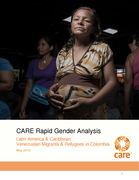
This Rapid Gender Analysis provides preliminary information and observations on the different needs, capacities and coping strategies of Venezuelan migrant and refugee women, men, boys, and girls in Colombia. It seeks to understand how gender roles and relations have changed as a result of the crisi
...
With this quick reference guide, providers can easily recognize diseases and side effects related to climate change, implement appropriate management and provide guidance to exposed populations, provide up-to-date information on the relationship bet
...
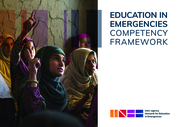
The EiE Competency Framework builds on the INEE Minimum Standards to articulate a set of required, valued and recognized competencies for the humanitarian and education in the emergencies sectors. It broadly describes expected standards of performance across a number of competencies that can be appl
...

Since the beginning of the Ukraine crisis on 24 February 2022, WHO has supported Government-led efforts and initiatives alongside key partners on the ground. Building on efforts to date, and working alongside Bulgaria’s health authorities to bring
...
Each humanitarian setting provides distinct opportunities and challenges for actors to coordinate and collaborate at strategic and operational levels. The Health and Protection Joint Operational Framework has been developed to ensure that the health and protection response during humanitarian emerge
...

2nd edition.
T The Compendium has been developed as a clear and concise instrument to facilitate the understanding and planning of delivery of high-quality care for everybody affected by TB. It incorporates all recent policy guidance from WHO; foll
...
Supporting the continuity of health and nutrition services in the context of COVID-19 in refugee settings
recommended
The 2014–2015 Ebola outbreak was catastrophic in West Africa but the indirect impact of increasing the mortality rates of other conditions was also substantial. The increased number of deaths caused by malaria, HIV/AIDS, and tuberculosis attributable to health system failures exceeded deaths from
...
This report provides a review and analysis of the research landscape for three diseases – Chagas disease, human African trypanosomiasis and leishmaniasis – that disproportionately afflict poor and remote populations with limited access to health
...
CEPI is seeking to raise $3.5 billion to implement CEPI’s next 5-year plan. To mitigate the immediate threat of COVID-19 variants, it is activating key elements of this plan now—and seeking to mobilise a portion of this $3.5 billion in 2021. We
...

Ebola disease and Marburg disease outbreaks continue to occur in Africa, with increased frequency. In addition to resulting in high mortality and morbidity, the outbreaks generate fear and mistrust about the response activities within the communities affec
...
The document "Diabetes and Ramadan: Practical Guidelines 2021," published by Elsevier, provides updated guidance for managing diabetes during Ramadan fasting. Developed by the International Diabetes Federation (IDF) and the Diabetes and Ramadan (DAR) International Alliance, the guidelines address
...
PEPFAR Malawi’s Country Operational Plan (COP) 2021 reflects a culmination of strong interagency collaboration between the PEPFAR Malawi team, Government of Malawi (GoM), and civil society organizations (CSOs) to mitigate the devastating impacts of COVID-19 and sustain progress achieved over the l
...
Reporting period: January 2014 – December 2014
The human immunodeficiency virus (HIV) epidemic in Myanmar is concentrated among men who have sex with men (MSM), people who inject drugs (PWID) and female sex workers (FSW). HIV prevalence in the adult population aged 15 years and older was esti ...
The human immunodeficiency virus (HIV) epidemic in Myanmar is concentrated among men who have sex with men (MSM), people who inject drugs (PWID) and female sex workers (FSW). HIV prevalence in the adult population aged 15 years and older was esti ...
The guide is designed to help disaster managers in national Governments gain basic knowledge of how to use international tools and services. It aims to support the growing disaster response and disaster response preparedness capabilities that exist at national level across Asia and the Pacific.
...
...
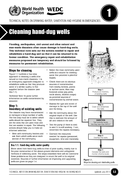
Download these technical notes directly from the website: These four-page illustrated notes, originally prepared in 2011 and updated in 2013, provide practical, evidence-based recommendations in responding to immediate and medium-term water, sanitation and hygiene needs of
...

The purpose of the PAS III is to guide Pakistan’s overall national response for HIV and AIDS through 2020, through focused interventions with set targets, costs, roles and responsibilities. The successful implementation of PAS III involves multiple stakeholders to achieve priority outcomes outline
...

In many of Myanmar’s contested regions, healthcare services are provided through two parallel governance systems – by the government’s Ministry of Health, and by providers linked to ethnic armed organizations. Building upon efforts to build trust between these two actors following ceasefires s
...
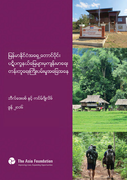
In many of Myanmar’s contested regions, healthcare services are provided through two parallel governance systems – by the government’s Ministry of Health, and by providers linked to ethnic armed organizations. Building upon efforts to build trust between these two actors following ceasefires s
...
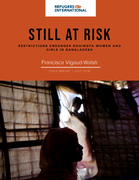
In April 2018, Refugees International (RI) conducted a mission to Bangladesh, to research the GBV (gender-based violence) response for Rohingya women and girls. RI found that the entire humanitarian system is struggling under tremendous constraints in Bangladesh, and protection and health actors do
...
The world is not on track to end the AIDS pandemic. New infections are rising and AIDS deaths are continuing in too many communities. This report reveals why: inequalities are holding us back. In frank terms, the report calls the world’s attention to the painful reality that dangerous inequalities
...

As of 12 December 2022, over 645 million people worldwide have been diagnosed with COVID-19, with over 6.6 million deaths (4).
The Omicron variant, which emerged in late November 2021, and its subvariants, are now the dominant circulating viruses, contributing to the ongoing surge in several countr
...
Emergency medical teams (EMT) are first response health care providers – doctors, nurses, paramedics, and others – during outbreaks and emergencies or disasters, working with governments, charities such as nongovernmental organizations (NGOs), armies, and international organizations such as the
...
This document provides technical guidance on concepts, definitions, indicators, criteria, milestones and tools to assist leprosy programmes in their journey towards the goals of interruption of transmission and elimination of leprosy disease and through the post-elimination period. Importantly, it p
...

The 2030 health-related Sustainable Development Goals call on countries to end AIDS as a public health threat and also to achieve universal health coverage. The World Health Organization (WHO) promotes primary health care (PHC) as the key mechanism
...
Global growth is projected to slow significantly amid high inflation, tight monetary policy, and more restrictive credit conditions. The possibility of more widespread bank turmoil and tighter monetary policy could result in even weaker global growth and lead to financial dislocations in the most vu
...
Background:Neonatal mortality accounts for 43% of global under-five deaths and is decreasing more slowly than maternal or child mortality. Donor funding has increased for maternal, newborn, and child health (MNCH), but no analysis to date has disaggregated aid for newborns. We evaluated if and how a
...
The 2019-2023 Strategy for UNU-IIGH, developed in
2018, built on UNU-IIGH’s strategic advantage and
position vis-à-vis the UN and global health ecosystem.
The Strategy set a goal to advance evidencebased policy on key issues related to sustain
...
Terminology used to describe the transmission of pathogens through the air varies across scientific disciplines, organizations and the general public. While this has been the case for decades, during the coronavirus disease (COVID-19) pandemic, the terms ‘airborne’, ‘airborne transmission’ a
...

Regional Network for Equity in Health in east and southern Africa (EQUINET): Disussion Paper 111
The health services delivery system in Zambia is pyramid in structure, with primary healthcare (PHC) services at community level, at the base, followed by first and second level hospitals at distric ...
The health services delivery system in Zambia is pyramid in structure, with primary healthcare (PHC) services at community level, at the base, followed by first and second level hospitals at distric ...
June 2021. Shock-responsive social protection (SRSP) operates in contexts where rapid on-set disasters mean needs for assistance are acute and urgent. Monitoring and identifying problems in programme design and delivery are therefore critical. However, there is limited existing guidance on how to mo
...

The war in Ukraine has rapidly taken the form of a series of conflicts in urban contexts. Urban warfare has a long history, but unfortunately, we can see from this conflict just how topical it remains. Generally, a first phase involves imposing a siege and forcing the city to surrender by making liv
...

English Analysis on Brazil about Health, Protection and Human Rights and Epidemic; published on 26 May 2021 by SSHAP
For the estimated 20 million refugees and 25 million internally displaced people worldwide, well-planned settlements can help to maximise their protection and security, and support them to minimise the spread of disease, manage natural resources sustainably, and maintain good relations with their ho
...

This guidance aims to support national clusters to implement their commitments on AAP and core people-related issues both before the beginning of a response (preparedness) and thereafter, throughout the Humanitarian Programme Cycle (HPC)
Shielding is a term used to describe the protection of individuals at high risk of severe COVID-19 illness by separating them from the general population.
Key considerations for the use of law to prevent noncommunicable diseases in the WHO European Region
Report of an intensive legal training and capacity-building workshop on law and noncommunicable diseases (Moscow, 30 May–3 June 2016)
The report summarizes important issues, themes and topics discussed during the meeting in Moscow, ranging from the design and implementation of legislation, reconc
...
The document presents an assessment developed by both institutions as a contribution to the prioritization of education in national response plans to the health emergency and future recovery strategies. "Countries have deployed various response and recovery plans in which education needs to be incor
...
This analytical report reviews and discusses the potential role and influence of political commitment in implementing endorsements and conducting policy in the field of tuberculosis (TB) prevention and care. It promotes discussion by comparing and analysing the extent to which selected international
...
The most frequent health problems of newly arrived refugees and migrants include accidental injuries, hypothermia, burns, gastrointestinal illnesses, cardiovascular events, pregnancy- and delivery-related complications, diabetes and hypertension. Female refugees and migrants frequently face specific
...
The first section highlights knowledge and questions regarding security incidents, trends, and causes of violence, including around causes and motives for attacks, and tensions between individual and collective responses. The next section then explores the role of the humanitarian principles, and th
...
A handbook for leaders and managers

This document provides information for WHO Member States, particularly low-income and middle-income countries, to strengthen preparedness and response plans with regard to the social and mental health consequences of biological and chemical attacks.
For close to 15 years, the Monitor has tracked the impact of victim assistance on the lives of victims of landmines, cluster munitions,
and other explosive remnants of war (hereafter “mine/ERW victims”). Over this time, the international communi
...
STUDY - 2015 | Advocacy

This study primarily aims to understand how children living in areas of civil strife are denied their basic rights, especially the right to education and protection. For this study, eight districts affected by civil strife across the three states (C
...
Rural Development through decent work
Themes: Rural Policy Briefs
Known avoidable environmental risks to health cause at least 12.6 million deaths every year, and account for about one quarter of the global burden of disease (2016 data) (1). Air pollution alone causes about 7 million
deaths a year, placing it among the top global risks to health (2). Global envir
...
Promoting health and preventing disease is a critical component of the effort required to achieve Universal Health Coverage (UHC). to date, efforts to achieve UHC have focused mostly on strengthening health systems and their capacities to provide curative care. However, experience from the COVID-19
...
Epidemics of infectious diseases are occurring more often, and spreading faster and further than ever, in many different regions of the world. The background factors of this threat are biological, environmental and lifestyle changes, among others. A potentially fatal combination of newly-discovered
...

Reproductive health needs are particularly acute in countries affected by armed conflict. Reliable information
on aid investment for reproductive health in these countries is essential for improving the efficiency and effectiveness of
aid. The pur
...
An ICRC Guidance Document
The social protection landscape for people affected by TB in the WHO South-East Asia Region
This is only the cover of the book. Download the whole Toolkit at: www.cdc.gov/reproductivehealth/Refugee/
Understanding the reproductive health needs of conflict-affected women will enable organizations to implement and enhance programs and se
...
The use of safe and efficacious insecticides against the adult and larval populations of mosquito vectors is one of the most effective ways to rapidly interrupt transmission of Zika virus, as well as other viruses transmitted by Aedes mosquitoes suc
...
Tackling Tuberculosis in Under-Served Populations: A Resource for TB Control Boards and their partners
Climate change is the single biggest health threat facing humanity, and health professionals worldwide are already responding to the health harms caused by this unfolding crisis.
The Intergovernmental Panel on Climate Change (IPCC) has concluded that to avert catastrophic health impacts and prevent
...
This document aims to assist policy‑makers, health care providers and researchers to understand key concepts in health ethics and to identify basic ethical questions surrounding health and health care. It illustrates the challenges of applying eth
...
UNAIDS/WHO Working Group on Global HIV/AIDS and STI Surveillance
Global HIV Strategic Information Working Group
Expanded IMPACT Program in Zimbabwe
Lea Toto and APHIAplus Nuru ya Bonde programs in Kenya Yekokeb Berhan Program for Highly Vulnerable Children in Ethiopia
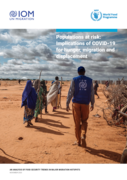
The report – the first of its kind – shows how the pandemic has driven up food insecurity and increased vulnerability among migrants, families reliant on remittances and communities forced from their homes by conflict, violence and disasters.
The two UN agencies warn the social and economic
...
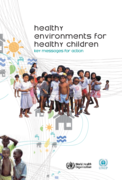
This booklet presents key messages for action, summarized from a set of
chapters on different environmental health issues.
Quality of care in fragile, conflict-affected and vulnerable settings: tools and resources compendium
recommended
This compendium represents a curated, pragmatic and non-prescriptive collection of tools and resources to support the implementation of interventions to improve quality of care in such contexts. Relevant tools and resources are listed under five areas: Ensuring access and basic infrastructure for qu
...
To provide information on trends on official development assistance (ODA) disbursement patterns for
reproductive health activities in 18 conflict-affected countries
PLOS ONE | www.plosone.org
September 2014 | Volume 9 | Issue 9 | e103657
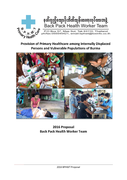
Project Programs:
A. Medical Care Program
B. Community Health Promotion and Prevention Program
C. Maternal and Child Health Program
Target Population: 228,000 people living within the Mon, Kayah, Kayan, Karen,Shan, Kachin, Pa O, Chin and Arakan areas
Projec ... January to December 2016
A. Medical Care Program
B. Community Health Promotion and Prevention Program
C. Maternal and Child Health Program
Target Population: 228,000 people living within the Mon, Kayah, Kayan, Karen,Shan, Kachin, Pa O, Chin and Arakan areas
Projec ... January to December 2016
Accessed: 26.10.2019
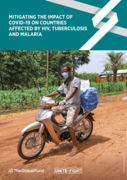
While many of the countries hit by the COVID-19 in the first few months of the year are now beginning to relax lockdown measures as infection and death rates fall, in the regions most affected by HIV, TB and malaria, such as Africa, South Asia and L
...
The guide is suitable and can be used for the following audiences:
1. nurses and other trained healthcare workers who can use this manual as a self-study tool and then incorporate its guidance into their practice;
2. governmental and non-governmental employers of lay and professional TB treatment
...

Tuberculosis continues to represent a severe public health problem in the Region of the Americas, even more so in the case of indigenous peoples, whose TB incidence is much higher than that of the general population. To achieve tuberculosis control in these communities, it is necessary to respond t
...
This guidance provides an overview of interventions to improve early diagnosis of TB and treatment completion in these populations, as well as factors to consider when developing programmes for health communication, awareness and education, and prog
...
The Camp Managment Toolkit
recommended
Applicable to both IDP and refugee scenarios, the Toolkit incorporates a wide range of relevant information on managing displaced populations living in communal settings (collective centres, spontaneous sites, established camps, etc.). Large scale d
...
The WHO Toolkit for the care and support of people affected by complications associated with Zika virus has been developed to serve as a model guide, with the goal of enhancing country preparedness for Zika virus outbreaks. The toolkit is intended
...
More than 700 000 people lose their life to suicide every year. A core foundation of suicide prevention is the timely registration and regular monitoring of suicide and self-harm. Surveillance data can be used to show important progress towards reaching global targets, such as reducing the suicide r
...
This literature review summarizes the link between psychological well-being and entrepreneurial outcomes for small and medium-size enterprises in fragile, conflict, and violence–affected contexts. It identifies potentially promising, scalable psyc
...
