
Filter
162
Text search:
ivermectin
Featured
23
37
Language
Document type
61
37
36
13
6
6
1
1
1
Countries
11
7
6
6
6
5
5
5
4
4
4
3
2
2
2
2
1
1
1
1
1
1
1
1
1
1
1
1
Authors & Publishers
Publication Years
Category
52
27
13
2
2
2
1
Toolboxes
45
29
9
3
3
3
3
2
2
2
2
1
1
1
This toolkit for integrated vector management (IVM) is designed to help national and regional programme managers coordinate across sectors to design and run large IVM programmes.
The toolkit provides the technical detail required to plan, implement, monitor and evaluate an IVM approach. IVM can ...
The toolkit provides the technical detail required to plan, implement, monitor and evaluate an IVM approach. IVM can ...
This year marked the beginning of the WHO biennium 2016-2017 action plan; this annual report highlights WHO’s key achievements in 2016
It also documents the extraordinary efforts by a broad coalition of government ministries, municipalities, international agencies, community groups, women’s or
...

WHO recommendations on adolescent health: guidelines approved by the WHO Guidelines Review Committee
This document is meant to respond to the questions:
■ What health interventions should the adolescent receive and when should s/he receive it?
■ What health behaviours should the adolescent practise (or not practise)?
■ What health interventions should the adolescent receive and when should s/he receive it?
■ What health behaviours should the adolescent practise (or not practise)?
The objective of this paper is to summarise and critically review the available data about onchocerciasis in Mozambique, in order to report epidemiological and clinical aspects related to the disease and identify gaps in knowledge. The paper is intended to raise awareness of the existence and import
...

The primary audience for this guidance is persons
working directly in vector-borne disease prevention
and control, including programme managers,
researchers and field workers. A brief technical
background is provided for the benefit of persons
without expertise in vector-borne diseases; readers
...

This manual is intended to enable WASH practitioners
who work in Mozambique to contribute to the
reduction of WASH-preventable NTDs.

It provides insight into WHO’s work that aims to improve the health of the people of the United Republic of Tanzania in collaboration with key stakeholders.
Moving from accelerated burden reduction to malaria elimination in Zambia
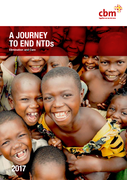
LEAVING NO-ONE BEHIND | “A Journey to End NTDs – Elimination and Care” records what we have achieved over the last year and where we are now. It presents our plan of action for the coming years, bringing our ‘traditional’ NTD work together with ‘Disease Management Disability and Inclusio
...
African Health Sciences 2013; 13(2): 219 - 232 http://dx.doi.org/10.4314/ahs.v13i2.4

Emerging Infectious Diseases • www.cdc.gov/eid • Vol. 19, No. 9, September 2013
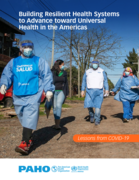
This brochure presents a summary of the situation of health systems and services in the Americas as they progress toward the achievement of universal access to health and universal health coverage (universal health). The information provided presents an overview of the situation before the COVID-19
...
Training manual that outlines the training of smallholder farmers to improve biosecurity and practices in their farms to prevent infectious diseases and thus the need for use of veterinary drugs. Describes training sessions and includes exercises and handouts.
16.7.2021
The waves of yellow fever transmission in the Region of the Americas in 2016–2018 involved the largest number of human and epizootic cases to be reported in several decades. Yellow fever is a serious viral hemorrhagic disease that poses a challenge for health professionals. It requires early recog
...
Вариативные рекомендации 24 сентября 2021 г.
Этот документ представляет собой текущие рекомендации ВОЗ. В них будут вноситься изменения и дополнения,
касающиеся нов
...
Änderung gegenüber der Version vom 26.1.2021: Aktualisierung der Informationen über monoklonale Antikörper und Rekonvaleszentenplasma
GUIDE PRATIQUE À L’INTENTION DES PROGRAMMES DE LUTTE CONTRE LES MALADIES TROPICALES NÉGLIGÉES
This toolkit provides step-by-step guidance to NTD programme managers and partners on how to engage and work collaboratively with the WASH community to improve delivery of water, sanitation and hygien
...

Recently, a renewed interest in large-scale community health worker (CHW) programs has been seen globally. This renewal provides an opportune moment to take stock of issues and challenges such programs face and what can be done to make them as effective as possible. With this in mind, this manual is
...
This manual summarizes key issues related to the safety of NTD medicines and their administration, with a focus on essential medicines used in mass drug administration (MDA), also called preventive chemotherapy. It can be used as a standalone reference manual, but is intended to be used in conjuncti
...
Since the launch of the 2012–2020 World Health Organization (WHO) road map for the control, elim-ination and eradication of neglected tropical diseases (NTDs) (1), considerable progress against NTDs has been made. Between 2010 and 2020, the number of people requiring interventions against NTDs glo
...

SBMFC Recommendations for PHC during the Pandemic of COVID-19 (edition 4)
This document answers questions and gives recommendations so that the Brazilian PHC can quickly receive the best possible scientific synthesis on the current situation of the pandemic of COVID-19
The case for evidence- based communication of science

Uso de doxiciclina para prevenção e tratamento de pacientes com Covid-19
BMJ Open Science 2021;5:e100202. doi:10.1136/
bmjos-2021-100202
Information for policy-makers and planners on conducting deworming as part of an integrated
school health program
Ongoing Living Update of COVID-19 Therapeutic Options: Summary of Evidence, Rapid Review 22 February 2022
recommended
This document includes the results of a rapid systematic review of current available literature. The information included in this review reflects the evidence as of the date posted in the document. In recognition of the fact that there are numerous ongoing clinical studies, PAHO will periodically up
...
Learnings from the COVID-19 evidence response and recommendations for the future.
Reflections and recommendations from the evidence synthesis community.
Guía de tratamiento farmacológico y manejo deescenarios clínicos de casos de COVID-19 – enero 2022 Guía de tratamiento farmacológico y manejo deLeer más
Glob Heart . 2020 Oct 13;15(1):69. doi: 10.5334/gh.891.
This document sets out, therefore, to explain the socioeconomic value of investing in the fight against NTDs and highlights priorities for global investment attention. Our work was guided by the need not only for
additional funding and funders but also for the need to understand the current funding
...
The World Health Organization (WHO) convened a meeting of the Technical Advisory Group on Buruli ulcer at its headquarters in Geneva, Switzerland on 25 to 27 March 2019
The purpose of this book is to provide an overview of Buruli ulcer (Mycobacterium ulcerans infection) for the medical and scientific communities and the general public alike.
The document explains why vector control is important in national programmes and describes the preparation of a tailor-made vector control plan for national programmes. It outlines entomological procedures for regular and specific vector control and how data should be analysed for better overall und
...

In 1997, the Fiftieth World Health Assembly adopted resolution WHA50.29 on the elimination of
lymphatic filariasis as a public health problem. Preliminary guidance from WHO printed in 2011 referred to “verification” as the official process by which the achievements of the Global Programme to El
...
Meeting of the Neglected Tropical Diseases Strategic and Technical Advisory
Group’s Monitoring and Evaluation Subgroup on Disease-specific Indicators
Canadian Journal of Microbiology 25 June 2021 https://doi.org/10.1139/cjm-2020-0572
The road map 2030 was developed by WHO through an extensive global consultation, with indicators set for measuring progress against targets and milestones. This compendium of indicators provides a comprehensive and standardized listing of recommended indicators, including the 70 core indicators pres
...

International commitment to eliminate trachoma as a public health problem worldwide is supported by resolution WHA51.11 of the World Health Assembly .1 Important progress towards this goal has been made by harnessing the mostly informal relationships that exist between partners including Member Stat
...
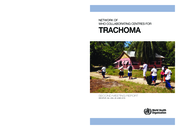
SECOND MEETING REPORT
DECATUR, GA, USA, 26 JUNE 2016

The sixteenth meeting of the Strategic and Technical Advisory Group for Neglected Tropical Diseases (STAG-NTD) was held as a hybrid meeting, 27–28 September 2022.
Dr Ren Minghui, Assistant Director-General, Universal Health Coverage/Communicable and Noncommunicable Diseases, welcomed participan
...
Mem Inst Oswaldo Cruz, Rio de Janeiro, Vol. 117: e200460, 2022
Integrating the multiple dimensions of the problem into a coherent approach adapted to field realities and needs represents an immense challenge, but the payoff is more effective and sustainable experiences, with higher social awareness
...

The World Health Organization (WHO) and the global community of countries, partners, donors, technical experts, scientists and field implementation teams continue to work towards the ultimate goal of a world free of the burden of neglected tropical diseases (NTDs).
In May the Sixty-sixth World Health Assembly adopted resolution WHA66.12 (1) on 17 neglected tropical diseases (NTDs). Among other measures, the resolution urges Member States to:
• ensure country ownership of prevention, control, elimination and eradication programmes;
• expand and implemen
...
Burden of T. solium: Neurocysticercosis is a disease induced by T. solium larvae penetrating human tissues, especially the nervous system. Neurocysticercosis burdens economies, societies and individuals because of the impact of epilepsy on wages, health costs and social stigmatization of sufferers.
...
PLoS Negl Trop Dis 16(10): e0009774. Although the practice of communication is often called upon when intervening asn involgvingcommunties affected by NTD's, the disciplinary framewokr of healt communication research has been largely absent from NTD strategies. To illustrate how practices conceptual
...
Training in monitoring and epidemiological assessment of mass drug administration for eliminating lymphatic filariasis: learners’ guide. World Health Organization.
Lymphatic filariasis (LF) is an avoidable, debilitating, disfiguring disease caused by infection with the filarial parasites Wuchereria bancrofti, Brugia malayi and B. timori. Globally, 51.4 million people are
estimated to be infected. Lymphoedema and hydrocoele are the visible, chronic clinical co
...
La filariose lymphatique (FL) est une maladie évitable, incapacitante et défigurante, due à une infestation par des filaires parasites des espèces Wuchereria bancrofti, Brugia malayi et B. timori. On estime que 51,4 millions de personnes sont infectées dans le monde. Le lymphœdème et l’hydr
...
Skin-related neglected tropical diseases, or “skin NTDs”, are historically neglected because active case detection, individual case management, significant resources and intensive effort are required to control, eliminate and eradicate them. Integrated control and management of skin NTDs offers
...
The Pharmaceutical Forum of the Americas (PFA) has previously published guidelines and organised campaigns for community pharmacists on the prevention, detection and control of arbovirus infections in 2018 with a grant from the FIP Foundation for Pharmacy Education and Research. Building on that exp
...
Following the publication of Guidelines on certification of elimination of human onchocerciasis in 2001 by the World Health Organization (WHO), these are the first evidence-based guidelines developed by NTD Department according to the international standards. They provide a set of recommendations th
...

This fourth WHO report on neglected tropical diseases (NTDs) reviews the progress made towards achieving the Roadmap targets for 2020, noting the remaining challenges, then looks beyond 2020 to evaluate the changing global health and development landscape, considering the implications of integrating
...
The increasing amounts of official development assistance (ODA) for health have been aimed primarily at fighting HIV/AIDS, malaria and tuberculosis. Neglected tropical diseases (NTD), one of the most serious public health burdens among the most deprived communities, have only recently drawn the atte
...
Las olas de transmisión de la fiebre amarilla ocurridas en la Región de las Américas entre el 2016 y el 2018 causaron el mayor número de casos humanos y epizoóticos registrados en varios decenios. La fiebre amarilla es una enfermedad hemorrágica viral grave que representa un desafío para el p
...
Buruli ulcer (BU) is a bacterial skin infection that is caused by Mycobacterium ulcerans and mainly affects people who reside in the rural areas of Africa and in suburban and beach resort communities in Australia.
