
Filter
918
Text search:
handwashing
Featured
103
214
Language
Document type
302
177
156
62
61
49
31
30
28
7
7
6
2
Countries
31
30
28
25
23
21
21
21
21
21
20
20
19
18
17
13
13
13
13
13
12
12
11
11
10
10
10
10
9
9
9
8
8
8
8
7
7
7
6
6
6
6
6
6
5
5
5
4
4
4
4
4
4
4
4
3
3
3
3
3
3
3
3
3
3
3
3
2
2
2
2
2
2
2
2
1
1
1
1
1
1
1
1
1
1
1
1
1
1
1
1
1
1
1
1
1
1
1
1
1
Authors & Publishers
Publication Years
Category
377
138
49
43
35
23
6
Toolboxes
297
57
48
42
41
36
36
24
21
13
11
9
8
7
6
4
2
2
1
1
1
1
1
Finding community-led solutions to COVID-19
recommended
An interagency guidance note on working with communities in high density settings to plan local approaches to preventing and managing COVID-19. This guidance note is intended for anyone involved in COVID-19 risk communication and community engagement (RCCE) efforts in complex and fragile settings in
...
This document draws on scientific evidence from the COVID-19 pandemic and from prior public health research on behaviour change, with the purpose of empowering African Union Member States to promote widespread adoption of masks in the general population. This document complements existing Africa CDC
...

Recommendations to Member States to improve hand hygiene practices to help prevent the transmission of the COVID-19 virus: interim guidance.
WHO recommends member states provide universal access to public hand hygiene stations and making their use obligatory on entering and leaving any public or
...
he Western Pacific is the world’s most disaster-prone region. When a disaster occurs, people may need to seek accommodation in a disaster evacuation shelter. However, it may be difficult for people in a disaster evacuation shelter to avoid confined and enclosed spaces with poor ventilation; crowde
...

In collaboration with partners, the government of Ethiopia has successfully developed 10 years Hand Hygiene for All (HH4A) costed national roadmap- a country-wide approach to achieving sustainable and universal hand hygiene. On the occasion of the 2022 Global Hand Washing Day event ( Ethiopia is cel
...
WASH in schools during a cholera response is important due to the strong correlation between WASH and IPC. Not only can it impact the health and well-being of students and staff but also facilitate the potential spread of the disease via the congregation of children and adults from multiple househol
...

A manual for physicians and other senior health workers. This fourth revision of the manual reflects recent clinical experience and research findings in diarrhoea case management. Compared to earlier versions, it includes revised guidelines on the management of children with acute diarrhoea using th
...

These guidelines deal specifically with water, sanitation and hygiene, and are designed to be used in schools in low-cost settings in low- and medium-resource countries to:
• assess prevailing situations and plan for required improvements;
• develop and reach essential safety standards as a f
...
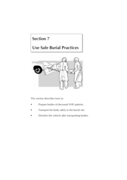
Part 3: Use Safe Burial Practices
Important Guideline for Ebola prevention and control
It is designed for the following uses:
- for prevention through preparedness--to help African health facilities make advance preparations for responding with appropriate precautions when a VHF (including Ebola) case is suspected.
- for pl
...


UNICEF Cholera Toolkit
recommended
Large size: 27 MB. Download directly from the website: https://www.unicef.org/cholera_toolkit/Cholera-Toolkit-2017.pdf
Travelers planning to conduct humanitarian work in areas where outbreaks of Ebola hemorrhagic fever and Marburg hemorrhagic fever are known to occur need to be familiar with how Ebola virus and Marburg virus are transmitted

A Training Course for Vasectomy Providers and Assitants 2nd Edition
A training course for Vasectomy Providers and Assistants
2nd Edition
Hand Hygiene: Why, How and When?
recommended
Hand Hygiene: Why, How, & When?
A manual to train health-care workers on practising, teaching and observing hand hygiene.
On the appropriate use of gloves with respect to hand hygiene.
This document provides a summary of infection control recommendations when providing direct and non-direct care to patients with suspected or confirmed Filovirus haemorrhagic fever (HF), including Ebola or Marburg haemorrhagic fevers. These recommendations are interim and will be updated when additi
...
Training manual
Anyone planning to conduct humanitarian work in areas of Africa where outbreaks of Ebola virus disease are known to occur needs to be familiar with how Ebola virus is transmitted.
This leaflet recommends the precautions that humanitarian workers should take and provides advice on what to do if you
...
Recommendations of the Healthcare Infection Control Practices Advisory Committee and the HICPAC/SHEA/APIC/IDSA Hand Hygiene Task Force

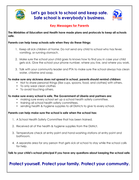
Key Messages for Safe Schools

For General Healthcare Settings in West Africa
www.thelancet.com/infection Vol 15 February 2015
Assessing the impact of the EVD outbreak on health systems in Sierra Leone. Survey concluded 6-17 October 2014
Updated September 2021.
Provision of water and sanitation and good hygiene practices play an essential role in protecting human health during all disease outbreaks, including during Ebola Virus Disease (EVD) outbreaks. This question and answer document provides practical, evidence-based recommend
...
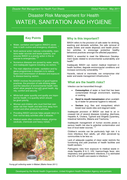

Reporting Period: 4 to 10 April 2020
• In collaboration with the Ministry of Youth, UNICEF started training 50 young bloggers on how to identify and respond to fake news.
• UNICEF engaged with 97 social services to enable front-line social workers to carry out community prevention work and
...
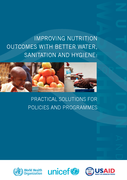
This document provides an overview of the evidence of nutrition gains that can be achieved with improved WASH, a description of key WASH practices, and practical knowledge and guidance on how to integrate WASH into nutrition programmes, including important monitoring and evaluation (M&E) aspects. Th
...
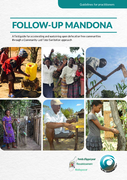
A field guide for accelerating and sustaining open defecation free communities through a Community-Led Total Sanitation approach
Follow-up MANDONA (FUM) is an action-oriented approach for accelerating community-wide sanitation and hygiene behaviour change following the initial triggering session. D
...

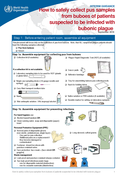
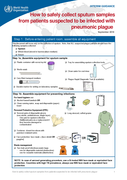
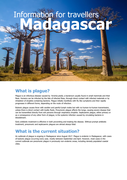
This information leaflet is for general informative purposes only. It can be used in its current form or further modified and adapted by responsible authorities in each country as a country-specific guidance.
Updated 8 June 2021. The document has two sections:
A. The first section covers fundamental principles which are crucial to a successful, holistic intervention.
B. The second covers relevant standards and guidance in the handbook’s Water Supply, Sanitation and Hygiene Promotion (WASH) and Health
...
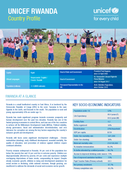
This document provides a snapshot view of Rwanda in terms of key socio-economic indicators, political and economic context and the situation of children. It also gives an overview of UNICEF's Country Programme and key achievements.
Rwanda has made significant progress towards economic prosperity an
...

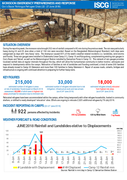
Update - 27 June 2018
During the reporting week, the monsoon rains brought 252 mm of rainfall compared to 95 mm during the previous week. The downpour caused 65% of the week’s weather-related incidents (i.e. landslides, wind-storms and floods). Three rain gauges were installed in Chakmarkul ( ...
During the reporting week, the monsoon rains brought 252 mm of rainfall compared to 95 mm during the previous week. The downpour caused 65% of the week’s weather-related incidents (i.e. landslides, wind-storms and floods). Three rain gauges were installed in Chakmarkul ( ...

The package is designed to help address the WASH in Schools monitoring deficit at the national level.
The package consists of three modules:
The EMIS module: a set of basic monitoring questions on WASH in Schools to be incorporated into national Education Monitoring Information Syst ...
The package consists of three modules:
The EMIS module: a set of basic monitoring questions on WASH in Schools to be incorporated into national Education Monitoring Information Syst ...
WHO recommendations on child health: Guidelines approved by the WHO Guidelines Review Committee
recommended
Updated May 2017
This document is meant to respond to the questions:
■ What health interventions should the child receive and when should s/he receive it?
■ What health behaviours should a mother/caregiver practise (or not practise)?
This document is meant to respond to the questions:
■ What health interventions should the child receive and when should s/he receive it?
■ What health behaviours should a mother/caregiver practise (or not practise)?
In 2016 CRS leveraged the robust infrastructure of its large, multi-sectoral orphans and vulnerable children (OVC) program in Nigeria by expanding the program's core mandate to include community childhood TB casefinding, with a focus on highly vulnerable children and their caregivers
While the world was gripped by the unfolding COVID-19 pandemic in 2020, children continued to face the same crisis they have for decades: intolerably high mortality rates and vastly inequitable chances at life. In total, more than 5.0 million children under age 5, including 2.4 million newborns, alo
...
September Highlights
Ebola prevention measures began in South Sudan with three border screening points established
Nearly 160,000 people reached with WASH services throughout South Sudan
Lancet Global Health Volume 7, Issue 1, January 2019, Pages e81-e95
Over 1 million people, including an estimated 450,000 children, are affected by Myanmar’s decade-long conflict and are increasingly vulnerable to gender-based violence, exploitation, abuse, detention and trafficking.
Community transmission of coronavirus disease 2019 (COVID-19) is increasing in
...
This brief draws out some recommendations for Ebola response actors in North Kivu. It includes lessons learned primarily from (i) historical outbreaks in Congo; (ii) outbreaks in Uganda in 2000-01 and 2012; (iii) the 2014-2016 West African epidemic; (iv) the outbreak in Equateur Province in DRC (May
...
WASH Training for Hygiene Promotion Staff.
This manual has been designed to train NRC hygiene promotion incentive staff on ... concept and importance of hygiene, diseases that are present or a risk in Kakuma Refugee. Camp and how to prevent them; monitoring WASH activities and prevention, managemen
...
Large File: 12 MB!
Training Material - Power Point
Statistical Agency under the President of the Republic of Tajikistan Dushanbe, Republic of Tajikistan
Ministry of Health and Social Protection of Population of the Republic of Tajikistan
Dushanbe, Republic of Tajikistan
The DHS Program ICF
Rockville, Maryland, USA
Antibiotic resistant bacteria are spreading at an alarming rate and some bacterial infections may once again be untreatable. Antibiotic resistance (ABR), conservatively calculated, causes more than 500 000 deaths every year. This number is projected to rise dramatically if radical actions are not ta
...
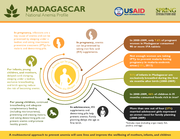
A multisectoral approach to prevent anemia will save lives and improve the wellbeing of mothers, infants, and children
Updated 8 June 2021. Coronavirus is spreading globally. How can individuals, communities, humanitarian actors, local and national authorities best respond to uphold the rights of all affected people?
The Coronavirus is spreading globally. How can individuals, communities and humanitarian actors best respond to the COVID-19 outbreak? How can the Sphere Handbook guide our response?
These guidelines are available in different languages

India reported its 1st case of COVID-19 on 30th January, 2020. It was a travel related case from Wuhan, China. Since then (as on 29th March, 2020), 979 confirmed cases and 25 deaths have been reported from 27 States/UTs. Although there is no evidence to widespread community transmission, 20 existing
...
Human rights must be at the centre of all prevention, preparedness, containment and treatment efforts from the start, in order to best protect public health and support the groups and people who are most at risk. States have an obligation to protect and guarantee everyone the right to the highest at
...
Frequently asked questions (FAQs)
This document highlights COVID-19 specific considerations in relation to camp and camp-like settings, and is intended to assist in guiding operations where camp/site management5 is being implemented. Although the guidance - structured around questions from the fiel
...
This document, produced by IFRC, UNICEF and WHO, suggests key actions on how people and communities can stay safe and slow down the spread of COVID-19, particularly for contexts where you might have been asked by your local authorities to maintain physical distance or stay home.
Available in: Arabi
...
WHO recommends member states provide universal access to public hand hygiene stations and making their use obligatory on entering and leaving any public or private commercial building and any public transport facility. It is also recommended that healthcare facilities improve access to and practice
...
(15 April 2020, BST 17:00 hours)
Actions Taken from Bangladesh Red Crescent Society (BDRCS):
9292 Number of staff and RCY/ CPP/ Camp/ Community volunteers being mobilized throughout the country.
10116 Set of PPE provided to individuals working on COVID-19 response.
130,851 Number of Total Peop
...
Orientations provisoires
1er avril 2020
Les États Membres doivent améliorer les pratiques d’hygiène des mains de manière ambitieuse afin d’aider à prévenir la transmission du virus de la COVID-19 :
1. en fournissant un accès universel à des postes publics d’hygiène des mains et
...
Водоснабжение, санитария, гигиена и обращение сотходами в контексте коронавирусной инфекции COVID-19
Временные рекомендации23апреля 2020г.
The purposes of this template are to support PAHO Country Offices and national/subnational emergency management mechanisms to develop or update their risk communication and community engagement (RCCE) plans related to COVID-19. The COVID-19 pandemic is a rapidly evolving situation and takes on diffe
...
This guidance note developed by UNICEF helps WASH staff in their preparedness and response to the current COVID-19 pandemic. It provides an overview of Infection Prevention and Control (IPC) and its intersection with water, sanitation and hygiene (WASH). It also provides key actions that staff can i
...
In April 2020, the UN launched a coordinated global humanitarian response plan (GHRP) to fight COVID-19 in some of the world’s most vulnerable countries and address the needs of the most vulnerable people. This tips sheet provides practical tips to strengthen disability inclusion within the new up
...
This Interim Guidance is intended for field coordinators, site managers and public health personnel, as well as national and local governments and the wider humanitarian community working in humanitarian situations at food distribution sites, who are involved in the decision making and implementatio
...
This brief considers the rationale for shielding individuals at high risk of severe disease or death from COVID-19 in low- and middleincome countries. It provides an overview of proposed approaches to shielding, discusses the categories of individuals who may be identified for shielding, and outline
...
This note provides information and practical guidance to support gender-based violence (GBV) practitioners to integrate attention to disability into GBV prevention, risk mitigation and response efforts during the COVID-19 pandemic. This document complements other resources relating to GBV and COVID-
...
The spread of COVID-19 poses a challenge for emerging markets such as those in Africa and Latin America. While governments around the world are suffering from a shortage of ventilators, hospital beds, and personal protective equipment, availability of these items is already extremely limited in some
...
According to WHO, infection prevention and control (IPC) is a scientific approach and practical solution designed to prevent harm caused by infection to patients and health workers. It is grounded in infectious diseases, epidemiology, social science and health system strengthening. IPC occupies a un
...
This guidance note is for UNICEF Regional and Country Office WASH staff to help them in their preparedness and response to the current COVID-19 global pandemic. It provides an overview of Infection Prevention and Control (IPC) and its intersection with water, sanitation and hygiene (WASH) and how UN
...
The purpose of this brief is to provide practical tips for UNICEF country offices, partners and young people themselves on engaging adolescents and youth as part of the COVID-19 preparedness and response. As a first step, we recommend engaging with adolescents and youth to understand what their need
...
Government measures in response to the outbreak have included severe restrictions on movement and physical distancing, which will inevitably impact the way we engage communities. This document provides key messages and practical tips for such community engagement.
The following is a breakdown of key considerations to guide planning and resource allocation for COVID-19 preparedness and response to support UNHCR regional and country operations in Public Health, WASH, Shelter and Settlements programmes. While some of the activities are more relevant in camps or
...
PERC produces regional and member state situation analyses, updated regularly.
