
Filter
286
Text search:
foodborne
diseases
Featured
24
54
Language
Document type
91
79
40
29
16
12
6
5
4
3
1
Countries
20
9
7
5
4
4
4
4
4
3
3
3
3
2
2
2
2
2
2
2
2
2
2
1
1
1
1
1
1
1
1
1
1
1
1
1
1
1
1
1
1
1
1
Authors & Publishers
Publication Years
Category
56
27
26
14
8
7
7
Toolboxes
57
52
29
18
17
9
8
8
6
6
6
4
4
3
2
1
1
1
The objective of this briefis to set outlinkages between food safety and the Sustainable Development Goals(SDGs), to identify priority issues,and to suggest how investments in food safety can help attain SDGs.
This report of the EFSA and ECDC presents the results of zoonoses monitoring activities carried out in 2020 in 27 EU Member States (MS) and nine non-MS. Key statistics on zoonoses and zoonotic agents in humans, food, animals and feed are provided and interpreted historically.
Burden of T. solium: Neurocysticercosis is a disease induced by T. solium larvae penetrating human tissues, especially the nervous system. Neurocysticercosis burdens economies, societies and individuals because of the impact of epilepsy on wages, health costs and social stigmatization of sufferers.
...
WHO Ghana 2022 annual report
recommended
“2022 was an eventful year for the WHO Country Office in Ghana,” says Dr Francis Kasolo, WHO Representative to Ghana.
In 2022, WHO Ghana collaborated with partners to deliver interventions in support of the Government of Ghana's health sector agenda to ensure healthy lives for all towards ach
...
Mission report: June 11-20, 2017



Annals of Global Health, 87(1), p.30. DOI: http://doi.org/10.5334/aogh.2647
Lancet Planet Health 2017 Published Online November 6, 2017 http://dx.doi.org/10.1016/S2542-5196(17)30141-9
Accessed: 11.03.2019
The idea to the ANDEMIA online course manual is based on the challenge that resources for sending ANDEMIA students to a variety of face to face courses is limited not only due to financial but also time constraints. Online course provide a good basis for the students, Master, PhD and Post Docs to pr
...
Wet markets have been implicated in multiple zoonotic outbreaks, including COVID-19. They are also a conduit for legal and illegal trade in wildlife, which threatens thousands of species. Yet wet markets supply food to millions of people around the world, and differ drastically in their physical com
...
. Interim Guidelines. This interim guideline lays out some basic principles of optimal nutritional care for adults and paediatric patients during treatment and convalescence in Ebola treatment units, community care centres or to other centres where Ebola patients are receiving care and support. It h
...
This paper focuses on the Sustainable Development Goals related to poverty, economic growth, inequality, health, food production and the environment. It presents concrete examples of the underlying and complex aspects of antibiotic resistance and its impacts across different Sustainable Development
...
Discrete typing units of Trypanosoma cruzi: Geographical and biological distribution in the Americas
Chagas disease caused by Trypanosoma cruzi is a public health issue in Latin America. This highly diverse parasite is divided into at least seven discrete typing units (DTUs) TcI-TcVI and Tcbat. Some DTUs have been associated with geographical distribution in epidemiological scenarios and clinical m
...

What are the common health problems of refugees and migrants arriving in the European Region?


Guidebook on ICD10
recommended
3rd edition
Public Health Situation Analysis and Interventions 10 October 2017
A GUIDE FOR HEALTH WORKERS AND AUTHORITIES IN NIGERIA

Mem Inst Oswaldo Cruz , Rio de Janeiro, Vol. 110 (3): 377-386, May 2015
January - December 2017

With the goal of ending viral hepatitis as a public health threat by 2030, the Regional Action Plan will provide an actionable framework for implementing evidence-based interventions at scale. It will be informed through strategic monitoring of the response, that must be equitable and sustainable an
...
Downloaded from https://aidsinfo.nih.gov/guidelines on 11/27/2019
Visit the AIDSinfo website to access the most up-to-date guideline.
Register for e-mail notification of guideline updates at https://aidsinfo.nih.gov/e-news.
These Guidelines on prudent use of antimicrobials in human health are based on a technical report prepared by the European Centre for Disease Prevention and Control (ECDC) with input from EU Member States experts and stakeholders, which should be referred to for details of the methodology used in cr
...

This is the first NAP on the Prevention and Containment of AMR in Kenya. It has been developed based on the National Policy on Prevention and Containment of AMR and the recommendations of the situation analysis on AMR conducted in 2011 and updated in 2016. This strategy provides a regulatory and imp
...
Recommendations for health care professionals – the experience from Latvia
The authors conduct an integrated survey of Antimicrobial Resistant Organisms (AMR) in drinking water, wastewater and surface water in three settings in Bangladesh: rural households, rural poultry farms, and urban food markets. Results show that untreated water discharged from rural households, poul
...
Due to the particular Amazonian situation of vectorial transmission based mostly on the wild cycle of Trypanosoma cruzi with diversity of triatomine vectors involved in effective transmission, and the variety of eco-epidemiological situations that facilitate such transmission, the countries of the A
...
Technical Document
Lancet Planet Health 2022;6: e760–68
The emergence of COVID-19 has drawn the attention of health researchers sharply back to the role that food systems can play in generating human disease burden. But emerging pandemic threats are just one dimension of the complex relationship between agriculture
...
The position papers are intended for use by national public health officials and managers of immunization programmes. They may also be of interest to international funding agencies, vaccine advisory groups, vaccine manufacturers, health professionals, researchers, the scientific media and the genera
...

WHO’s Ambition and Action in Nutrition 2016-2025 is anchored in the six global targets for improving maternal, infant and young child nutrition and the global diet-related NCD targets.
In support of the 2030 Agenda for Sustainable Development, particularly SDG2 and SDG3, and in concert w ...
In support of the 2030 Agenda for Sustainable Development, particularly SDG2 and SDG3, and in concert w ...
BMZ Papier 1
Gesundheit ist nicht nur Voraussetzung für ein selbstbestimmtes Leben, sondern auch essenziell für die gesellschaftliche und nachhaltige wirtschaftliche Entwicklung in unseren Partnerländern. Die gegenwärtige COVID-19 Pandemie zeigt, welche Gefahren von Infektionskrankheiten ausge
...
Advising principles. The purpose of this document is to support competent authorities in charge of IHR implementation to improve national capacities for the prevention, detection and control of events, by strengthening communications and coordination between points of entry and the national health s
...
The report focuses on antibacterial resistance (ABR) in common bacterial pathogens. There is a major gap in knowledge about the magnitude of this problem. Antimicrobial resistance (AMR) threatens the effective revention and treatment of an ever-increasing range of infections caused by bacteria, para
...
The Strategy provides a high-level unifying framework to leverage existing capacities, address barriers and strengthen the use of genomic surveillance in the detection, monitoring and response to public health threats. Genomic surveillance is part of the broader surveillance and laboratory system, a
...
Clinical Presentation and Management for Haiti Cholera Outbreak, 2010

Biology, Diagnosis and Treatment, Epidemiology and Prevention
Laboratory biosafety manual
recommended
4th edition
The WHO Laboratory Biosafety Manual (LBM) has been in broad use at all levels of clinical and public health laboratories, and other biomedical sectors globally, serving as a de facto global standard that presents best practices and sets trends in biosafety.
LBM encouraged countries t
...
This new publication presents the continuing and emerging challenges to children’s environmental health.
A manual for developing national action plans.This manual for developing national action plans to address antimicrobial resistance has been developed at the request of the World Health Assembly to assist countries in the initial phase of developing new, or refining existing national action plans in
...
5th revised edition.
This document provides a ranking of medically important antimicrobials for risk management of antimicrobial resistance due to non-human use. The current revision took place at the seventh meeting of the AGISAR held in Raleigh, United States of America in 2016.
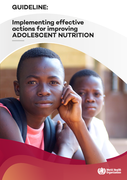
The purpose of this publication is to facilitate the implementation of existing WHO guidelines on nutrition-specific and nutrition-sensitive actions required for improving health and well-being of adolescents. Implementing these actions should explicitly take into account the heterogeneity of adoles
...

Technical report
This manual aims to provide information about the methods for investigating outbreaks of hepatitis E, and measures for their prevention and control. In addition, the manual gives information about the causative agent – known as the hepatitis E virus (HEV) – its epidemiology ...
This manual aims to provide information about the methods for investigating outbreaks of hepatitis E, and measures for their prevention and control. In addition, the manual gives information about the causative agent – known as the hepatitis E virus (HEV) – its epidemiology ...
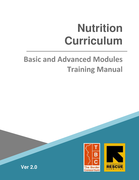
The Border Consortium (TBC) developed a comprehensive Training of Trainers Nutrition Curriculum which includes 12 Modules (6 Basic and 6 Advanced topics). The Manual provides trainers with standardized methods and content to deliver nutrition training.
Original file: 25 MB
Original file: 25 MB
In Climate Change 2014: Impacts, Adaptation, and Vulnerability. Part A: Global and Sectoral Aspects. Contribution of Working Group II to the Fifth Assessment Report of the Intergovernmental Panel on Climate Change
In the framework of the United Nations Sustainable Development Goals Issue-based Coalition on Health and Well-being for All at All Ages in Europe and Central Asia
Antimicrobial resistance (AMR) is a global threat that requires urgent collaborative action within and among countries. AMR makes standard treatments ineffective and facilitates the spread of antimicrobial resistant infections rendering communities vulnerable. The Ministry of Health (MOH) and Minist
...
The National Action Plan for Combating Antibiotic-Resistant Bacteria (CARB), 2020-2025, presents
coordinated, strategic actions that the United States Government will take in the next five years to improve the health and wellbeing of all Americans by changing the course of antibiotic resistance.
T
...
Maldives has made significant strides in the area of infectious disease prevention and control. This is exemplified by elimination of malaria from Maldives in 2015 and successes in TB control. In addition, Maldives is a front runner in infectious disease prevention through successful water, sanitati
...
Supporting the food and agriculture sectors in implementing the Global Action Plan on Antimicrobial Resistance to minimize the impact of antimicrobial resistance
The second ECDC/EFSA/EMA joint report on the integrated analysis of antimicrobial consumption (AMC) and antimicrobial resistance (AMR) in bacteria from humans and food-producing animals addressed data obtained by the Agencies’ EU-wide surveillance networks for 2013–2015. AMC in both sectors, exp
...
Comprehensive Reviews in Food Science and Food Safety, Vol.12 (2013) pp.234-248
In 2006, the Institute of Food Technologists (IFT) published an Expert Report entitled “Antimicrobial Resistance: Implications for the Food System” (IFT 2006). That report summarized current scientific knowledge pe
...
The WHO CIA List should be used as a reference to help formulate and prioritize risk assessment and risk management strategies for containing antimicrobial resistance. The WHO CIA List supports strategies to mitigate the human health risks associated with antimicrobial use in
...
ຢາຕ້ານເຊື້ອຈຸລະຊີບ (Antimicrobial medicines) ມີຄວາມສໍາຄັນຫຼາຍຕໍ່ວຽກງານການແພດ, ສາທາລະນະສຸກ, ສຸຂະພາບສັດ ແລະ ການຜະລິດອາຫານ. ເນà
...
Myanmar, as a country going through rapid socio-political transition and institutional development also suffers with a high burden of infectious disease. An ongoing challenge has been to effectively reach its 51 million population, most of whom battle tuberculosis, acute respiratory infections, diar
...
The present National action plan on antimicrobial resistance (AMR) with component of antimicrobial consumption (AMC) covering both human and agriculture sectors was developed based on the World Health Organization's (WHO) Global plan on AMR dated 2015. With the purpose to develop this plan, in May 2
...
The COVID-19 pandemic has provided a dramatic illustration of the extent to which the health of people, animals and the environment is interdependent, which is why “One Health” is now high on the political agenda. This document provides an overview of KfW Development Bank’s approach to promoti
...
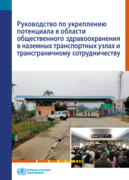
В этом руководстве использован комплексный подход к укреплению системы здравоохранения на границах с целью оказания поддержки национальным координационным цент
...
A rapid review of evidence on the managing the risk of disease emergence in the wildlife trade - World Animal Health Organization (OIE)
Training Modules for climate change and Health - WHO
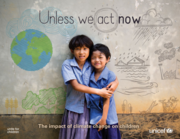
Today’s children, and their children, are the ones who will live with the consequences of climate change.
The climate crisis has many consequences – among them widespread health impacts that will lead to immense societal, ecological, and economic harm.
Over the past two decades multiple large-scale reviews on climate change and health have made clear the need for a multi-sectoral approach to target t
...

In 2015, 26% of the deaths of 5.9 million children who died before reaching their fifth birthday could have been prevented
through addressing environmental risks – a shocking missed opportunity. The prenatal and early childhood period represents
a window of particular vulnerability, where enviro
...
Environmental pollution, protection, quality and sustainability

Front. Vet. Sci., 01 December 2021

Over the ages, human societies have altered local ecosystems and modified regional climates. Today the human influence has attained a global scale. This reflects the recent rapid increase in population size, energy consumption, intensity of land use, international trade and travel, and other human a
...
Saving lives is the priority of WHO’s response in Ukraine. WHO works to ensure time-critical, lifesaving multisectoral assistance, non-discriminatory access to emergency and essential health services and priority prevention programmes, and laying the foundation for longer-term health systems recov
...
