
Filter
3688
Text search:
fever
Featured
409
1171
Language
Document type
2142
529
408
161
122
92
79
51
37
32
17
8
6
1
Countries
262
148
145
127
112
93
91
85
80
73
70
59
59
56
55
50
47
47
44
44
44
41
39
37
34
28
27
26
26
24
24
23
21
20
19
18
18
17
14
14
14
13
13
13
11
11
11
11
10
10
10
9
9
9
9
9
8
8
7
7
6
6
6
6
5
5
5
5
5
5
5
4
4
4
4
4
4
3
3
3
3
3
3
3
3
2
2
2
2
2
2
2
2
2
2
2
2
2
2
2
2
2
2
2
2
1
1
1
1
1
1
1
1
1
1
1
1
1
1
1
1
1
1
1
1
1
1
1
1
1
1
1
1
1
Authors & Publishers
Publication Years
Category
1523
439
169
152
95
86
29
Toolboxes
419
361
278
182
162
121
113
103
93
91
61
61
59
43
43
40
37
36
22
21
19
12
2
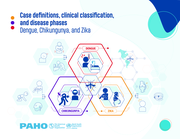
Case definitions, clinical classification, and disease phases Dengue, Chikungunya, and Zika
recommended
A person who lives in or has traveled in the previous 14 days to areas with dengue transmission, and presents with acute fever that has typically lasted 2 to 7 days, and two or more of the following clinical manifestations: nausea or vomiting, exant
...

Online Training Course
Ebola hemorrhagic fever is one of many viral hemorrhagic fevers. It is a severe, often fatal disease in humans and nonhuman primates, and is one of the world's most contagious diseases. However, the infection can be controll
...
The threat posed by Zika virus infection highlights the need to reinforce preparedness arrangements for mosquito-borne diseases in EU/EEA countries, especially for pathogens transmitted by Aedes aegypti and Aedes albopictus.
The aim of this document is to highlight measures that can effectively red
...

Chikungunya virus (CHIKV) is a re-emerging mosquito borne alphavirus responsible
for the recent outbreak in the Americas. Immunologically naïve population in the Americas favors the spread of epidemics. Chikungunya fever is characterized by an abr
...
Websites last accessed on 31.03.2023
Dengue, Dengue virus, dengue hemorrhagic fever, dengue fever, flavivirus, Aedes mosquitoes, DHF, DF, DSS
Travelers planning to conduct humanitarian work in areas where outbreaks of Ebola hemorrhagic fever and Marburg hemorrhagic fever are known to occur need to be familiar with how Ebola virus and Marb
...
Learn together. Managing transmission of viral haemmoraghic fever. Only available online!
This book is part of the Bettercare series which addresses the need for continuing education for health professionals. The book is produced under the auspice
...
Evidence for technical update of pocket book recommendations. Newborn conditions, dysentery, pneumonia, oxygen use and delivery, common causes of fever, severe acute malnutrition and supportive care
Marburg virus disease (MVD), formerly known as Marburg haemorrhagic fever, is a severe disease in humans caused by Marburg marburgvirus (MARV). Although MVD is uncommon, MARV has the potential to cause epidemics with significant case fatality rates.
...
Clinical management standard operating procedures.
Ebola virus disease (EVD) is a life-threatening multisystem illness associated with fever and gastrointestinal (GI) symptoms that frequently leads to hypovolaemia, metabolic acidosis, hypoglycaemia
...
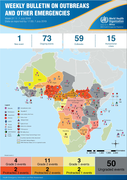
Circulating vaccine-derived poliovirus type 2 in Angola
Ebola virus disease in Democratic Republic of the Congo
Dengue fever in Côte d’Ivoire
Humanitarian crisis in north-east Nigeria.
Malaria is a prevalent cause of febrile illnesses in areas with high transmission, and its clinical presentation overlaps with initial signs of Ebola disease. For this reason, the effectiveness of the Ebola response in Guinea, Liberia and Sierra Leone can be optimized through the deployment of targe
...
Zika virus is primarily transmitted by the Aedes species of mosquito which is also responsible for the spread of dengue, Chikungunya and yellow fever viruses. In most areas, the primary vector of these viruses is Aedes aegypti, with Aedes albopictus
...
The ECDC Communicable Disease Threats Report (CDTR) is a weekly bulletin for epidemiolgists and health professionals on active public health threats. This issue covers the period 7-13 August 2016 and includes updates on Zika virus, yellow fever in
...
Communication Risk in Public Health Emergencies
recommended
A WHO Guideline for Emergency Risk Communication (ERC) policy and practice.
Recent public health emergencies, such as the Ebola virus disease outbreak in West Africa (2014–2015), the emergence of the Zika virus syndrome in 2015–2016 and multi-country yellow
...
The purpose of this document is to inform the public about biological and chemical hazards and thereby prepare the population for an immediate response in the event of an incident until public health support is provided.
The agents reported here are: Anthrax, Botulism, Haemorrhagic
...

This toolkit for integrated vector management (IVM) is designed to help national and regional programme managers coordinate across sectors to design and run large IVM programmes.
The toolkit provides the technical detail required to plan, implement, monitor and evaluate an IVM approach. IVM can ...
The toolkit provides the technical detail required to plan, implement, monitor and evaluate an IVM approach. IVM can ...
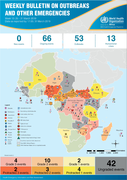
Response to the tropical cyclone in southern Africa
Ebola virus disease outbreak in the Democratic Republic of the Congo
Meningitis outbreak in Togo
Lassa fever outbreak in Liberia.
Persons with acute respiratory illness with sudden onset of at least one of the following: cough, sore throat, shortness of breath or fever [≥ 38°C (measured) or history of fever (subjective)] ir
...
Historically, the discovery of the sulfa drugs in the 1930s and the subsequent development of penicillin during World War II ushered in a new era in the treatment of infectious diseases. Infections that were common causes of death and disease in the pre-
...

Coronavirus (COVID-19) is the illness caused by a new strain of coronavirus first identified in Wuhan city, China. It can cause a cough and/or a fever/high temperature.
These are Arabic versions of the latest coronavirus (COVID-19) guidance.
27 May 2021
COVID-19 vaccines teach our immune systems how to recognize and fight the virus that causes COVID-19. Sometimes this process can cause symptoms, such as fever. These symptoms are normal and are signs that the body is building protectio
...

Taking a multisectoral, One Health approach is necessary to address complex health threats at the human-animal-environment interface, such as rabies, zoonotic influenza, anthrax, and Rift Valley fever. Such zoonotic diseases continue to have major i
...
Monkeypox virus is an orthopoxvirus that causes human monkeypox, a viral disease with symptoms similar to smallpox, including fever and rash. Following the worldwide eradication of smallpox in 1980, monkeypox emerged as the most significant orthopox
...

In a retrospective review of hospital records of 40 human monkeypox cases from Nigeria, the majority developed fever and self-limiting vesiculopustular skin eruptions. Five deaths
were reported. Compared to human immunodeficiency virus (HIV)–nega
...

the current surge in cases follows unprecedented flooding that began in mid-June 2022. With the current flood crisis affecting the national health system capacity and the growing humanitarian situation, there is a high risk of serious health impacts from dengue
...
People with Guinea worm disease (GWD) have no symptoms for about 1 year. Then, the person begins to feel ill. Symptoms can include the following:
Slight fever
Itchy rash
Nausea
Vomiting
Diarrhea
Dizziness
A blister then develops. This blist
...

Visceral leishmaniasis, the most severe form of leishmaniasis also known as kala-azar, is a life-threatening disease caused by Leishmania parasites which are transmitted by female sandflies. Visceral leishmaniasis causes fever, weight loss, spleen a
...
i. A person who is a contact of a probable or confirmed mpox case in the 21 days before the onset of signs or symptoms, and who presents with any of the following: acute onset of fever (>38.5°C), headache, myalgia (muscle pain/body aches), back pai
...
Preparedness planning is essential in order to respond effectively to outbreaks, including single case occurrences of highconsequence infectious diseases (HCID), such as the importation of a viral haemorrhagic fever (VHF) case
On March 16, 2023, the Tanzania Ministry of Health declared an outbreak of an unidentified illness in Bukoba district, Kagera region. A group of seven individuals presented with fever, vomiting, bleeding from various body orifices, and kidney failur
...
In a prospective cohort study in Bangwe primary care clinic, Blantyre, Malawi, all adults (18 years or older) presenting with an acute illness were screened for TB symptoms (cough, fever, night sweats, weight loss). Demographic characteristics were
...
In the context of the Support to National Malaria Control Programme (SuNMaP), demand creation is the strategic combination of advocacy, communication and mobilisation approaches that seek to achieve increased community awareness of, and demand for, effective malaria prevention and treatment services
...
This manual provides guidance on best practices to be followed in Ebola Care Units (ECUs)/Community Care Centres (CCCs). It is intended for health aid workers (including junior nurses and community health-care workers) and others providing care for patients in ECUs/CCCs. While the focus is on the ca
...
The ongoing Ebola epidemic in parts of West Africa largely overwhelmed health-care systems in 2014, making adequate care for malaria impossible and threatening the gains in malaria control achieved over the past decade. The study suggests that untreated malaria cases as a result of reduced health-ca
...
The document "Prevansyon kont Diare" provides guidance on preventing and managing diarrhea. It explains that diarrhea, caused by pathogens like viruses, bacteria, and parasites, can lead to severe dehydration if untreated. Symptoms include vomiting, fever
...
This toolkit for integrated vector management (IVM) is designed to help national and regional programme managers coordinate across sectors to design and run large IVM programmes.
The toolkit provides the technical detail required to plan, implement, monitor and evaluate an IVM approach. IVM can be
...
Barriers to the prompt and effective diagnosis and treatment of malaria exist at both the community and health facility level. Household surveys measure malaria case management at the population level with standard indicators that assess treatment-seeking behavior, access to diagnostic testing, and
...
Maldives has made significant strides in the area of infectious disease prevention and control. This is exemplified by elimination of malaria from Maldives in 2015 and successes in TB control. In addition, Maldives is a front runner in infectious disease prevention through successful water, sanitati
...
The DCPs are a series of disease specific datasheets that list the critical commodities and the technical specifications for each commodity per disease. The DCPs inform Member States and operational partners of commodity requirements and potential gaps in the health emergency supply chain. From an o
...
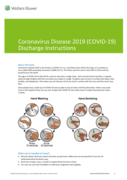
Coronavirus disease 2019 is also known as COVID-19. It is a viral illness that infects the lungs. It is caused by a virus called SARS-associated coronavirus (SARS-CoV-2). This illness was first seen in late 2019 in China and has spread across the world.
The signs of COVID-19 are like the flu, and y
...
This module is part of the WHO series The Immunological Basis for Immunization, which was initially developed in 1993 as a set of eight modules, comprising one module on general immunology and seven modules each devoted to one of the vaccines recommended for the Expanded Programme on Immunization, i
...
Since the re-emergence of monkeypox in Nigeria in September 2017, the Nigeria Centre
for Disease Control(NCDC) has continued to receive reports and respond to cases of the
disease from States across the country. Between September 2017 when the outbreak started and November 2018, about 300 suspecte
...
Theodor Bilharz, a German professor of anatomy and chief of surgery at the Kasr El Ani Hospital of Cairo from 1850, first identified an infective organism, Distomum hematobium in 1851, which was renamed Schistosoma haematobium in 1858. It arose from a cestode worm, Hymenoleptis nana, lying in the sm
...

Dengue is the fastest spreading, mosquito-borne viral infectious disease worldwide, with remarkable morbidity and mortality. In the past decades, profound contributions have been made towards understanding its epidemiology, including disease burden and distributions, risk factors, and control and pr
...
Leptospirosis is a bacterial zoonotic disease of worldwide importance, though relatively neglected in many African countries including sub Saharan Africa that is among areas with high burden of this disease. The disease is often mistaken for other febrile illnesses such as dengue, malaria, rickettsi
...
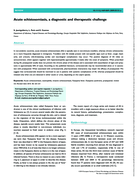
Clin Microbiol Infect 2010; 16: 225–231 Abstract In non-endemic countries, acute (invasive) schistosomiasis (AS) is typically seen in non-immune travellers, whereas chronic schistosomiasis is more frequently diagnosed in immigrants. Travellers with AS initially present with non-specific signs such
...
This report is one of the first major products of the newly established Precision Public Health Metrics unit of the UCN cluster of the WHO Regional Office for Africa. The report presents national trends in communicable and non-communicable disease burden and control in the WHO African region. It tra
...
Mpox continues to affect people around the world. A new framework released today by WHO will guide health authorities, communities and other stakeholders in preventing and controlling mpox outbreaks, eliminating human-to-human transmission of the disease, and reducing spillover of the virus from ani
...
The Mediclinic article on silicosis provides an overview of this occupational lung disease caused by inhaling silica dust. It explains that inhaled silica particles lead to lung scarring and nodule formation, progressively impairing breathing. The article outlines symptoms such as shortness of breat
...
The Mediclinic Infohub article on silicosis provides an overview of this occupational lung disease caused by inhaling silica dust. It explains that inhaled silica particles lead to lung scarring and nodule formation, progressively impairing breathing. The article outlines symptoms such as shortness
...
Asthma:
• is one of the most common respiratory complaints in the world today.
• affects one in ten children (10%) and one in twenty adults (5%)
• can occur for the first time at any age, even in adulthood.
•usually begins before the age of five years. A few children affected will â
...
The video titled "Ganemos tiempo: podría ser tuberculosis" (Let's save time: it could be tuberculosis) is part of a public health campaign aimed at raising awareness about tuberculosis (TB). It emphasizes the importance of early detection and timely treatment to combat the disease effectively. The
...
Children malnutrition eradication in developing countries is a real challenge, especially among
vulnerable population. There are so many effort towards women (who are the main care providers)
socio-economic situation in order to improve their children nutrition. This article aims to identify the
...
WHO has updated its guidelines for COVID-19 therapeutics, with revised recommendations for patients with non-severe COVID-19. This is the 13th update to these guidelines.
Updated risk rates for hospital admission in patients with non-severe COVID-19
The guidance includes updated risk rates for
...
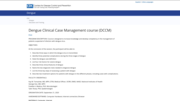
PROGRAM DESCRIPTION: Course is designed to increase knowledge and develop competency in the management of patients suspected of infection with dengue virus.
This first online course is geared at helping healthcare workers in diagnosing and managing all aspects of dengue in order to avoid complications and fatalities.
This course was developed with a comprehensive vision. It is divided into seven modules that include:
Epidemiological informatio
...
El propósito de este curso es proveer al personal de salud encargado de atender casos sospechosos de dengue la información necesaria para realizar un diagnóstico y manejo clínico oportuno, evitando la progresión a las formas graves y las muertes ocasionadas por esta enfermedad.
Between epidemiological weeks (EW) 1 and 22 of 2024, a total of 9,541,015 suspected cases of dengue were reported, resulting in a cumulative incidence of 1,011 per 100,000 population. This represents an increase of 230% compared to the same period in 2023 and 421% compared to the average of the last
...
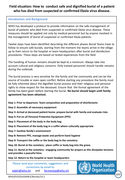
This protocol provides information on the safe management of dead bodies and burial of patients who died from suspected or confirmed Ebola or Marburg virus disease. These measures should be applied not only by medical personnel but by anyone involved in the management of dead bodies and burial of su
...
This document serves to provide interim guidance/ recommendations to carry out mpox surveillance activities mainly case investigation, contact tracing and isolation. For the development of this document WHO, UKHSA and CDC guidelines were referred to and adopted within the country context.
The purpose of this document is to present concise information on the current case definitions for dengue, chikungunya, and Zika proposed by PAHO, as well as information on the clinical phases and severity classification of dengue and chikungunya.
Fact Sheet
Please find here the latest Update on MVD in Rwanda
Ebola virus (EBOV) and Marburg virus (MARV) are associated with severe, potentially fatal, systemic diseases. During the development of the Infection Prevention and Control Guideline for Ebola Disease and Marburg Disease, the Guideline Development Group (GDG) identified multiple research gaps in key
...
Guide de poche pour l’agent de santé en première ligne
Ce guide s’intéresse plus particulièrement à certaines fièvres hémorragiques virales (FHV) Ebola, Marburg, FHCC, fièvre de Lassa [et Lujo] – qui surviennent en Afrique et risquent de donner lieu à une transmission interhumaine. I
...
Accessed 1 July 2014
This document builds on the Background document prepared for the September 4-5, 2014 Consultation. It includes proposed elements to consider during the development of a framework to assist decision-making at global and national level.
The aim of the document is to assist Member States and releva
...

Interim Guidance.
A number of medical problems have been reported in survivors, including mental health issues. Ebola virus may persist in some body fluids, including semen. Ebola survivors need comprehensive support for the medical and psychosocial challenges they face and also to minimize the ...
A number of medical problems have been reported in survivors, including mental health issues. Ebola virus may persist in some body fluids, including semen. Ebola survivors need comprehensive support for the medical and psychosocial challenges they face and also to minimize the ...
10 points basés sur l’expérience de terrain
GUIDE OPÉRATIONNEL à l'usage du personnel de niveau central, intermédiaire et périphérique

The scope of this PPC document is to serve as a guide to address the unmet public health need for a PPE system that protects the HW-F in tropical climate
s while caring for patients and providing heavy duty essential health services.
The characteristics described in this guidance are targeted fo
...
Ce document présente des recommandations sur les soins cliniques et le dépistage du virus chez les survivants de la maladie à virus Ebola. Il s'adresse principalement aux professionnels de santé qui dispensent des soins primaires aux personnes ayant survécu.
Table des matières
...
Table des matières
...
Guidelines for the management of pregnant and breastfeeding women in the context of Ebola virus disease
recommended
To save the lives of mothers and their babies, mitigate complications, and limit the spread of disease, it is critical that recommendations are made on the prevention, treatment, and surveillance of women who are exposed to EVD, acquire EVD during pregnancy or breastfeeding, or survive EVD with ongo
...
Guidance for health care workers.
Both the REGN-EB3 and mAb114 are recommended for use in EVD. The two drugs should not be given together. The choice of which monoclonal antibody to use depends on availability, including emerging information about effectiveness.
Guidance for health care workers.
Both the REGN-EB3 and mAb114 are recommended for use in EVD. The two drugs should not be given together. The choice of which monoclonal antibody to use depends on availability, including emerging information about effectiveness.
Guidance for health care workers.
Both the REGN-EB3 and mAb114 are recommended for use in EVD. The two drugs should not be given together. The choice of which monoclonal antibody to use depends on availability, including emerging information about effectiveness.
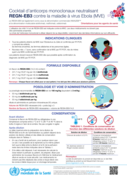
Cocktail d’anticorps monoclonaux neutralisant REGN-EB3 contre la maladie à virus Ebola (MVE)
recommended
Guidance for health care workers.
Both the REGN-EB3 and mAb114 are recommended for use in EVD. The two drugs should not be given together. The choice of which monoclonal antibody to use depends on availability, including emerging information about effectiveness.
Guidance for health care workers.
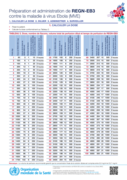
Guidance for health care workers.
Las olas de transmisión de la fiebre amarilla ocurridas en la Región de las Américas entre el 2016 y el 2018 causaron el mayor número de casos humanos y epizoóticos registrados en varios decenios. La fiebre amarilla es una enfermedad hemorrágica viral grave que representa un desafío para el p
...
Ebola disease and Marburg disease outbreaks continue to occur in Africa, with increased frequency. In addition to resulting in high mortality and morbidity, the outbreaks generate fear and mistrust about the response activities within the communities affected.
Infection prevention and control (IP
...
La fièvre de Lassa est une fièvre hémorragique virale aiguë d'une durée d'une à quatre semaines qui sévit en Afrique occidentale. La fièvre de Lassa, une fièvre hémorragique virale avec des symptômes similaires à ceux de la maladie virale d'Ebola, est endémique dans une grande partie de
...
