
Filter
156
Text search:
e-learning
courses
Featured
22
55
Language
Document type
74
24
18
10
9
6
6
4
2
2
1
Countries
7
7
6
4
4
4
3
3
3
3
3
3
3
3
3
2
2
2
2
2
2
1
1
1
1
1
1
1
1
1
1
1
1
1
Authors & Publishers
Publication Years
Category
35
26
14
11
10
9
1
Toolboxes
15
11
11
10
10
8
7
6
6
6
4
3
3
3
2
2
2
1
1
1
This guide is an introduction on how to integrate logistics management information systems (LMIS) with geographic information systems (GIS). It covers the value of integrating these two systems, the steps in assessing if it is currently viable to link the systems, how to set the linkage, the process
...
Disaster Management Reference Handbook Series Overview.
Floods, storms, and wind account for large proportions of displacement compared to other disasters. Floods are the most frequent type of disaster whereas wind-related disasters constitute the biggest losses in terms of economic damage, displac
...

Gender-based violence, including rape is a problem throughout the world, occurring in every society, country and region. Refugees and internally displaced people are particularly at risk of this violation during every phase of an emergency situation. The systematic use of sexual violence as a method
...
This EISF report provides an analysis of the issues surrounding the relationship between NGO’s and their local partners. It includes a section on the topic and its background, responsabilities towards the partner organisation and particularly in terms of security, how to enable and help the partne
...
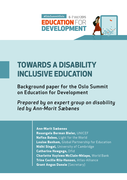
Background paper for the Oslo Summit on Education for Development
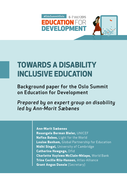
Background paper for the Oslo Summit on Education for Development.
This paper covers the four topics of the Oslo Summit: investment in education, quality of learning, education in emergencies and girls’ education. Disability continues to be one of the primary causes of educational disadvantage a
...

This report highlights key achievements registered by the Ministry of Health, affiliated institutions, implementing agencies both at central and decentralized levels in 2013-2014. Generally, the Health Sector accomplishments and programs routine data for 2013-2014 confirm that Rwanda maintains its p
...
The current SEARVAP (South-East Asia regional vaccine action plan) describes a set of regional goals and objectives for immunization and control of vaccine-preventable diseases for 2016 – 2020 and highlights priority actions, targets and indicators that address the specific needs and challenges of
...

People younger than 20 years comprise 35% of the global population and 40% of the global population of least-developed nations. The number of children - neonates, infants, children, and adolescents up to 19 years of age - who need pediatric palliative care (PPC) each year may be as high as 21 millio
...
mhGAP is based on evidence-based technical guidelines (4) and provides a set of tools and
training packages to extend service provision. The mhGAP Intervention Guide (mhGAP-IG)
for MNS disorders in non-specialized health settings (8) is a clinical decision-making tool
for assessing and managing p
...

Zambia has about 1.2 physicians, nurses, and midwives per 1000 population while the minimum acceptable density threshold is 2.3 per 1000 population. The estimated shortage of doctors, nurses and midwives in Zambia is about 14,960. However, with the projected population growth the deficit more than d
...
This curricula guide builds on several existing products of WHO and partners, aimed at supporting countries in their effort to address the first objective of the GAP-AMR (to improve awareness and understanding of AMR). It is targeted specifically at health educators and policy planners, and applies
...

This paper is an initial compilation of the promising practices on risk communication and community engagement that have developed in Europe during the COVID pandemic, in complementarity to the UNHCR’s Practical Recommendations and Good Practice to Address Protection Concerns in the Context of the
...
It highlights how proven digital innovation can be replicated to curb the spread of COVID-19 in Africa. It also estimates investment required to implement such high impact solutions.

COVID-19 has heavily emphasized how contact tracing is crucial for managing outbreaks, and as part of the strategy for adjusting, and eventually lifting, lockdowns and other stringent public health and social measures. As the pandemic develops further, it will be a core measure to manage further wav
...
The purpose of this field guide is to provide comprehensive information on planning and implementing high-quality3 SIAs for injectable vaccines and highlight the opportunities to strengthen RI and surveillance. The guide uses measles–rubella SIAs as the main example throughout, but the informatio
...
2 March 2021
Protracted displacement, socio-economic crises aggravated by the COVID-19 pandemic, dire humanitarian needs and protection threats continue to affect the Palestine refugees in Syria, Lebanon and Jordan.
In Syria, the protracted conflict has left 91 per cent of the 438,000 Palestine re
...
The COVID-19 Strategic Preparedness and Response Plan (SPRP) 2021 Monitoring and Evaluation Framework tracks global progress against the COVID-19 SPRP 2021 for the ten pillars of the public health response. The operational intelligence complements the epidemiologic information used to drive a global
...
The brief concludes that sustaining the continuity of EHS requires policies that ensure a whole-society and systems strengthening approach. This involves increased health care investment, community engagement, disease control regulations, and multisector approaches to improve resilience, EHS quality
...
This is the sixth of our 11-paper supplement entitled “Community Health Workers at the Dawn of New Era”. Expectations of community health workers (CHWs) have expanded in recent years to encompass a wider array
of services to numerous subpopulations, engage communities to collaborate with and to
...

Occupational health and safety programmes aim to prevent diseases and injuries arising out of, linked with or occurring in the course of work, while improving the quality and safety of care, safeguarding the health workforce and promoting environmental sustainability in the health sector.
This gu
...
Promoting health and well-being throughout Europe
This manual for trainers outlines the information and materials required to undertake training in line with the WASH FIT Guide, including background documents, the content of the recommended training modules and training evaluation approaches. The modular approach outlined enables trainers to decide
...
Expanding access to quality health services through task sharing

More than 700 000 people lose their life to suicide every year. A core foundation of suicide prevention is the timely registration and regular monitoring of suicide and self-harm. Surveillance data can be used to show important progress towards reaching global targets, such as reducing the suicide r
...
WHO Ghana 2022 annual report
recommended
“2022 was an eventful year for the WHO Country Office in Ghana,” says Dr Francis Kasolo, WHO Representative to Ghana.
In 2022, WHO Ghana collaborated with partners to deliver interventions in support of the Government of Ghana's health sector agenda to ensure healthy lives for all towards ach
...
The Water and Sanitation for Health Facility Improvement Tool (WASH FIT) presents a framework and acts as a guide to support multisectoral action to improve water, sanitation and hygiene (WASH) in health care. Central to the WASH FIT methodology is training and incremental improvements.
Implementat
...
Fully functioning water, sanitation, hygiene (WASH) and health care waste management services are a critical aspect of infection prevention and control (IPC) practices, and ensuring patient safety and quality of care. Such services are also essential for creating an environment that supports the dig
...
Health systems in Latin America face many challenges in controlling the increasing burden of diabetes. Digital health interventions are a promise for the provision of care, especially in developing countries where mobile technology has a high penetration. This study evaluated the effectiveness of th
...
The 2023 meeting of the WHO Clinical Consortium on Healthy Ageing (CCHA) was the group’s ninth gathering and took place in Geneva 5–7 December 2023. The meeting was structured around seven panels, with a series of technical presentations, plenary discussions and group work, and a final session o
...
The Global Action Plan on Antimicrobial Resistance (AMR) calls for making AMR a core component of professional education and training. In 2018, the World Health Organization (WHO) published Competency framework for health workers’ education and training on AMR to ensure that academic institutions
...
The guide is especially appropriate for settings where the provision of medical, diagnostic and support services is sparse or lacking. It covers adult and child mental health problems, as well as childhood developmental disorders. It includes information and guidance on dealing with mental health cr
...
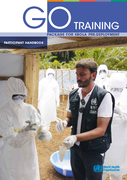
GO pre-deployment training: participant handbook
recommended
This is a pre-deployment training, tailored specially to the Ebola outbreak in West Africa, offered to WHO personnel, consultants, and key partners. The material covered in modules 1-4 is applicable and useful to frontline response workers, national and international. Only Module 5, which focuses on
...
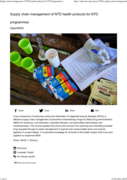
A key component of achieving control and elimination of neglected tropical diseases (NTDs) is effective supply chain management of preventive chemotherapy drugs for Mass Drug Administration (MDA) for trachoma, river blindness, lymphatic filariasis, soil-transmitted helminthiasis and schistosomiasis.
...
Mafunzo haya ya kina ya kiwango wastani ni ya wauguzi wanaowatunza wagonjwa wanaoshukiwa au waliothibitishwa kuwa na ugonjwa wa virusi vya Ebola (EVD). Moduli hii inatoa taarifa ya uchunguzi na ukaguzi, na kuzuia maambukizi and kuthibiti, uchunguzi wa maabara, taratibu za Kituo cha Matibabu ya Ebola
...
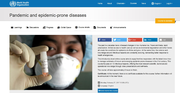
The past two decades have witnessed changes in how humans live. Travel and trade, rapid urbanization, limited access to health care as well as environmental degradation and other trends all create the conditions for epidemics to thrive and grow. At the same time, the science and knowledge around inf
...
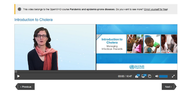
Cholera is an acute diarrhoeal infection caused by ingestion of contaminated water or food.
This introductory-level course has 4 sections and is intended for personnel responding to cholera outbreaks in complex emergencies or in settings where the basic environmental infrastructures have been damag
...
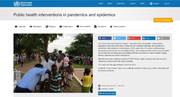
The 21st century has witnessed changes - travel and trade, urbanization, environmental degradation and other trends that increase the risk of disease outbreaks, their spread and amplification into epidemics and pandemics. At the same time, the science and knowledge around infectious hazards are cons
...

What health profressional need to know. An online learning programme
Adult HIV is for primary care nurses, medical officers and lay counsellors. It covers management of HIV-infected adults at primary care clinics, preparing patients for ARV treatment
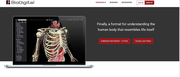
Create interactive content for your curriculum to power active learning for a digital generation.
Hands-on learning for students and faculty to actively participate in a social, fun, and gamified education experience.
A truly astounding collection of more than 5,000 3D anatomy and health condition
...
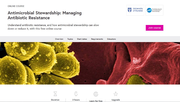
Designed for healthcare professionals, this six-week course will inform you about – and empower you to provide – safe, high-quality antibiotic use. You’ll interact with colleagues globally, to understand what antibiotic resistance means – and why the World Economic Forum has placed it alongs
...

Managing normal and high-risk infants in the newborn nursery
ePROTECT 2018 (French version)
recommended
ePROTECT est une séance d'information sur la santé et la sécurité au travail qui couvre les renseignements de base dont vous avez besoin pour vous protéger lorsque vous vous déployez dans des pays où le virus Ebola est présent. Ceux d'entre vous qui effectueront des tâches spécialisées, c
...

What health professionals need to know.
An online learning programme
ePROTECT 2018
recommended
ePROTECT is an occupational health and safety briefing that covers the basic information you need to protect yourself when deploying to countries with Ebola virus disease. Those of you who will carry out specialized tasks, such as working in direct contact with sick people, will need more advanced-l
...
