
Filter
2198
Text search:
drug
users
Featured
194
630
Language
Document type
1482
253
247
100
51
23
23
10
4
4
1
Countries
131
64
60
55
54
53
52
52
43
39
36
33
32
32
31
31
31
28
25
25
24
24
21
20
17
16
16
14
13
12
11
11
11
11
9
8
7
7
7
6
6
6
5
5
5
5
4
4
4
4
4
3
3
3
3
3
3
3
3
3
3
3
3
3
2
2
2
2
2
2
2
2
2
2
2
2
2
2
1
1
1
1
1
1
1
1
1
1
1
1
1
1
1
1
1
1
1
1
1
1
1
1
1
1
Authors & Publishers
Publication Years
Category
843
171
114
78
61
30
28
1
1
Toolboxes
364
260
202
74
73
60
40
31
31
30
25
23
20
19
19
14
11
9
8
7
6
3
1
1
Analysis
Accessed: 14.03.2019
Perspectives on Drugs
World Drug Report 2017
-1-
Accessed: 14.03.2019
with recommended essential medicines for common diseases in patients in Stockholm County Council (Healthcare Region), Sweden
Harm reduction: evidence, impacts and challenges
-10-
Accessed: 22.03.2019
A summary of the national drug situation
A summary of the national drug situation
Best practice portal: standards and guidelines
recommended
The Best practice portal is a resource for professionals, policymakers and researchers in the drugs field. We provide information on the available evidence on drug-related prevention, treatment and harm reduction, focusing on the European context. T
...
Perspective on drugs
EMCDDA Insights - 11
Accessed: 14.03.2019
Accessed: 28.03.2019
A summary of the national drug situation
Perspectives on drugs
Perspectives on Drugs
Advance copy.
Amphetamine-type stimulants, new psychoactive substances
-4-
World Drug Report 2017
Accessed: 14.03.2019

Opiates, cocaine, cannabis
World Drug Report 2017
-3-
Accessed: 14.03.2019
A practical toolkit for young people who are passionate about advancing HIV and sexual and reproductive health and rights through national advocacy in the post-2015 agenda.
International Journal of Drug Policy 24 (2013) e91-98
This is a detailed manual giving a step by step approach to undertaking the pharmacovigilance of antiretrovirals. It is intended to be a source of practical advice for Pharmacovigilance Centres and health professionals involved in HIV/AIDS prevention and treatment programmes. A number of WHO publica
...
Drug Advisory Board
World Drug Report 2018
-4-
Key Features:
• Module Users: Disaster Management Trainers
• Training Targets: State Government and District
officials / Disaster Management Authorities / Disaster
Management Planners and Responders
• Training Duration: 5 working days (on
...
Module 1q
PrEP users
July 2017
Module 11: PrEP users. This module provides information for people who are interested in taking PrEP to reduce their risk of acquiring HIV and people who are al
...
PURPOSE: To assess the appropriateness of computerizing a health facility warehouse. If users are interested in receiving technical assistance to improve and/or computerize the logistics information system, Management Sciences for Health (MSH) will
...
WHO’s sentinel surveys of acquired HIV resistance to dolutegravir among people receiving dolutegravir-containing antiretroviral therapy is intended for easy and frequent implementation. Results from sentinel surveys provide insight into the prevalence and year-over-year trends of dolutegravir resi
...
In preparing this paper, the Pharmacovigilance Group of the Pan American Health Organization’s Pan American Network for Drug Regulatory Harmonization (PANDRH) adopted the perspective of PAHO/WHO, which considers Pharmacovigilance, an essential com
...
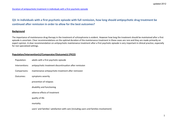
Q3: In individuals with a first psychotic episode with full remission, how long should antipsychotic drug treatment be continued after remission in order to allow for the best outcomes?
This Situation Update describes events occurring in Bilin Township, Thaton District during the period between July and October 2017, including healthcare, education, development projects and drug issues.
This guide is a resource for physicians and other health care professionals who provide care and treatment to patients with drug-resistant tuberculosis.

Antimicrobial Resistance Surveillance and Research Network | This manual describes well accepted methods to carry out drug susceptibility testing on important gram positive and gram negative clinically relevant bacteria. Methods of specimen collecti
...
Q1: Are brief psychosocial interventions for people using cannabis or psychostimulants effective in reducing drug use, dependence and harm from drug use?
Internews’ Rooted In Trust (RiT) Project tracks COVID-19-related rumors circulating among social media users and vulnerable communities in Mali, as well as other countries around the globe. The rumors are used to inform risk communication efforts
...
HIV, viral hepatitis and STI epidemics, particularly among people who inject drugs and other key populations, continue to be fuelled by laws and policies criminalizing sex work; drug use or possession; diverse forms of gender expression and sexualit
...

The Ministry of Health has developed the first version of the Service Standards and Service Delivery Standards for the health sector in Uganda. The main objective is to provide a common understanding of what is expected by the public, service users
...
Overview and Practical Experiences from Ethiopia and Uganda. Slide set.
This webinar provides an overview of the new IEC & Social Mobilization NTD Tool Kit, which leads users through a step-by-step process to systematically review, revise, develop
...
This guide to local production of WHO-recommended handrub formulations is separated into two discrete but interrelated sections:
Part A provides a practical guide for use at the pharmacy bench during the actual preparation of the formulation. Users
...
This checklist covers five areas of competence needed by health care providers to provide quality of care in contraceptive information and services including: respecting users’ privacy and guaranteeing contfidentiality, choice, accessible and acce
...
The modules (1-12) are based on materials originally developed by FIND, KNCV and Cepheid, and are in PowerPoint format for country customization. Depending on the audience, modules may be selected and adapted according to need (e.g. basic users, sup
...
The framework is to be used as a reference guide, applied according to local priorities and needs, and targeted at academic institutions, educators, accreditation bodies, regulatory agencies and other users. The ultimate aim is to ensure that all he
...

The WHO South-East Asia (SEA) Region bears a high burden of tuberculosis (TB) and MDR-TB. In 2015, the Region accounted for nearly 200 000 or 35% of the global estimated new RR/MDR-TB cases eligible for treatment. Extensively drug-resis
...
Health Systems for Outcomes Publication | This report summarizes the findings of a qualitative study on health workers’ performance and career in Rwanda to identify bottlenecks, strengths and shortcomings for human resources in the health sector, as perceived by both health workers and
...
Submitted to the US Agency for International Development by the Systems for Improved Access to Pharmaceuticals and Services (SIAPS) Program. Arlington, VA: Management Sciences for Health. Submitted to the United Nations Children’s Fund by JSI, Arlington, VA: JSI Research & Training Institute, Inc.
...
The main objective of these guidelines is to provide guidance on up-to-date, uniform, evidence-informed practices for suspecting, diagnosing and managing various forms of extra-pulmonary tuberculosis (EPTB) at all levels of healthcare delivery. They can then contribute to the National Programme to i
...
Treatment Improvement Protocol (TIP) Series No. 59
This Quick Guide is based entirely on information contained in TIP 59, published in 2014. No additional research has been conducted to update this topic since publication of TIP 59. | This Quick Guide provides succinct, easily accessible informatio
...
In this entry we are looking at smoking, alcohol consumption and the use of illicit drugs. We are studying who is using these substances, how their use has changed over time, and we are presenting the estimates of their impact on health. Collectively, smoking, alcohol and illicit
...
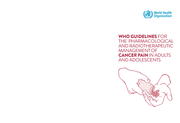
The aims of these guidelines are to provide guidance to health-care providers (i.e. the end-users of these guidelines: physicians, nurses, pharmacists and caregivers) on the adequate relief of pain associated with cancer. They also assist policy-mak
...
Module 3
Counsellors
July 2017
Module 3: Counsellors. This module is for staff who counsel people as they consider PrEP or start taking PrEP and support them in coping with side-effects and adherence strategies. Those who counsel PrEP users m
...
The WHO COVID-19 Essential Supplies Forecasting Tool (COVID-19-ESFT) is meant to help countries forecast essential supplies for their COVID-19 response including personal protective equipment (e.g., masks and gloves), biomedical equipment for case management (e.g., ventilators and oxygen concentrato
...
2nd edition. The purpose of the WHO human health risk assessment toolkit: chemical hazards is to provide its users with guidance to identify, acquire and use the information needed to assess chemical hazards, exposures and the corresponding health r
...

The Updated guidelines on Management of tuberculosis in children and adolescents include new recommendations that cover diagnostic approaches for TB, shorter treatment for children with non-severe drug-susceptible TB, a new option for the treatment
...
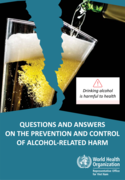
The "Questions and Answers on Prevention and control of Alcohol related harm" has been developed by WHO country office in Viet Nam with technical contribution from national and international experts in the field. This publication provides scientific evidences on harms of alcohol use to the health of
...
Recommendations on the initiation and continuing use of nine common types of contraceptive methods are covered by the tool. In addition to looking at individual medical conditions or characteristics, users may also easily combine multiple conditions
...
The purpose of this document is to contribute to improved recognition of Buruli
ulcer (Mycobacterium ulcerans infection) and encourage greater efforts in detecting
cases at an early stage of infection.Today, patients can be cured with antibiotics if
diagnosed early, thus avoiding unnecessary suff
...
The WHO standard: Universal access to rapid tuberculosis diagnostics sets benchmarks to achieve universal access to WHO-recommended rapid diagnostics (WRDs), increase bacteriologically confirmed tuberculosis and drug resistance detection, and reduce
...
The goal of this addendum is to help management and staff
minimize the risk of TB transmission at facilities in resource limited settings in which a.) HIV-infected persons receive diagnosis, care, treatment,
and/or support, and b.) there is a high prevalence of HIV infection, both known
and
...

The mandate of the National Tuberculosis Control Programme is to provide leadership and stewardship to accelerate intense and coordinated efforts to reduce the adult TB burden of 290 per 100,000 population recently established in the 2013 National TB Prevalence Survey. Other key challenges are low T
...
Module 1
Clinical
July 2017
Module 1: Clinical. This module is for clinicians, including physicians, nurses and clinical officers. It gives an overview of how to provide PrEP safely and effectively, including: screening for substantial risk of HIV; performing appropriate testing before initi
...
This curricula guide builds on several existing products of WHO and partners, aimed at supporting countries in their effort to address the first objective of the GAP-AMR (to improve awareness and understanding of AMR). It is targeted specifically at health educators and policy planners, and applies
...
A tutorial for trainers in healthcare settings
Version 2: 2 Dec 2014
"The document focuses on an extended set of PPE components, which includes goggles, respirators, gloves,
coveralls and footwear. Used properly, these PPE components can provide effective protection even from airborne
transmissi
...
The World Health Organization Assessment Instrument for Mental Health Systems (WHO-AIMS) was used to collect information on the mental health system in Ghana for the year 2011. The goal of collecting this information is to improve the mental health system and to provide a baseline for monitoring the
...
A new frontier for integrated care.
Until now, most efforts to promote integrated care have focused on bridging the gaps between health and social care or between primary and secondary care. But the NHS five year forward view has highlighted a third dimension – bringing together physical and ment
...
This publication seeks to describe the best treatments and practices based on the scientific evidence available at the time of writing as evaluated by the authors and may change as a result of new research. Readers need to apply this knowledge to patients in accordance with the guidelines and laws o
...
World Psychiatry. 2010 Jun;9(2):67-77.
The main recommendations are presented in relation to: the need for coordinated policies, plans and programmes, the requirement to scale up services for whole populations, the importance of promoting community awareness about mental illness to increase levels
...
The seven essential features of practice for scaling up are described with great clarity. They are practical and universal, and encourage local innovation. They include policy, funding and local management structure, as well as working with all possible partners and developing local context adaptati
...
This Toolkit aims to support the understanding and implementation of integrated mental health programs in humanitarian settings. It provides a framework for essential steps and components, with associated key guidance and resources, that strengthen the integration process, and is primarily intended
...
This document focuses on making recommendations for the diagnosis and treatment of Chagas disease, an infection caused by Trypanosoma cruzi, the protozoan agent of a systemic parasitic disease. Methodology: These clinical practice guidelines were prepared following the WHO handbook for guideline dev
...
The guidelines are aimed at clinical professionals directly involved with and responsible for the care of adults with HIV infection, and at community advocates responsible for promoting the best interests and care of HIV-positive adults. They should be read in conjunction with other published BHIVA
...
The extensive use of antimicrobials in human and veterinary medicine in recent years has accelerated the emergence and spread of resistant microorganisms. This situation has been worsened by the lack of investment in developing new effective antibiotics. The severity of the consequences is clear to
...
Module 6
Pharmacists
July 2017
Module 6: Pharmacists. This module is for pharmacists and people working in pharmacies. It provides information on the medicines used in PrEP, including on storage conditions. It gives suggestions for how pharmacists and pharmacy staff can monitor PrEP adherence
...
GUIDE PRATIQUE À L’INTENTION DES PROGRAMMES DE LUTTE CONTRE LES MALADIES TROPICALES NÉGLIGÉES
This toolkit provides step-by-step guidance to NTD programme managers and partners on how to engage and work collaboratively with the WASH community to improve delivery of water, sanitation and hygien
...
The larval stage of the parasite Taenia solium can encyst in the central nervous system causing neurocysticercosis, which is the main cause of acquired epilepsy in the countries in which the parasite is endemic. Endemic areas are those with the presence (or likely presence) of the full life cycle of
...
To support its R&D activities on Chagas disease, DNDi launched the Chagas Clinical Research Platform (CCRP). The platform brings together partners, experts, and stakeholders to provide support for evaluation and development of new treatments for Chagas disease. The patient-centred platform aims to f
...
The Event-based Surveillance Framework is intended to be used by authorities and agencies responsible for
surveillance and response. This framework serves as an outline to guide stakeholders interested in implementing
event-based surveillance (EBS) using a multisectoral, One Health approach. To
...
The Democratic Republic of Timor-Leste has the highest TB incidence rate in the South East Asian Region - 498 per 100,000, which is the seventh highest in the world. In Timor-Leste TB is the eighth most common cause of death.
The salient observations are as follows:
In 2018, 487 (12.5%) of the
...
This is an update (third edition) of the BACPR Standards & Core Components and represents current evidence-based best practice and a pragmatic overview of the structure and function of Cardiovascular Prevention and Rehabilitation Programmes (CPRPs) in the UK. The previously described seven standards
...
Traditional medicine, including the knowledge, skills and practices of holistic health care, exists in all cultures. It is based on indigenous theories, beliefs and experiences and is widely accepted for its role in health maintenance and the treatment of disease.Medicinal plants are the main ingred
...
The ICF Practical Manual provides information on how to use ICF. Anyone interested in learning more about use of the International Classification of Functioning, Disability and Health (ICF, WHO 2001) may benefit from reading this Practical Manual. The ICF is presently used in many different contexts
...
In many low- and middle-income countries, there is a wide gap between evidencebased recommendations and current practice. Treatment of major CVD risk factors remains suboptimal, and only a minority of patients who are treated reach their target levels for blood pressure, blood sugar and blood choles
...

The WHO Global Antimicrobial Resistance and Use Surveillance System (GLASS) was launched in 2015 to foster AMR surveillance and inform strategies to contain AMR. The system started with surveillance of AMR in bacteria causing common human infections and has expanded its scope to include surveillance
...
Cardiovascular disease (CVD) is the leading cause of global deaths, with the majority occurring in low- and middle-income countries (LMIC). The primary and secondary prevention of CVD is suboptimal throughout the world, but the evidence-practice gaps are much more pronounced in LMIC. Barriers at the
...
Ahead of World Malaria Day, the WHO Global Malaria Programme published a new operational strategy outlining its priorities and key activities up to 2030 to help change the trajectory of malaria trends, with a view to achieving the global malaria targets. The strategy outlines 4 strategic objectives
...
Our target end-users are those with limited literacy. It is a challenging task to achieve success in this group as so much of what is "obvious" to those of us with good literacy skills is totally obscure to those who have never had the opportunity t
...

Protocol for the management of specialized centres for the treatment of people with alcohol and other drug abuse problems (CETAD) in the framework of the COVID-19 pandemic. Version 1.
The document is a summary report by the World Health Organization (WHO) Regional Office for the Eastern Mediterranean, focusing on a capacity-building workshop held in Abu Dhabi in 2019. The workshop addressed the management and care of substance use disorders, aiming to improve technical and manage
...
The pamphlet "Prescription Benzodiazepines" explains the uses, effects, and risks of benzodiazepines, commonly prescribed for insomnia, anxiety, and panic attacks. It describes how these drugs enhance GABA activity to suppress brain activity, leading to short-term effects like drowsiness and anxiety
...
Бюро ВОЗ в Украине инициировало написание этого отчета для оценки развития
интегрированных услуг для людей употребляющих наркотики в рамках ответа Украины на эпÐ
...
Rappart sur les populations clés.
The manufacturing process is one of the key steps where quality control is required to ensure quality of medicinal products, including herbal medicines. Good manufacturing practices (GMP) is one of the most important tools for this measure.
Third edition

