Filter
1881
Text search:
disorder
Featured
180
323
Language
Document type
1237
226
201
89
45
38
22
9
5
4
4
1
Countries
96
58
43
41
32
30
29
29
28
24
23
23
23
22
21
19
17
16
16
15
14
13
13
12
11
11
11
11
9
9
8
8
7
6
6
6
6
5
5
5
5
5
5
5
5
4
4
4
4
4
3
3
3
3
3
3
3
3
3
3
2
2
2
2
2
2
2
2
2
2
2
2
2
1
1
1
1
1
1
1
1
1
1
1
1
1
1
1
1
1
1
1
1
1
1
1
1
1
1
Authors & Publishers
Publication Years
Category
461
106
78
78
44
23
5
1
Toolboxes
806
114
103
72
46
45
43
39
38
30
27
20
19
19
16
15
11
10
6
6
2
2
2
The Diagnostic and Statistical Manual of Mental Disorders, Fifth Edition, Text Revision (DSM-5-TR), is the most comprehensive, current, and critical resource for clinical practice available to today's mental health clinicians and researchers. DSM-5-TR includes the fully revised text and references,
...
Some 32% of internally displaced persons (IDPs) in Ukraine suffer from post-traumatic stress disorder (PTSD) as a result of the conflict in the east.
Among the 2,203 respondents surveyed across Ukraine, the study also found a high prevalence of men
...

The purpose of the situation assessment was to execute a situation analysis for Autism and Neurodevelopment Disorder (NDD) in Bangladesh. The situation assessment covers the following areas: a review of the scale and prevalence of NDD with trends of
...
This study investigated the recollections of child survivors of the 2004 Asian tsunami in terms of their vantage point and posttraumatic stress disorder (PTSD) responses. Five years after the tsunami, 110 children (aged 7–13 years) living in Aceh,
...
1. MYTH: Sexual violence is just another stressor in populations exposed to extreme stress: there is no need to do anything special to address sexual violence | 2. MYTH: The most important consequence of sexual violence is posttraumatic stress disorder
...
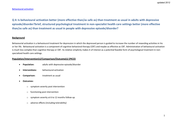
Q 4: Is behavioural activation better (more effective than/as safe as) than treatment as usual in adults with depressive episode/disorder?brief, structured psychological treatment in non-specialist health care settings better (more effective than/as
...
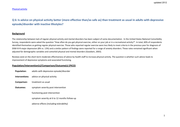
Q6: Is advice on physical activity better (more effective than/as safe as) than treatment as usual in adults with depressive episode/disorder with inactive lifestyles

Q11. SCOPING QUESTIONS: In people with psychotic disorders (including schizophrenia and bipolar disorder) are recovery-oriented psychosocial strategies enhancing independent living and social skills (such as life skills and social skills training) f
...
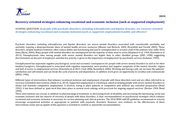
Q12. SCOPING QUESTION: In people with psychotic disorders, including schizophrenia and bipolar disorder, are recovery-oriented strategies enhancing vocational and economic inclusion (such as supported employment) feasible and effective?
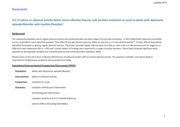
Advice on physical activity should be encouraged as part of treatment for adults with depressive episode/disorder with inactive lifestyles. In moderate and severe depression, this intervention should be considered as adjunct to antidepressants or br
...
This guide outlines key social and play skills that can develop differently in children with Autism Spectrum Disorder (ASD). It includes an extensive list of practical play ideas and activities which are appropriate for ASD. These are designed to be
...
Q 1: Are antidepressants (Tricyclic Antidepressants (TCA) and Selective Serotonin Reuptake Inhibitors (SSRI)) better (more
effective than/as safe as) than treatment as usual (placebo) in adults with depressive episode/disorder?
Q 3: Is brief, structured psychological treatment in non-specialist health care settings better (more effective than/as safe as) than treatment as usual in people with depressive episode/disorder?

Hilfe und Information in der Ulmer Onlineklinik | Accessed Online January 2019. | The CATS questionnaire is a short freely accessible screening instrument directly based on the DSM-5 criteria for Posttraumatic Stress Disorder (PTSD). It is a measure
...
Background: Indian adolescents are presumably exposed to a range of potentially traumatizing and negative life events. However, the knowledge on this area is relatively sparse. The present study aims to investigate the prevalence of exposure to potentially traumatizing and negative life events and t
...

Every five minutes a child dies as the result of violence, according to a ground-breaking report from Unicef UK. The report reveals that the vast majority of children are killed outside warzones and that physical, sexual and emotional abuse is widespread with millions of children unsafe in their hom
...
Hilfe und Information in der Ulmer Onlineklinik | Accessed Online January 2019. | The CATS questionnaire is a short freely accessible screening instrument directly based on the DSM-5 criteria for Posttraumatic Stress Disorder (PTSD). It is a measure
...

Hilfe und Information in der Ulmer Onlineklinik | Accessed Online January 2019. | The CATS questionnaire is a short freely accessible screening instrument directly based on the DSM-5 criteria for Posttraumatic Stress Disorder (PTSD). It is a measure
...

Hilfe und Information in der Ulmer Onlineklinik | Accessed Online January 2019. | The CATS questionnaire is a short freely accessible screening instrument directly based on the DSM-5 criteria for Posttraumatic Stress Disorder (PTSD). It is a measure
...

Hilfe und Information in der Ulmer Onlineklinik | Accessed Online January 2019. | The CATS questionnaire is a short freely accessible screening instrument directly based on the DSM-5 criteria for Posttraumatic Stress Disorder (PTSD). It is a measure
...
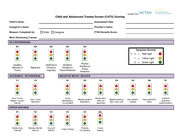
Adapted from NTCSD - The National Child Traumatic Stress Network | Hilfe und Information in der Ulmer Onlineklinik | Accessed Online January 2019. | The CATS questionnaire is a short freely accessible screening instrument directly based on the DSM-5 criteria for Posttraumatic Stress
...
This treatment guideline is intended to assist clinicians in the Behavioral Health department in treatment planning and service delivery for patients with Post Traumatic Stress Disorder (PTSD). It may also assist clinicians treating patients who hav
...

A Capstone Project submitted in partial fulfillment of the requirements for the Master of Science Degree in Counselor Education at Winona State University | This article reviews the use of Art Therapy to treat children who suffer from Posttraumatic Stress
...
This guide covers: Treatment That Works; Myths About Treatment; Success Stories; Resources | Do you or a loved one have PTSD? There is no need to suffer. Treatment works. If you have PTSD—posttraumatic stress disorder — you don’t have to suff
...
This NCEPOD report highlights the quality of mental health and physical health care for patients aged 18 years or older with a significant mental disorder who are admitted to a general hospital. The report takes a critical look at areas where the ca
...

Mental health problem is one of the growing major public health issues in the Asia Pacific region. It contributes to the high number of Disability Adjusted Life Years (DALYs), morbidity and mortality in the region. It is expected that leading mental health problems will occur in the low-and middle-i
...
Q15. SCOPING QUESTION: Is pharmacological intervention effective and safe for treatment of psychotic disorders in adolescents (including schizophrenia and bipolar disorder)?
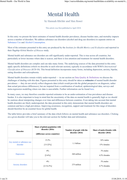
Mental health disorders remain widely under-reported — in our section on Data Quality & Definitions we discuss the challenges of dealing with this data. Figures presented in this entry should be taken as estimates of mental health disorder prevale
...
Poverty, HIV and other disease burdens, coupled with common mental disorders including alcohol and other substance use disorders, posttraumatic stress disorder, clinical and postnatal depression, distress, and anxiety, impact how caregivers meet the
...

In these guidelines we use the term gambling problems to refer to
difficulties over time in limiting money or time spent on gambling,
which leads to adverse consequences for the person, others, or for
the community. This could include someone whose gambling is having
a great enough impact on the
...
This manual is a resource for Health Counselors working in Family Physician Clinics (FPC) as part of the MANAS program. This program is for common mental disorders like depression and anxiety seen in primary health care facilitieslike the FPC; since depression is the common
...

According to the latest available estimates, more than 1 in 7 adolescents aged 10–19 is estimated to live with a diagnosed mental disorder globally. Almost 46,000 adolescents die from suicide each year, among the top five causes of death for their
...

According to the latest available estimates, more than 1 in 7 adolescents aged 10–19 is estimated to live with a diagnosed mental disorder globally. Almost 46,000 adolescents die from suicide each year, among the top five causes of death for their
...
In the WHO South-East Asia Region, epidemiological knowledge of mental health conditions remains
a relative unknown, given the sparsity of data and information on (a) the total burden associated
with each disorder; (b) the degree of met and unmet
...
The "Cystic Fibrosis Fact Sheet" by the National Heart, Lung, and Blood Institute provides an overview of cystic fibrosis (CF), a chronic and often fatal genetic disorder affecting the respiratory and digestive systems. The document outlines the cau
...
Objectives and scope of the document
This document was developed to provide recommended management strategies for problems and disorders that are specifically related to the occurrence of a major stressful event. The recommended strategies will form the basis of a new module to be added to the WHO
...
The new guide provides practical, first-line management recommendations for mental, neurological and substance use conditions. Contents include modules on assessing and managing conditions such as acute stress, grief, moderate-severe depressive disorder
...
In the last five years, i.e. how old turned the Campaign “Indifesa” (Defenceless) in 2016, that was launched by Terre des Hommes in 2012, the world has become smaller. One can actually say that the derangements following the Arab Spring in 2011 reshuffled what is stable and what produces instabi
...

The global burden of disease due to mental disorders continues to rise, especially in low- and middle-income countries (LMIC). In addition to causing a large proportion of morbidity, mental disorders – especially severe mental disorders (SMD) – are linked with poorer health outcomes and increase
...
Reduced healthy life expectancy due to the high burden of both mental ill health and noncommunicable diseases (NCDs) is a major public health concern in the European Region. The links between mental disorders and major NCDs are well established.
In clinical practice, however, mental disorders in pa
...
Mental disorders impose an enormous burden on society, accounting for almost one in three years lived with disability globally. •In addition to their health impact, mental disorders cause a significant economic burden due to lost economic output and the link between mental disorders and costly, po
...
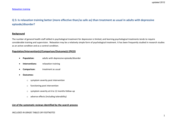
The number of general health staff skilled in psychological treatment for depression is limited, and learning psychological treatments tends to require considerable training and supervision. Relaxation may be a relatively simple form of psychological treatment. It has been frequently studied in rese
...
The Lancet Published Online June 11, 2019 http://dx.doi.org/10.1016/S0140-6736(19)30934-1
More than one-in-five people living in conflict-affected areas suffers from a mental illness, according to a new UN-backed report, prompting the World Health Organization (WHO) to call for increased, sustained
...
Health Evidence Network Synthesis Report, No. 47
The increasing number of refugees, asylum seekers and irregular migrants poses a challenge for mental health services in Europe. This review found that these groups are exposed to risk factors for mental disorders before, during and after migration.
...
Background: Healthcare workers’ mental health was affected by SARS-CoV-2 pandemic.
Aim: To evaluate healthcare workers’ mental health and its associated factors during the pandemic in Chile. Material and Methods: An online self-reported questionnaire was designed including the Goldberg Healt
...
The world faces grave consequences from the lack of available mental health services and treatment. Mental illness impacts every country, culture and community, with the World Health Organization (WHO) stating that 10% of the global burden of disease is related to mental, neurological and substance
...

A major problem facing the world is how to build peace following the ravages of increasingly protracted armed conflict. Armed conflicts leave behind shattered, divided societies that are at risk of repeating cycles of violence, and therefore need concerted peacebuilding efforts. Conflicts also take
...
The South African Cystic Fibrosis Association (SACFA) is a non-profit organization dedicated to supporting individuals with cystic fibrosis (CF) in South Africa. Their website provides comprehensive information about CF, including its causes, symptoms, and treatment options. CF is described as an in
...
Guidelines on obstructive sleep apnea in India.

Post-traumatic symptoms in Ghanaian children. Thesis for Master of Philosophy in Peace and Conflict Studies (PECOS). This study investigated whether Ghanaian children exposed to low intensity warfare experience symptoms of PTSD as described in the DSM-IV. It also aimed to find out if there are cultu
...
Overview
Learning objectives
• Promote respect and dignity for people with psychoses.
• Name common presentations of psychoses.
• Name assessment principles of psychoses.
• Name management principles of psychoses.
• Perform an assessment for psychoses.
• Use effective communicatio
...
Externalising disorders
Chapter D.3

Mood disorders
Chapter E.1
2015 edition
Mood disorders
Chapter E.2
Substance use disorders
Chapter G.3

10 Jan 2022
Fetal alcohol spectrum disorders (FASD) represent a range of physical, mental, and behavioral disabilities caused by alcohol use during pregnancy, or prenatal alcohol exposure (PAE). FASDs are considered to be one of the leading preventable causes of developmental disability. Despite its high preval
...
TRAUMA & GEWALT 5. Jahrgang Heft 3/2011
Background: Little is known about post-traumatic stress (PTSD) prevalence rates in community samples. This is especially true for the African continent where child-soldiers, HIV/AIDS affected and orphans have been the target for PTSD prevalence studies. Objectives: The aim of this study is to invest
...

Адаптивные технологии развития интеллектуальных способностей человека учитывают естественные интересы людей разных возрастных групп, позволяют оптимизировать
...

Patient information
Seit > 5 Jahren nicht aktualisiert, Leitlinie wir zur Zeit überprüft | AWMF-Register Nr. 051/010 | Klasse: S3
Accessed Online January 2019
PLoS Med 15(7): e1002615. https://doi.org/10.1371/journal. pmed.1002615
Depression is a leading cause of non-fatal disease burden worldwide, with a lifetime prevalence of 9% among European adult men and 17% among European adult women.
The task at hand requires substantial investments in preventive mental health care, but the potential benefits can be equally rewarding.
...
Introduction
Chapter A.9
Other disorders Chapter H.1
From raising awareness to building capacity
Meeting Report
World Health Organization, Geneva, Switzerland 16 -18 September 2013
[Updated 2015]
SCOPING QUESTION: What is the effectiveness of psychosocial interventions (including caregiver skills training) for behavioural disorders in children and adolescents?
Alcohol misuses
Substance use disorders
Chapter G.1
Mental, Neurological, and Substance Use Disorders: Disease Control Priorities, Third Edition (Volume 4).
Patel V, Chisholm D, Dua T, et al., editors.
Washington (DC): The International Bank for Reconstruction and Development / The World Bank; 2016 Mar 14.
Developmental disorders
Chapter C.5
Dialogues Clin Neurosci. 2017 Jun; 19(2): 93–107.
Europe PMC Funders Group
Author Manuscript
Arch Dis Child. Author manuscript; available in PMC 2013 November 01.
Published in final edited form as:
Arch Dis Child. 2013 May ; 98(5): 323–327. doi:10.1136/archdischild-2012-302079.

New England Journal of Medicine
April 9, 2021
DOI: 10.1056/NEJMoa2104840
Immigrant and refugee mental health - Best practices in meeting the needs of immigrants and refugees
Compared to their native counterparts, immigrants and refugees are at higher risk for developing mental health problems due to previous trauma and/or the stress of migration and resettlement; such as war, violence, poverty, and acculturation.
Patient information on coronary heart disease. English version. Also available in: Arabic, French, German, Russian, Turkish, Spanish. For other versions go to: http://www.patienten-information.de/kurzinformationen/herz-und-gefässe/koronare-herzkrankheit-notfall
Patient information on depression. English version. Also available in: Arabic, French, German, Russian, Turkish, Spanish. For other versions go to: http://www.patienten-information.de/kurzinformationen/psychische-erkrankungen/depression
ACAPS Briefing Note: Zika virus epidemic
Zika virus infection: update on the evidence for a causal link to congenital brain abnormalities and Guillain-Barré syndrome
Update 7 September 2016
Joining efforts to control two trelated global epidemics.
Bulletin of the World Health Organization, 2001, 79 (4)
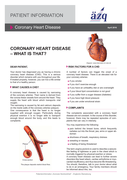
short information/patient handout on coronary heart disease, on this homepage available in:
arabic, english, german, french, russian, spanish & turkish
ext. Homepage, accessed 2018/04/16
JIMSA Jan.-March 2015 Vol. 28 no.1 p.47-50e
Anxiety Disorders
Chapter F.4
Objective: To review research on associations of trauma type with PTSD in the WHO World Mental Health (WMH) surveys, a series of epidemiological surveys that obtained representative data on trauma-specific PTSD.

A list of terms found within the Measures Review Database (MRD). This fact sheet defines various terms from the MRD to help users better understand the measures reviews.
Training of Health-care Providers and Training manual Supporting material
Q7: In individuals with bipolar mania, are a) antipsychotics, b) mood stabilizers (lithium carbonate, valproate, and carbamazepine) effective and safe
IK Notes No. 10 July 1999 | IK Notes reports periodically on Indigenous Knowledge (IK) initiatives in Sub-Saharan Africa. It is published by the Africa Region's Knowledge and Learning Center as part of an evolving IK partnership between the World Bank, communities, NGOs, development institutions and
...
This Review summarizes many of the persistent biological alterations associated with childhood maltreatment including changes in neuroendocrine and neurotransmitter systems and pro-inflammatory cytokines in addition to specific alterations in brain areas associated with mood regulation. Finally, I d
...
The WHO Global Burden of Disease (GBD) study measures the burden of
disease using the disability-adjusted life year metric (DALY). The DALY metric
was developed to assess the burden of disease consistently across diseases,
risk factors and regions. A consistent and comparative description of the
...
Биполярное расстройство в детском возрасте
Клинический случай
Anxiety disorders
Chapter F.5
Other disorders
Chapter H.5
World Psychiatry16:2 - June 2017
First published: 12 May 2017
https://doi.org/10.1002/wps.20428
Volume16, Issue2; Pages 213-214